Milford Sound Waterfalls
Two waterfalls in Milford Sound run every day of the year. The other hundreds are weather. Understanding which is which is the difference between being disappointed by a dry spell and timing your visit for the version of the fiord that ends up in everyone's photographs.
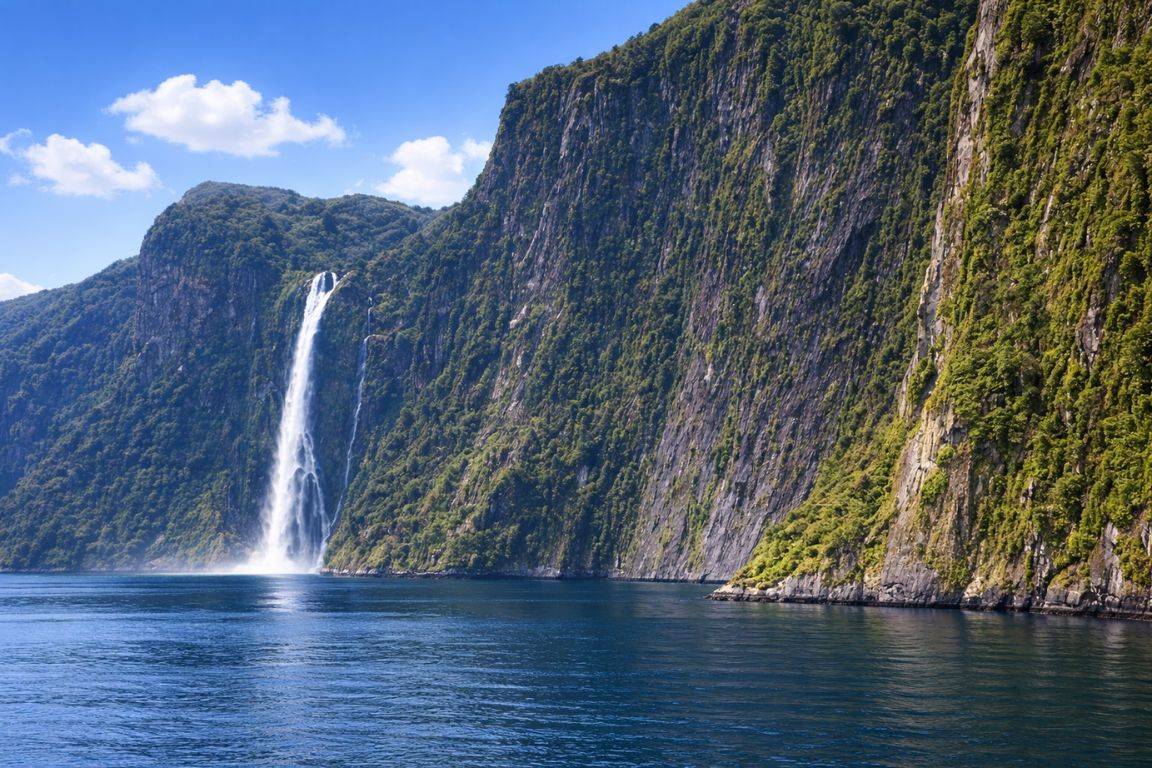
Milford Sound has two permanent waterfalls, Stirling Falls and Lady Bowen Falls, and an uncountable number of temporary ones that appear during and after heavy rain. With around seven metres of rainfall a year, the temporary falls are a regular event rather than a rarity.
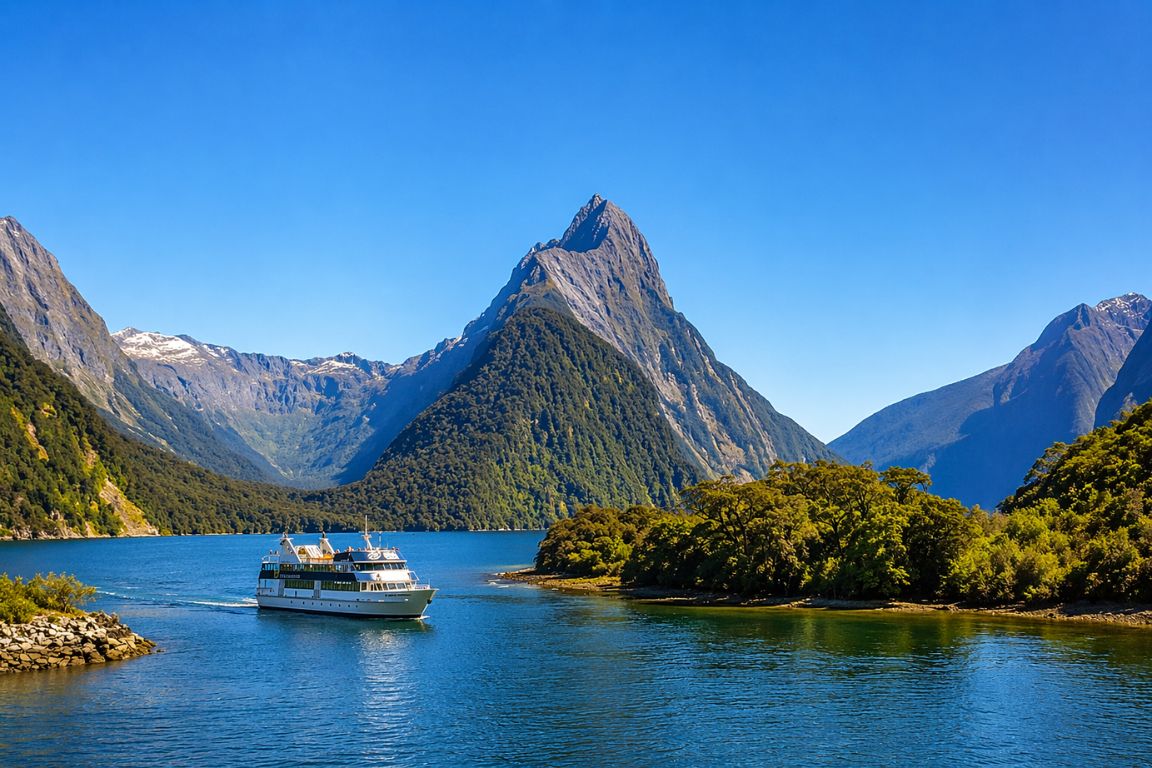
Choose a cruise that stays close to the walls, then step outside early so temporary falls are not missed while you wait for Stirling Falls.
Your Milford Plan
- Stirling Falls and Lady Bowen Falls run all year; the rest depend on recent rain, not the month.
- A cruise is the practical way to see the fiord falls, including the close Stirling Falls approach most boats attempt.
- Check your actual travel date before arranging the drive, parking, flights or the rest of the Milford day.
This is the single most useful thing to understand about the fiord's appearance. Photographs showing cliffs streaming with water in every direction were taken in or shortly after rain. Photographs showing bare grey walls and two white ribbons were taken in a dry spell. Both are Milford Sound.
Which Waterfalls Run All Year?
Stirling Falls and Lady Bowen Falls. Both are fed by permanent catchments rather than direct runoff, so they flow regardless of recent weather. Bowen is the taller of the two and is closest to the terminal. Stirling is the one the cruise boats nose up to.
Lady Bowen Falls drops from a hanging valley near the head of the fiord and supplies the small Milford settlement with both water and power. You see it early on a cruise, usually within minutes of leaving the terminal.
Stirling Falls is the one people remember, because of what the boats do with it. Most operators take their vessels directly under or alongside the fall, close enough that the bow gets soaked and anyone standing outside gets a face full of glacial meltwater. It is the closest physical contact most visitors have with the fiord.
| Waterfall | Runs | Where in the fiord | What happens on a cruise |
|---|---|---|---|
| Lady Bowen Falls | Year-round | Near the head, close to the terminal | Viewed from the boat, usually early in the trip |
| Stirling Falls | Year-round | Mid-fiord, on the southern wall | Boats nose in close; expect spray on deck |
| Temporary falls | During and after rain | Everywhere along both walls | Hundreds at once in heavy rain |
How Close Do The Boats Really Get To Stirling Falls?
Close enough to get wet, and most operators make a point of it. The standard move is to bring the bow directly under the outflow so passengers on the open deck are soaked, then back out. It is deliberate, it is safe, and it is the moment most people photograph.
Smaller vessels can manoeuvre closer and turn more tightly than the large ones, which is a real advantage if this is the part of the trip you care about. A boat carrying a few dozen people can hold position under the fall in a way a 150-passenger vessel cannot.
Bring a jacket you do not mind getting wet, and think about your camera. Spray carries further than it looks from inside the cabin.
What Happens To The Fiord When It Rains?
The walls turn white. Rain falling on the plateau above runs off bare rock with almost nowhere to soak in, so within an hour or two of sustained rainfall hundreds of temporary waterfalls appear down both sides of the fiord, some of them hundreds of metres tall.
They are also short-lived. Many stop within a day of the rain easing, which is why two visitors a week apart can come away with completely different impressions of the same place.
The wind adds the detail people remember most. In strong conditions the updraught against the cliffs catches the smaller falls and blows the water back upward before it reaches the fiord, so the waterfall appears to run in reverse. This is common enough in Milford Sound that most regular visitors have seen it.
Is A Rainy Day Actually Better For Waterfalls?
For waterfalls, unambiguously yes. Rain is the mechanism that produces the temporary falls, and a fiord with hundreds of them is a fundamentally different sight from a fiord with two. The trade is visibility: heavy cloud can hide the peaks, including Mitre Peak.
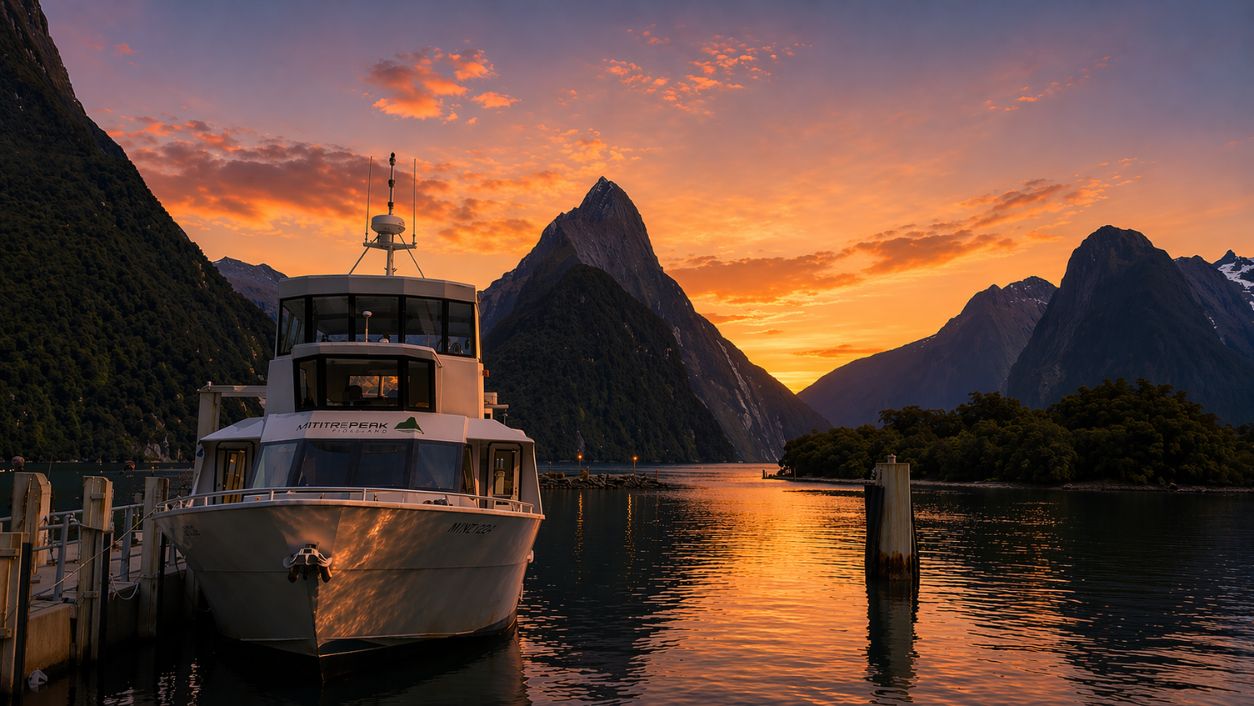
The best combination is rain the day before and clearing weather on the day of your cruise. The temporary falls are still running, the cloud has lifted enough to see the tops, and the light is better for photographs. That combination is a matter of luck rather than planning, but it is worth knowing what to hope for.
Cruises run in rain as standard. What stops operations is wind strong enough to matter for marine safety, and that is uncommon. Scenic flights are the weather-sensitive part of a Milford day, not the boats.
| Conditions | Waterfalls | Peaks visible | Verdict |
|---|---|---|---|
| Heavy rain | Hundreds, at full flow | Often hidden by cloud | The dramatic version, and genuinely worth it |
| Clearing after rain | Still running strongly | Yes, with cloud on the tops | The best combination available |
| Dry, settled spell | Two permanent falls only | Yes, clear | Sharpest views, quietest walls |
What About Sutherland Falls?
Sutherland Falls, at around 580 metres one of the tallest in New Zealand, is not in Milford Sound. It sits inland on the Milford Track and is reached by a side trip on the walk. You cannot see it from a cruise.
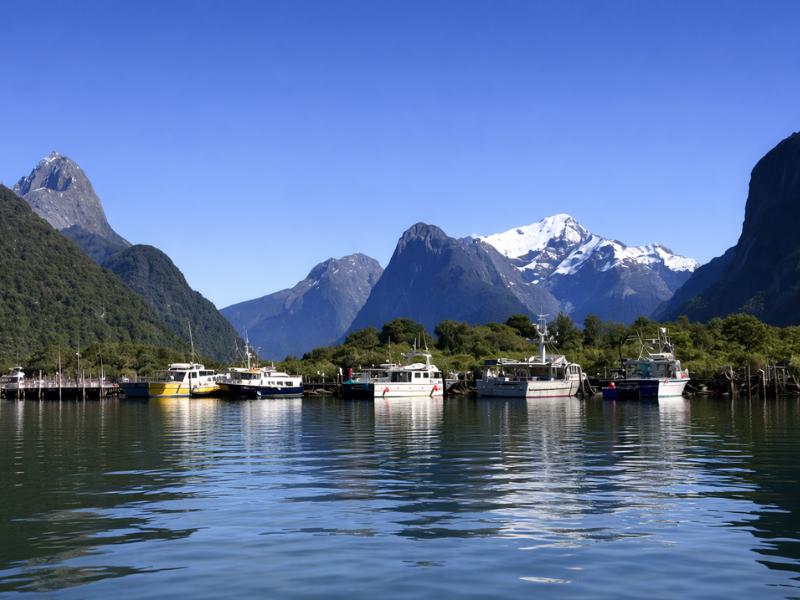
This trips up a lot of visitors, because the falls appear in Milford Sound image searches and in the region's marketing. If seeing Sutherland Falls matters to you, it means walking the track or taking a scenic flight that routes over it.
The flights are the practical option for most people. From the air the fall reads properly for the first time, dropping in stages down a rock wall with the Milford Track visible as a thread below.
Can You See Waterfalls From The Road?
Yes, and the Milford Road has its own set. The stretch after the Homer Tunnel is lined with them in wet weather, and The Chasm, a short walk near the Milford end, shows what the water does to the rock itself rather than the drop.
The descent from the tunnel to the fiord is the most reliable place to see roadside falls in rain. Water comes off the walls above the road in dozens of places, and in a heavy spell the whole valley is running.
The Chasm is worth the twenty minutes it takes. The Cleddau River has cut and polished the rock into shapes that look sculpted, and the interest is in the erosion rather than the height.
Which Cruise Sees The Most Waterfalls?
All of them cover the same fiord and pass the same permanent falls. The differences are how close the vessel gets, how long it lingers, and whether you can be outside. Smaller boats do better on all three.
Nature-focused cruises tend to allocate more time to the falls and the wildlife and less to the run out to the Tasman Sea. Scenic cruises usually cover the full length. If waterfalls are the priority, a smaller boat with a guide who will hold position is a better fit than a large vessel on a tighter schedule.
Being able to stand outside matters more than people expect. The Stirling Falls approach is an outdoor experience. A boat where everyone is behind glass turns the highlight into a view.
When Is The Flow Highest?
Spring, when snowmelt adds to the rainfall, and any time within a day or two of sustained rain in any season. There is no dry month in Fiordland, which is why the temporary falls can appear at any point in the year.
Spring gives you the most reliable combination of high flow and reasonable weather, because the catchments are still releasing winter snow. Autumn tends toward more settled spells, which means clearer views and fewer temporary falls between fronts.
Why Is The Water Brown Near The Surface?
Tannins. Rain washes through the forest and peat above the fiord and carries out plant compounds that stain the fresh water the colour of weak tea. That layer floats on the seawater beneath and can be several metres deep after heavy rain.
This is not pollution and it is not silt. It is the same process that colours streams in any temperate rainforest, concentrated by the sheer volume of water moving through. Rain that has just run down a thousand metres of forested rock arrives loaded with it.
The effect on the fiord is significant. The stained layer filters out much of the light before it reaches the salt water below, which creates conditions normally found far deeper in the open ocean. Black coral, usually a deep-water species, grows here within reach of divers, and the underwater observatory at Harrison Cove exists to show it without getting wet.
Do The Waterfalls Ever Stop?
The temporary ones do, often within a day or two of the rain easing. Stirling Falls and Lady Bowen Falls do not, because they drain permanent catchments rather than direct runoff. In a long dry spell the fiord can look strikingly bare between them.
Dry spells are not common but they happen, particularly in settled autumn weather. Visitors who arrive during one sometimes conclude the waterfall photography they had seen was exaggerated. It was not. It was taken on a different sort of day.
| Recent weather | What you will see |
|---|---|
| Raining now | Hundreds of falls at full flow, peaks likely hidden |
| Rained yesterday, clearing today | Most temporary falls still running, tops visible |
| Dry for two or three days | Flow dropping fast, mainly the two permanent falls |
| Dry for a week | Two permanent falls, bare walls, sharpest views |
Where Do The Falls Actually Come From?
Hanging valleys and bare rock. Smaller glaciers cut side valleys that ended hundreds of metres above the floor of the main one, so their streams now drop straight off the wall. Everywhere else, rain runs off rock with almost no soil to absorb it.
That absence of soil is why the response to rain is so fast. In most landscapes a downpour takes days to work through the ground and into the rivers. Here it arrives at the fiord within hours, which is why the walls can go from bare to streaming in a single morning.
The same shortage of soil explains the tree avalanches. Rainforest grows on almost nothing, roots interlocking across the rock face rather than anchoring into it, and when a section loses its grip the whole mat slides into the water and leaves a bare scar that takes decades to recolonise.
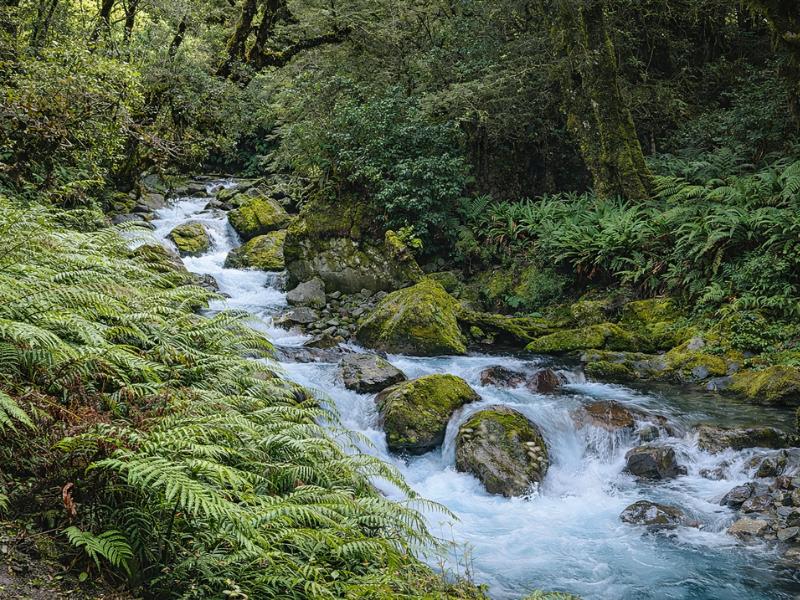
Link Hanging Valleys To The Water You See A local guide, Milford Road walks and a small-vessel cruise help connect bare rock and hanging valleys with the falls dropping toward the fiord.
Scheduled dates load here. Confirm availability and final price on Viator.
Viator scheduled departures, not confirmed inventory for your party. Select the same date on Viator to confirm availability and final price.
This recommendation does not fit your selected itinerary. Adjust your choices at the end to see other options.
Which Waterfalls Do You Pass, And In What Order?
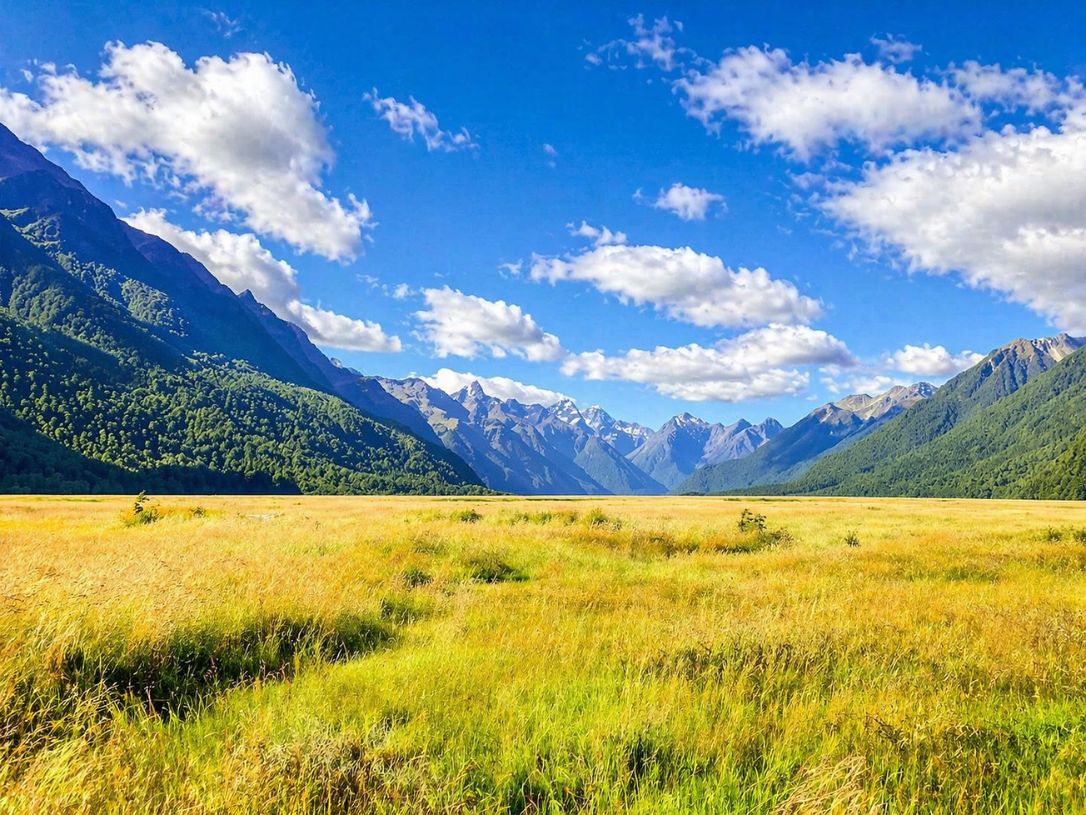
Heading out from the terminal toward the sea you pass Lady Bowen Falls first, then a run of temporary falls along both walls, then Stirling Falls roughly midway, and finally the open water at the Tasman entrance. The return leg usually hugs the opposite wall, so you see a different set.
| Order from the terminal | Feature | What happens |
|---|---|---|
| First few minutes | Lady Bowen Falls | Viewed from the boat; supplies the settlement with water and power |
| Early to midway | Temporary falls | Dozens to hundreds after rain, none in a dry spell |
| Roughly midway | Stirling Falls | The close approach; expect spray on the open deck |
| Outer fiord | Seal Rock | Fur seals hauled out on the rocks |
| The mouth | Tasman Sea | Swell arrives; the fiord opens out |
Knowing the sequence is useful for deciding when to be outside. Many passengers stay in the cabin for the first stretch and come out only when the crew announce Stirling Falls, which means missing the temporary falls that are often the more remarkable sight on a wet day.
Why Do Quoted Waterfall Heights Vary So Much?
Because different sources measure different things: the total drop from the hanging valley lip, the visible drop from the waterline, or the tallest single unbroken cascade. A fall described as 155 metres in one place and considerably more in another is usually the same water measured two ways.
Milford's permanent falls sit in the region of 150 metres and up, and the temporary ones on a wet day can be substantially taller because they run from the plateau rim rather than a mid-wall valley. Rather than chase a number, the useful comparison is against the boat: a vessel carrying a hundred people looks small at the base of Stirling Falls, and that reads more honestly than a figure.
What Do The Falls Do In High Wind?
They can run upward. Wind funnelled along the fiord hits the walls and is forced up, and a lighter temporary fall gets caught in the updraught and blown back over the lip before it lands. Regular visitors see this often enough that it stops being remarkable.
The heavier falls are unaffected because the volume is too great to lift. What you get instead is the water shredded into spray partway down, which produces the drifting white veils across the rock that photograph well and soak anyone on deck from an unexpected direction.
This is also why waterproof gear beats an umbrella here. An umbrella in a fiord with an updraught is a liability rather than a tool.
Do The Waterfalls Freeze In Winter?
Rarely at fiord level. Milford Sound sits at sea level with a maritime climate, so winter temperatures at the waterline hover above freezing more often than not. High on the walls and inland on the tops, ice does form, and snowmelt later feeds the flow.
Winter's real effect is different: fewer people, more settled clear spells between fronts, and snow on the peaks above bare rock, which many photographers consider the best combination of the year. The falls still run, and the road becomes the harder part of the day rather than the fiord.
How Should You Photograph Them?
Protect the lens first, everything else second. Spray at Stirling Falls reaches further than it looks, a microfibre cloth is more useful than any filter, and a wide lens is the only way to fit a fall and its wall into one frame from a moving boat.
| Problem | What works |
|---|---|
| Spray on the lens | Microfibre cloth, lens hood, shoot then wipe immediately |
| Flat grey light | Include a boat or person for scale; shoot the texture, not the sky |
| Glare off wet rock | A polariser, turned while you look through it |
| Everything too big to frame | Wide lens, and shoot verticals for the falls |
| Moving deck | Faster shutter than feels necessary; brace against the rail, not the hull |
The single best photograph most people get is not the waterfall itself. It is the moment the bow goes under it, taken from further back along the deck with other passengers in frame, because that is the only shot that conveys the size of the thing.
Are There Waterfalls You Can Walk To?
Not to the big fiord falls, which drop into deep water with no shoreline. What you can walk to is The Chasm, where the Cleddau River has carved and polished the rock into shapes that are more interesting than any single drop, about twenty minutes return from the road.
Lady Bowen Falls has a short foreshore walk near the terminal that gives a distant view. Beyond that, seeing the falls means being on the water or in the air, which is the recurring theme of the whole fiord.