What To See In Milford Sound
What should you see at Milford Sound? Discover the must-see sights - from Mitre Peak to the Milford Road stops, and how to experience it all in one day.
Quick Summary
Milford Sound contains more genuinely extraordinary sights per hour than almost anywhere in New Zealand. The fiord itself delivers Mitre Peak, two permanent waterfalls, hundreds of rain-fed cascades, the Tasman Sea entrance, Harrison Cove, Seal Rock, and the Pembroke Glacier in a single two-hour cruise. The Milford Road adds Mirror Lakes, the Eglinton Valley, the Homer Tunnel, Monkey Creek, and The Chasm. The foreshore and short walks at the fiord complete the picture. A full day gives you access to nearly all of it. The most common regret is not stopping along the road.
Match your starting point and available time to a trip that covers the fiord landmarks together with the Milford Road stops most visitors miss.
Your Milford Plan
- From Te Anau, a guided full day can combine Milford Road walks, a small-vessel cruise, and return transport.
- If you are already at the terminal, a 105-minute boutique cruise covers the water-only sights.
- From Queenstown, compare a full road-and-cruise day with a five-hour flight and cruise before arranging other plans.
What To See In Milford Sound: At A Glance
| Mitre Peak (1,692m) | Cruise, foreshore walk, kayak, or helicopter | Visible throughout cruise | Most photographed landmark; best afternoon light from cruise deck |
| Lady Bowen Falls (162m) | Cruise; also accessible via short boat + walk | 30 min walk if exploring | Tallest permanent waterfall; supplies water and power to Milford township |
| Stirling Falls (146m) | Cruise – boats get close enough for spray | On cruise route | The “glacial facial” experience; stand on deck for full spray; named after Captain Stirling |
| Seal Rock / Copper Point | Cruise | On cruise route | Year-round fur seal colony; every cruise slows here |
| Harrison Cove | Cruise or kayak | On cruise route; 1 hr kayak if adding | Only safe natural harbour; underwater observatory; tawaki sightings; Milford Track end visible |
| Tasman Sea entrance | Cruise (weather permitting) | On cruise route | Where fiord meets ocean; missed by Captain Cook; first hint of ocean swell |
| Pembroke Glacier / Mt Pembroke (2,015m) | Cruise; helicopter for close approach | Visible from Harrison Cove section | The glacier that carved the fiord; over one million years old |
| Milford Sound Foreshore Walk + Lookout Track | Self-guided walk from carpark | 30-45 min return | Best land-based Mitre Peak view; hidden swing viewpoint; sunset photography |
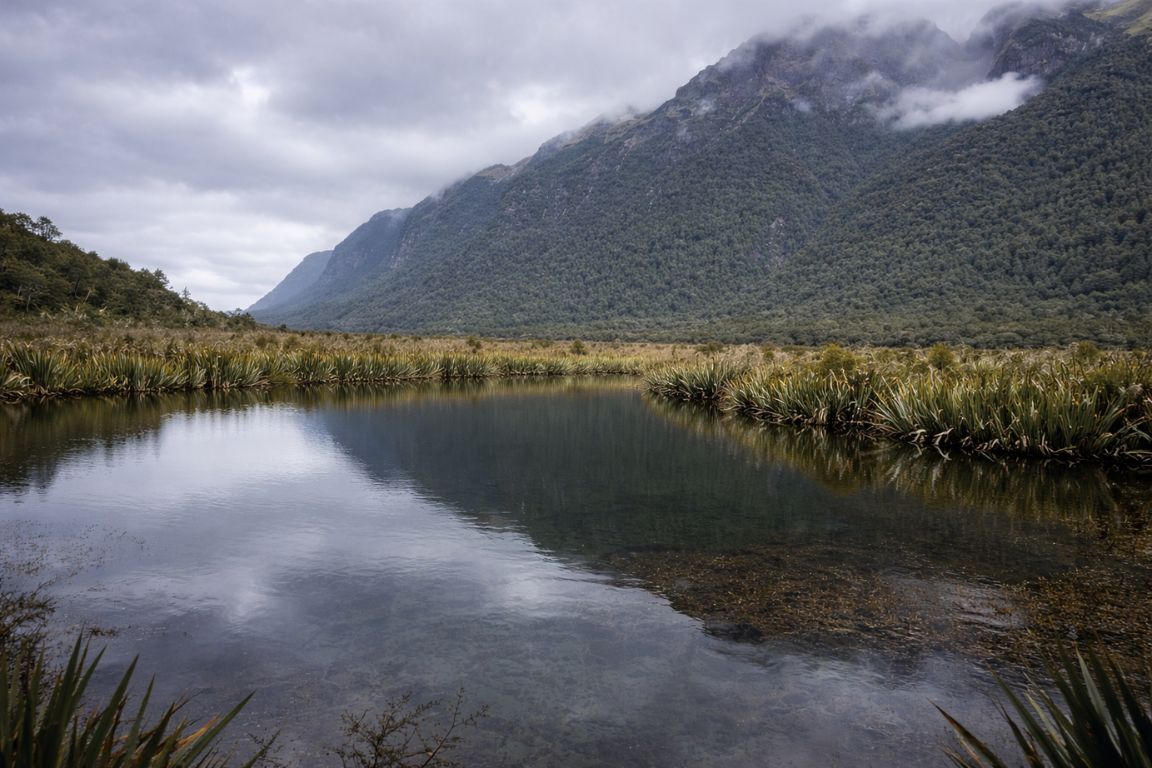
| Mirror Lakes | Roadside stop on Milford Road (57km from Te Anau) | 10-15 min | Best before 9am on calm mornings; upside-down Earl Mountains reflection |
| Homer Tunnel / Gertrude Valley | Drive-through with stop | 15-20 min stop | 1.2km unlined granite tunnel; kea at car park; dramatic post-tunnel Cleddau descent |
| The Chasm | Short walk from carpark (9km before Milford) | 20 min return walk | Partially open Dec 2024; walk to river’s edge to view; bridge crossing not yet restored |
| Monkey Creek | Roadside stop (99km from Te Anau) | 10-20 min | Kea and whio (blue duck) habitat; drinkable glacial water direct from creek |
What Are The Top Things To See In Milford Sound?
 The essential sights at Milford Sound fall into three categories: what you see on the water (Mitre Peak, both permanent waterfalls, Seal Rock, Harrison Cove, the Tasman Sea entrance), what you see at the fiord on foot (the foreshore walk, the Lookout Track, Lady Bowen Falls by boat-accessed walk), and what you see on the Milford Road on the way in (Mirror Lakes, the Eglinton Valley, the Homer Tunnel, Monkey Creek, The Chasm). A full day covers nearly all of it. A half-day cruise covers the water entirely. The road stops are the most commonly missed category, and the one guides most consistently cite as undervalued.
Milford Sound is one of those rare places where the most famous thing, Mitre Peak viewed from the fiord, genuinely delivers on its reputation. The peak does not photograph the way it looks. No image captures the way it rises without preamble from flat water, 1,692 metres of vertical granite appearing as the boat clears the first bend of the fiord. The effect is abrupt and enormous, and the photographs already in your camera do not prepare you for it.
The less-known elements are equally extraordinary if you find them. The Homer Tunnel, a 1.2-kilometre unlined granite tube cut through the Darran Mountains by hand over nineteen years before its 1954 completion, opens on the Milford side into the Cleddau Valley with a descent so steep and visual so sudden it regularly causes audible reactions from passengers experiencing it for the first time. The Mirror Lakes, 57 kilometres from Te Anau, reflect the Earl Mountains in still-water conditions with a clarity that seems implausible until you see it yourself.
The framework for seeing everything is a self-drive from Te Anau with stops at each Milford Road highlight on the way in, a cruise at the fiord, and either a short walk or the helicopter return to Queenstown. For visitors arriving by coach from Queenstown, the driver guide handles the road stops and the cruise delivers the fiord. What a coach cannot give you is the ability to stop at Mirror Lakes before the morning convoy arrives, or to spend 20 minutes at Monkey Creek watching the creek for whio. That flexibility belongs to the self-driver. If you want the road stops and cruise handled together, see the Premium Milford Sound Small-Group Tour & Cruise from Queenstown, or compare formats in our self-drive vs tour guide.
Getting to Milford Sound takes more planning than most people expect – our how to visit New Zealand Milford Sound tours guide breaks down the logistics before they catch you off guard.
What Is Mitre Peak And Why Is It So Famous?
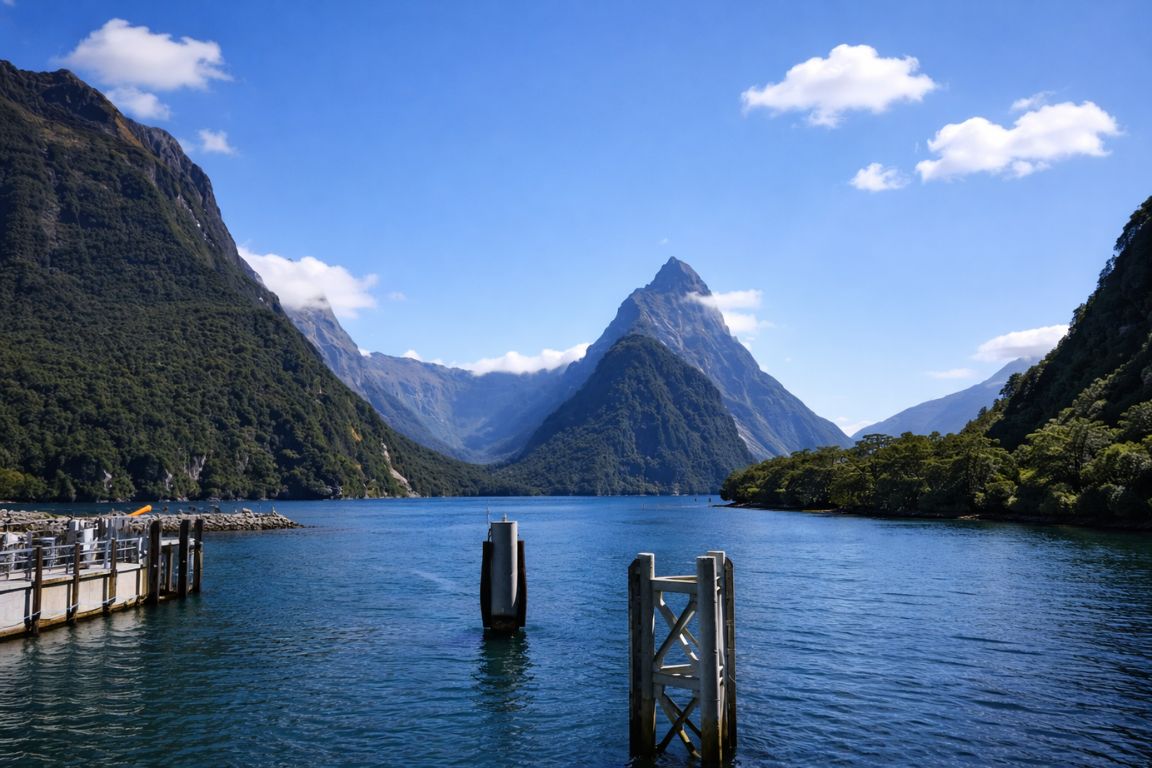 Mitre Peak is a cluster of five peaks rising 1,692 metres directly from the water’s surface on the southern shore of Milford Sound, making it one of the tallest coastal mountains in the world. From most angles it appears as a single pointed summit whose shape gives it its name: a bishop’s mitre. Named by Royal Navy Captain John Stokes in the nineteenth century, it is the most photographed mountain in New Zealand and the defining image of Milford Sound. No road, trail, or building interrupts the view from the water.
The exact appearance of Mitre Peak changes dramatically depending on conditions and time of day. In clear weather it stands in sharp relief against blue sky, every ridge line and gully visible from the cruise deck. In rain, cloud settles around its mid-section and the peak disappears into mist above, leaving the lower rock face visible with temporary waterfalls running off every surface. Both are extraordinary. Many experienced visitors who have seen Mitre Peak multiple times say the rainy version is more powerful, not less: the mountain reveals itself in stages, appears and disappears, and the waterfalls running off its faces from nothing seconds earlier change the entire visual character of the fiord.
In winter, Mitre Peak can carry snow on its upper ridges even when the lower fiord is clear. The contrast between snow-white peaks, dark granite walls, and the tannin-dark water below is the most dramatic version of the view. The reflection in calm morning water doubles the image: mountain above, mountain below, the two meeting at the water line in a symmetry that photographers have made their lives’ work.
What Mitre Peak actually is, geologically, is a remnant of the same granite intrusion that forms the Darran Mountains. The U-shaped valley floor is 265 metres below the waterline at its deepest; the total vertical extent from valley floor to summit is therefore nearly two kilometres. The peak was not carved by the glacier that formed the fiord but rather survived it, standing proud while the ice scoured the valley floor on either side. This makes Mitre Peak a witness to the process that created the fiord rather than a product of it.
Mitre Peak cannot be seen from the terminal or car park at the right angle. The first clear view comes as the cruise vessel rounds the first bend out of Freshwater Basin heading west into the fiord. For self-drivers who arrive early, the Milford Sound Foreshore Walk delivers a good ground-level view before boarding.
Trying to figure out if the famous Milford Road is manageable without a guide? Check out our self-drive vs tour New Zealand Milford Sound guide before you commit either way.
What Are The Main Waterfalls In Milford Sound?
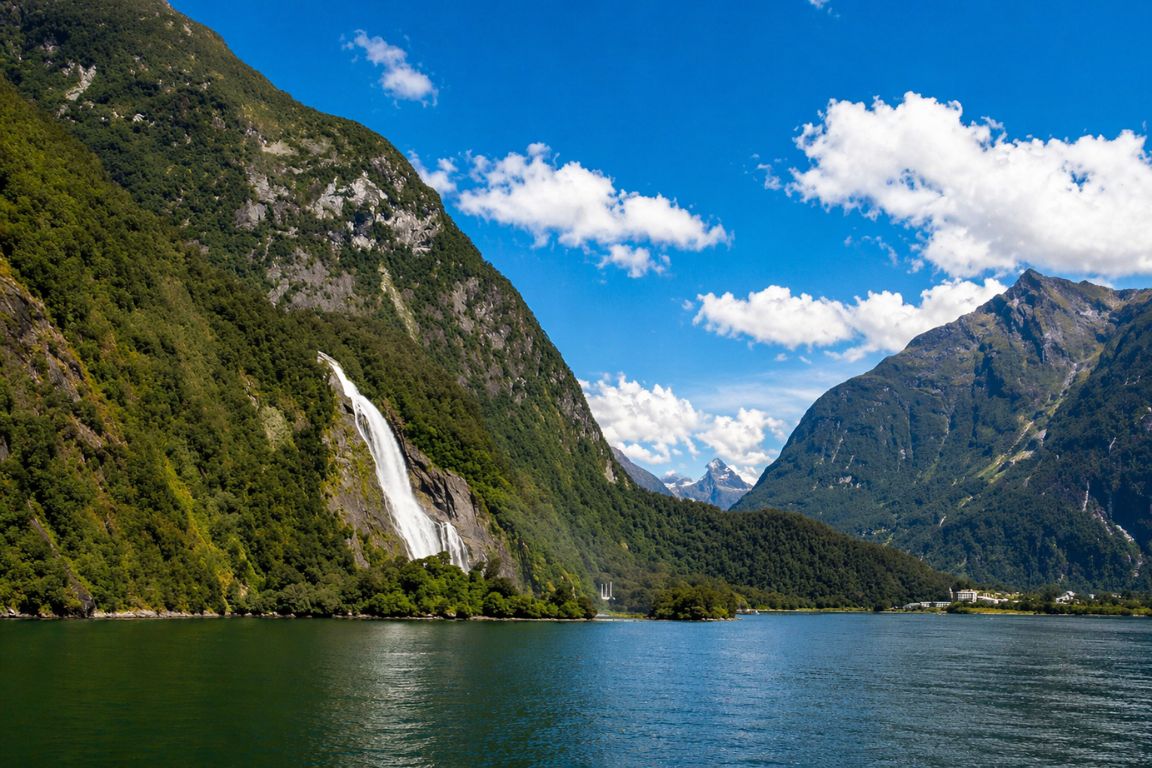 Milford Sound has two permanent waterfalls – Lady Bowen Falls at 162 metres and Stirling Falls at 146 metres, and hundreds of named and unnamed temporary cascades that appear after significant rainfall. Every cruise passes both permanent falls and slows at Stirling Falls for the spray experience. Fairy Falls and Bridal Veil Falls are semi-permanent features that flow reliably in all but the driest conditions. Sutherland Falls at 580 metres is the most spectacular waterfall in the broader Fiordland region but accessible only by the Milford Track or helicopter.
Lady Bowen Falls greets every departure from the terminal, visible and audible within the first minutes of the cruise. At 162 metres it is the tallest waterfall in the fiord and entirely permanent: fed by glaciers and the Darran Mountains catchment above, it flows year-round. Named after Lady Diamantina Bowen, wife of New Zealand’s fifth Governor. The Maori name is Hine Te Awa. Lady Bowen Falls is also the water supply and hydroelectric power source for the entire Milford Sound settlement. The pipes that carry water from the falls to the township are visible on the Lady Bowen Falls walk, accessible via a short on-demand boat service (NZD $10 adult) from the wharf at Freshwater Basin and a 30-minute walk through native bush.
Stirling Falls is the crowd-pleaser. It drops 146 metres from a U-shaped hanging valley carved between Elephant Mountain and Lion Mountain (Mt Kimberley), fed directly by the Pembroke Glacier above. Cruise boats position within misting distance and hold there. Standing on the bow deck, the waterfall is above you, the spray reaches you, the sound at close range is physically felt. The geological precision of Stirling Falls is what makes the spray possible: the cliff face is nearly vertical and the water drops cleanly without dispersing against rock, producing a concentrated column that survives the full 146-metre fall intact. The Maori name is Wai Manu, meaning “cloud on the water.” Stirling Falls also appeared in a scene of the Wolverine film – the one where Hugh Jackman appears to leap from it.
Fairy Falls is the falls most cruise skippers will try to collect drinking water from if conditions allow. It drops directly into the fiord without touching the rock face below, keeping the water clean enough to drink. On some cruises the skipper positions a tray of glasses at the bow and catches a fill of glacier-fed water for passengers. The experience of drinking directly from a Fiordland waterfall in the middle of the fiord is genuinely unusual.
The temporary falls are the visual signature of Milford Sound in wet weather. After rain, every available surface on the 1,200-metre cliff faces sheds water simultaneously. Falls appear in cracks, ledges, gullies, and over sheer faces, running in curtains and threads and ribbons across surfaces that were dry granite an hour before. Some of these temporary falls are large enough to carry names, including the Four Sisters: four identically sized cascades in a line on the northern wall. The visual effect of Milford Sound in heavy rain, with hundreds of temporary falls appearing simultaneously, is among the most striking natural spectacles in the Southern Hemisphere.
Wondering whether the famous waterfalls are more dramatic after heavy rain or whether sunshine gives you the better overall experience? This New Zealand Milford Sound in rain vs sun weather guide covers what each condition actually delivers.
What Is Harrison Cove And What Can You See There?
 Harrison Cove is a large, sheltered bay on the northern wall of the fiord, approximately two-thirds of the way toward the Tasman Sea from the terminal. It is the only safe natural harbour in Milford Sound, facing away from the fiord entrance so its calm waters are protected from wind and swell. Every cruise passes it. Harrison Cove is where the overnight cruise anchors, where the Underwater Observatory is positioned, where the tawaki nesting colony lives, where the Harrison River enters the fiord, and where the end of the Milford Track is visible from the water.
From the cruise deck, Harrison Cove presents a different character from the main channel. The water here is exceptionally calm, the cliff walls higher and more enclosed, and the Cascade Range looms behind the south wall of the cove. On a clear day, Mount Pembroke and its glacier are visible above the rainforest canopy at the cove’s inland edge. The Pembroke Glacier, more than one million years old, is the oldest named glacier in Fiordland and the ancestor of the ice sheet that carved the entire fiord you are cruising through.
The Harrison River enters the fiord at the head of the cove, carrying glacial meltwater from the mountains above. This water is cold, clean, and carries none of the tannins that colour the main fiord surface. Where Harrison River water meets the tannin-stained layer, a visible boundary can sometimes be seen from the deck: a line where dark water meets lighter water at the river mouth.
The Milford Sound Underwater Observatory sits in Harrison Cove on a floating platform accessible by boat from Southern Discoveries cruise vessels. Ten metres below the surface, inside a sealed viewing chamber, visitors look through panoramic windows at black coral, brachiopods, sea stars, anemones, and fish. The observatory is subject to intermittent availability following storm damage in 2024; verify current status with Southern Discoveries before booking.
For kayakers, Harrison Cove is the destination. The cove’s calm water and high walls produce an acoustic and visual immersion that a cruise vessel cannot replicate at its size and speed. Being at water level in a kayak with the cliff walls of Harrison Cove above you and the glacier visible above the treeline at the far end is a different kind of encounter with the fiord from anything available on a boat.
What Wildlife Landmarks Can You See On A Milford Sound Cruise?
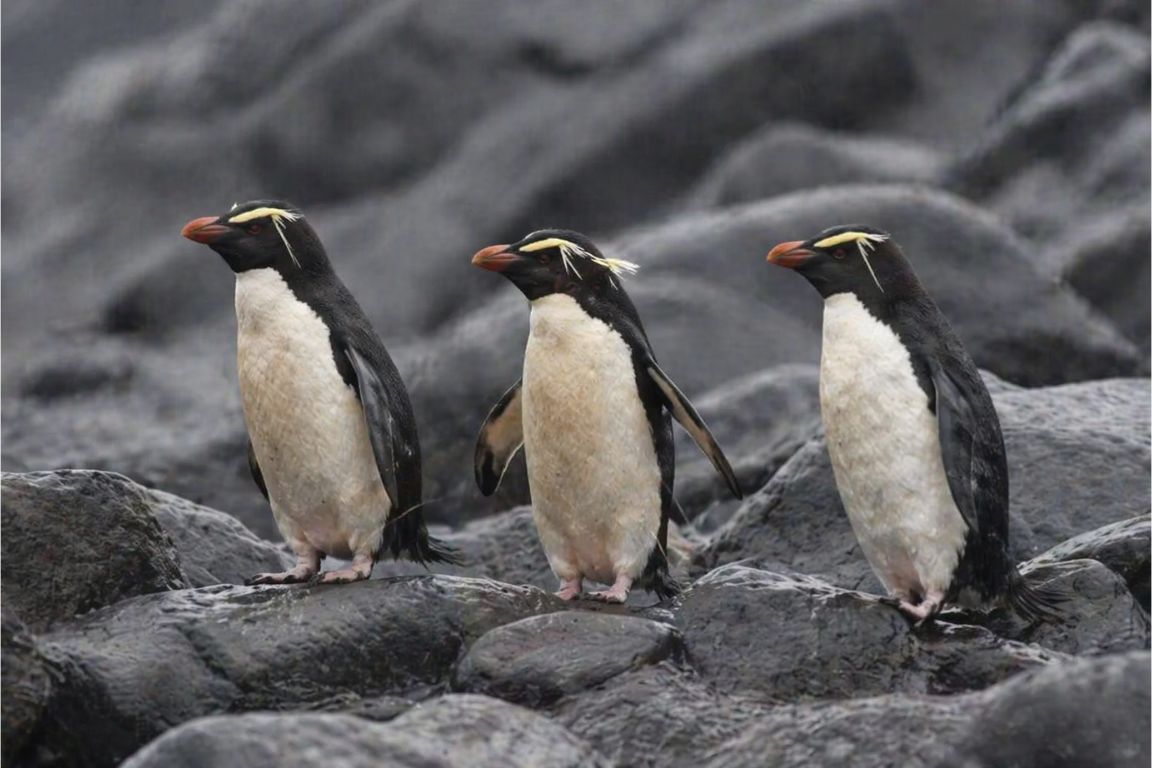 Every standard cruise passes three dedicated wildlife viewing points: Seal Rock near Copper Point for New Zealand fur seals, Harrison Cove for Fiordland crested penguins in breeding season, and the Tasman Sea entrance for dolphin encounters and occasional whale sightings. The entire cruise route also passes through dolphin habitat, and bottlenose dolphins may bow-ride at any point. Anita Bay on the return journey is historically significant as a pounamu gathering location and a secondary penguin sighting spot.
Seal Rock sits near Copper Point on the northern wall, past the midpoint of the fiord heading toward the Tasman Sea. The fur seal colony hauls out here year-round: animals in classic resting posture, motionless or shifting slowly in the sun, with occasional individuals sliding into the water as the boat approaches. In spring, fur seal pups appear alongside adults, noticeably smaller and lighter in colour.
Sinbad Gully, opposite Mitre Peak on the northern wall, is a landmark worth knowing. It is a hanging valley formed 15,000 years ago when a smaller Sinbad Glacier ran into the larger Milford Glacier. The valley sits suspended high on the cliff face, visible as a dark notch with vertical walls rising 1,400 metres above the fiord. Sinbad Gully was the last mainland refuge of the kakapo – the world’s heaviest and only flightless parrot – before the species was moved to offshore island sanctuaries. The gully is inaccessible from below and essentially unvisited by humans.
Anita Bay, near the fiord’s entrance on the return leg, is where Maori historically gathered pounamu (greenstone/jade). It is a secondary location for tawaki penguin sightings, and its geology of schist and gneiss rather than granite makes it visually distinct from the rest of the fiord walls.
The Tasman Sea entrance is where the fiord opens to the open ocean, marked by the change from sheltered water to the first swells from the Tasman. This is where Captain Cook twice passed without entering, his charts showing no significant opening: the treacherous glacial moraine bar at the entrance made the approach look dangerous from outside. From the cruise vessel at the entrance, looking back into the fiord and forward into the open Tasman, both worlds are simultaneously visible.
Want to know which animals you can realistically expect to see on the fiord and which ones are just lucky sightings? Here’s our wildlife in New Zealand Milford Sound tours guide so you set the right expectations.
What Can You See On The Milford Sound Foreshore And Walking Tracks?
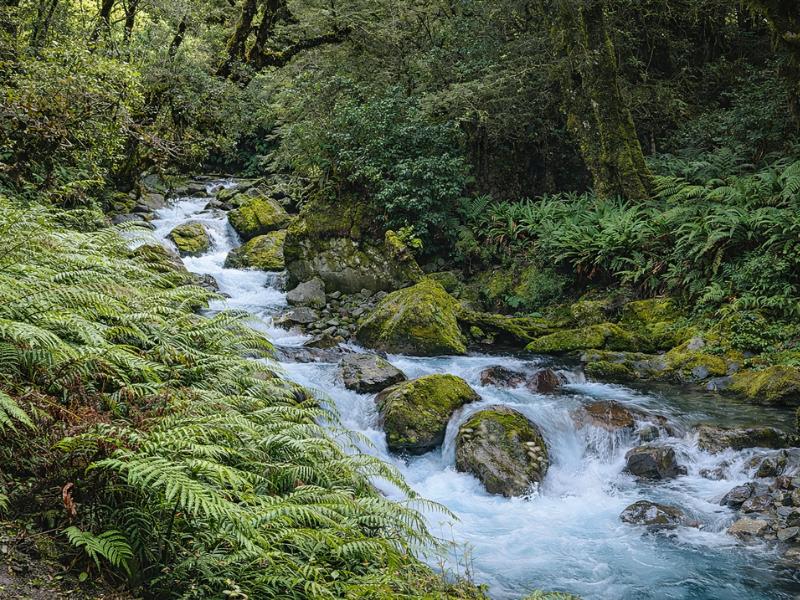
The Milford Sound Foreshore Walk starts at the car park behind the Visitor Terminal and takes 30 minutes return, delivering ground-level views of Mitre Peak, the fiord, and Lady Bowen Falls from the northern shore. The Lookout Track branches uphill from near the terminal and provides an elevated view over the entire fiord in approximately 30 minutes return from the car park. Both walks are accessible before or after a cruise and require no special equipment. A hidden wooden swing on a small peninsular along the Foreshore Walk provides the most iconic ground-level Mitre Peak view at the fiord.
The Foreshore Walk begins where most visitors do not look: past the car park, through a gate near the Visitor Terminal, and along the northern shoreline heading west. Within five minutes the terminal infrastructure falls away and the walk enters a native bush corridor with the fiord on one side and rainforest on the other. The first unobstructed Mitre Peak view comes from a small promontory approximately ten minutes along the track.
The swing viewpoint is genuinely difficult to find without directions, which is probably why it remains uncrowded even at peak season. Follow the Foreshore Walk past the first viewpoint, cross a small wooden bridge, continue for approximately five minutes and look right for a wooden swing positioned on a sandy point jutting into the fiord. From the swing, Mitre Peak is framed in perfect proportions across calm water. Arriving at sunrise or sunset adds light that the midday crowds cannot access.
The Milford Sound Lookout Track climbs from near Donald Sutherland’s grave marker near the terminal and ascends through bush to an open viewpoint overlooking the fiord. From this elevated position, the layout of Milford Sound becomes comprehensible in a way it cannot be at water level: the fiord’s narrows near the terminal, the widening toward Harrison Cove, the Mitre Peak ridge, and the gap to the right where the Tasman Sea entrance lies.
The Lady Bowen Falls Walk is a separate experience accessible only by boat. A small on-demand vessel from Freshwater Basin carries passengers the 120 metres across (NZD $10 adult, NZD $5 child) and the walk continues through native bush to a viewing platform at the base of the falls. The round trip including boat crossings takes approximately 30 minutes. Check current conditions before planning as the track has been subject to periodic closures.
What Can You See Along The Milford Road On The Way In?
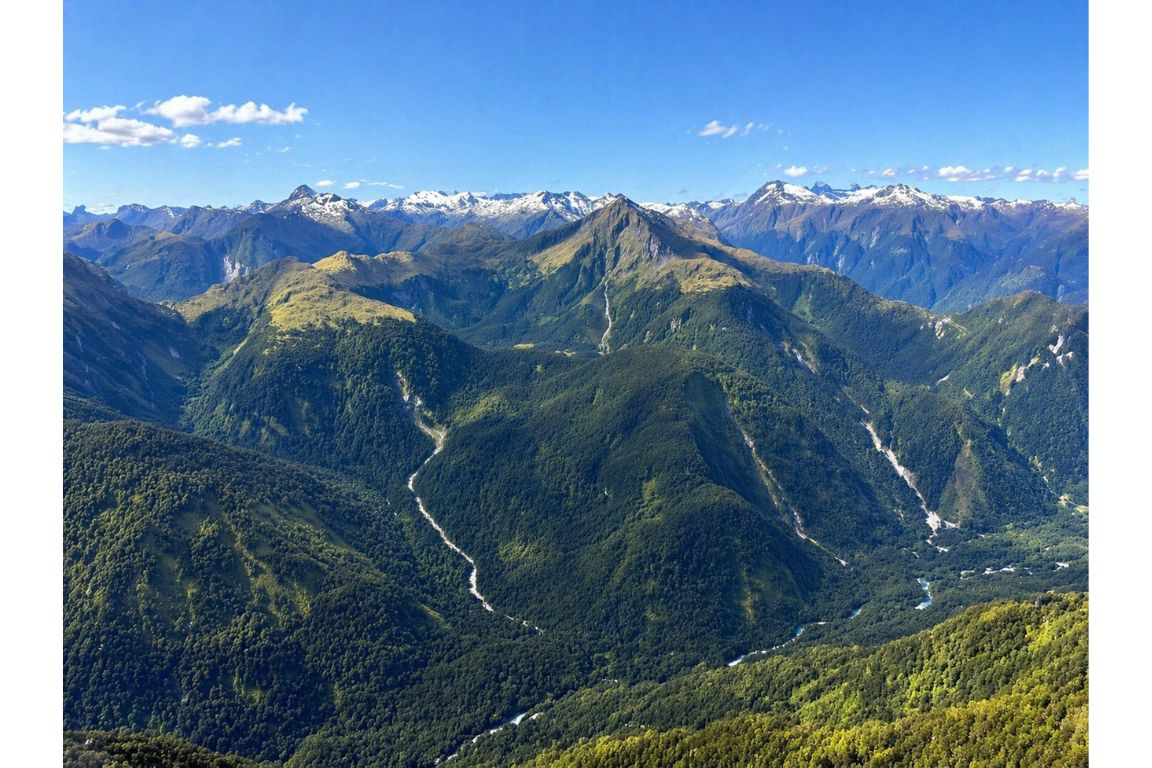 The 120-kilometre Milford Road from Te Anau to Milford Sound is one of the great scenic roads on earth, entirely within Fiordland National Park and the Te Wahipounamu World Heritage Area. The essential stops are Mirror Lakes (57km), the Lake Gunn Nature Walk (76km), Monkey Creek (99km), the Homer Tunnel (104km), and The Chasm (109km). Each takes between 10 and 45 minutes. The full road with all stops takes three to four hours. Coach passengers see all of these with guided stops included; self-drivers choose their own pace.
Mirror Lakes is the first landmark stop and one of the most reliably photographed spots on the road. The lakes are small tarns positioned immediately beside the road, with the Earl Mountains visible behind them. In calm conditions and particularly before 9am before wind disturbs the surface, the reflection is so precise it is difficult in photographs to determine which end is up. A short accessible boardwalk leads from the carpark to the water’s edge. The familiar “Te Anau” sign above the lakes reads correctly in the sign and upside-down in the reflection below.
The Eglinton Valley, visible as the road opens from forest into broad tussock flats at around 50 to 65 kilometres, was once filled to its rim with glacier ice. The valley floor is a flat expanse of golden tussock and grassland flanked by steep rock walls that still show the polished faces left by retreating ice. This is one of the few places in Fiordland where the scale of glaciation can be perceived horizontally rather than vertically.
Monkey Creek at kilometre 99 is the kea capital of the Milford Road. The creek carries pure glacial water safe and cold to drink directly from the source. Kea appear reliably at the carpark, investigating vehicles and approaching visitors with the combination of curiosity and ill intent that makes them impossible to ignore. The creek also flows through habitat used by whio (blue duck), one of New Zealand’s most threatened birds.
The Homer Tunnel at kilometre 104 is the engineering landmark of the road. At 1.2 kilometres long, unlined (raw granite walls visible the entire length), and built at a gradient of one in ten on the Milford side, it was excavated entirely by hand starting in 1935. Work was repeatedly interrupted by avalanches, funding shortfalls, and the Second World War before the tunnel opened in 1954. Traffic is controlled by lights in peak season, with waits of up to 20 minutes at the Homer Tunnel carpark, where kea are almost always present.
The Chasm at kilometre 109 is a 400-metre return walk from its carpark through native rainforest to the Cleddau River. The river has cut through solid granite over thousands of years, producing a narrow chasm with carved pools, smooth curved walls, and the sound of water under pressure in an enclosed space. Part of the track was damaged by storm flooding in 2020. As of December 2024, the track is partially open: you can walk to the river’s edge and view The Chasm, but the bridge crossing that previously allowed viewing of the formations from above is not yet restored. Check DOC’s current track information before visiting.
How Long Do You Need To See Everything In Milford Sound?
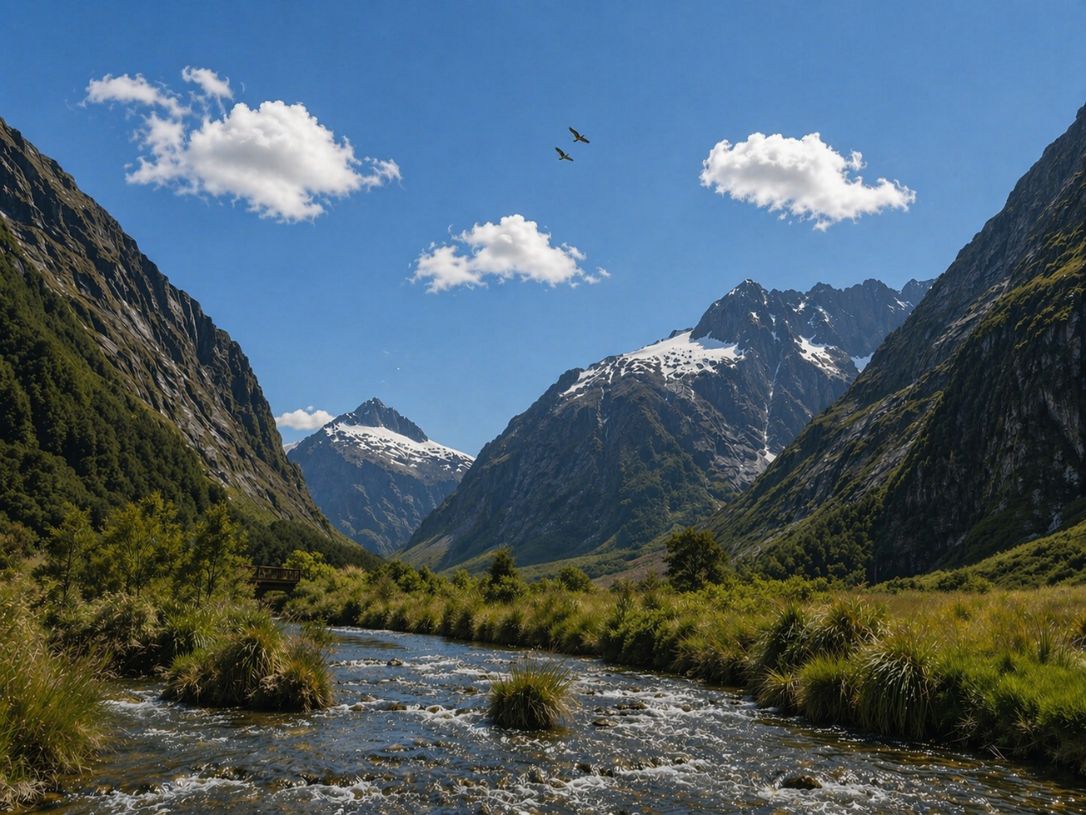 A standard day cruise from Te Anau covers the entire fiord in two hours and is a complete Milford Sound experience on its own. A full day from Te Anau, including Milford Road stops and the cruise, covers the road landmarks plus the fiord in seven to eight hours. Two days allows everything: the Milford Road stops in both directions, a full cruise, the foreshore walks, the optional Lady Bowen Falls walk, and additional time for photography or the Key Summit hike. Visitors on a Queenstown coach day trip spend twelve to thirteen hours total and cover both the road and the fiord.
The minimum to see Milford Sound properly is the cruise. Two hours on the water delivers all of the fiord’s primary landmarks in sequence. Nothing essential is missed on a standard cruise; the route is designed to cover every significant sight. For visitors on tight schedules, the fly-cruise-fly option from Queenstown adds the aerial dimension and compresses the total trip to around five hours.
Want to fit Milford Sound into your Queenstown itinerary without losing a full day to travel? Here’s our New Zealand Milford Sound tours from Queenstown guide so you use your time wisely.
The next level is a full day from Te Anau with self-driving. Leaving Te Anau by 7am allows time for Mirror Lakes before coaches arrive, three to four strategic Milford Road stops, the cruise at 10:30am or 1pm, the foreshore walk before or after, and a relaxed return. Total time is nine to ten hours from Te Anau and back, covering the road fully in both directions. Driving out and stopping at different points on the return than on the way in means different angles of the Eglinton Valley, a second pass at Monkey Creek in different light, and The Chasm if you skipped it inbound.
Staying overnight at Milford Sound Lodge changes the experience entirely. You see the fiord at dawn before any cruise vessel has departed, walk the Foreshore Walk in morning light with no other visitors present, and have time for the Lake Marian hike (3 to 4 hours return from the Hollyford Road turnoff) or Key Summit (3 hours return from The Divide) that day visitors cannot fit.
The overnight cruise, departing at 4pm and returning at 9:15am, gives you the fiord after the day visitors leave and before the next morning’s departures arrive. The late afternoon light on the fiord walls is the best available. The glass-flat water at dawn the following morning is unlike anything a day cruise sees. Whatever your available time, the full-day flight and cruise from Queenstown takes about five hours, or stay on the water overnight on the Fiordland Jewel luxury overnight cruise.
The difference between a morning and afternoon cruise on Milford Sound is more significant than most people realize – our morning vs afternoon New Zealand Milford Sound cruises guide breaks down exactly what changes.
What Our 14,500+ Guided Travelers Tell Us About Milford Sound’s Sights
| Travelers who said the Milford Road was as memorable as the fiord itself | 78% – particularly strong among self-drivers who stopped at Monkey Creek and Homer Tunnel |
| Coach tour visitors who wished they had had more time at individual road stops | 65% – most common post-trip comment from coach passengers |
| Visitors who cited the Stirling Falls spray experience as their single most memorable Milford moment | 45% – consistently close to the Mitre Peak first view in rankings |
| Travelers who found Mirror Lakes in calm early morning conditions vs mid-morning after wind builds | 82% described the reflection as “impossible-looking” before 9am vs 15% after wind had built |
| Visitors who did the Foreshore Walk and rated it as the best free activity at Milford Sound | 88% – particularly high among those who found the swing viewpoint independently |
| First-time visitors who said Mitre Peak exceeded their photographic expectations in person | 94% – “it’s even better than the photos” is our most consistent feedback across all sights |
Frequently Asked Questions
What is the most famous sight in Milford Sound?
Mitre Peak, the 1,692-metre mountain that rises directly from the fiord’s southern shore, is universally considered the defining landmark. It is the most photographed mountain in New Zealand. The first view of it from a cruise vessel as the boat rounds the first bend out of Freshwater Basin is what most visitors describe when they recall Milford Sound.
How many waterfalls can you see in Milford Sound?
Two permanent waterfalls flow year-round: Lady Bowen Falls at 162 metres and Stirling Falls at 146 metres. Several semi-permanent falls including Fairy Falls and Bridal Veil Falls flow reliably in all but the driest conditions. After significant rainfall, hundreds of temporary cascades appear across every cliff face simultaneously. Milford Sound receives around 6,813mm of rain per year across approximately 182 rainy days, so the temporary falls are frequently visible.
Can you see Milford Sound without doing a cruise?
You can see Mitre Peak and Lady Bowen Falls (partially) from the shore and the Foreshore Walk. But Stirling Falls, Seal Rock, Harrison Cove, the Tasman Sea entrance, and the full depth of the fiord are only accessible by water. A cruise is essential for a complete experience. The foreshore walk is excellent for early arrival photography and the swing viewpoint, but it complements rather than replaces the cruise.
Is the Milford Road worth stopping on?
Yes, emphatically. Mirror Lakes, the Eglinton Valley, Monkey Creek, the Homer Tunnel, and The Chasm are each genuinely extraordinary in their own right. The Milford Road is consistently rated among New Zealand’s best scenic drives. Plan at least three to four hours for the road from Te Anau, in addition to cruise time at the fiord.
What is the Chasm walk and is it currently open?
The Chasm is a series of water-carved rock formations formed by the Cleddau River, located approximately 9 kilometres before Milford Sound and a 400-metre return walk from the road. Two bridges were destroyed by flooding in 2020. As of December 2024, the track is partially open: you can walk to the river’s edge and view The Chasm, but the bridge crossing that allowed viewing of the formations from above is not yet restored. Check current conditions at doc.govt.nz before visiting.
What can you see on the Milford Sound Foreshore Walk?
The Foreshore Walk from the car park behind the Visitor Terminal delivers ground-level views of Mitre Peak, views of Lady Bowen Falls, and native bush. The walk is 30 minutes return at a gentle pace. A hidden wooden swing on a small promontory approximately 15 minutes along provides the best ground-level Mitre Peak framing on the walk. The Lookout Track branches from near the terminal to an elevated viewpoint over the whole fiord in a similar time.
Want to see everything Milford Sound has to offer?We know every sight, every stop, and every timing trick that makes the difference between a good visit and a great one. Check dates on the full-day tour from Te Anau with cruise and walks if you are already staying closer to the fiord. Or start with the Milford Sound small boutique cruise if you only need time on the water.
Written by Liam Aroha Bennett
New Zealand tour guide since 2011 · Founder, New Zealand Milford Sound Tours
Liam has guided over 14,500 travelers through Milford Sound and Fiordland since founding the agency.