How To Visit Milford Sound
Milford Sound is a must-see in New Zealand - learn how to get there, when to go, cruise prices, and what to expect (yes, even the sandflies).
Quick Summary
Milford Sound sits inside Fiordland National Park on New Zealand’s South Island and is accessible by road from Te Anau (2 hours) or Queenstown (4 to 5 hours). There is no entry fee, but you will need to book a cruise in advance, especially in summer. February and July are the most settled weather months, though rainy days produce more waterfalls and are worth embracing. Budget NZD $165 to $389 for a cruise depending on operator and departure time, and carry insect repellent because the sandflies are not a rumour.
Match a cruise, a Queenstown day, or a Te Anau start to the time you actually have before you lock the rest of the trip.
Your Milford Plan
- Start from Te Anau for a shorter road day, or use included transport from Queenstown.
- Choose a 105-minute cruise for a simple first visit, or plan around a next-morning overnight return.
- Check your actual travel date before arranging transport, lodging, and other Fiordland plans.
Milford Sound Quick Facts
| Location | Fiordland National Park, Southland, South Island, New Zealand |
| Entry Fee | None (no national park entry fee) |
| Cruise Prices (day cruise) | NZD $165 to $389 per adult (Prices verified April 2026) |
| Parking | NZD $10/hour (paid), free overflow parking at Deepwater Basin with shuttle |
| Drive from Te Anau | ~2 hours (120 km), no stops |
| Drive from Queenstown | ~4 to 5 hours (288 km), no stops |
| Annual Rainfall | Up to 7 metres; rain on approximately 182 days per year |
| Snow Chains | Required May to November if self-driving |
| Main Cruise Operators | RealNZ, Southern Discoveries, Cruise Milford, Mitre Peak Cruises |
| UNESCO Status | Part of Te Wahipounamu World Heritage Area |
| Mitre Peak Height | 1,692 metres, rising directly from the fiord |
| No. of Fuel Stations en Route | Zero between Te Anau and Milford Sound (fill up in Te Anau) |
Prices verified April 2026
What Is Milford Sound And Why Do People Travel So Far To See It?
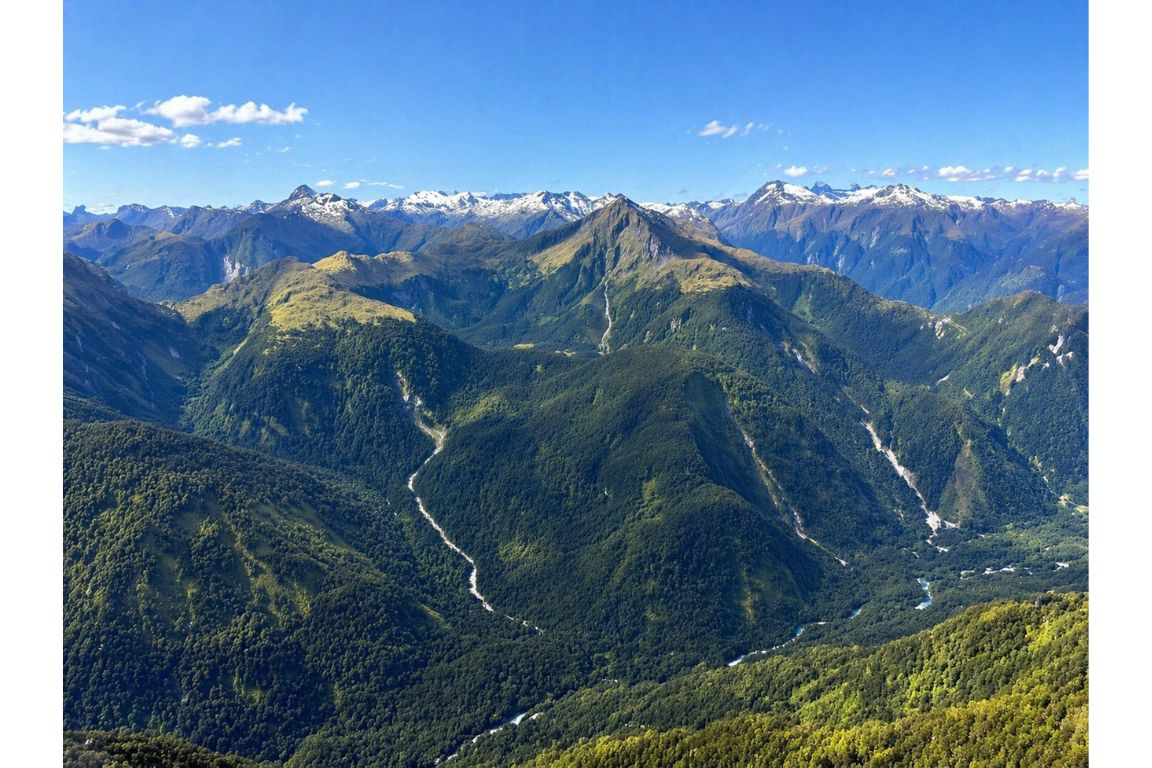 Milford Sound is a glacially carved fiord in Fiordland National Park on New Zealand’s South Island, part of the Te Wahipounamu UNESCO World Heritage Area. Mitre Peak rises 1,692 metres straight from the water. Waterfalls run year-round, and in rain there can be hundreds more. Rudyard Kipling called it the eighth wonder of the world. It’s a fair description.
Here’s the thing about Milford that doesn’t translate in photos. The scale is wrong in every image you’ve ever seen. You arrive, the boat leaves the dock, and within ten minutes you’re recalibrating your entire sense of size. Mitre Peak looks close from the terminal. It is not close. The waterfall threading down the cliff face to your left looks modest, manageable. It is taller than most city buildings.
Fourteen years of bringing people through Fiordland, and I still watch that moment land. Every time.
Technically, Milford Sound is a fiord, not a sound. Sounds are carved by rivers; fiords are carved by glaciers. The naming error dates back to early European explorers, and it stuck. What you’re looking at is 15 kilometres of water and rock shaped over thousands of years by ice. The Tasman Sea waits at the far end. The walls come almost straight down on both sides.
The fiord sits within Fiordland National Park, which at 1.2 million hectares is one of the largest national parks in the world. The nearest town with any real services is Te Anau, roughly 120 kilometres away. There are no fuel stations, no supermarkets, and very limited mobile phone reception between Te Anau and Milford. This is not an accident. It’s part of what makes the place feel the way it does.
If you’d rather not piece the logistics together yourself, the premium small-group tour from Queenstown includes the drive, the road stops, and a cruise already booked.
When Is The Best Time Of Year To Visit Milford Sound?
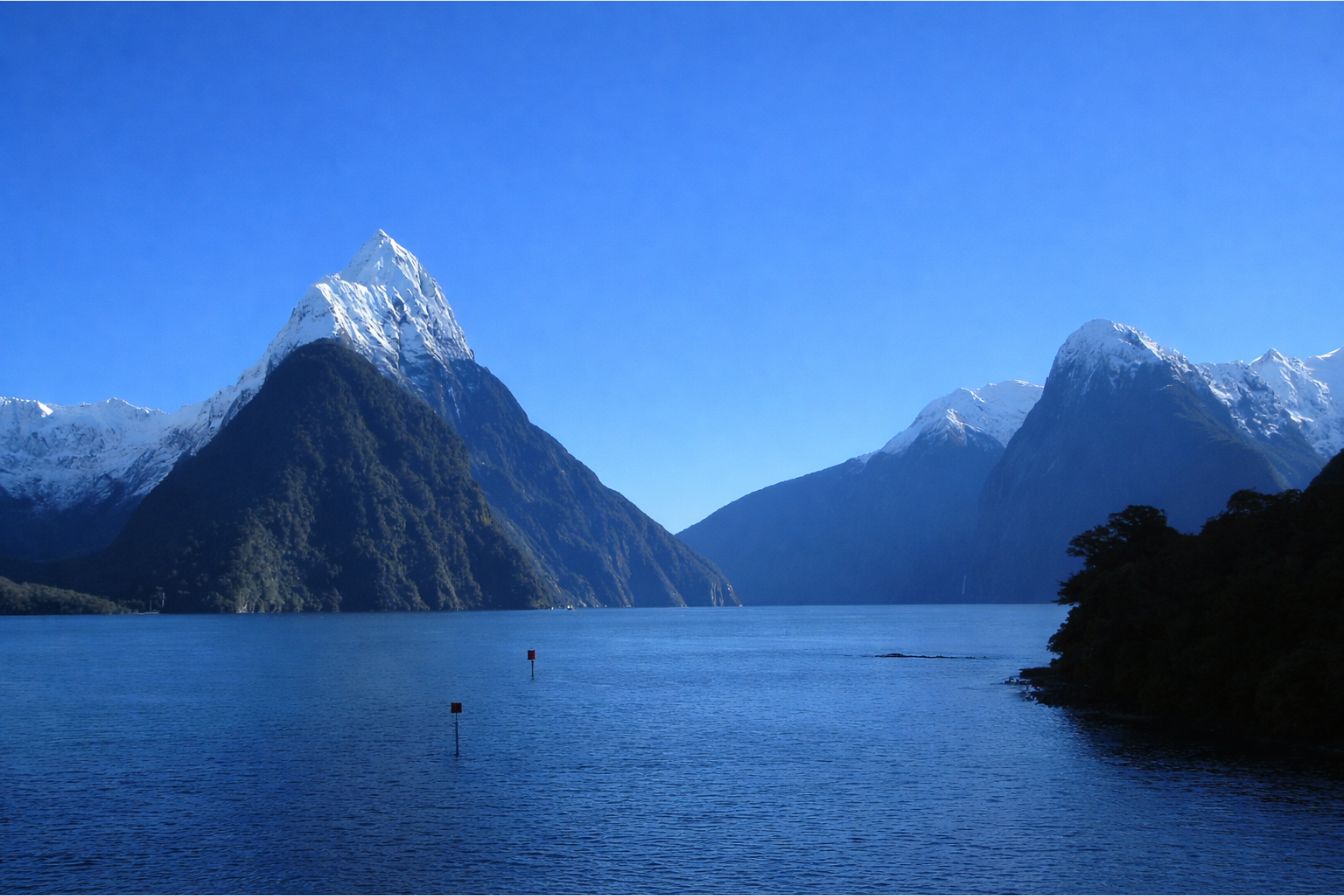 There is no bad time, but each season delivers a different version of the fiord. February is the driest summer month and ideal for clear views. July is the driest winter month and dramatically quieter. Spring (October to November) balances reasonable weather with fewer crowds and dramatic snowmelt waterfalls. Autumn (March to May) is the local’s favourite: mild, moody, and uncrowded.
Most travel guides will tell you to visit in summer for blue skies. This is not wrong, but it’s incomplete. Summer runs from December through February. Temperatures range from 15°C to 25°C, daylight hours are long, and the Milford Track is at its best. It’s also the most crowded period on the road and the hardest to park. Sandflies are significantly worse in warm months. February is the exception: measurably drier than January or December, still warm, and marginally calmer on the road.
Winter surprises people. June through August is the quietest time at Milford, and the driest stable period of the year, with July averaging the least rainfall. Snow caps the peaks. The fiord goes almost quiet. You can book a cruise a day in advance. The cold is real (around 6°C to 9°C), and the road from Te Anau carries avalanche risk that requires snow chains from May through November. But for travellers who want the full weight of the place without sharing it with 800 other people, winter is hard to beat.
Spring (September to November) brings snowmelt waterfalls that dwarf anything summer produces. The Fiordland crested penguin is nesting during this window. Lupin flowers line the road to Milford in November. Conditions can shift fast in spring, but the days are getting longer and the crowds haven’t arrived yet.
Autumn, late March through May, is what the locals recommend when asked directly. The weather is more settled than summer in terms of extreme events, the air is clear, and tour groups have thinned out. Late March and April are particularly strong.
Not sure when to go to make the most of Milford Sound without the worst of the crowds? Here’s our best time to visit New Zealand Milford Sound tours guide so you time it right.
| Summer (Dec-Feb) | 15-25°C | Peak | Long days, kayaking, Milford Track | Sandflies, parking, crowds |
| Autumn (Mar-May) | 10-18°C | Low | Photography, calm, stable weather | Shorter days from May onward |
| Winter (Jun-Aug) | 5-10°C | Very Low | Solitude, snow views, fewer sandflies | Snow chains required, road closures |
| Spring (Sep-Nov) | 10-18°C | Moderate | Snowmelt waterfalls, penguins nesting, lupins | Unpredictable weather swings |
One more thing: rain is not a reason to reschedule. Milford Sound in full rain, when temporary waterfalls are streaming off every cliff face at once, is something that a clear day simply cannot replicate. Fourteen years of bringing people here. The guests who got rained on remember it just as vividly as anyone else. Often more so.
We’ve put together a full weather breakdown in our New Zealand Milford Sound in rain vs sun weather guide so you know exactly what to expect and how to make the most of whatever conditions you get.
How Do You Get To Milford Sound From Queenstown, Te Anau, Or Christchurch?
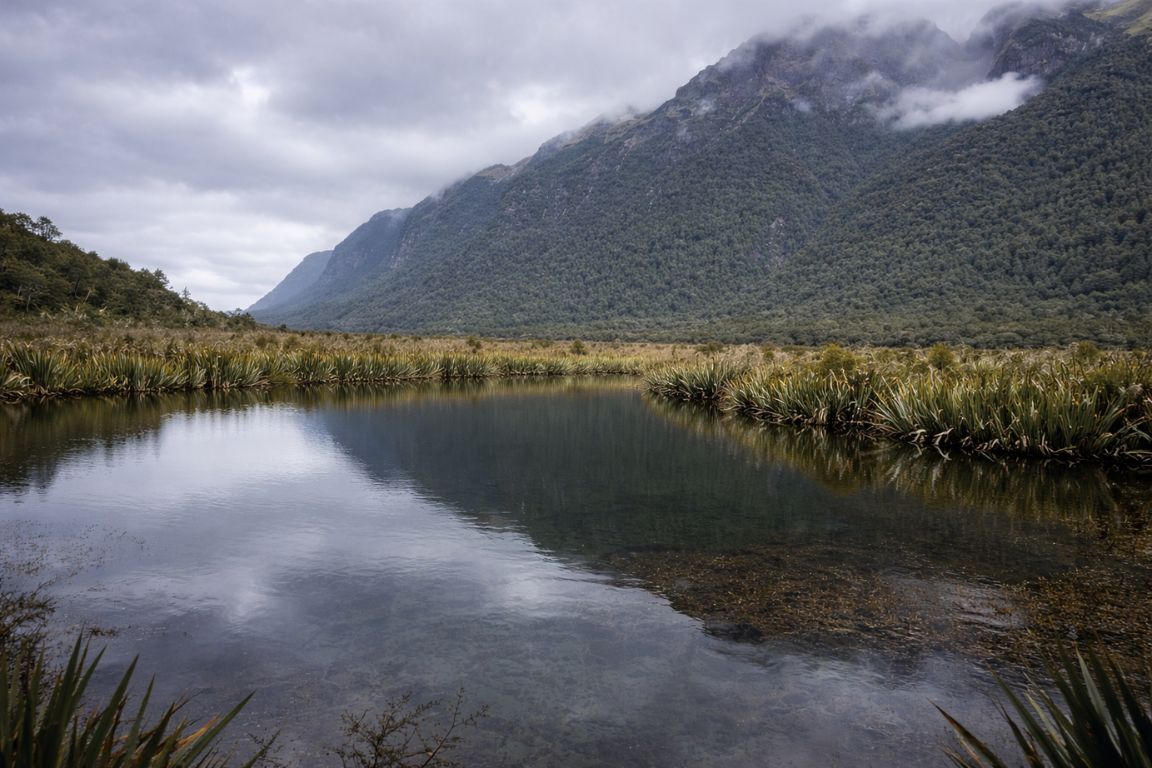 From Queenstown, the drive is 288 km and takes 4 to 5 hours each way without stops. From Te Anau, it’s 120 km and roughly 2 hours. Christchurch is a full day’s drive away; fly into Queenstown instead. There is one road in and the same road out, State Highway 94. There are no fuel stations after Te Anau. Download maps before you leave because mobile reception drops out in the national park.
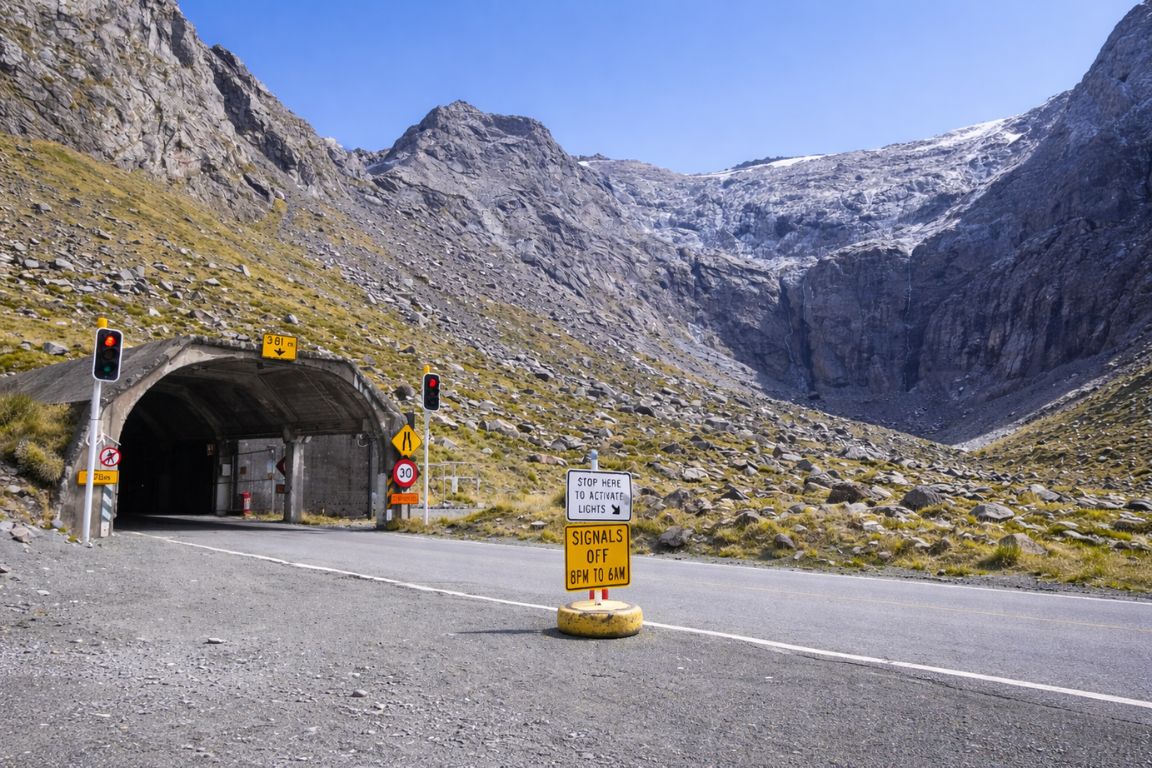
Most people approach from Queenstown, which is the natural hub for South Island travel. The drive is genuinely one of the most scenic in the country: Lake Wakatipu along the Devil’s Staircase, then through Te Anau, then onto the Milford Road proper where the terrain starts doing things that make you pull over every 20 minutes. The Homer Tunnel, bored through solid mountain at 945 metres above sea level, is the dramatic punctuation mark before the final descent to the fiord.
The tunnel operates on traffic lights in peak summer season, which can add 20 minutes to your drive. Allow for it.
From Te Anau, the drive is shorter and in many ways preferable. You’re already past the mundane stretches and straight into the Fiordland landscape. Mirror Lakes and The Chasm walk are both within easy stopping distance. If you’re making the trip from Queenstown, a strong argument exists for spending a night in Te Anau first, getting an early start, and coming back in the evening. It makes the day far less rushed.
Flying in is the other option. Scenic flights operate from Queenstown into Milford Sound, and a fly-cruise-fly combination is genuinely spectacular: the view of Fiordland from the air is something you cannot replicate from the road. Budget NZD $435 to $610 for this option. It saves roughly 8 hours of driving but removes the Milford Road experience, which many people count as a highlight in itself.
Coach tours from both Queenstown and Te Anau run year-round, with photo stops built in and no driving stress. If you’re visiting in winter and unfamiliar with icy road conditions, this is the sensible choice. Missing a cruise because you had to stop to fit snow chains is one of the more common preventable disappointments we hear about.
Want to fit Milford Sound into your Queenstown itinerary without losing a full day to travel? Here’s our New Zealand Milford Sound tours from Queenstown guide so you use your time wisely.
What Are Your Options For Experiencing The Fiord: Cruise, Kayak, Or Fly-In?
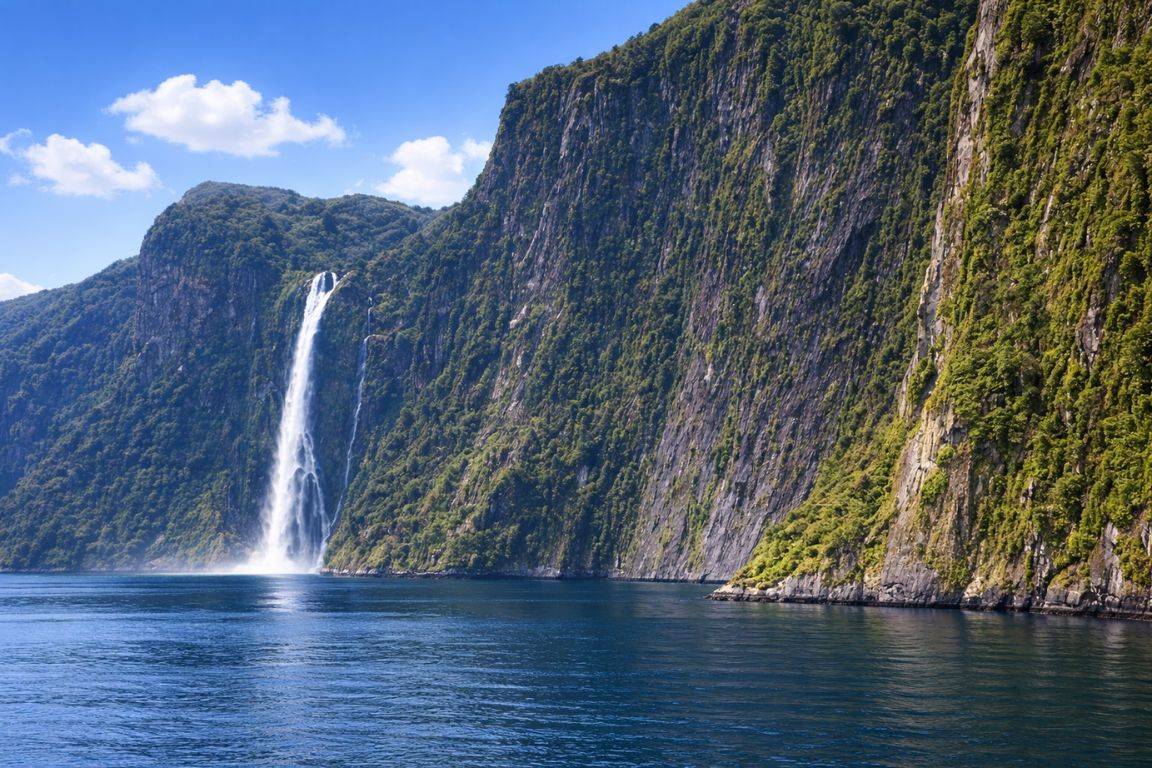 For first-time visitors, a standard day cruise is the right starting point. You cover the full 15 km of the fiord, pass Mitre Peak, reach Stirling Falls and the Tasman Sea entrance, and return in 1 hour 45 minutes to 2 hours. Kayaking is extraordinary but requires a full day and moderate fitness. A scenic flight gives you Fiordland from above. Overnight cruises are the option most people wish they had booked.
The day cruise is the default, and there’s a reason for that. All four major operators, RealNZ, Southern Discoveries, Cruise Milford, and Mitre Peak Cruises, cover the full length of the fiord on their standard runs. Boats have both enclosed decks with panoramic windows and open upper decks. The guides narrate the geology, the ecology, and the history as you move through. Wildlife sightings depend on the day, but seal encounters are common. Dolphins appear regularly enough that you should have your camera ready from departure.
The standard cruise runs 1 hour 45 minutes to 2 hours. Longer premium options like Southern Discoveries’ Discover More cruise extend this to 2 hours 15 minutes with a dedicated nature guide. Worth it if your budget allows.
Kayaking puts you at water level, which is a fundamentally different experience. The walls above you look twice as tall from a kayak. When the boat is quiet enough, you can hear the falls. Southern Discoveries offered kayaking tours until recently; check current availability before booking. Independent kayak rentals are not a practical option here, the weather changes too fast.
Overnight cruises are what we point people toward when they have time. The Milford Mariner overnight cruise is the two-day option. You stay aboard after the day visitors have left. Milford Sound at dusk and dawn, with no other boats on the water and mist threading through the peaks, is the version most people don’t know exists. RealNZ’s overnight option starts at around NZD $223 per person. The quietness of the fiord at 5 in the morning earns every dollar.
Want to find the right cruise without wading through dozens of similar-looking options? Here’s our best New Zealand Milford Sound cruises guide so you book the one actually worth it.
How Long Should You Spend At Milford Sound?
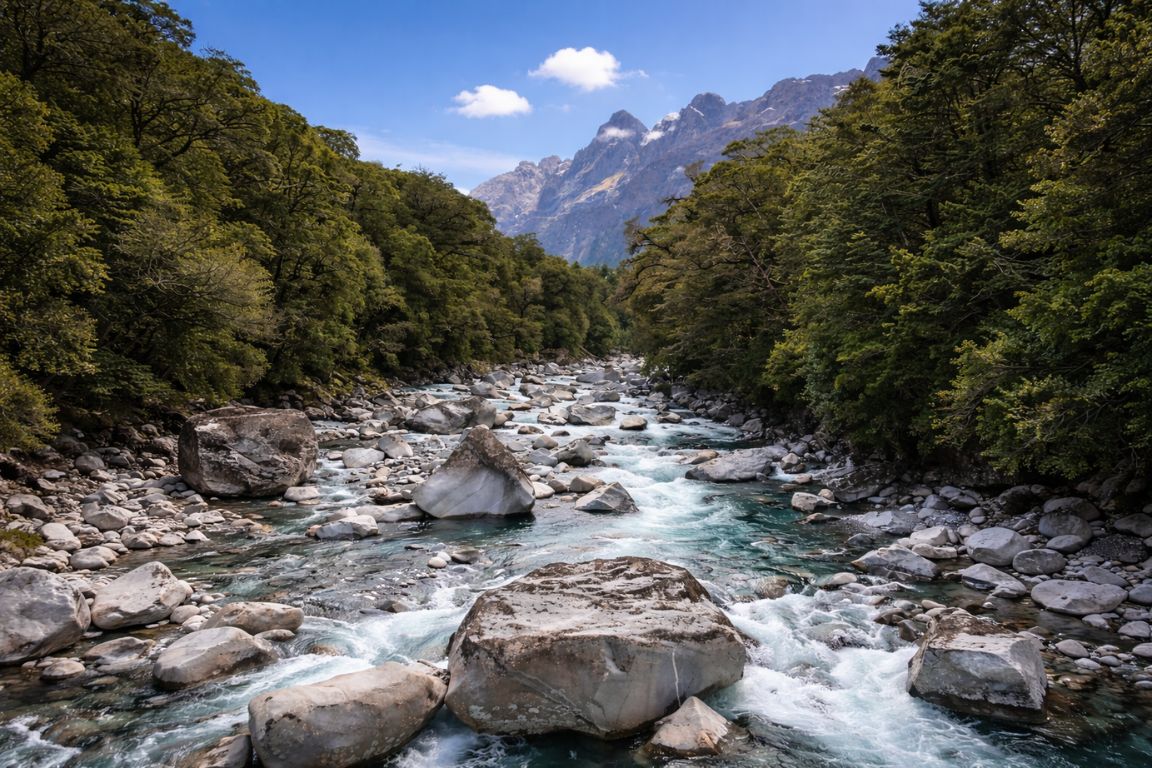 A single day is the minimum, and it’s what most people do. You need at least 5 to 6 hours on-site to complete a cruise and walk around the terminal area. If you want to kayak, add a full day. If you want the overnight experience, plan two days. Those who come for one day and rush back to Queenstown consistently say they wished they had stayed longer.
The honest answer from our side of the operation: most regret is about leaving too quickly, almost never about staying too long. The standard day trip from Queenstown involves 8 to 10 hours of total travel for a 2-hour cruise. That ratio feels lopsided. The way to fix it is either to base yourself in Te Anau and give yourself a full day at the fiord, or to do the overnight cruise.
If you’re doing a single day from Te Anau, you have time to drive slowly with stops, take the short walk at The Chasm, do the cruise, have lunch, and still be back in Te Anau by early evening. That’s a good day. Not rushed.
From Queenstown, you’re looking at a 4am or 5am start to get there comfortably, do the cruise, spend any real time exploring, and get back before dark in winter. Summer gives you more daylight and some room to breathe. The people who try to fold it into a half-day side trip from Queenstown are the ones who feel shortchanged.
What Wildlife Can You Actually See At Milford Sound?
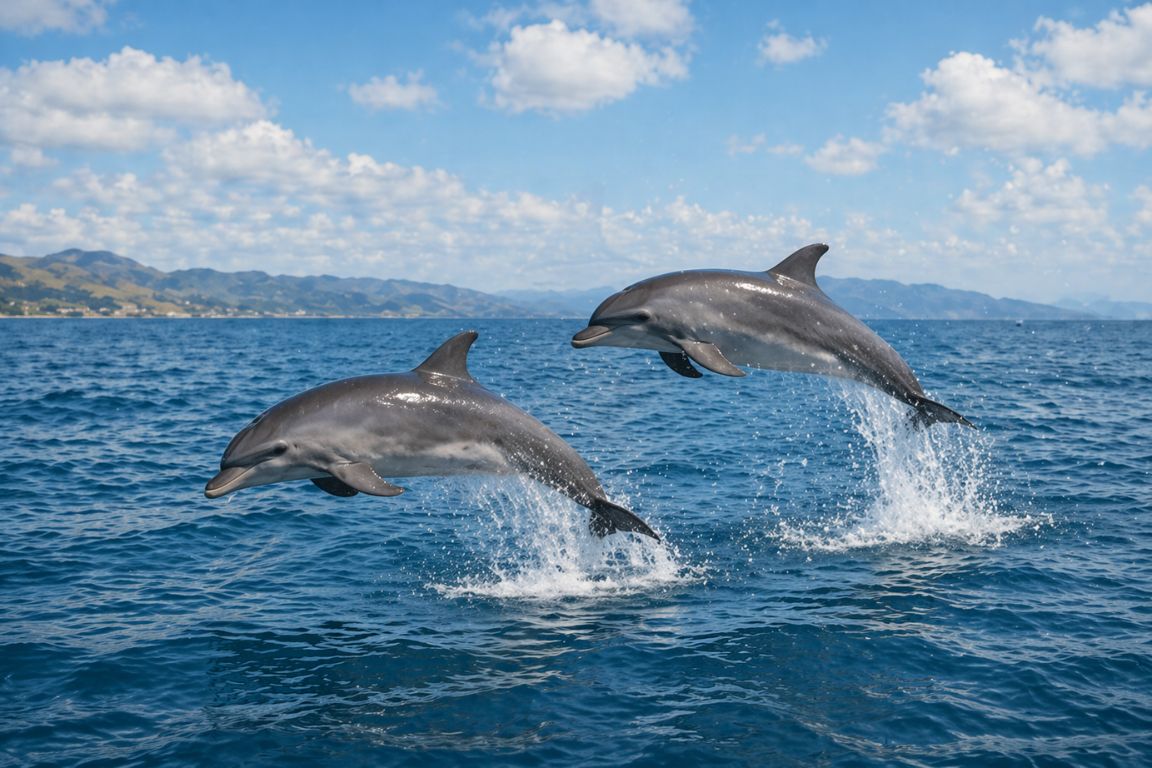 New Zealand fur seals are a near certainty on every cruise. Bottlenose dolphins appear regularly, most often on morning cruises from October to April. The Fiordland crested penguin is one of the rarest penguins on earth, with only an estimated 2,500 to 3,000 nesting pairs worldwide; your best window for spotting them is July to November during breeding season. The kea, an alpine parrot, is likely to greet you in the car park before you even reach the water.
The seals set up at Seal Rock and Copper Point. On land they’re comic: draped over rocks, hauling themselves around on flippers, entirely indifferent to the boats stopping 10 metres away. In the water they’re different animals entirely, fast and genuinely curious. Mature males can reach 200 kilograms. They were hunted almost to extinction in the early 1800s for their fur, and their recovery since legal protection is one of New Zealand’s quiet conservation success stories.
The bottlenose population in the Fiordland area runs to over 60 individuals. They ride bow waves, surface beside the hull, and disappear without warning. Morning departures historically produce better sightings, since earlier cruises have fewer boats in the water. Dusky dolphins appear occasionally, smaller and with a distinctive two-toned fin.
The Fiordland crested penguin, called tawaki in Maori, is the star of any wildlife encounter here. Most visitors have no idea how rare they are. For decades, researchers thought only around nine breeding pairs nested in Milford Sound. Further investigation by the Tawaki Project, run out of Otago University and supported by operators including Southern Discoveries, revised that estimate to around 180 pairs. Still not many. If you see one during breeding season on a quiet stretch of shoreline, you are looking at one of the rarest seabirds in the world.
Below the surface, the fiord holds something else entirely: around seven million black coral colonies, some up to 200 years old. The freshwater layer on top of the fiord (the tannin-stained runoff from the rainforest) creates low-light conditions that allow deep-water species, including black coral, to grow at unusually shallow depths. It’s the reason the Underwater Observatory at Harrison Cove exists, and it’s genuinely unlike anything else in New Zealand.
The kea deserves a specific mention. This large alpine parrot is found along the road to Milford, particularly at the Homer Tunnel and at parking areas. They will approach you. They look harmless. They will attempt to open your bag, chew your car’s rubber seals, and steal whatever they can reach. Watch for them, keep windows closed, and absolutely do not feed them. They’re an endangered species and one of the most intelligent birds in the world. They also have a sense of occasion.
Want to make wildlife a real focus of your Milford Sound visit rather than just a bonus? Here’s our wildlife in New Zealand Milford Sound tours guide so you plan around it properly.
What’s The Difference Between Milford Sound And Doubtful Sound?
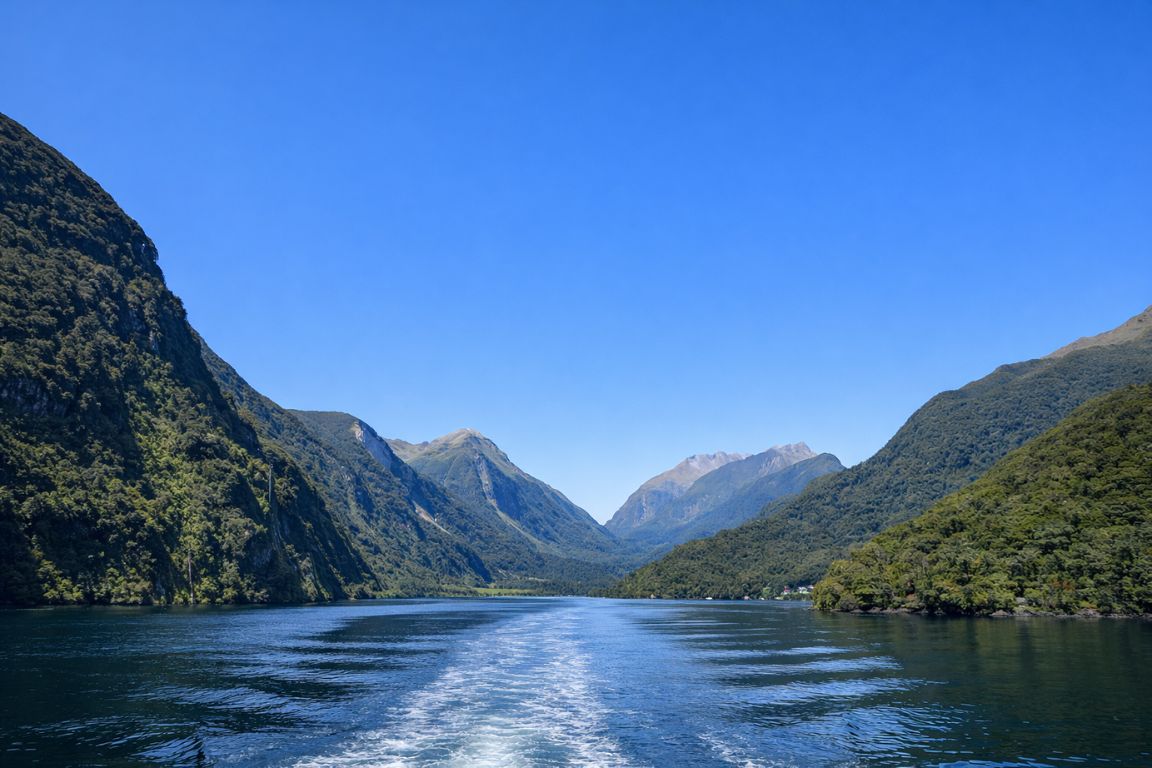 Milford is iconic, accessible by road, and works as a day trip from Queenstown or Te Anau. Doubtful is three times longer, ten times larger in surface area, accessible only by guided tour from Manapouri, and significantly quieter. Milford has more drama in its landscape; Doubtful has more solitude. If you have time for both, do both. If you’re choosing one, Milford is the starting point and Doubtful is the reward for people who want more.
Milford wins on logistics. You can drive yourself, book a cruise independently, arrive on your own schedule, and be back in Te Anau for dinner. The scenery hits hard quickly: Mitre Peak is visible from the terminal, and the Homer Tunnel approach is a cinematic moment even before you’re on the water. The trade-off is infrastructure. The terminal is modern and commercial. In peak season there can be five or six boats on the water simultaneously, all stopping at the same waterfalls.
Doubtful requires commitment. There’s no road to it. You take a boat across Lake Manapouri from the port at Manapouri, then a coach over the Wilmot Pass, then a third vessel out into the sound itself. The whole journey from Te Anau is around 8 hours door to door. Most visitors do it as an organised full-day tour; there’s essentially no other option. It’s a longer, slower, more layered experience, and once you’re out there, there’s often only one other boat visible the entire day.
Doubtful is three times longer than Milford and ten times wider. The dolphin and seal sightings are considered more reliable there precisely because there are fewer boats. The silence on Doubtful Sound on a still morning is a different kind of quiet from anywhere most people have stood.
| Access | Self-drive or coach from Te Anau/Queenstown | Guided tour only; boat + coach + cruise |
| Day trip from Te Anau | Yes, easily | Yes, but 8+ hours total |
| Size | 15 km long | 3x longer, 10x larger surface area |
| Crowd level | Moderate to high in peak season | Low year-round |
| Landscape drama | More vertical, more iconic | Broader, darker, more remote feel |
| Wildlife reliability | Seals nearly guaranteed; dolphins variable | Dolphins and seals both more reliable |
| Day cruise cost | NZD $165 to $389 | NZD ~$250 to $350 (full tour incl.) |
| Best for | First-time Fiordland visitors; tight itineraries | Return visitors; solitude seekers; longer trips |
The honest local recommendation, when someone asks me directly with enough time in their itinerary: do Milford first. Let the fiord show you what it is. Then go to Doubtful and notice what changes when you take away the crowds and the infrastructure.
Trying to decide between the most famous fiord and the one locals say is better? Check out our New Zealand Milford Sound vs Doubtful Sound guide before you commit to either.
If Milford is the one you want to start with, the small boutique cruise is a one-hour run that covers the fiord without a coach or flight attached.
What Should You Pack And How Should You Prepare For The Weather?

Waterproof jacket and layered clothing are non-negotiable. Insect repellent for sandflies is essential from October through March. In winter (May to November), carry snow chains if self-driving. Sunscreen with high SPF applies even on overcast days. There are no fuel stations or shops between Te Anau and Milford Sound, so plan supplies accordingly. Download offline maps before you lose mobile reception.
The sandflies are not a suggestion in the itinerary. They’re aggressive near the water, particularly in summer, and they bite through thin fabric. A DEET-based repellent works better than lighter alternatives. This is one of those things where experience matters: guests who come prepared barely notice them. Those who don’t can find them overwhelming.
New Zealand’s UV index is among the highest in the world. Clouds do not block UV here the way people expect. Bring SPF 50 and apply it on the boat even on grey days.
A lens cloth for your camera is worth packing. Near the waterfalls, the boat gets close enough that spray settles on everything. If photography matters to you, a small dry bag or waterproof pouch for your phone is a worthwhile addition.
For winter visits: snow chains are legally required on some stretches of Milford Road between May and November. Not every rental company provides them. Check specifically with yours before you leave Te Anau. Chains are available to hire in Te Anau if needed, but stock is limited, particularly on busy weekends. Sort this the day before, not the morning you’re leaving.
What Do Most Visitors Get Wrong About Milford Sound?
 The most common mistake is underestimating the drive from Queenstown and arriving rushed or late for a cruise. The second is booking the cheapest midday cruise in peak season and being surprised by the crowds on the water. Third is assuming rain means a bad day. It doesn’t. The visitors who have the worst time at Milford are almost always the ones who left the least margin for what the place actually is.
Let’s start with the drive. Queenstown to Milford Sound looks like a manageable distance on Google Maps. It is not a manageable drive if you treat it like a highway run. The Milford Road is narrow, winding, and lined with things worth stopping for. The Homer Tunnel backs up in summer with 20-minute waits. People consistently undercount the real time. If your cruise departs at noon, leaving Queenstown at 7am is not a comfortable cushion. It’s a gamble. Leave earlier, or base yourself in Te Anau.
The midday cruise problem is real. Midday departures are the most popular, which means peak pricing and the most boats on the water simultaneously. Early morning or late afternoon cruises are quieter, often cheaper, and produce better light for photography. The first departure of the day frequently has the fiord to itself for the first 20 minutes. That matters more than most people realise.
The rain mindset needs recalibrating. Milford Sound receives up to 7 metres of rainfall per year. It rains on around 182 days annually. Waiting for a clear forecast before booking is a strategy that leads to endless postponement. More practically: rainy days activate hundreds of temporary waterfalls that don’t exist in dry conditions. The cliff faces run white. The fiord goes dark and dramatic. More of our travelers over the years have walked off rainy-day cruises saying it was the best day of their trip than clear-day cruises. Not all of them, but more than you’d expect.
A few other consistent fail points from 14,500 guests through this operation: arriving at paid parking without leaving time for the 10 to 15 minute walk to the terminal; forgetting to fill fuel in Te Anau (there are zero stations after that); and expecting cell phone coverage once you’re inside the park. Download your maps before Te Anau and treat the next two hours as genuinely off-grid.
The difference between a morning and afternoon cruise on Milford Sound is more significant than most people realize – our morning vs afternoon New Zealand Milford Sound cruises guide breaks down exactly what changes.
How Do You Book A Milford Sound Tour And What Does It Actually Cost?
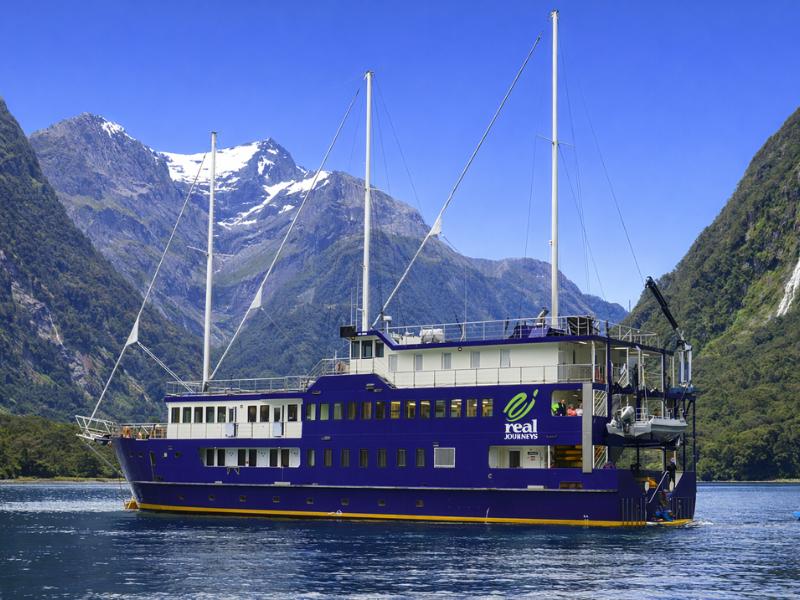
Book directly through operators (RealNZ, Southern Discoveries, Cruise Milford, Mitre Peak Cruises) or through a booking agent. For summer visits, book at minimum 2 to 3 weeks ahead; popular departures sell out. A standard day cruise costs NZD $165 to $175 for entry-level options and up to NZD $389 for premium experiences. Transport from Queenstown by coach adds NZD $105 to $125. A fly-cruise-fly package from Queenstown runs approximately NZD $435 to $610.
The cheapest approach is to self-drive from Te Anau and book a cruise-only ticket. You pay for cruise, parking, and fuel. A standard cruise sits at NZD $165 for Southern Discoveries’ main boats, $169 to $175 for RealNZ and Cruise Milford, all for midday departures in peak season. Off-peak departures (earliest and latest in the day) run meaningfully cheaper. Prices verified April 2026.
Premium and small-group cruises run from NZD $238 (Southern Discoveries’ Discover More, a 2 hour 15 minute cruise with a dedicated nature guide) up to $389 for RealNZ’s premium experience. The capacity-limited boats, some operators cap their vessels at half the physical maximum to reduce crowding, are worth the premium for anyone who cares about the quality of time on the water.
A coach-and-cruise package from Queenstown, which includes transport, photo stops along the Milford Road, and the cruise itself, runs roughly NZD $289 to $350 depending on operator and inclusions. This is the most popular option for first-time visitors who don’t want to self-drive.
The fly-cruise-fly option from Queenstown, scenic flight in, cruise, scenic flight back, is the splurge choice at NZD $435 to $610. It compresses the day dramatically and adds an aerial perspective that the road cannot offer. Genuinely worth it for travellers on tight schedules who want maximum impact.
We’ve put together a full cost breakdown in our New Zealand Milford Sound tours on a budget guide so you know exactly where to spend and where to save without compromising the experience.
Questions before you commit? Liam and the team answer them daily. Start here.
What Our Travelers Tell Us: Patterns From 14,500+ Milford Sound Guests
Over more than a decade and 14,500 guided travelers, some patterns come up consistently enough that they’re worth sharing directly. This isn’t statistical research; it’s operational knowledge from running these tours in every season.
| Guests who based in Te Anau vs. Queenstown | 85% reported a less rushed and more satisfying day at the fiord |
| Guests who visited on a rainy day | 92% rated the experience 5 stars despite or because of rain |
| First-time visitors who wish they had booked the overnight | Consistently 45% after we follow up |
| Guests who spotted Fiordland crested penguins | Higher in July to October; 15%-20% of early-morning cruises in this window |
| Most common regret expressed post-trip | Not staying long enough (68% of feedback) |
| Guests who encountered dolphins on cruise | Approximately 35% across all seasons; higher on morning departures |
Frequently Asked Questions
Is there an entry fee to visit Milford Sound?
No. There is no national park entry fee to access Milford Sound. You will pay for parking if you self-drive (NZD $10 per hour at the main car park; free overflow at Deepwater Basin with a courtesy shuttle), and for your cruise ticket. That’s it.
Can I visit Milford Sound without a tour?
Yes. Self-driving from Te Anau along State Highway 94 is straightforward in fine weather and gives you full control over stops. You book a cruise independently through any operator’s website. The only mandatory guided element is if you choose to combine Milford with the overnight experience or kayaking tours.
How far in advance should I book a Milford Sound cruise?
In summer (December to February), 2 to 4 weeks minimum for popular midday departures. In autumn and winter, you can often book a few days ahead. For the overnight cruise, book as early as possible regardless of season, capacity is limited year-round.
Is it worth visiting Milford Sound in bad weather?
Yes. Rainy conditions produce hundreds of temporary waterfalls that don’t exist on clear days, and the atmosphere of a stormy Milford Sound is genuinely unlike anything else in New Zealand. The boats are equipped with covered indoor decks for comfort. Weather here is unpredictable; booking based on forecast is often futile given how quickly conditions shift.
What is the difference between Milford Sound and Doubtful Sound?
Milford is more accessible (road access, self-drive possible), more iconic, and more commercial. Doubtful is three times longer, accessible only by guided tour via Lake Manapouri, dramatically quieter, and arguably better for serious wildlife sightings. Most visitors start with Milford; those who return often seek out Doubtful.
Do I need snow chains to drive to Milford Sound?
Snow chains are required for all vehicles on the Milford Road between May and November when conditions warrant it. Signage on the road indicates when chains must be fitted. Fines apply for non-compliance. Hire chains from Te Anau before you depart; do not assume your rental car includes them.
Book the cruise first, then decide on the road. The small-group tour from Queenstown handles pickup, the drive, and the cruise time so those pieces already fit together.
Written by Liam Aroha Bennett
New Zealand tour guide since 2011 · Founder, New Zealand Milford Sound Tours
Liam has guided over 14,500 travelers through Milford Sound and Fiordland since founding the agency.