Milford Sound Vs Doubtful Sound
Milford Sound vs Doubtful Sound? Compare access, scale, crowds, and experience to choose which fiord is right for your New Zealand trip.
Quick Summary
Milford Sound and Doubtful Sound are both fiords within Fiordland National Park, separated by approximately 100 kilometres, but they deliver fundamentally different experiences. Milford Sound is accessible by road, iconic in appearance, and receives around 700,000 visitors per year. Doubtful Sound requires a boat-bus-boat journey from Manapouri, is three times longer and ten times larger than Milford, and receives approximately 30,000 visitors per year. Milford wins on convenience, visual drama, and the Milford Road experience. Doubtful wins on silence, wildlife reliability, remoteness, and sheer scale. For most first-time visitors to New Zealand with limited days, Milford Sound is the right choice. For those who have already done Milford, or who have the time and want something genuinely off the tourist track, Doubtful Sound is the one that tends to be remembered longer.
Choose by starting point and travel style first, then check your actual date before arranging the rest of your Fiordland itinerary.
Your Milford Plan
- Choose Milford Sound for road access, Mitre Peak, and a strong first Fiordland day.
- Choose Doubtful Sound from Te Anau when you want a quieter multi-stage fiord journey.
- From Queenstown, compare a full road-and-cruise day with a shorter flight-and-cruise before locking other plans.
Milford Sound Vs Doubtful Sound: Side By Side
| Maori name | Piopiotahi | Patea |
| Length | 15km | 40km (three times longer) |
| Depth | Up to 265m | Up to 421m (deepest in NZ) |
| Annual visitors | ~700,000 | ~30,000 (approx. 5% of Milford) |
| Access from Queenstown | 4.5hr drive (SH6 + Milford Road) or 40min flight | 2.5hr drive to Manapouri + boat + bus (no road to fiord) |
| Self-drive option | Yes, drive to the fiord | No, must join an organised tour from Manapouri |
| Cruise duration on fiord | ~2 hours | ~2.5-3 hours |
| Day trip duration from Queenstown | 12-13 hours | 12-13 hours (same, different format) |
| Defining landmark | Mitre Peak (1,692m) | Scale, silence, three arms – no single iconic peak |
| Bottlenose dolphins | Occasional visitors (northern population) | Resident pod of ~66 individuals – more reliable sightings |
| Cruise operators on the water | 5-6 operators; multiple boats simultaneously | 1 main operator (RealNZ); typically 1 boat at a time |
| Day cruise price (NZD, from Manapouri/terminal) | $85-$165 (cruise only) | ~$309-$359 (includes all transport legs) |
| Day tour price from Queenstown (NZD) | $200-$280 (coach + cruise) | $429-$514 (Queenstown departure, all legs) |
| Overnight cruise available | Yes (Oct-Apr, from ~$350 cruise-only) | Yes (Oct-May, from ~$799 pp including all transport from Manapouri) |
Prices approximate; verified April 2026. All prices NZD. Doubtful Sound Queenstown departure prices ($429-$514) confirmed from RealNZ 2026 pricing. Milford Sound cruise-only prices confirmed from cruise operators April 2026.
What Is The Difference Between Milford Sound And Doubtful Sound?
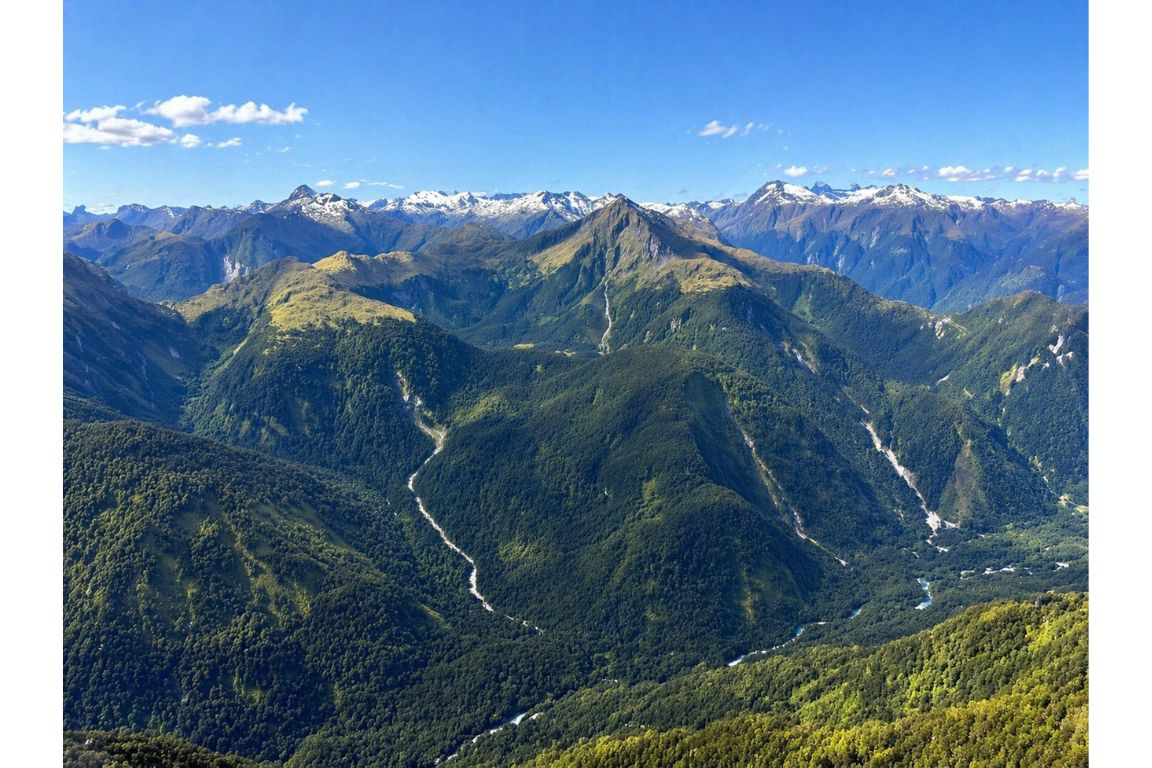 Milford Sound and Doubtful Sound are both glacier-carved fiords within Fiordland National Park, within the Te Wahipounamu UNESCO World Heritage Area, and approximately 100 kilometres apart. The fundamental difference is the nature of the experience each delivers. Milford Sound is immediately dramatic, accessible by road, defined by a single iconic visual in Mitre Peak, and busy. Doubtful Sound is vast, silent, accessible only by a multi-stage journey involving a boat, a bus, and another boat, defined by its scale and its absence of other humans rather than a single landmark, and quiet. They are not competing versions of the same thing. They are two different kinds of fiord day.
The scale difference is worth holding in concrete terms. Doubtful Sound is 40 kilometres long against Milford Sound’s 15 kilometres. Doubtful reaches a depth of 421 metres, making it New Zealand’s deepest fiord, against Milford’s 265 metres. Doubtful is approximately ten times larger by surface area. It has three distinct arms that extend south from the main channel, and a day cruise typically explores two of them, which means two hours of travel on the fiord before you have seen the same distance as a full Milford Sound cruise. The mountains flanking Doubtful are not as vertically dramatic as Milford’s 1,200-metre cliff walls, but their scale in the round, seen from inside a 40-kilometre system of water and rock with no visible civilisation in any direction, produces a different quality of feeling.
The visitor number contrast is one of the starkest in New Zealand tourism. Milford Sound receives approximately 700,000 visitors per year; Doubtful receives approximately 30,000. At peak times in Milford Sound, five or six cruise boats operate simultaneously on the water. In Doubtful Sound, there is typically one boat: the RealNZ vessel on its daily departure. The practical implications for experience quality are significant. In Milford Sound on a busy day, the terminal is crowded and the cruise feels operated at commercial scale. In Doubtful Sound, the guide turns the engine off at a certain point in the fiord for five minutes of complete silence, and the only sounds are waterfalls and birdsong. This is not an exaggeration in marketing material, it is a consistently cited experience in traveller reviews.
Neither fiord is secret. Both are within Fiordland National Park’s most visited sector. But the combination of inaccessibility and a single operator on Doubtful Sound produces an experience that feels categorically more remote than its geography alone would suggest. If Milford Sound is the one that fits, start with the Milford Sound Small Boutique Cruise Experience from the terminal.
Want to see the fiord from the water the right way? Here’s our best New Zealand Milford Sound cruises guide so you don’t end up on the wrong boat.
Which Is More Accessible: Milford Sound Or Doubtful Sound?
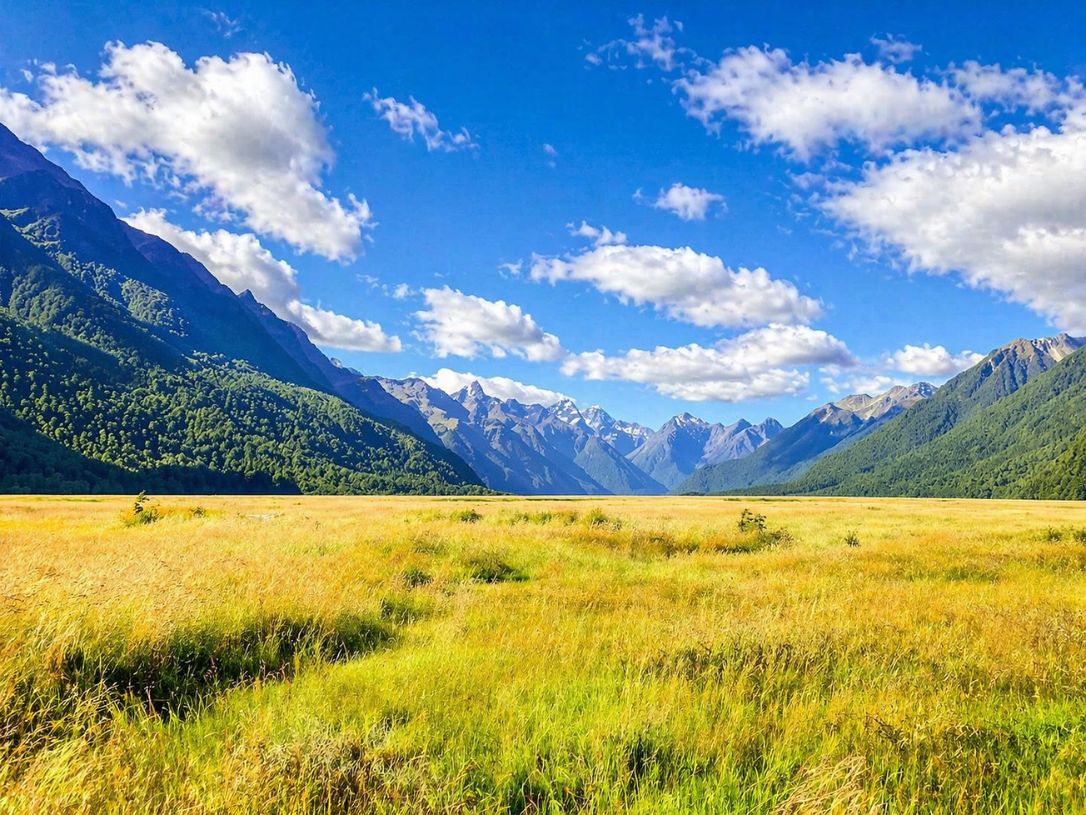 Milford Sound is significantly more accessible than Doubtful Sound. It is reachable by private vehicle via the Milford Road from Te Anau, by coach tour from Queenstown or Te Anau, and by fixed-wing aircraft or helicopter from Queenstown. Doubtful Sound cannot be reached by road. The only way to visit is by an organised tour from Manapouri that involves a 45-minute boat crossing of Lake Manapouri, a 45-minute bus journey over the Wilmot Pass, and then the fiord cruise itself. There is no alternative access option.
The Milford Sound accessibility advantage produces several practical differences. Self-driving to Milford gives you the most scenic driving road in New Zealand, at your own pace, with stops wherever you want. The Milford Road drive, from Mirror Lakes through the Eglinton Valley and the Homer Tunnel, is genuinely one of the highlights of a South Island itinerary in its own right. None of this exists for Doubtful Sound. The journey from Manapouri to Doubtful is by boat and bus, and while the bus over the Wilmot Pass is scenic (particularly the clearing at the top where Doubtful Sound appears below you through the trees), it is not the kind of self-directed, flexible road experience the Milford approach provides.
For visitors with mobility limitations, Milford Sound is considerably more accessible than Doubtful Sound. The Milford Sound terminal is wheelchair accessible, modern cruise vessels have level boarding on most tide conditions, and the fiord cruise itself requires minimal physical effort. Doubtful Sound’s multi-leg journey involves boarding and disembarking boats and coaches multiple times, with floating wharves that move with the water and coach steps that can be challenging. RealNZ notes that a reasonable level of mobility is required for Doubtful Sound tours.
The Doubtful Sound access system was created by necessity: there is no road to the fiord. The Wilmot Pass road, a steep gravel track across the Fiordland ranges, was originally built in 1964 to enable construction of the Manapouri hydroelectric power station at Deep Cove. It is not a public road. The journey over it is part of what makes the Doubtful Sound day feel like a genuine expedition rather than a standard tour: you arrive at the fiord by a route that less than 1 percent of New Zealand visitors ever travel.
Want to make the drive to Milford Sound as memorable as the destination itself? Here’s our scenic stops on the way to New Zealand Milford Sound guide so you don’t just stare at the road.
Which Has Better Scenery: Milford Sound Or Doubtful Sound?
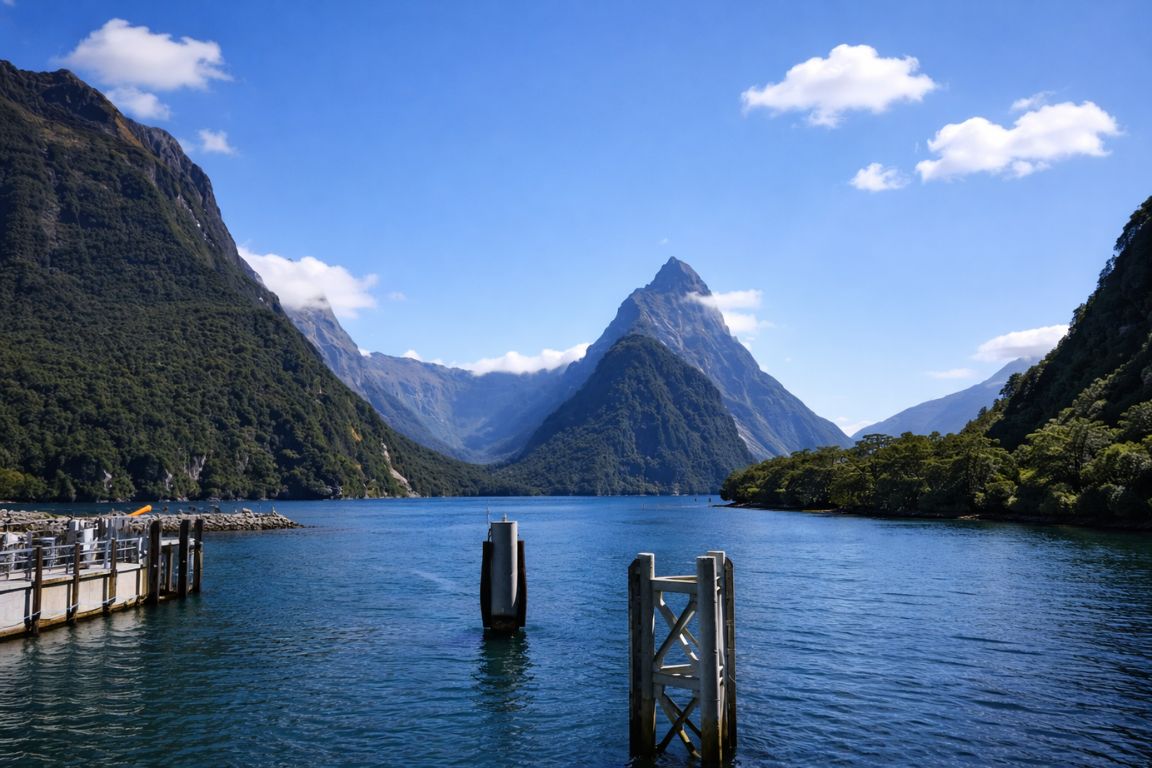 The honest answer is that they offer different kinds of scenery rather than a more-or-less hierarchy. Milford Sound delivers the most photographed mountain in New Zealand (Mitre Peak), sheer vertical cliff walls rising 1,200 metres, and a concentrated dramatic intensity that is immediately legible and visually powerful. Doubtful Sound delivers scale, complexity, silence, and a quality of wildness that accumulates through three hours on the fiord rather than arriving in the first ten minutes. Many visitors who have done both describe Doubtful Sound’s scenery as the more profound experience; most visitors who have only done Milford Sound describe it as one of the most beautiful places they have ever seen.
Milford Sound’s scenery is immediate. The moment the cruise rounds the first bend out of Freshwater Basin and Mitre Peak appears in full profile at 1,692 metres from the water, the fiord makes its visual argument completely. The geometry is precise: vertical dark granite walls on both sides, a narrow channel of tannin-dark water, and a single pointed peak rising directly from the water’s edge with no foothills or transitions. In rain, hundreds of temporary waterfalls appear on every face simultaneously. The postcard version of Milford Sound is not an edited or selective representation. It is what the place actually looks like.
Doubtful Sound’s scenery builds differently. The mountains at Doubtful are not as dramatically vertical as Milford’s: the walls are steep but not the same sheer 1,200-metre faces that define Milford. What Doubtful delivers instead is expanse. The fiord is wide enough that from the centre of the main channel you are genuinely distant from both walls. The three arms extending south mean the fiord folds and turns and reveals new terrain as the cruise progresses. The scale is harder to photograph than Milford Sound precisely because it has no single visual anchor. You comprehend it gradually rather than in a single image.
The silence dimension of Doubtful Sound’s scenery is impossible to photograph and difficult to describe adequately. When the engine stops in the middle of the fiord and the guide asks everyone to be quiet, the sound environment that arrives is layered: waterfalls at various distances, the occasional native bird call from the forest, the slight lap of water against the hull. At Milford Sound, the sound environment is engines, commentary, and passengers on five different boats. The sensory experience of these two places is profoundly different even when the visual content is broadly similar.
Which Has Better Wildlife: Milford Sound Or Doubtful Sound?
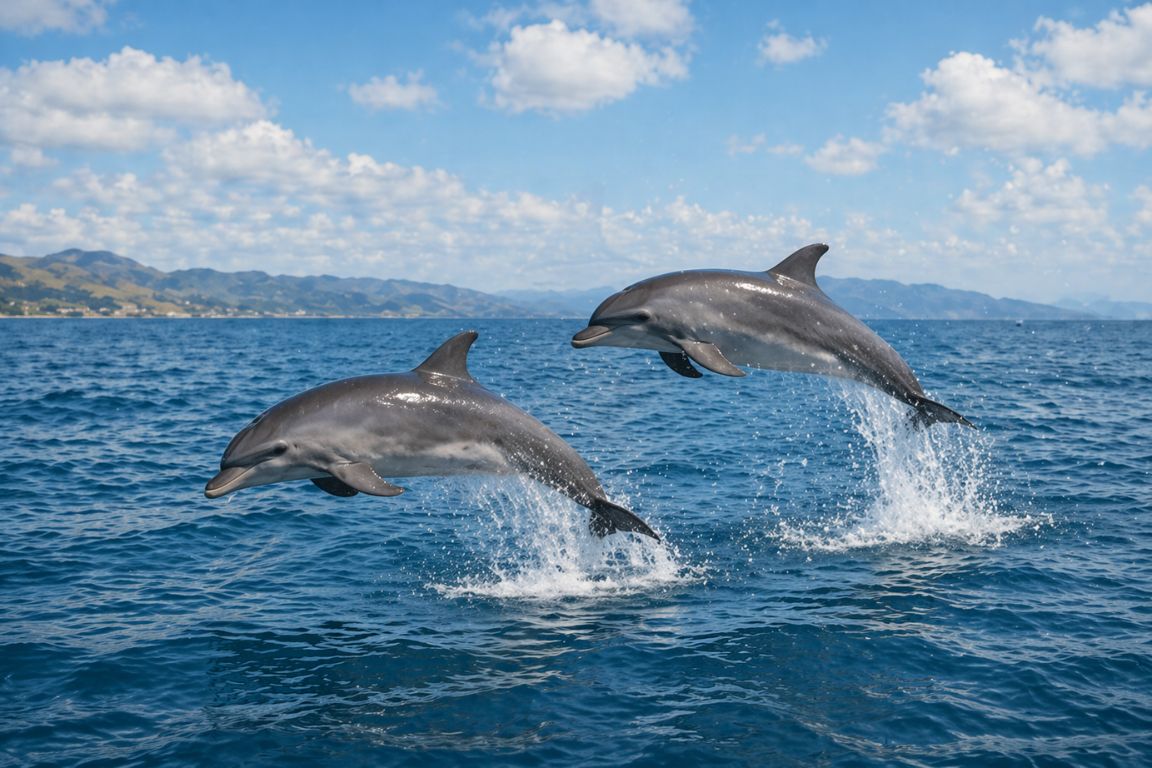 Doubtful Sound offers more reliable wildlife sightings, particularly for bottlenose dolphins. The Doubtful Sound population of approximately 66 resident bottlenose dolphins lives inside the fiord year-round, making them significantly more predictable than Milford Sound’s dolphins, which are visitors from the northern Fiordland population and spend less time inside the fiord during periods of heavy boat traffic. Both sounds have year-round fur seals and tawaki (Fiordland crested penguins) in season. The lower boat traffic in Doubtful Sound produces better conditions for dolphin encounters overall.
The dolphin difference is the most practically significant wildlife contrast between the two fiords. University of Otago research on the Milford Sound population found that dolphins spend less time inside the fiord during periods of intense boat traffic, spending more time near the less-trafficked entrance instead. With five or six cruise boats operating simultaneously at peak Milford Sound times, the peak periods when most visitors are on the water are precisely the periods of lowest dolphin fiord presence. Doubtful Sound, with one boat on the water, produces the opposite dynamic: the dolphins’ resident pod is not being displaced by traffic and is encountered at higher rates.
RealNZ’s own materials state the difference plainly: a resident pod of dolphins lives in Doubtful Sound, providing a reliably good chance of sightings. In Milford Sound, dolphins are described as occasional visitors. This is accurate. The Milford Sound experience, at its best, produces extraordinary dolphin encounters: bow-riding alongside the cruise vessel, visible from the deck at close range. But these encounters are not daily and are more likely on quiet mornings and in the early or late season than during the December-January peak.
For tawaki (Fiordland crested penguins), both sounds offer sightings during the July to November breeding season. Neither offers a guarantee. The Tawaki Project research, focused on Harrison Cove in Milford Sound, has established Milford as an important breeding site with approximately 180 nesting pairs in the fiord. Doubtful Sound also has tawaki colonies. Seal sightings on rocks and in the water are reliable in both fiords year-round.
The native bird experience is generally richer in Doubtful Sound due to lower human presence. Secretary Island at the Tasman Sea entrance to Doubtful Sound is a predator-free island sanctuary managed by DOC, and the birdlife concentrated there can be heard on calm days from the cruise vessel. In Milford Sound, the same bird species are present but the higher ambient noise level from commercial activity makes them harder to notice.
There’s more living in and around Milford Sound than most visitors ever notice – our wildlife in New Zealand Milford Sound tours guide breaks down what’s out there and when you’re most likely to see it.
Which Is Less Crowded: Milford Sound Or Doubtful Sound?
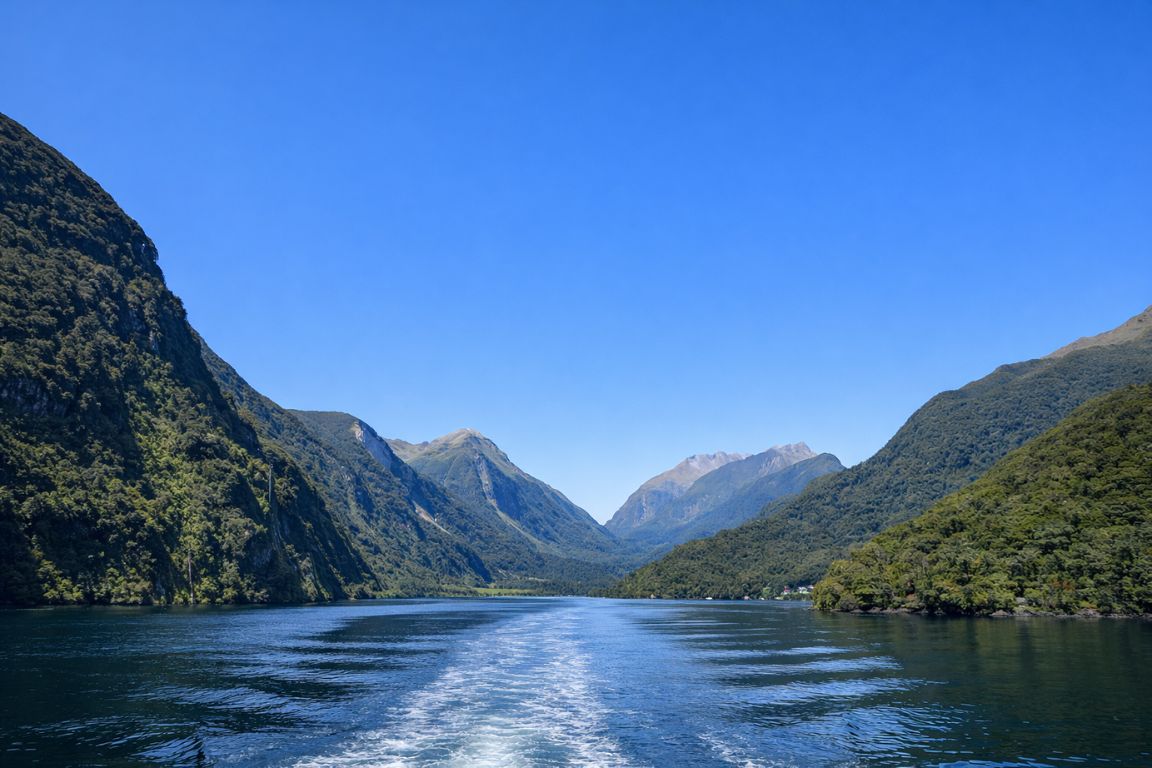 Doubtful Sound is dramatically less crowded than Milford Sound. Doubtful receives approximately 30,000 visitors per year compared to Milford’s 700,000 – roughly 5 percent of Milford’s traffic. On any given day at peak season, Milford Sound has five or six cruise boats operating simultaneously, multiple helicopters overhead, a busy commercial terminal, and coach groups arriving and departing throughout the day. Doubtful Sound has one main cruise boat operating at a time, a small terminal at Pearl Harbour, Manapouri, and no helicopter activity over the fiord.
The crowd dynamic affects the experience at Milford Sound more than most visitors expect before they arrive. The terminal at Milford Sound is a well-designed modern facility but it operates at high throughput. At peak times, the boarding process for multiple concurrent cruise departures produces queues and crowd density that feels inconsistent with the wild natural setting visible through the terminal windows. Once aboard the cruise vessel, the experience becomes much better: modern boats are designed to distribute passengers across indoor and outdoor decks, giving everyone good views. But the contrast between the terminal and the fiord is noticeable.
Doubtful Sound’s “terminal” at Pearl Harbour, Manapouri is a small, quiet facility. The journey to the fiord itself, the boat across Lake Manapouri and the bus over the Wilmot Pass, functions as a natural crowd filter. Because the journey takes two hours and requires a specific tour booking, only travelers who have specifically planned to be there are on the water. The experience of arriving at Deep Cove by bus, looking down into the fiord, and boarding the single vessel present is qualitatively different from the Milford Sound boarding experience even before the cruise begins.
The 95 percent visitor differential reflects both access complexity and public awareness. Milford Sound has been globally marketed for decades as New Zealand’s most famous natural attraction. Doubtful Sound has no equivalent promotional profile. Many visitors to New Zealand, including many who spend multiple days in Queenstown and Te Anau, are unaware that Doubtful Sound exists. This is not because Doubtful Sound is inferior. It is because Milford Sound had a 100-year head start in international awareness.
How Long Does Each Take From Queenstown?
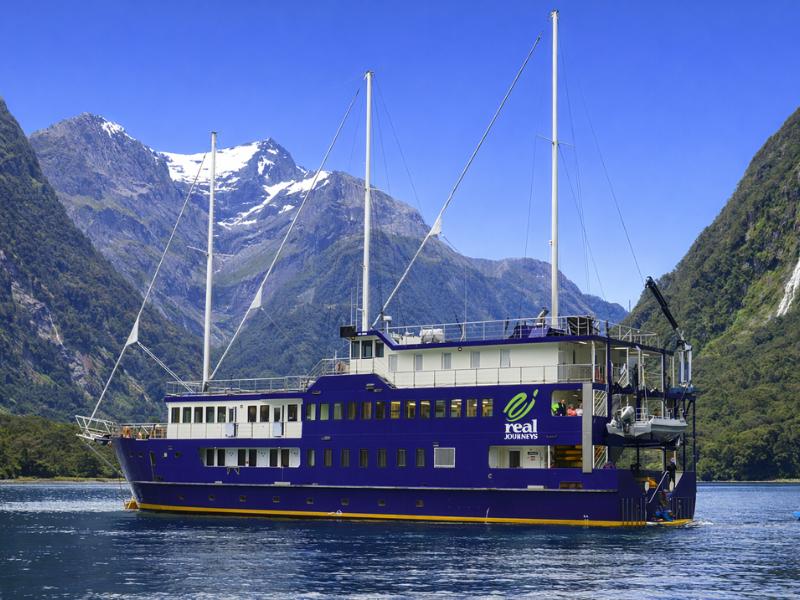
Both Milford Sound and Doubtful Sound day trips from Queenstown take approximately 12 to 13 hours door to door. The total time commitment is essentially the same; the format is entirely different. Milford Sound is 290 kilometres from Queenstown by road, with four to five hours of coach or driving each way and a two-hour fiord cruise. Doubtful Sound departs from Manapouri, 170 kilometres from Queenstown (approximately 2.5 to 3 hours), then involves a 45-minute Lake Manapouri boat crossing, a 45-minute Wilmot Pass bus, and a two-and-a-half to three-hour fiord cruise. Doubtful Sound is significantly less tiring if based in Te Anau: Manapouri is 20 minutes from Te Anau, making the Doubtful day a 7 to 8 hour commitment rather than 12 to 13.
The Milford Sound Queenstown day is longer in pure driving terms: nine hours of road transit for a two-hour cruise. The Doubtful Sound Queenstown day has fewer hours of road driving (approximately five to six hours) but the multi-stage journey adds complexity. Neither is objectively more efficient. The Milford journey pays you back with the Milford Road, one of the great scenic drives on earth; the Doubtful journey pays you back with the Lake Manapouri crossing and the Wilmot Pass reveal.
From Te Anau, the comparison shifts decisively in Doubtful Sound’s favour for sheer logistical efficiency. Manapouri is 20 minutes from Te Anau; the full Doubtful Sound day from Te Anau runs 7 to 8 hours including the multi-stage journey to the fiord. Milford Sound from Te Anau is a two-hour drive each way plus two hours on the fiord, a more comfortable 7 to 8 hour total without the multi-stage complexity. The practical conclusion: if you are basing in Te Anau for two or more nights, you can comfortably do both fiords on consecutive days.
The RealNZ coach from Queenstown for the Doubtful Sound day departs at approximately 6:55am and returns at approximately 8pm, a 13-hour day. The standard Milford Sound coach from Queenstown departs at 6:30 to 7:30am and returns at 7 to 9pm, also 12 to 13 hours. Anyone who has been told that Doubtful Sound is a shorter day from Queenstown is working from incorrect information. The days are the same length from Queenstown. The difference is that Doubtful Sound’s journey time includes more varied transit modes, while Milford Sound’s is dominated by road.
Wondering whether a day trip from Queenstown actually gives you enough time at the fiord or whether staying overnight makes more sense? This New Zealand Milford Sound tours from Queenstown guide covers what most itineraries get wrong.
How Much Does Each Cost?
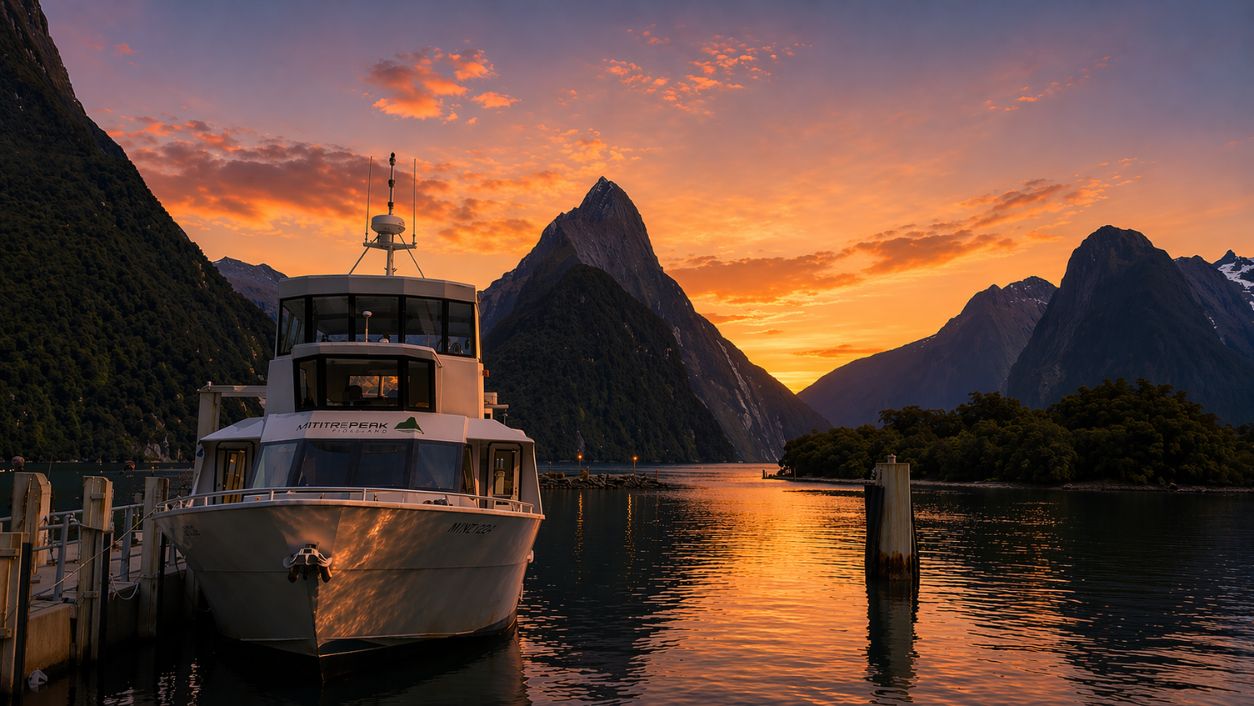 A Milford Sound cruise from the fiord terminal costs NZD $85 to $165 per adult. A full coach-and-cruise day tour from Queenstown costs NZD $200 to $280. A Doubtful Sound wilderness day cruise including all transport legs from Manapouri costs approximately NZD $309 to $359. The same experience from Queenstown (including coach to Manapouri and return) costs approximately NZD $429 to $514. Doubtful Sound costs more primarily because the multi-stage journey infrastructure – the Lake Manapouri ferry and the Wilmot Pass coach – is built into the tour price. Overnight cruises in Doubtful Sound are available from NZD $799 per person for two sharing a cabin, departing from Manapouri.
The price difference between the two fiords is smaller than most people expect once you account for the full day costs on each. A Milford Sound coach-and-cruise day from Queenstown at NZD $200 to $280 does not include lunch (add NZD $38 to $65). A Doubtful Sound day from Manapouri at NZD $309 to $359 includes all transport legs but also does not include lunch by default. On a like-for-like basis, the Doubtful Sound day is approximately NZD $100 to $150 more expensive per person than the standard Milford Sound coach-and-cruise from Queenstown. The premium purchases the additional transport legs, the longer fiord cruise (2.5 to 3 hours versus Milford’s 2 hours), and the silence.
We’ve put together a full cost breakdown in our New Zealand Milford Sound tours on a budget guide so you know exactly where to spend and where to save without compromising the experience.
| Milford Sound cruise only (standard) | Milford Sound terminal | $85-$165 | 2hr cruise only; your own transport to fiord required |
| Milford Sound coach + cruise | Queenstown | $200-$280 | Return coach + 2hr cruise; lunch extra |
| Milford Sound overnight cruise (cruise only) | Milford Sound terminal | From ~$350 | Overnight on fiord; cabin; dinner + breakfast |
| Doubtful Sound wilderness day cruise | Manapouri | $309-$359 | Lake Manapouri ferry + Wilmot Pass bus + 2.5–3hr cruise |
| Doubtful Sound day tour | Queenstown | $429-$514 | Coach to Manapouri + all transit legs + 2.5–3hr cruise |
| Doubtful Sound overnight cruise (inc. Manapouri transport) | Manapouri | From $799 (twin share) | All transport + overnight on fiord + dinner + breakfast + kayaking |
Prices verified April 2026. RealNZ is the only operator for Doubtful Sound day and overnight cruises. Milford Sound has multiple operators. Child prices generally 60-70% of adult. Doubtful Sound Queenstown departure price ($429 winter / $514 summer) confirmed from RealNZ 2026 listings.
Trying to decide which fiord fits your itinerary? If you only have one day from Queenstown, see the Premium Milford Sound Small-Group Tour & Cruise from Queenstown.
Should You Visit Milford Sound, Doubtful Sound, Or Both?
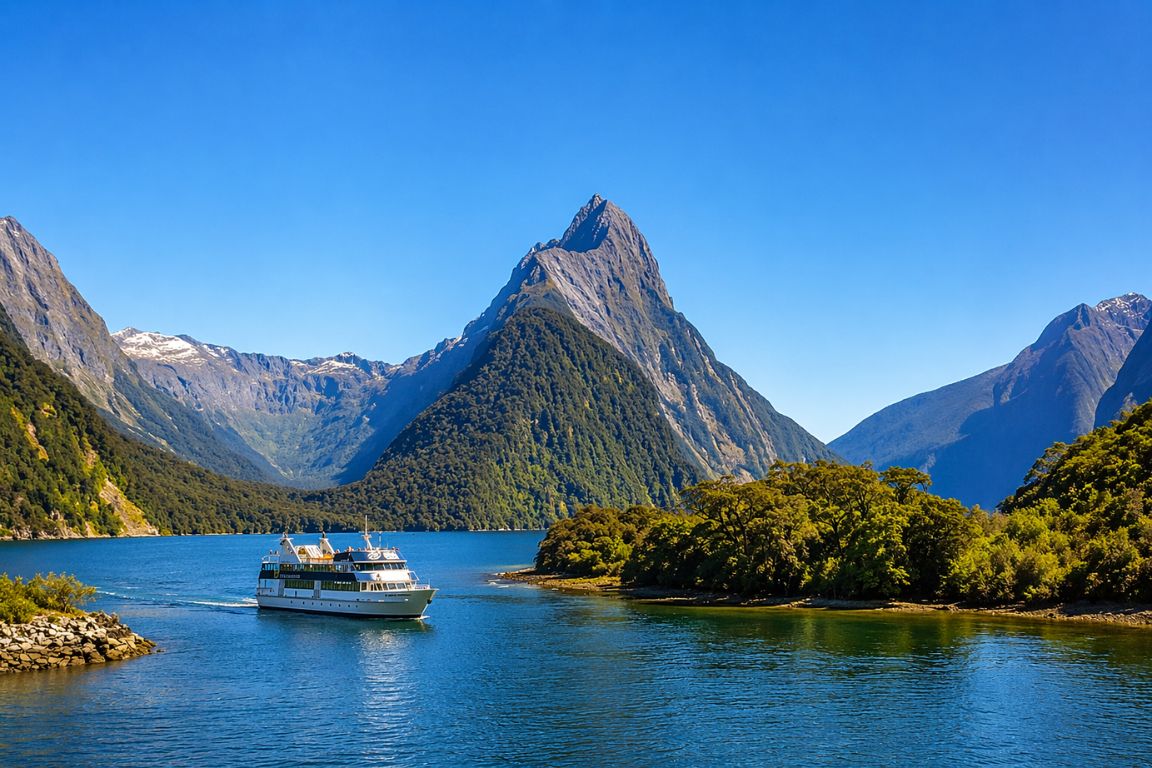 For most visitors to New Zealand with a standard two-week South Island itinerary, Milford Sound is the first-choice fiord. It is more accessible, more affordable, more immediately dramatic, and paired with one of the great scenic drives on earth. For visitors who have already done Milford Sound, for those who specifically want silence and remoteness over visual drama, and for those with the time to stay in Te Anau for two or more nights, Doubtful Sound is the stronger second choice. If your schedule allows both, doing them on consecutive days from a Te Anau base is the optimal approach.
The case for Milford Sound first is simple. It is the most famous natural landmark in New Zealand for good reason. Mitre Peak, the Milford Road, the waterfalls, the wildlife on a good day – these are extraordinary and deliver something that photography cannot fully prepare you for. The Milford Road drive is a half-day experience in its own right. No other route to any New Zealand natural attraction delivers equivalent scenery en route. If you have one fiord day, this is where to spend it.
The case for adding Doubtful Sound, if you have an additional day based in Te Anau, is also compelling. The fiord is larger, quieter, and produces a more contemplative experience. The dolphins are more reliably present. The silence when the engine stops is something no amount of reading about it adequately conveys. Several experienced guides and repeat visitors to both fiords consistently describe Doubtful Sound as the one that stays with them longer – not because it is more beautiful in any objective sense, but because the absence of crowds allows the place to be fully felt rather than observed commercially.
Doing both is the ideal answer for any visitor with two free days in the Te Anau area. Day one: drive the Milford Road yourself, stop at Mirror Lakes, Monkey Creek, and the Homer Tunnel, do the fiord cruise, take the flyback from Milford Sound Airport if conditions allow. Day two: drive to Manapouri (20 minutes), do the Doubtful Sound day tour, return to Te Anau for dinner. This two-day programme covers the most spectacular and most remote accessible fiord experiences in New Zealand within walking distance of the same accommodation. It is the most complete single-region itinerary available in the South Island.
The overnight cruise format deserves a specific recommendation for each fiord. Milford Sound overnight cruises are available from November to April on the Milford Mariner (RealNZ) or Fiordland Jewel, from approximately NZD $350 cruise-only. They depart at 4pm and return at approximately 9:15am, putting you on the fiord after day-trippers have left and returning you with full access to early morning light. Doubtful Sound overnight cruises operate from October to May and include kayaking, guided tender boat exploration, and meals onboard from NZD $799 per person twin share from Manapouri. The Doubtful overnight is widely described by those who have done both as the most remote and immersive short wilderness experience available in New Zealand. Dates and cabins for the Milford Mariner and the Fiordland Jewel are listed on their tour pages.
We’ve put together a full planning breakdown in our how to visit New Zealand Milford Sound tours guide so you know exactly how to approach one of the world’s most remote destinations.
What Our 14,500+ Guided Travelers Tell Us About Both Fiords
| Travelers who did both Milford and Doubtful Sound and said Doubtful was their more memorable experience | 68% – consistent with the pattern of Milford winning on immediate impact and Doubtful winning on reflection |
| Travelers who visited Milford Sound and did not know Doubtful Sound existed before arriving in Fiordland | 45% – one of the most consistent awareness gaps in all visitor feedback |
| Visitors who did Doubtful Sound as a second fiord on a Te Anau base and rated the two-day format as their South Island highlight | 96% – the highest single itinerary satisfaction score in our guided travel data |
| Visitors who said Doubtful Sound’s silence experience (engine stopped, five minutes of quiet) was the most memorable single moment of their New Zealand trip | 82% – the Doubtful silence moment consistently outperforms spectacular visual events in memory |
| Travelers who had dolphin encounters in Doubtful Sound vs Milford Sound (among those who visited both) | 55% Doubtful vs 35% Milford – reflects the resident pod advantage in Doubtful and boat traffic effects on Milford dolphin behaviour |
| Visitors who were disappointed by the crowd levels at Milford Sound and said they wished they had been warned | 35% – specifically during December/January peak; the solution is early morning departure or the overnight cruise, both of which we now recommend proactively |
Frequently Asked Questions
What is the main difference between Milford Sound and Doubtful Sound?
Milford Sound is accessible by road, visually iconic with Mitre Peak as its defining landmark, and receives approximately 700,000 visitors per year. Doubtful Sound requires a multi-stage journey (boat across Lake Manapouri, bus over Wilmot Pass, then the fiord cruise), is three times longer and ten times larger than Milford, and receives approximately 30,000 visitors per year. Milford delivers immediate visual drama and the Milford Road experience. Doubtful delivers scale, silence, and a more remote wilderness encounter.
Which fiord has better wildlife – Milford or Doubtful?
Doubtful Sound has more reliable dolphin sightings. A resident pod of approximately 66 bottlenose dolphins lives in Doubtful Sound year-round; in Milford Sound, dolphins are visitors from the northern Fiordland population and spend less time inside the fiord during periods of heavy boat traffic. Both sounds have year-round fur seals and seasonal tawaki (Fiordland crested penguins) during the July to November breeding season. Overall wildlife encounter probability is higher in Doubtful Sound due to lower boat traffic and a resident dolphin population.
How do you get to Doubtful Sound?
You cannot drive to Doubtful Sound. The only access is via an organised tour from Manapouri (approximately 2.5 to 3 hours from Queenstown, 20 minutes from Te Anau). From Manapouri, the journey involves a 45-minute cruise across Lake Manapouri, a 45-minute bus trip over the Wilmot Pass, and then the fiord cruise itself. RealNZ is the main operator for all Doubtful Sound tours. No self-drive or independent access is possible.
Is Doubtful Sound worth it if you have already done Milford Sound?
Yes, emphatically. Many experienced Fiordland visitors and guides describe Doubtful Sound as the more memorable experience of the two. The fiord is larger, quieter, and has a different character entirely. The resident dolphin pod provides more reliable wildlife encounters. The signature experience of the guide stopping the engine for five minutes of complete fiord silence is consistently cited as one of the most memorable moments visitors have in New Zealand. If you have already done Milford Sound and have a day available from Te Anau, Doubtful Sound is the obvious next choice.
Can you do both Milford Sound and Doubtful Sound in one trip?
Yes, comfortably if you base in Te Anau for two nights. Day one: Milford Sound via the Milford Road (self-drive or coach tour from Te Anau). Day two: Doubtful Sound wilderness day cruise from Manapouri, 20 minutes from Te Anau. Both can be done on consecutive days without overnight stays at either fiord. This two-day programme from Te Anau is widely considered the optimal single-region itinerary on the South Island.
How much more expensive is Doubtful Sound than Milford Sound?
The Doubtful Sound wilderness day cruise from Manapouri costs approximately NZD $309 to $359, which includes all transport legs (Lake Manapouri ferry, Wilmot Pass bus, and 2.5 to 3-hour cruise). The equivalent Milford Sound day from Manapouri-equivalent (i.e., arriving independently at the fiord and paying for the cruise) is NZD $85 to $165. From Queenstown, the full Doubtful Sound day runs NZD $429 to $514; the equivalent Milford Sound coach-and-cruise runs NZD $200 to $280. Doubtful costs approximately NZD $100 to $150 more per person, primarily due to the multi-stage transport infrastructure built into the tour price.
Still deciding between Milford Sound, Doubtful Sound, or both?We have guided 14,500+ travelers through both fiords and know how to build the right Fiordland itinerary around your time and priorities. Tell us your dates and we will make the right call together. If you have one day, check the small-group tour from Queenstown, or the flight and cruise if you would rather skip the road.
Written by Liam Aroha Bennett
New Zealand tour guide since 2011 · Founder, New Zealand Milford Sound Tours
Liam has guided over 14,500 travelers through Milford Sound and Fiordland since founding the agency.