Best Milford Sound Cruises
Which Milford Sound cruise should you choose? The route is the same - compare boat size, price, and experience to find the best option (and why overnight is the top pick).
Quick Summary
All Milford Sound day cruises follow the same route through the same fiord. The scenery is identical regardless of operator. What varies is boat size, onboard experience, passenger numbers, and price. For most first-time visitors, a standard morning cruise with any of the four main operators delivers the full experience. For those who want fewer people and a more personal feel, a small-boat or premium option is worth the premium. The overnight cruise is the best version of Milford Sound that exists, and the one thing most people wish they had booked.
Match the cruise to your starting point, available time, and preference for a day or overnight experience before arranging the rest of your Fiordland itinerary.
Your Milford Plan
- Choose the 17-hour overnight cruise when one night on the fiord fits your itinerary.
- Choose the 105-minute boutique cruise when you are already traveling to Milford Sound independently.
- Choose the 13-hour Queenstown package when transport, lunch, guided stops, and a cruise need to be bundled.
Milford Sound Cruise Options: At A Glance
| Standard day cruise | 1 hr 45 min – 2 hrs | $165-$175 | First-timers, budget-conscious, groups | RealNZ, Southern Discoveries, Cruise Milford, Pure Milford, Mitre Peak |
| Extended/nature cruise | 2 hrs 15 min | $238 | More time on water, nature commentary | Southern Discoveries (Discover More) |
| Premium small-boat cruise | ~2 hrs | $389 | Intimate experience, fine dining, fewer crowds | RealNZ (MV Sinbad Premium) |
| Overnight cruise (RealNZ) | ~17 hrs (departs 4pm, returns 9:15am) | From ~$350 pp (double cabin) | Solitude, morning on the fiord, kayaking | RealNZ (Milford Mariner) |
| Overnight cruise (luxury) | ~18 hrs (departs 3pm, returns 9am) | From ~$595 pp | Luxury, small group (max 22), chef-cooked meals, hot tub | Fiordland Discovery (Fiordland Jewel) |
Prices verified April 2026. Overnight cruise prices are approximate and vary by season, cabin type, and booking window. Infants (0-4 years) free on all day cruises.
Which Milford Sound Cruise Is Best For First-Time Visitors?
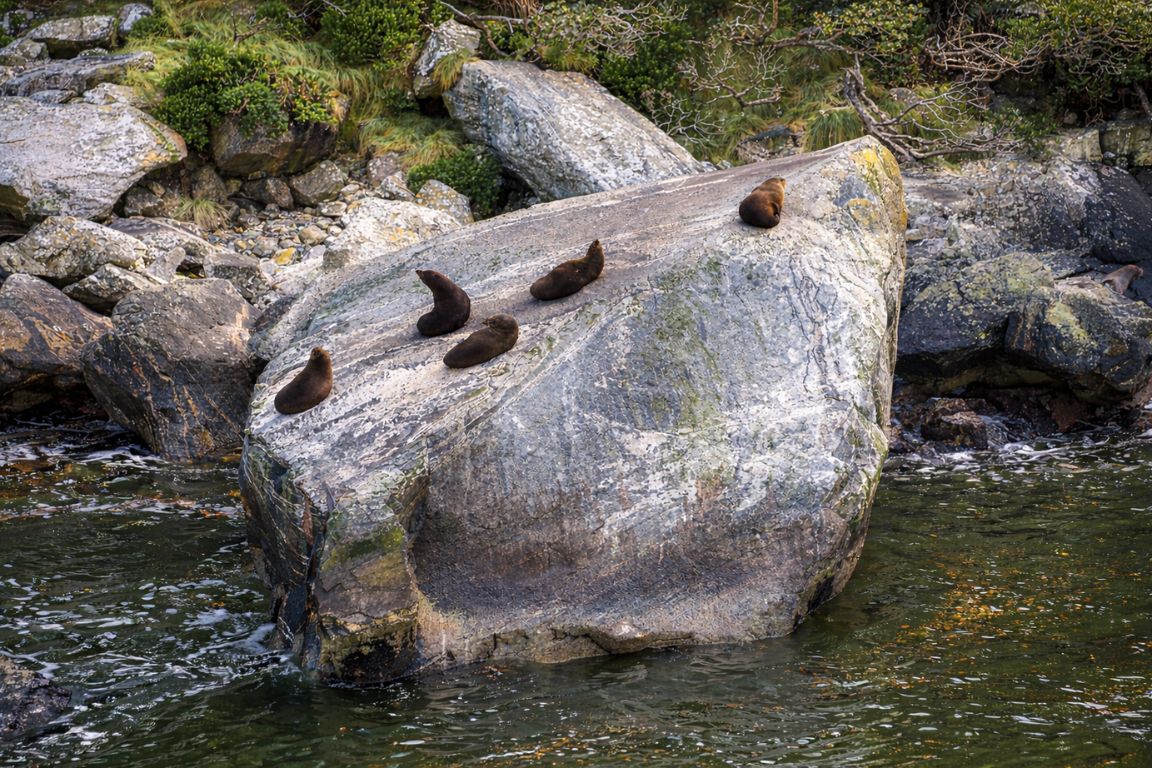 A standard morning day cruise with any of the main operators delivers the complete Milford Sound experience for a first-time visitor. All cruises follow identical routes through the full 15 kilometres of the fiord, reaching the same waterfalls, passing Mitre Peak, and going as far as the Tasman Sea entrance. The most important variable is not which operator you choose, it is what time you depart. Book the first or second departure of the day, arrive before the midday coaches, and you will have a markedly better experience than the same cruise at noon.
The question we get most often from first-timers is which cruise is best. The honest answer is that the scenic difference between operators is essentially zero. All boats get equally close to Stirling Falls. All of them pass Seal Rock. All of them go to the Tasman Sea entrance when conditions allow. The fiord looks the same from every vessel. What changes is the size of the boat, the onboard food and drink, the passenger count, and the price.
For a first visit, a standard day cruise at NZD $165 to $175 from any of the four main operators gives you everything. Mitre Peak, Stirling Falls at 146 metres with the option to feel the spray, Lady Bowen Falls, the Tasman entrance, Seal Rock, and 1 hour 45 minutes to 2 hours of fiord with commentary. That is the complete experience. Spending more than this is a personal preference choice, not a necessity for seeing everything Milford Sound offers from the water.
If you are coming from Queenstown or Te Anau with transport already bundled into a tour package, your cruise is almost certainly included and the operator choice has been made for you. That is fine. The cruise itself will be good regardless. Focus your energy on departure time and getting the first boat out.
Who Are The Main Milford Sound Cruise Operators And How Do They Differ?
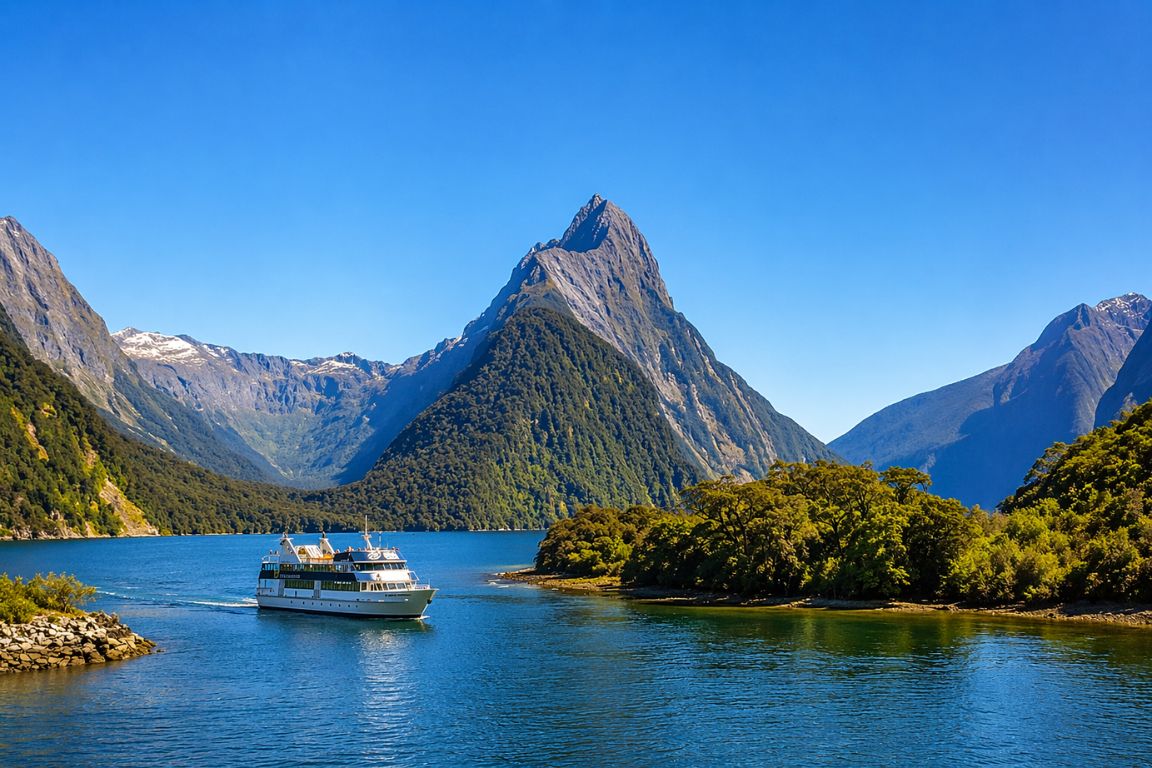 The five main day cruise operators are RealNZ, Southern Discoveries, Cruise Milford, Pure Milford, and Mitre Peak Cruises. RealNZ runs the largest operation with the most daily departures and multiple vessel types including a luxury option. Southern Discoveries is the original operator and offers the only underwater observatory add-on. Cruise Milford and Mitre Peak Cruises run smaller, quieter boats. Pure Milford is the most budget-friendly. All follow the same route.
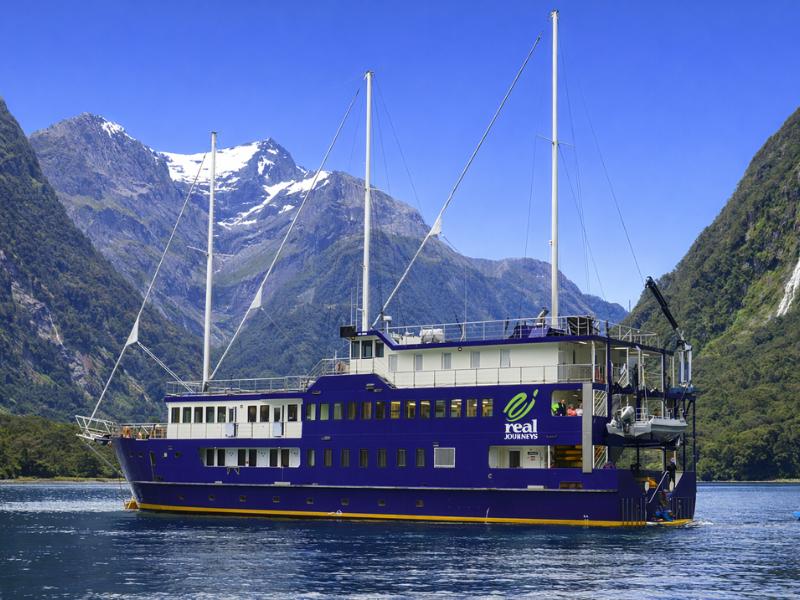
RealNZ is the largest operator on the fiord. Their fleet includes the Milford Haven (rooftop beer garden and contemporary lounge), the Milford Mariner (a traditional scow-style vessel with a historical atmosphere), the Milford Sovereign (largest and most group-friendly, with buffet meal options), and the MV Sinbad for their premium small-group experience. They also run the only overnight cruise product on the RealNZ side. Of all operators, RealNZ has the most flexibility in departure times and transport packages from both Queenstown and Te Anau. If you need everything bundled and want the most options, RealNZ is the default choice.
Southern Discoveries is the original Milford Sound cruise company. Their standard Nature Cruise runs 1 hour 45 minutes at NZD $165. Their Discover More cruise extends to 2 hours 15 minutes at $238, with a dedicated nature guide rather than just skipper commentary. Southern Discoveries also operates the Milford Sound Underwater Observatory, the only floating underwater observatory in New Zealand, where you descend 10 metres below the surface to see black coral and marine life. This is exclusively available through Southern Discoveries and represents a genuinely different experience from the standard cruise.
Cruise Milford limits each vessel to 75 passengers despite boats capable of carrying 150, which produces a noticeably less crowded experience than some larger operators at peak times. They run modern catamarans and are family-owned. Prices sit at NZD $175 for their standard cruise.
Mitre Peak Cruises is the smallest-boat option among the regular day operators, carrying around 60 to 70 passengers maximum. Guests who want the quietest, most intimate day cruise consistently point to Mitre Peak. Boats get as close to waterfalls as any other operator. The trade-off is fewer departures and less schedule flexibility.
Pure Milford runs modern glass-roofed catamarans with live commentary and is the most consistently budget-friendly option on the fiord at NZD $169. Good onboard facilities, solid reviews, no frills.
Questions about which operator suits your specific trip? The small boutique cruise is the usual match when you want a quieter boat without changing the route.
Want to know which cruise actually delivers the best value on the fiord? Here’s our New Zealand Milford Sound cruise comparison guide so you book with confidence.
What Is The Difference Between A Standard Cruise And A Premium Cruise?
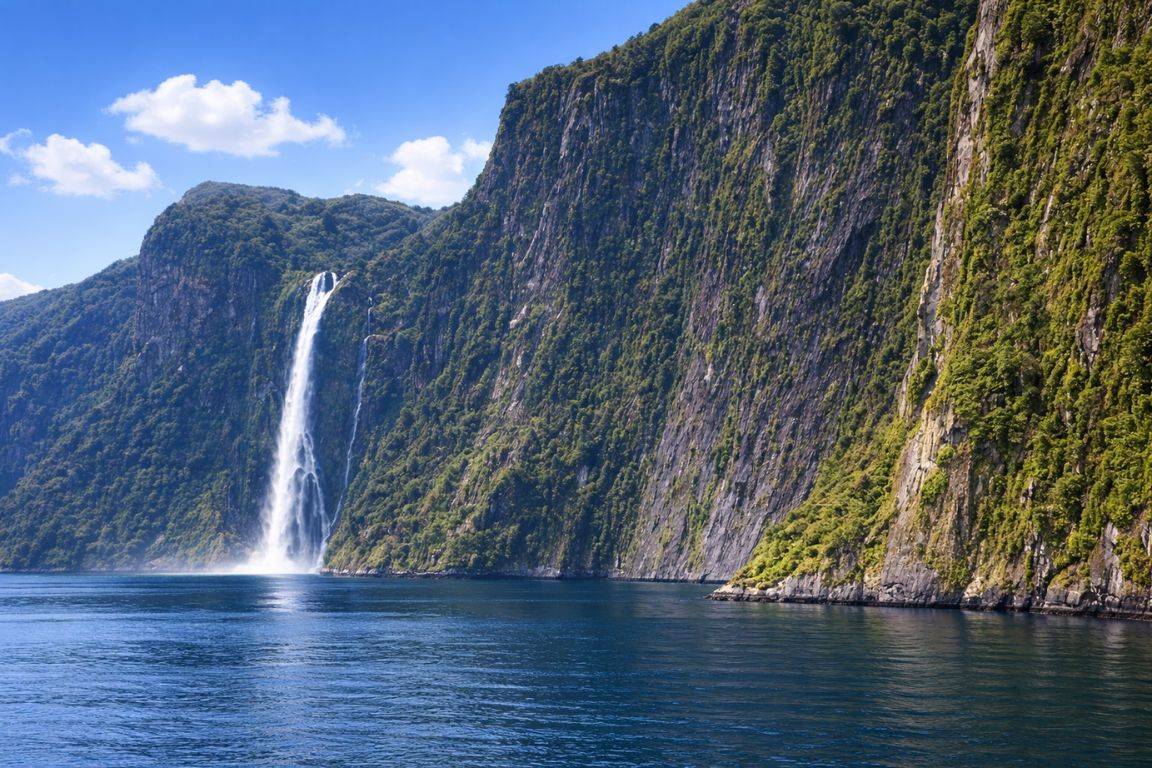 The scenery is identical. The difference is onboard experience: passenger density, food quality, service level, and boat atmosphere. A standard cruise carries up to 150 to 400 passengers on larger vessels. A premium or small-boat cruise caps at 20 to 80 passengers with reserved seating, fine dining, and a more considered commentary. The fiord outside the window looks the same. What changes is the experience of being on the water rather than just seeing what is outside it.
The clearest example of the premium tier is RealNZ’s MV Sinbad cruise at NZD $389. The Sinbad carries a small group, features reserved seating throughout, a five-course tasting menu curated by a New Zealand chef, Cloudy Bay sparkling wine on boarding, and an immersive Maori and conservation-focused commentary from guides who operate at a different level than the standard fiord narration. Passengers who have done both the Sinbad and a standard cruise consistently describe the Sinbad as a different category of experience, not just a more expensive version of the same thing.
Southern Discoveries’ Discover More cruise sits in a middle tier. At NZD $238 it is significantly above standard pricing but not at the Sinbad level. What it buys you is 30 extra minutes on the water, a dedicated nature guide (not just a skipper commentary), and a closer-to-wildlife experience on a smaller vessel capped at 75 passengers. For travelers who want more depth than a standard cruise without paying full premium prices, this is the strongest value option in that middle band.
The practical distinction worth knowing: on a standard large-boat cruise in peak season, you will share deck space with up to 150 passengers all trying to photograph Stirling Falls simultaneously. On a 60-passenger Mitre Peak vessel or a 20-passenger Sinbad, the deck is rarely congested. If personal space and unobstructed photography matter to you, smaller boats are worth the premium even before the food and service differences are considered.
Wondering whether the nature cruise is worth the premium if wildlife sightings aren’t guaranteed? This New Zealand Milford Sound scenic cruise vs nature cruise guide covers the honest trade-offs.
Is An Overnight Cruise Worth It?
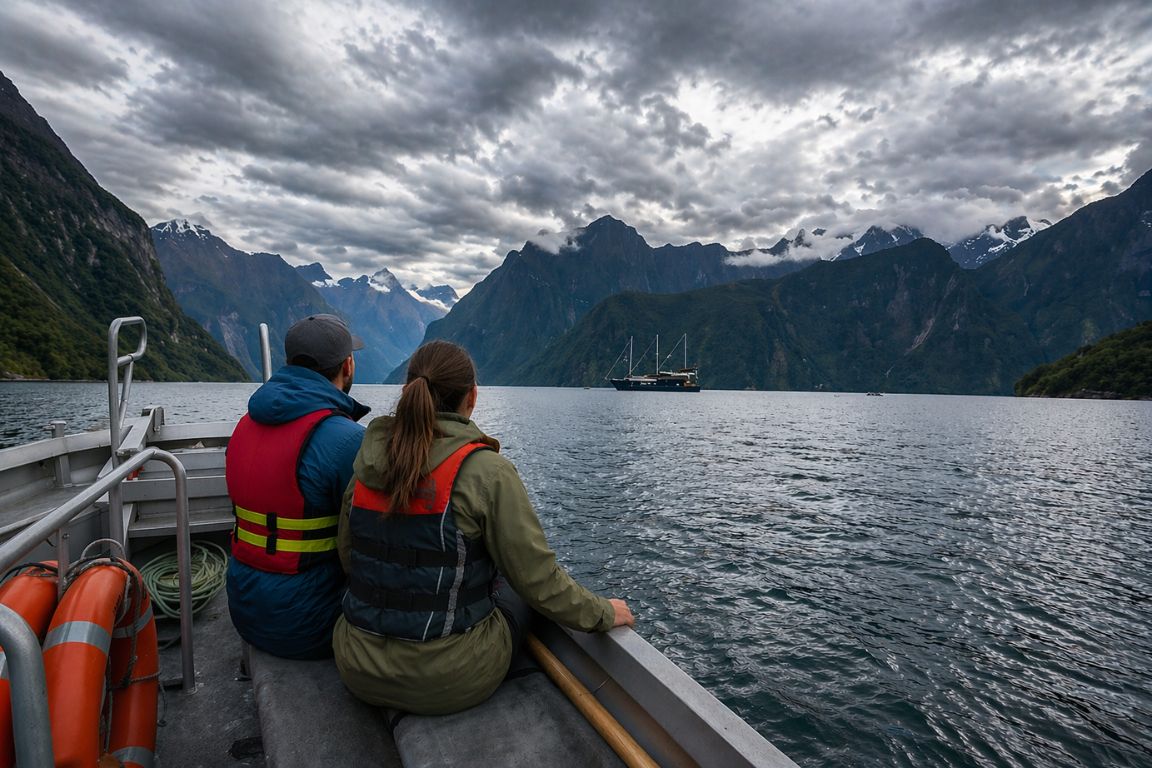 Yes, unequivocally. The overnight cruise is the best version of Milford Sound available. After the day visitors leave at around 4pm, the fiord goes quiet in a way that is completely unlike the daytime experience. You anchor at Harrison Cove, kayak or take a tender boat out in the late evening light, eat dinner onboard while the peaks above you go dark, wake up before dawn, and have Mitre Peak’s reflection in still water entirely to yourself. Guests who have done both a day cruise and an overnight consistently describe them as two different experiences rather than two versions of the same one.
There are two operators running overnight cruises: RealNZ on the Milford Mariner, and Fiordland Discovery on the Fiordland Jewel. Both anchor in the fiord overnight after the day traffic has left. Both include dinner, breakfast, and the option to kayak or take a tender boat out. The differences are meaningful.
The RealNZ Milford Mariner departs daily at 4pm and returns at 9:15am the following day. Private en-suite cabins are available alongside shared bunk-style options. The meal is a three-course dinner buffet. Pricing starts at around NZD $350 per person for a double cabin in season. The Mariner runs from approximately October through April.
The Fiordland Discovery Fiordland Jewel is the luxury alternative. Maximum 22 passengers across nine climate-controlled en-suite cabins, each with sea-view windows. The dinner is a three-course plated meal cooked by an onboard chef. There is a hot tub on the top deck. The Jewel also carries an ROV (remotely operated vehicle) that films underwater footage screened for guests after dinner. Pricing starts at around NZD $595 per person. Operating season runs from approximately November through April.
The Jewel produces more consistently exceptional guest reviews, driven primarily by the food, the small group size, and the cabin quality. The Mariner is the better value option and still delivers the core experience that makes the overnight worthwhile: Milford Sound in the hour after the day tourists leave and the hour before they arrive the following morning.
Both overnight products sell out well in advance of their operating seasons, particularly in December and January. Book these before any other element of your Fiordland itinerary, not as an afterthought.
What Should You Look For When Comparing Milford Sound Cruises?
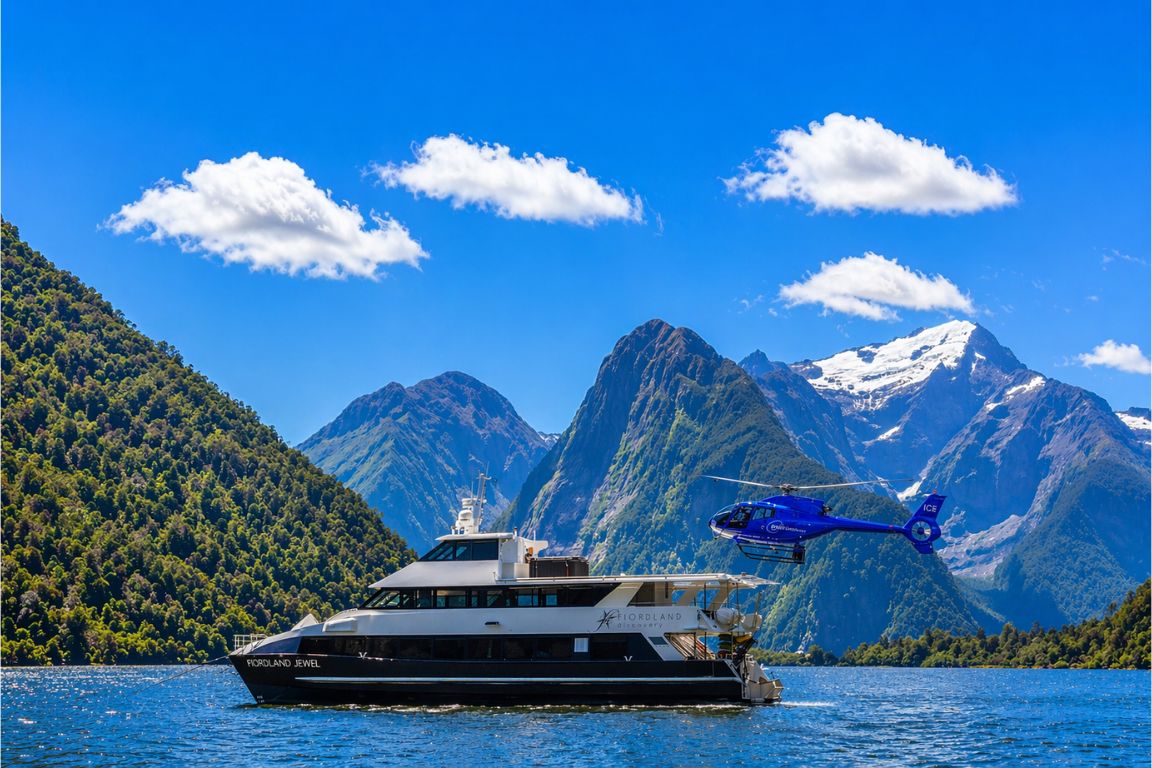 Five things matter when comparing cruises: passenger capacity and how full boats typically run, whether the cruise includes a nature guide or just skipper commentary, duration on the water, what is included in the price, and cancellation flexibility. Everything else, vessel aesthetics, onboard cafe menus, deck layout, is secondary. A cruise that runs at half capacity on a boat with no food service but a skilled guide often delivers a better experience than a full-capacity vessel with a buffet and generic PA commentary.
Passenger capacity is the most underappreciated variable. Some operators cap their vessels at 50 to 60 percent of physical capacity by policy. RealNZ’s Milford Haven, for example, can physically carry 400 passengers but typically caps at 150. Cruise Milford caps their 150-capacity boats at 75 passengers. These caps exist because the operators know what an uncrowded deck does for the experience. Look for operators who advertise these passenger limits specifically: it signals they understand the tradeoff between revenue and experience quality.
Commentary matters more than it sounds. There is a meaningful difference between a skipper narrating over a PA system and a dedicated nature guide working a small group. Guides who know the fiord’s ecology, who can read dolphin behaviour and position the boat for the best sighting angle, who understand the geology of the rock faces and can explain why the rainforest on those particular cliff ledges stays so dramatically green, change what you take away from the cruise. Southern Discoveries’ Discover More and the Sinbad explicitly include this tier of guide. Standard cruises vary significantly by individual crew.
Duration is simpler: longer is better if you can manage the timing. Standard cruises at 1 hour 45 minutes to 2 hours cover the fiord adequately. The Discover More at 2 hours 15 minutes gives a noticeably more relaxed pace without feeling rushed at the Tasman entrance. If you have only one chance to be on this water, more time on it is almost always preferable.
Cancellation policy: most operators offer full refunds with 24 hours notice. The Fiordland Discovery overnight is the notable exception; all bookings are final. Factor this into your planning, particularly for winter visits when road closures can prevent reaching Milford Sound on the day.
Trying to compare cruise packages but struggling to work out what each one actually covers? Check out our what’s included in New Zealand Milford Sound cruises guide before you commit.
What Time Of Day Is Best For A Milford Sound Cruise?
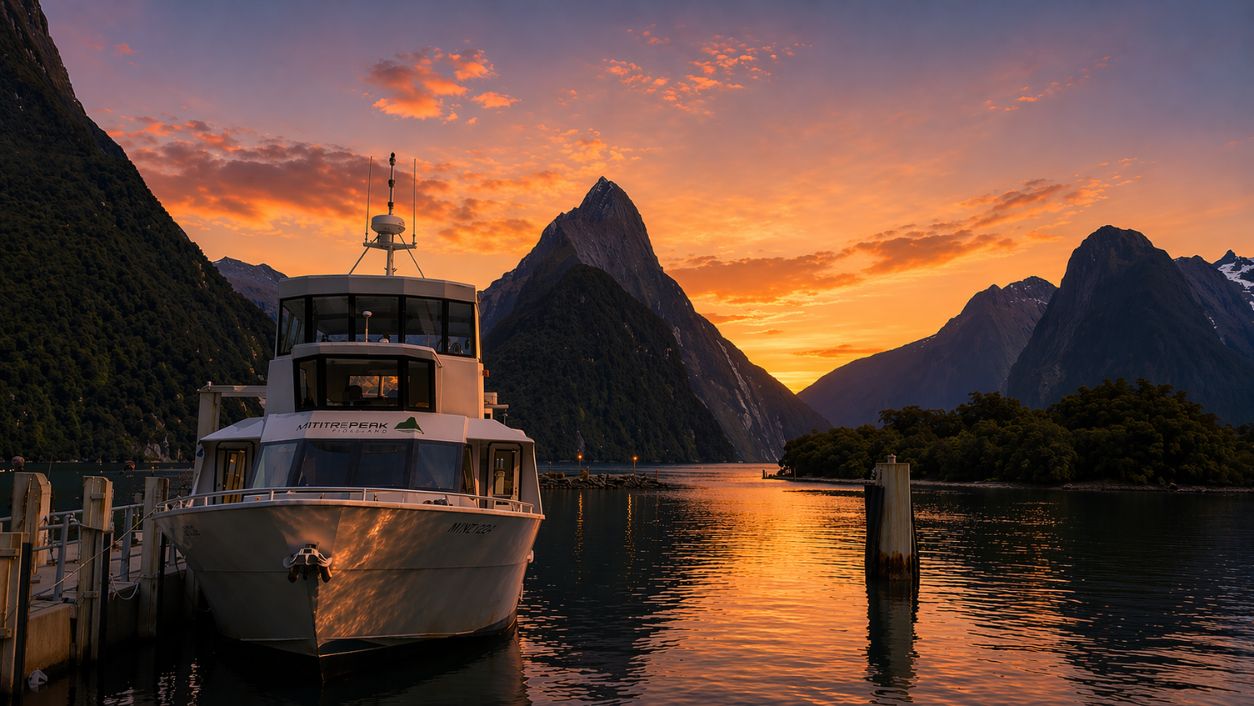 The first departure of the day, typically 9am or 10:30am depending on operator, is consistently the least crowded and produces the calmest water conditions. Midday and early afternoon departures are the busiest: multiple boats depart simultaneously, deck space is at its most contested, and the midday sun creates harsh light for photography. Late afternoon cruises (3pm and later) see fewer passengers and give the fiord’s light a quality that morning cannot match. Avoiding the 11am to 1pm window in peak season is one of the best decisions a first-time visitor can make.
The midday crowd peak exists because most visitors travelling from Queenstown by coach arrive at Milford Sound between 10am and 12pm. They have to depart by 2pm to 3pm to make the return journey reasonable. This concentrates the vast majority of fiord traffic into a two-hour window. During this window, up to five or six boats may be operating simultaneously, all stopping at the same landmarks in sequence. It works. You see everything. It just does not feel remote.
Morning departures, typically 9am or the first available slot, consistently receive better feedback for two reasons. First, the water is calmer: valley winds build through the day in Fiordland, and early morning often offers the flattest surface conditions for photography. Second, the first boat out often has the fiord to itself for the initial section before other departures catch up. Some skippers will push the boat harder on early departures to get ahead of the convoy, giving passengers 20 to 30 minutes with no other vessel in sight.
Afternoon departures at 3pm to 3:25pm are underrated. The Queenstown crowds have largely left. The sun is lower and strikes the fiord walls from an angle that produces more texture and shadow than the flat midday light. Late afternoon can be windier than morning, but the combination of quieter decks and better photographic light makes it a legitimate alternative to the morning slot for travelers who are not rigidly time-constrained.
One more note: the overnight cruise departs at 3pm to 4pm precisely to capture this transition window. After 4pm, the day visitors are gone and you have the fiord to yourself until the next morning’s first departures arrive.
Not sure whether to book the early departure or wait for the afternoon slot? Here’s our morning vs afternoon New Zealand Milford Sound cruises guide so you pick the right one.
How Much Do Milford Sound Cruises Cost And What Is Included?
Standard day cruises range from NZD $165 to $175 for adults in peak season. The Discover More extended cruise with a nature guide runs NZD $238. The RealNZ Premium (Sinbad) is NZD $389. Overnight cruises start at approximately NZD $350 per person on the RealNZ Milford Mariner and from NZD $595 per person on the Fiordland Discovery Fiordland Jewel. Off-peak and winter prices run 10 to 15 percent below peak rates. Children aged 5 to 14 pay approximately 50 to 70 percent of adult prices. Infants under 5 are free on all day cruises.
The base price of a standard cruise includes the fiord experience itself, commentary, and typically complimentary tea and coffee. Food and additional drinks are sold separately onboard at most operators. If you plan to eat on the boat, check the inclusions before booking. The Sovereign buffet lunch through RealNZ must be pre-purchased. Southern Discoveries offers picnic lunch options as an add-on. The Sinbad Premium includes the five-course tasting menu in the ticket price. The overnight cruises include all meals.
We’ve put together a full cost breakdown in our New Zealand Milford Sound tours on a budget guide so you know exactly where to spend and where to save without compromising the experience.
| RealNZ | Signature Cruise (Mariner/Haven) | 2 hrs | $169-$175 | Multiple vessels; barista coffee; rooftop deck |
| RealNZ | Classic Cruise (Sovereign) | 2 hrs | $169 | Largest boat; most accessible; buffet add-on available |
| RealNZ | Premium Cruise (MV Sinbad) | ~2 hrs | $389 | 5-course tasting menu; sparkling wine; small group |
| Southern Discoveries | Nature Cruise | 1 hr 45 min | $165 | Original operator; conservation donations included |
| Southern Discoveries | Discover More Cruise | 2 hrs 15 min | $238 | Dedicated nature guide; longest standard day cruise |
| Southern Discoveries | Cruise + Underwater Observatory | ~3.5 hrs total | ~$195-$250 | Only underwater observatory in NZ; 10m below surface |
| Cruise Milford | Day Cruise | 1 hr 45 min | $175 | Capped at 75 pax (150-capacity boats); family-owned |
| Mitre Peak Cruises | Day Cruise | 2 hrs | $169 | Smallest main-fleet boat; max ~60 passengers; quietest |
| Pure Milford | Day Cruise | 1 hr 45 min | $169 | Modern catamaran; glass roof; most budget-friendly |
| RealNZ | Overnight (Milford Mariner) | ~17 hrs | From ~$350 pp | Dinner, breakfast, kayaking, nature guide; Oct–Apr |
| Fiordland Discovery | Overnight (Fiordland Jewel) | ~18 hrs | From ~$595 pp | Max 22 guests; plated 3-course dinner; hot tub; ROV footage; Nov-Apr |
Prices verified April 2026. Peak season (December to February) midday rates. Off-peak and early/late departures typically 10-15% lower. Overnight prices approximate and vary by cabin type and booking date.
How Far In Advance Should You Book A Milford Sound Cruise?
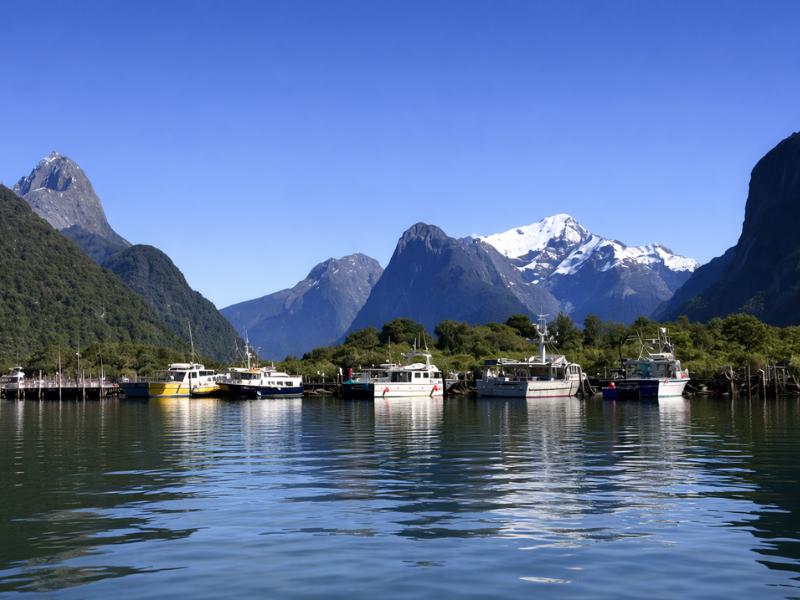
For summer visits (December to February), book standard day cruises at least two to three weeks ahead for preferred departure times. Book the overnight cruise as early as possible, ideally months ahead: both RealNZ and Fiordland Discovery’s overnight products sell out well before the operating season begins, and the Fiordland Jewel in particular books months in advance. In shoulder season (March to May, September to November), one week ahead is usually sufficient. In winter, walk-up bookings are often available.
The booking window for different products varies significantly. A standard midday day cruise in December or January fills fast, but first and last departures of the day typically have more flexibility. If your summer itinerary requires a specific date and time, booking three to four weeks ahead removes the risk of finding your preferred slot full.
The overnight products operate on a completely different booking timeline. The Fiordland Jewel runs a maximum of 22 passengers, has nine cabins, and operates only from November through April. The combination of small capacity and a genuinely extraordinary reputation means it books well in advance of its season opening. Travelers who decide they want the overnight cruise after arriving in New Zealand regularly find it unavailable. Book this product first, before any other element of your South Island itinerary, if it is on your list.
The RealNZ Milford Mariner overnight runs from approximately October through April and has more capacity than the Jewel but still sells out peak-season slots weeks or months ahead. The December and January dates go first; shoulder months are more flexible.
A note on weather cancellations: the main weather-related disruption to day cruises is not rain (cruises run in rain without cancellation) but road closures due to avalanche control or severe events on the Milford Road. If your cruise is cancelled for a road closure, operators will offer a rescheduled date or a refund. Booking with 24-hour cancellation flexibility where possible gives you room to adjust if conditions look uncertain the day before.
If you’d rather not assemble cruise, transport, and timing yourself, the small-group tour from Queenstown already combines pickup, the road, and a cruise.
What Our 14,500+ Guided Travelers Tell Us About Milford Cruises
Fourteen years of guiding and observing how different travelers respond to different cruise products produces consistent patterns. These are the observations that come up most reliably from our own traveler cohort.
| First-timers who wished they had booked the overnight | 45% – our single most consistent post-trip feedback observation |
| Travelers who chose an early morning departure and rated it better than midday | 94% – less crowded decks and calmer water consistently cited |
| Guests who upgraded to a premium or small-boat cruise and felt it justified the cost | 82% – most commonly cited reason: deck space and guide quality |
| Travelers who found standard cruise commentary adequate without a dedicated nature guide | 65% – varies significantly by operator and individual skipper |
| Guests who tried the Underwater Observatory and rated it a worthwhile addition | 78% – particularly strong among those who hadn’t expected the black coral |
| Overnight cruise guests (both operators combined) who described it as the trip highlight | 96% – consistently the highest satisfaction score of any product we run |
Frequently Asked Questions

See The Practical Details For A Terminal Sailing Bring a waterproof layer for a 105-minute terminal cruise that includes tea, coffee, and biscuits, then confirm parking and check-in for your date.
Scheduled dates load here. Confirm availability and final price on Viator.
Viator scheduled departures, not confirmed inventory for your party. Select the same date on Viator to confirm availability and final price.
This recommendation does not fit your selected itinerary. Adjust your choices at the end to see other options.
Do all Milford Sound cruises follow the same route?
Yes. All day cruises travel the full length of the fiord from the terminal at Freshwater Basin to the Tasman Sea entrance and back. Every boat passes Mitre Peak, Lady Bowen Falls, Stirling Falls, Seal Rock, and Harrison Cove. The route is determined by the geography of the fiord, not by operator choice. The scenery is identical regardless of which company you book with.
Is the Milford Sound Underwater Observatory worth it?
For most visitors who haven’t experienced an underwater observatory elsewhere, yes. You descend 10 metres below the surface by spiral staircase into a purpose-built floating structure, and view the fiord’s unique underwater world through panoramic windows. The fiord’s freshwater surface layer creates low-light conditions that allow deep-sea species, including black coral colonies some up to 200 years old, to grow at unusually shallow depths. It is exclusively available through Southern Discoveries and typically adds NZD $30 to $50 to the cruise price depending on the package.
Are Milford Sound cruises suitable for children?
Yes. All operators accommodate families and infants under 5 travel free. Children aged 5 to 14 receive discounted pricing, typically 50 to 70 percent of adult rates. Larger vessels like the RealNZ Sovereign are the most practical for families due to indoor seating space and stability. The Fiordland Discovery overnight is not recommended for children under 6. Small-boat premium experiences like the Sinbad specify ages 5 and above.
Do cruises run in bad weather?
Yes. Milford Sound cruises run in rain, which is the standard weather condition in Fiordland. Boats have fully enclosed indoor decks with panoramic windows so passengers stay comfortable regardless. The main weather-related disruptions are strong winds (rare, as the fiord is sheltered) and road closures preventing access via the Milford Road. If your cruise is cancelled by the operator, a rescheduled date or full refund is offered.
When does the overnight cruise operate?
The RealNZ Milford Mariner overnight operates from approximately October through April. The Fiordland Discovery Fiordland Jewel operates from approximately November through April. Neither operator runs overnight cruises from May through September. Book well in advance for both: the Fiordland Jewel in particular books months ahead of its season opening.
What should I wear on a Milford Sound cruise?
A waterproof jacket is essential regardless of forecast. Even in sunshine, the boat gets close enough to Stirling Falls that deck passengers will get sprayed. Layers underneath are worth carrying because air temperature drops when the boat is moving and when it is near the falls. Sturdy footwear rather than sandals is recommended. Insect repellent for when you are at the terminal and walking back to parking. A lens cloth or dry bag for cameras and phones.
Not sure which cruise fits your trip? Start with the overnight on the Milford Mariner if a night on the fiord is an option, or the boutique day cruise if it is not.
Written by Liam Aroha Bennett
New Zealand tour guide since 2011 · Founder, New Zealand Milford Sound Tours
Liam has guided over 14,500 travelers through Milford Sound and Fiordland since founding the agency.