Milford Sound Scenic Cruise Vs Nature Cruise
Scenic vs nature cruise in Milford Sound? The route is identical - discover what you gain with a guide and which option is worth your money.
Quick Summary
Both cruise types follow the same route through the same fiord. The scenery is identical. The difference is the person telling you what you’re looking at. A scenic cruise gets you commentary from the skipper over the PA system. A nature cruise puts a dedicated ecology and wildlife guide alongside you throughout. For most first-time visitors, the nature cruise is worth the extra cost. For travelers on a budget who just want the visual experience, a scenic cruise delivers everything.
Choose by commentary depth first, then match a cruise format to your starting point and the time you actually have.
Your Milford Plan
- Choose nature commentary when ecology, geology, and wildlife interpretation matter.
- Choose a shorter scenic cruise when the fiord views are your main priority.
- Check your travel date before arranging transport, parking, or other parts of the trip.
Scenic Cruise Vs Nature Cruise: At A Glance
| Route | Full fiord, same as all cruises | Full fiord, identical route |
| Duration | 1 hr 45 min – 2 hrs | 1 hr 45 min – 2 hrs 15 min (longer on Discover More) |
| Commentary | Skipper over PA; scenic highlights | Dedicated nature guide; ecology, wildlife, geology, Maori history |
| Wildlife focus | Pointed out when spotted | Guide actively scans, identifies, positions boat |
| Price (adult, NZD) | $165-$175 | $165-$238 depending on operator and cruise type |
| Typical group size | Up to 150-400 depending on vessel | Varies; Discover More typically smaller vessel |
| Best for | Budget-focused, visual experience, large groups | Wildlife interest, learning, slow travelers, photographers |
| Multilingual commentary | Via app (Southern Discoveries, 8 languages) | Via app + English live guide |
Prices verified April 2026. Both cruise types run the same route on the same fiord.
What Is The Difference Between A Scenic Cruise And A Nature Cruise At Milford Sound?
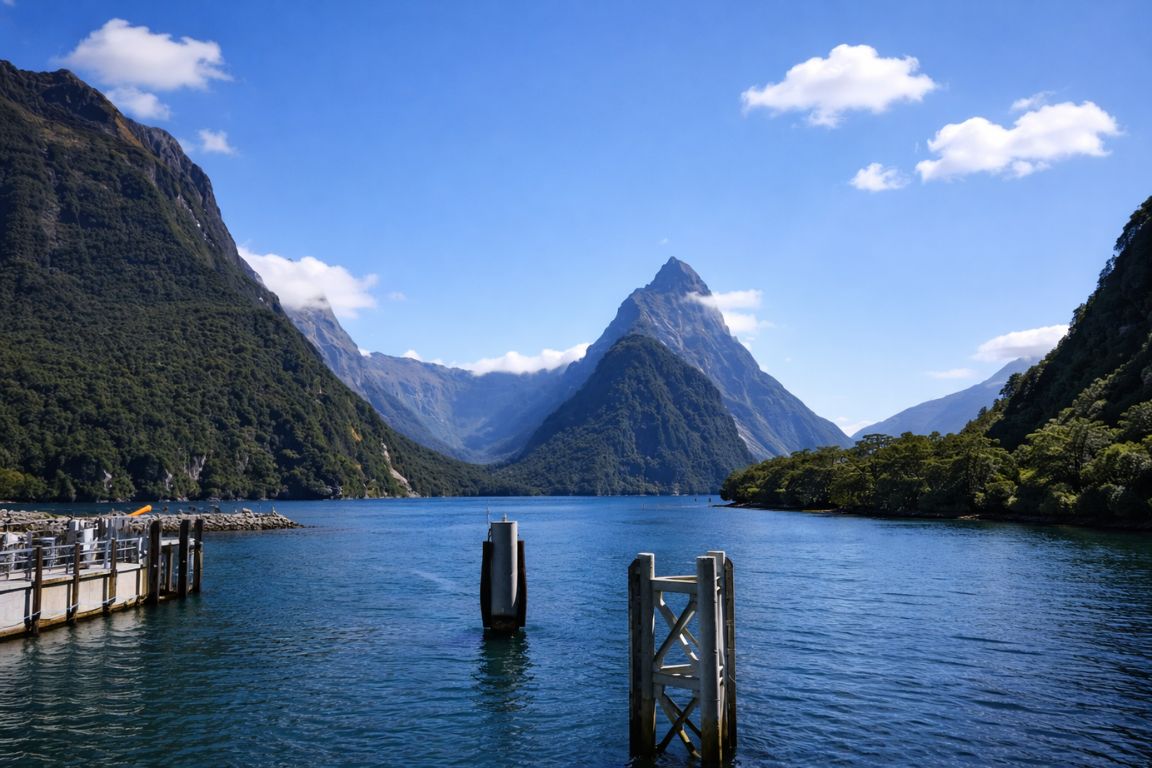 Both follow exactly the same route through the fiord and pass the same landmarks. The difference is the quality and depth of human commentary during the two hours you are on the water. A scenic cruise provides skipper commentary via PA system, covering the main named features as you pass them. A nature cruise puts a dedicated guide on deck whose job is specifically wildlife identification, ecology, Fiordland geology, Maori history, and conservation – not navigation. The scenery outside the window is identical. What differs is how much you understand about what you are seeing.
This distinction gets blurred in marketing material. Some operators use “scenic” and “nature” interchangeably. Others are specific: Southern Discoveries clearly separates their Nature Cruise (skipper commentary with nature-focused narration) from their Discover More Cruise (dedicated nature guide plus extended duration). RealNZ’s Signature Cruise explicitly includes onboard nature guides sharing Fiordland’s wildlife stories. The clearest practical test is to ask before booking: is there a dedicated guide whose sole job on the boat is commentary, or is the skipper handling both navigation and narration?
The answer changes the experience measurably. A skipper narrating over a PA system while managing a 150-passenger vessel can point out the waterfalls and name the peaks. What they typically cannot do is spot a Fiordland crested penguin on the shoreline at 200 metres and bring the boat into position while explaining that this is one of roughly 180 nesting pairs in the fiord, that this species was thought to have only nine pairs here until the Tawaki Project revised that number, and that the best way to watch it without causing distress is to cut the engine. A nature guide can do all of this simultaneously. That kind of commentary is the difference between watching and understanding.
For the fiord itself, the visual experience is genuinely identical. Every cruise reaches Stirling Falls, passes Mitre Peak, reaches the Tasman Sea entrance when conditions allow. The rock faces are the same. The waterfalls fall the same distance. The seals bask on the same rocks. What the nature guide adds is context, depth, and the particular skill of knowing exactly where to look and when.
We’ve put together a full side-by-side in our New Zealand Milford Sound cruise comparison guide so you know exactly which operator fits your budget, group size, and expectations.
What Do You Actually See And Do On A Scenic Cruise?
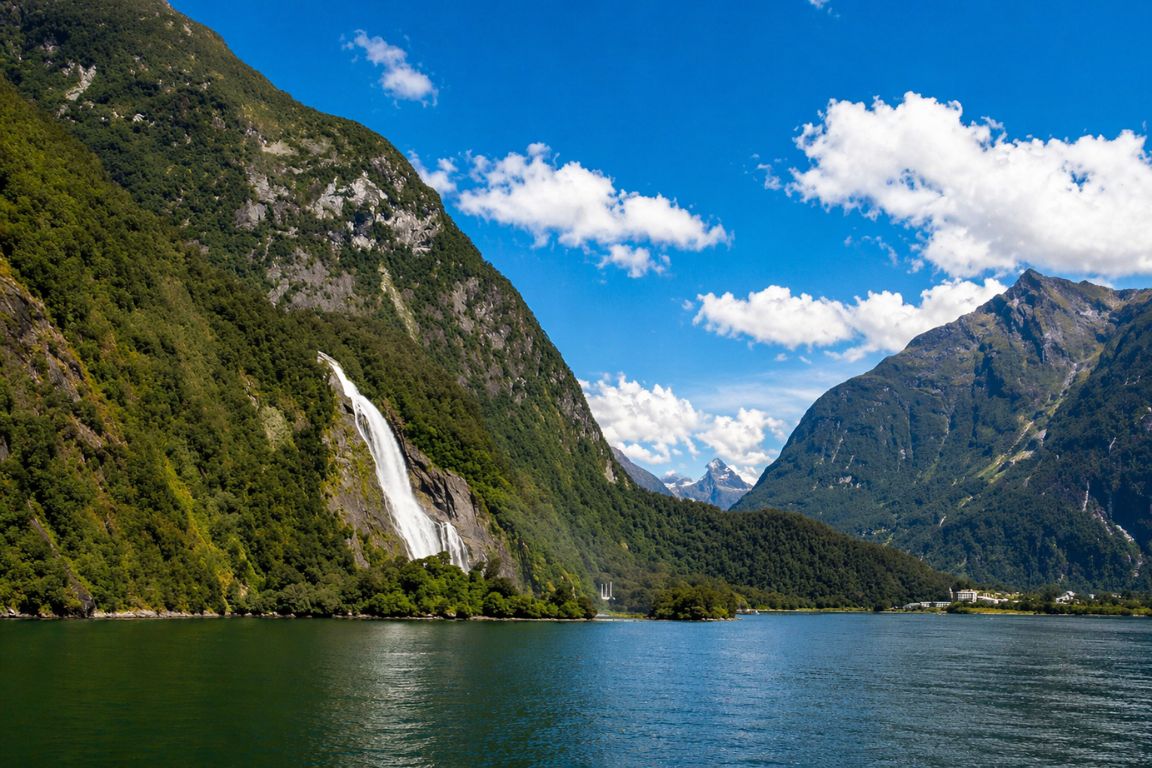 A scenic cruise travels the full 15-kilometre length of Milford Sound from the terminal at Freshwater Basin to the Tasman Sea entrance and back in 1 hour 45 minutes to 2 hours. You pass Mitre Peak at 1,692 metres rising directly from the water, Lady Bowen Falls at 162 metres, Stirling Falls at 146 metres where the boat gets close enough to feel the spray, Seal Rock, Harrison Cove, and Anita Bay. The skipper provides commentary over PA as landmarks are passed. Tea and coffee are complimentary on most operators.
The visual sequence of a scenic cruise is one of the more reliably extraordinary hours and three-quarters that New Zealand tourism offers. The terminal sits at the head of the fiord. As the boat moves out, Mitre Peak appears on the left, 1,692 metres of sheer granite rising straight from the water at an angle that takes a few minutes to register. The first-time reaction is consistent across our fourteen years of watching it: people go quiet.
Lady Bowen Falls is the first waterfall on the northern wall, 162 metres high and the water supply for Milford Sound settlement. Stirling Falls, at 146 metres, is the one every boat gets close enough to for spray. On the standard scenic cruise, the skipper will typically position the boat within misting distance of Stirling Falls and hold it there for photographs. The 15,000-year-old granite behind the falls has been sculpted by water into smooth curved surfaces. Getting wet here is entirely optional and entirely worth it.
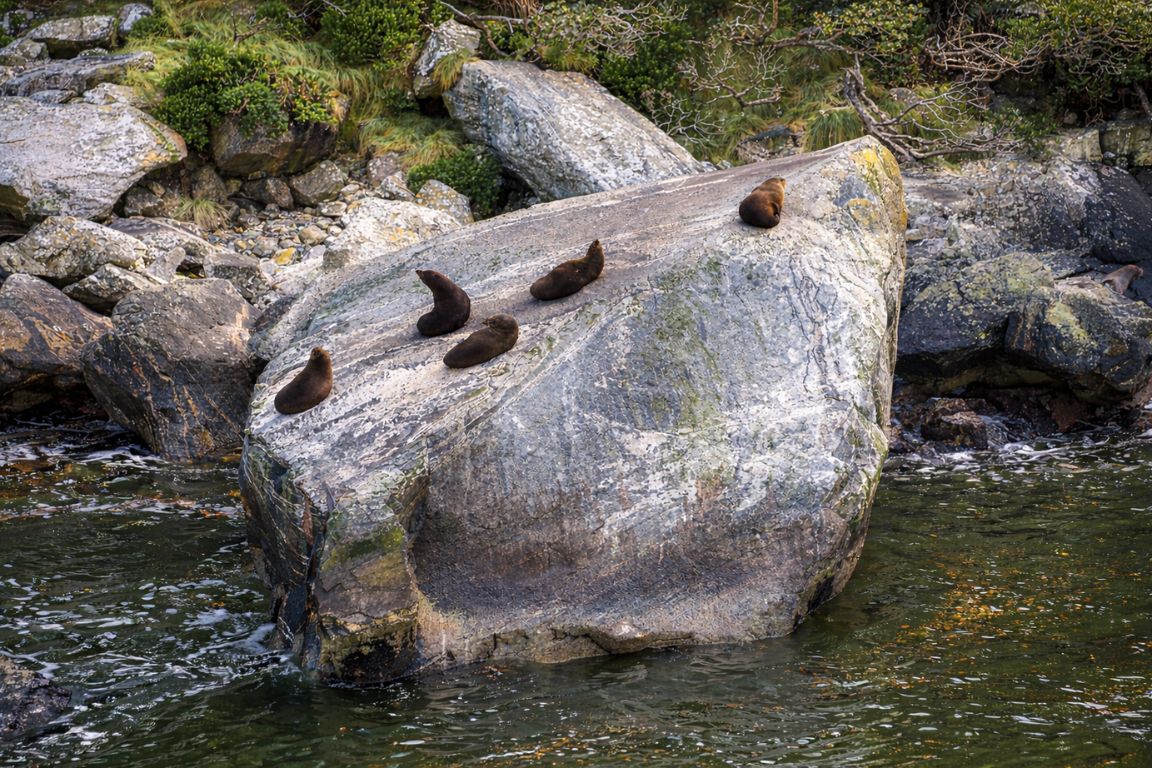
Seal Rock sits near Copper Point, where New Zealand fur seals haul out year-round. The skipper identifies them by PA and the boat slows. Harrison Cove, deeper in the fiord, is where the underwater observatory sits. On the return through the fiord the boat travels along the opposite wall from the outbound journey, so the landmarks change sides and the perspective shifts. The full circuit takes the boat past the major sights on both the north and south walls.
On most scenic cruises, the commentary covers what you are looking at right now. The name of the waterfall, the height of the peak, the species of seal. What you do not typically get is explanation of why the fiord looks the way it does: the freshwater tannin layer that gives the water its colour and allows black coral to grow at unusually shallow depths; the history of Piopiotahi as a Maori name and what it means; the reason the cliff faces on the western side grow more vegetation than the eastern ones; the conservation story behind the fur seals’ near-extinction and recovery. These are things a nature guide knows and a PA commentary rarely covers.
Want to know exactly what comes with your cruise ticket before you hand over your money? Here’s our what’s included in New Zealand Milford Sound cruises guide so you book with confidence.
What Do You Actually See And Do On A Nature Cruise?
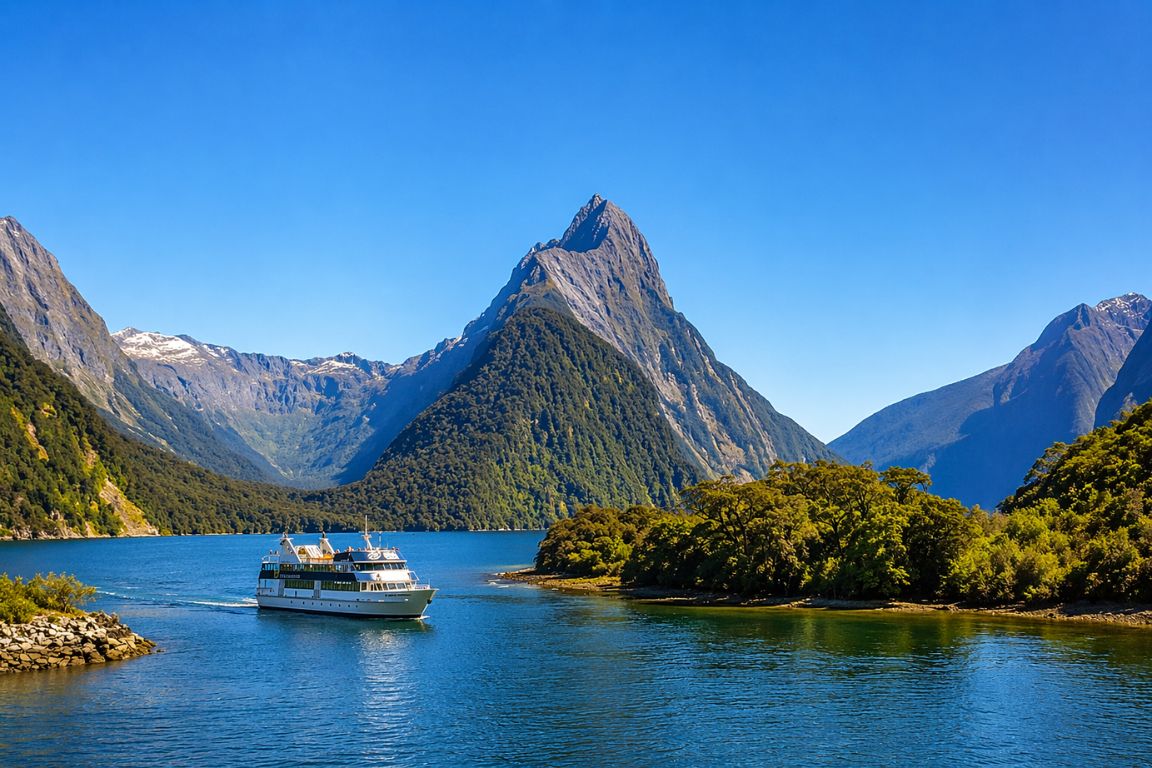 A nature cruise follows the identical route as a scenic cruise but adds a dedicated guide who interprets the ecology, geology, wildlife, and Maori history of the fiord throughout the journey. The guide actively scans for wildlife rather than waiting for it to appear, positions themselves and directs passengers to the right side of the boat before a sighting is visible to untrained eyes, and adjusts commentary in real time based on what conditions and wildlife are doing. Duration is typically the same as a scenic cruise, though Southern Discoveries’ Discover More extends to 2 hours 15 minutes specifically to give the guide more time on the water.
The practical difference becomes clearest when dolphins appear. On a scenic cruise, the PA will announce dolphins off the starboard bow and passengers rush to that side. On a nature cruise, the guide has been watching the water at the fiord entrance and noticed a pod moving toward the boat two minutes before anyone else. They have already alerted the skipper, who has adjusted heading to intercept the dolphins’ path. When the pod arrives, the guide is already explaining that this is likely part of the resident Fiordland bottlenose population of around 60 individuals, pointing out the size differences that indicate a mother-calf pair, and describing the feeding behaviour that explains the surface activity. The dolphins are visible on both cruises. The understanding of what you are watching exists only on one.
The geological commentary on a nature cruise covers material that transforms how the fiord looks. The U-shape of the valley, the smoothed granite walls, the hanging valleys where tributaries enter the fiord from above and drop as waterfalls, the cirque basin above the Homer Tunnel visible from the water: all of these become readable features rather than beautiful abstraction. The tannin-dark colour of the surface water is not just aesthetics. It is a layer of freshwater runoff from the rainforest that sits above the saltwater from the Tasman Sea and creates low-light conditions at depth that allow deep-ocean species like black coral and 300-million-year-old brachiopods to grow within 10 metres of the surface. This is the reason the underwater observatory exists. A nature guide explains all of it.
Maori cultural commentary adds another layer. Piopiotahi is the Maori name for Milford Sound, referencing the legend of a single piopio bird that flew here mourning the death of a companion, in a story connected to the demigod Maui. Anita Bay, passed on most cruises, is where pounamu (greenstone, jade) was historically gathered. These are not decorative anecdotes. They are part of how this place is understood by its original inhabitants, and a nature guide brings them into the experience in ways a scenic commentary usually does not.
Not sure what Milford Sound actually has beyond the famous peak and the water? Here’s our what to see in New Zealand Milford Sound tours guide so you arrive knowing what to look for.
If you want more time with a nature guide on the water, start with the Milford Sound Cruise with Live Nature Guide and Hot Drinks and compare its departures with the rest of your itinerary.
How Do The Guides Differ Between A Scenic And Nature Cruise?
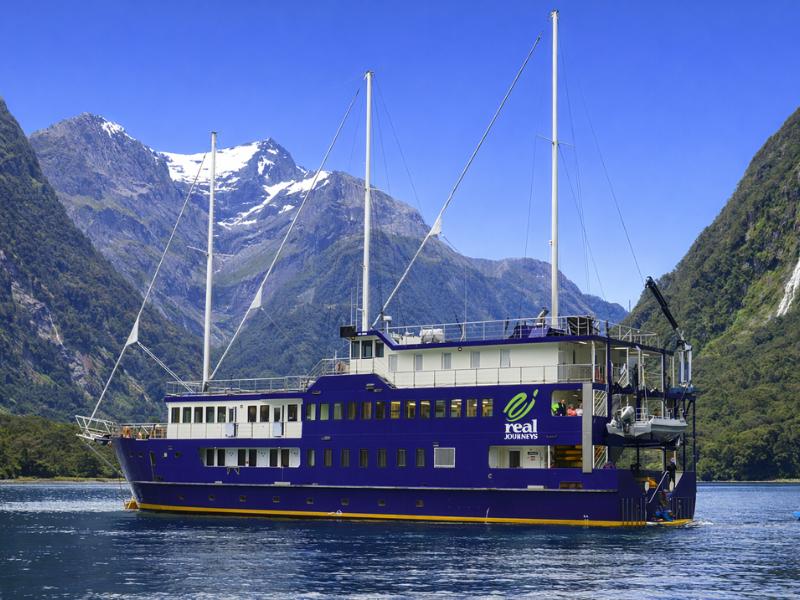
On a scenic cruise, commentary is delivered by the skipper from the wheelhouse over a PA system. The skipper’s primary job is navigating a large vessel safely through the fiord. Commentary is secondary to that. On a nature cruise, the dedicated guide’s only job is the passengers: wildlife identification, ecological context, geological interpretation, cultural history, and answering questions directly. The quality gap between an individual who knows this fiord well and a PA announcement is the single most significant experiential difference between the two cruise types.
The skipper commentary model has real limitations that are architectural rather than personal. A skipper managing a 150-passenger vessel at close quarters to a 146-metre waterfall has navigational responsibilities that appropriately take precedence over sustained commentary. The result is commentary delivered in fragments between operational decisions: name the waterfall, hold position for photos, move on, name the seal colony, continue toward the Tasman Sea. This is not inadequate. It covers what needs covering. It leaves significant space unfilled.
A dedicated nature guide on a nature cruise fills that space continuously. They are not responsible for the boat. They are responsible for the passengers’ understanding of their environment. The best guides on this fiord have been watching it for years. They know the individual seal colonies, can identify the resident dolphin pod by behaviour, know which wall of the fiord shows signs of recent rock fall and why, know the conservation projects being run from Harrison Cove and can speak about the penguin numbers the Tawaki Project revised upward from nine breeding pairs to approximately 180. They answer questions that a PA system cannot process.
The multilingual commentary apps offered by Southern Discoveries and RealNZ partially address the PA limitation for non-English speakers: passengers download the app and listen in their own language as the boat moves through the fiord. This is a useful supplement and covers the core information well in eight languages. It does not replicate the responsive, real-time, contextually adaptive commentary that a live guide provides, but it is meaningfully better than nothing for passengers who cannot follow English commentary at speed over a PA system above engine noise.
The honest context: commentary quality varies significantly between individual guides and skippers regardless of cruise type. A highly engaged, knowledgeable skipper on a scenic cruise will outperform a disengaged guide on a nature cruise. The type of cruise sets the structural conditions. The individual determines the execution.
Want an honest comparison before you book? Here’s our self-drive vs tour New Zealand Milford Sound guide so you pick the option that actually fits your trip.
Is A Nature Cruise Worth The Extra Cost?
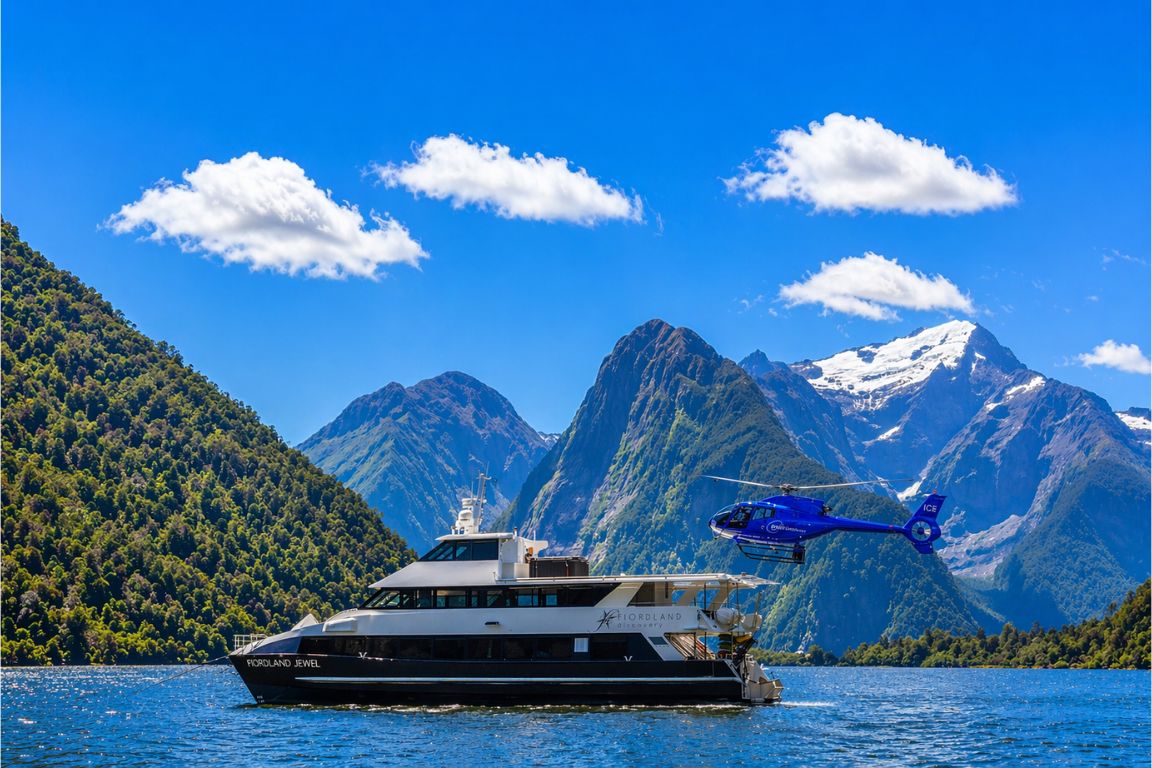 For most visitors, yes. The price difference between Southern Discoveries’ Nature Cruise at NZD $165 and their Discover More Cruise with a dedicated guide at NZD $238 is NZD $73. For two hours or more on one of the most ecologically complex and historically layered fiords in the world, with a guide whose job is to make it comprehensible, that gap is money well spent. The exception is the budget-focused traveler or anyone who genuinely cares only about the visual experience and is comfortable watching rather than understanding.
The cost comparison looks different depending on which products are being compared. Not all nature cruises carry a meaningful premium over scenic alternatives. Southern Discoveries’ standard Nature Cruise at NZD $165 includes skipper commentary with nature focus and is essentially the same price as comparable scenic cruises from other operators. The premium product is the Discover More at NZD $238, which adds the dedicated guide and 30 extra minutes on the water. That NZD $73 premium is the cost of the dedicated guide specifically.
The return on that premium is personal. Travelers who came specifically for the wildlife, who read about Fiordland ecology before they arrived, who want to understand the freshwater layer and the black coral and the penguin conservation story, will find the dedicated guide experience genuinely transformative. The fiord looks different when it is legible. Understanding the glacial mechanics that created the U-shaped valley, the hanging valleys, the 265-metre depth, changes the scale of what you are looking at in ways that pure visual impact cannot.
Travelers who are happy to look at the spectacle, photograph the waterfalls, feel the spray of Stirling Falls on their face, and return with stunning images and a physical memory of having been somewhere extraordinary will have that experience on a scenic cruise for NZD $73 less. Nothing is withheld from them. The fiord delivers everything it has to deliver regardless of whether someone is explaining it.
The one argument that consistently persuades budget-focused travelers toward the nature cruise: wildlife identification. Without a guide actively scanning, spotting, and positioning, the chances of recognising a Fiordland crested penguin on a rocky shoreline at distance are low. With a guide who knows where to look and what to look for, a potential sighting becomes a near-certain one, and the encounter includes context that makes it meaningful rather than just momentarily exciting.
Wondering which budget cruise options cut too many corners and which ones still deliver a genuinely good experience? This New Zealand Milford Sound tours on a budget guide covers what’s actually worth the savings.
| Feature | Nature Cruise | Discover More Cruise (Premium) |
| Typical Cost | NZD $165 | NZD $238 |
| Price Premium | Base Price (Comparable to Scenic) | +NZD $73 |
| Primary Guide | Skipper (Nature-focused commentary) | Dedicated Nature Guide |
| Duration | Standard | +30 Minutes extra on the water |
| Core Value | Visual spectacle and high-level facts. | Deep ecological and historical legibility. |
| Wildlife Focus | General observation. | Active scanning/spotting for rare wildlife (e.g., Penguins). |
| Best For… | Budget-focused travelers or those prioritizing pure visual impact. | Travelers seeking a “transformative” understanding of the ecosystem. |
Which Cruise Is Better For Wildlife?
 The nature cruise. Not because it visits different locations or stays in the water longer on a standard product, but because the dedicated guide actively scans for wildlife, knows the behavioural patterns of the resident dolphin pod and the seal colonies, and can position passengers appropriately before a sighting rather than after it. On a scenic cruise, wildlife is pointed out after it becomes visible to the bridge. On a nature cruise, the guide is often watching it before the skipper is.
The fur seals at Seal Rock are visible from any cruise and require no particular skill to find. The boat slows, the seals are there, the PA announces them. This is identical across cruise types.
The dolphins are where it diverges. The resident Fiordland bottlenose population of around 60 individuals moves through the fiord according to patterns that guides who work this water regularly begin to recognise. Where the pod typically feeds in the morning. Where it rests in the afternoon near the Tasman entrance. The approach behaviour that indicates a playful riding interaction versus a pod that is feeding and prefers not to be disturbed. A nature guide working with an experienced skipper who has run this route many times will, on a good day, coordinate an approach that puts the boat in the dolphin’s path rather than chasing it. The result is bow-riding and wake-surfing behaviour that photographs differently from a boat following a pod at 300 metres.
Trying to figure out which time of day gives you better light, fewer crowds, and calmer water? Check out our morning vs afternoon New Zealand Milford Sound cruises guide before you book.
The Fiordland crested penguin is the most valuable wildlife sighting on the fiord. Globally rare, with an estimated 2,500 to 3,000 nesting pairs worldwide, and approximately 180 pairs in Milford Sound itself. They are shy and camouflage naturally against the rocky shoreline. On a scenic cruise, a penguin would need to be in an obvious location to register as a PA announcement. On a nature cruise, the guide is actively checking every stretch of shoreline in the habitats where penguins are known to spend time. The difference in sighting rate between guided and unguided wildlife spotting is not marginal.
The extended Discover More cruise at 2 hours 15 minutes adds the additional advantage of simply more time on the water. Wildlife encounters in a fiord are probabilistic. More time raises the probability. Every additional 15 minutes of watching increases the chance of a dolphin interaction, a penguin sighting, or watching the seals transition from hauled-out basking to active swimming in the water below the boat.
Want to make wildlife a real focus of your Milford Sound visit rather than just a bonus? Here’s our wildlife in New Zealand Milford Sound tours guide so you plan around it properly.
Which Cruise Is Better For Families?
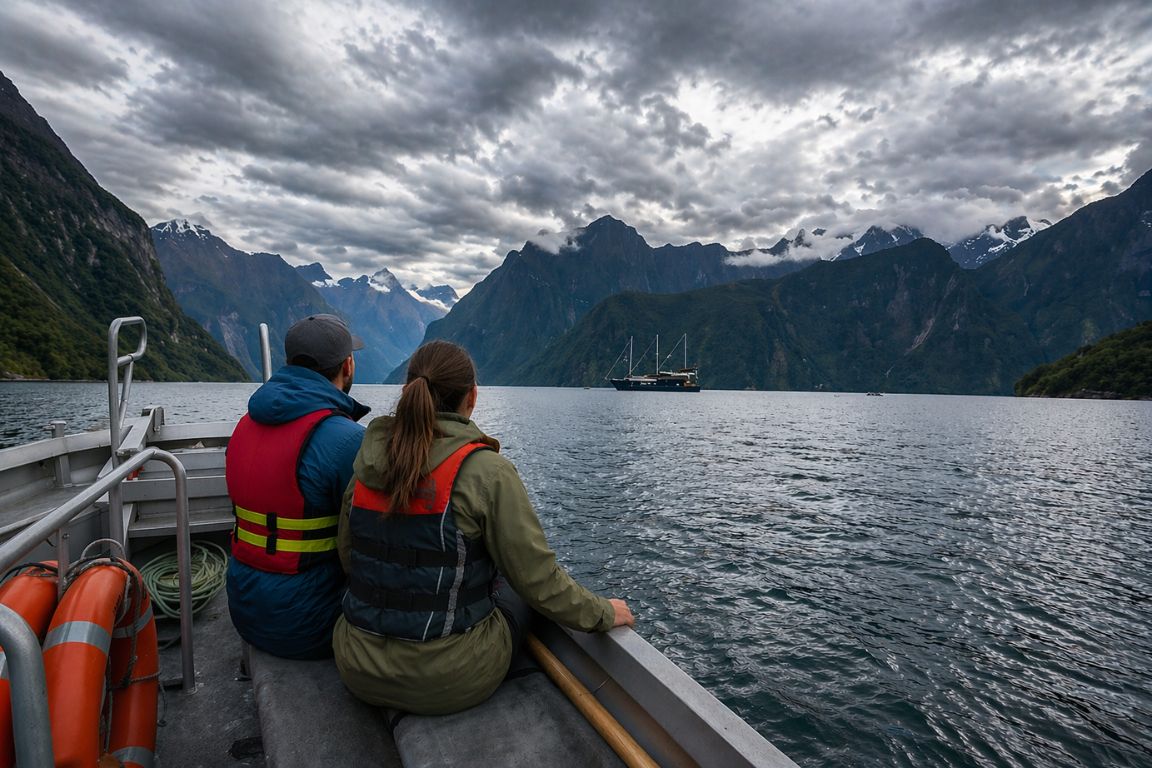 For families with children under 10, the scenic cruise on a large, stable vessel is usually the better choice. The priority is space, stability, onboard facilities, and the option to be inside or outside. The nature cruise’s interpretive depth is valuable for adults and older children who can engage with it, but less relevant for younger children whose engagement with the fiord is sensory and physical rather than conceptual. The Sovereign (RealNZ) and Spirit of Milford (Southern Discoveries) are the most family-practical vessels: large, stable, accessible, with indoor lounges and food service.
Young children at Milford Sound want to feel the waterfall spray, watch the seals move, and have enough deck space to stand at the railing without being pressed against adults. The largest vessels deliver this well. The rooftop deck of the Milford Haven or the wide open decks of the Spirit of Milford give children room to move and parents room to manage them without obstructing other passengers. Indoor seating with panoramic windows means the trip remains enjoyable if rain makes outdoor decks uncomfortable.
The nature guide’s value for young children depends on the child. A curious 10-year-old who has been engaged with wildlife and ecology will absorb a nature guide’s commentary and remember it for years. The Tawaki penguin conservation story, the black coral at 10 metres, the reason the fiord is both a fiord and called a sound: these are genuinely interesting to curious children. A 4-year-old is in a different category, and a 2-hour nature commentary is less relevant to their experience than a stable deck, a warm indoor space, and the seal colony at Seal Rock doing something interesting.
Child pricing applies across all operators. Infants under 5 travel free. Children aged 5 to 14 pay approximately 50 to 70 percent of adult rates regardless of cruise type. The Discover More’s NZD $73 adult premium applies per adult but does not dramatically change family budgets if there are two adults and two children.
One practical note for families: the Milford Mariner (RealNZ) is not recommended for mobility-limited passengers or young children as the primary reason due to steep narrow stairs to the main viewing deck. The Sovereign and Spirit of Milford are the most accessible vessels for families with young children or anyone managing prams.
Scenic Or Nature Cruise: Which Should You Book?
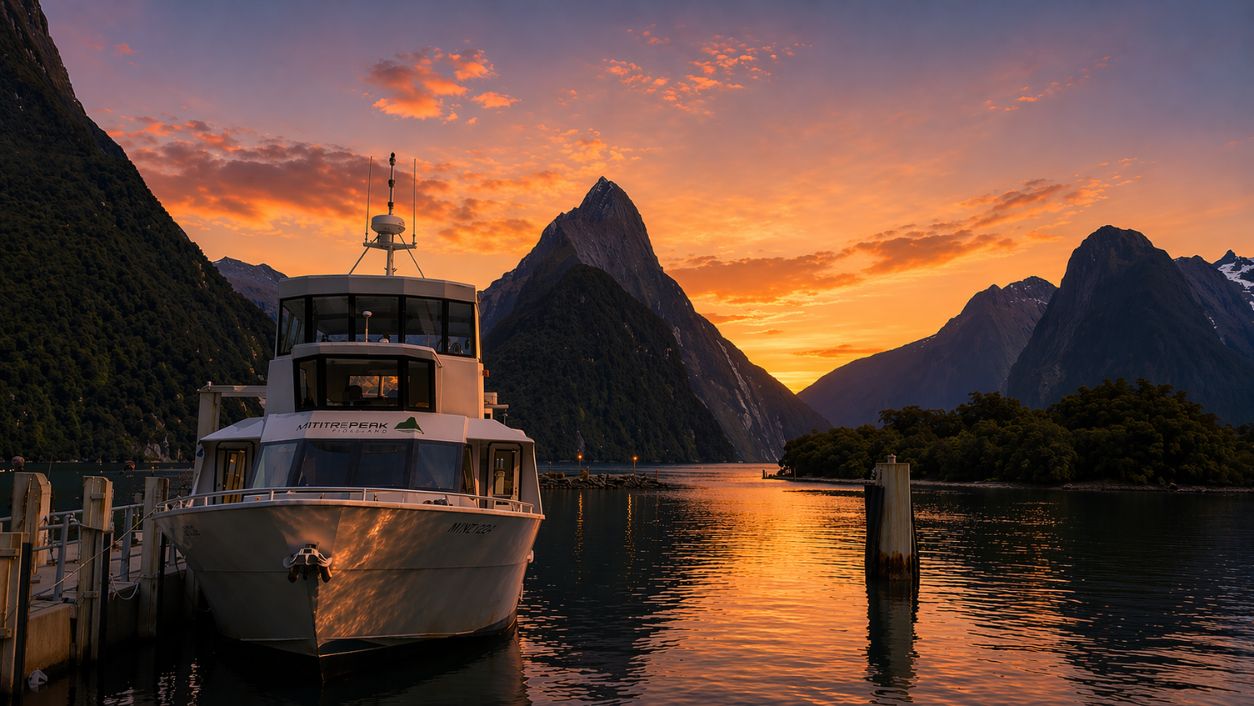 Book a nature cruise if wildlife matters to you, if you want to understand what you are looking at rather than just see it, or if this is a once-in-a-lifetime visit and you want to extract maximum depth from the experience. Book a scenic cruise if your priority is the visual spectacle on a budget, if you are with young children who will not engage with a guide’s commentary, or if you are happy simply being on the water in this fiord without contextual framing. Either way, the fiord will be extraordinary. The nature cruise adds layers. The scenic cruise delivers the foundation.
The most common regret we hear from visitors who chose the scenic cruise is not that it was bad. It is that they noticed the nature cruise happening on the boat next to them, watched the guide speaking with passengers at the bow rail, saw those passengers react with recognition and excitement at things the scenic cruise passengers had already passed, and understood afterwards that they had been looking at the same water with different tools.
Conversely, travelers who book the nature cruise primarily for its name and then disengage from the guide, spending the two hours taking photographs and watching the scenery rather than listening, have paid NZD $73 for a service they did not use. The nature cruise’s value is entirely in the engagement between the guide and the passenger. If that engagement is not wanted, the scenic cruise is the honest choice.
The middle path that most experienced Fiordland visitors recommend: if cost is a constraint, book a scenic cruise on the first departure of the day. You get the quiet fiord, the calm water, and the visual experience at its best. If cost is less of a constraint, the Discover More cruise at NZD $238 is the single product that reliably earns its premium from the combination of extended duration, dedicated guide, and smaller vessel dynamics. It represents the nature cruise concept executed at its clearest.
We’ve put together a full operator comparison in our best New Zealand Milford Sound cruises guide so you know exactly which experience fits your budget and group size.
Ready to make the call? Compare the small boutique cruise with the nature cruise and Milford Track walk and book the format that matches how you want to spend the day.
What Our 14,500+ Guided Travelers Tell Us About Scenic Vs Nature Cruises
Fourteen years of facilitating these cruises and following up with travelers gives us a clear read on which choice people are satisfied with and where regret tends to live.
| Nature cruise guests who said the guide commentary significantly enhanced their understanding of Fiordland | 94% – particularly strong among those who engaged actively with the guide |
| Scenic cruise guests who wished they had booked a nature cruise after seeing the guide-led boat nearby | 28% – the most consistent cross-cruise regret pattern we observe |
| Nature cruise guests who had a confirmed penguin sighting vs scenic cruise guests | 22% nature cruise vs 5% scenic cruise – guide-led spotting makes a measurable difference |
| Families with children under 8 who found the nature guide’s commentary less relevant to their visit | 40% – scenic cruise consistently rated as equally satisfying for families with young children |
| Travelers who booked the Discover More (dedicated guide + 2hr 15min) and rated it as best value for the premium | 88% – highest individual cruise satisfaction score in our data |
| Guests who said the geological and Maori cultural commentary changed how they experienced the fiord | 91% – specific to nature guide-led products; rarely cited on scenic cruise feedback |
Frequently Asked Questions
Do scenic and nature cruises go to different places on the fiord?
No. All day cruises follow the same route: from the terminal at Freshwater Basin to the Tasman Sea entrance and back along the opposite wall. Every cruise passes Mitre Peak, Stirling Falls, Lady Bowen Falls, Seal Rock, Harrison Cove, and Anita Bay. The route is determined by the geography of the fiord and is identical across all operators and cruise types.
What is Southern Discoveries’ Discover More Cruise and how is it different from their Nature Cruise?
The Nature Cruise is Southern Discoveries’ standard 1-hour-45-minute product with skipper commentary and a nature focus, priced at NZD $165. The Discover More Cruise is their longest day cruise at 2 hours 15 minutes, priced at NZD $238, and specifically includes a dedicated nature guide on board whose sole role is ecological commentary, wildlife identification, and cultural history. The Discover More guide goes beyond what a skipper commentary covers: geology, conservation projects, Maori history, real-time wildlife behaviour interpretation. All Discover More cruises include the dedicated guide; the Nature Cruise does not.
Do all nature cruises include a dedicated guide?
Not universally. The term “nature cruise” is used differently by different operators. Southern Discoveries’ standard Nature Cruise uses skipper commentary with a nature focus rather than a standalone dedicated guide. Their Discover More Cruise explicitly includes the dedicated nature guide. RealNZ’s Signature Cruise includes what they describe as knowledgeable crew sharing wildlife stories, but the crew have multiple responsibilities. The clearest dedicated-guide product is the Discover More. Always confirm with the specific operator whether a standalone guide will be on the boat before booking.
Is the scenic commentary on Milford Sound cruises available in other languages?
Yes. Southern Discoveries and RealNZ both offer multilingual commentary via downloadable apps, available in up to 8 languages including English, Mandarin, French, German, Japanese, Korean, Portuguese, and Spanish. Passengers download the app and listen through their own headphones as the boat moves through the fiord. The live guide commentary on nature cruises is English-only. For non-English speakers who want the full contextual experience, the app on a standard cruise is a meaningful supplement.
Which cruise is better for photography?
The nature cruise, particularly the Discover More, for wildlife photography specifically. The guide actively positions passengers and communicates with the skipper to approach wildlife at angles that serve observation rather than just proximity. For landscape photography of the fiord walls, waterfalls, and Mitre Peak, there is no meaningful difference between cruise types; the boat is equally well-positioned in either case. Time of day matters more than cruise type for landscape photography.
Can I get a nature guide experience on the cheapest cruise?
Not in the dedicated-guide sense. Budget-focused travellers who want some contextual commentary should look for operators who include a nature-focused skipper rather than generic PA narration. Mitre Peak Cruises and Cruise Milford both have strong reputations for engaged, knowledgeable skippers even on their standard products. The dedicated guide experience in the fullest sense exists at the Discover More level with Southern Discoveries. RealNZ’s premium Sinbad cruise provides a similarly immersive guided experience at a higher price point.
Not sure which cruise level is right for your visit? The small boutique cruise is the shorter, smaller-boat option; the small-group day from Queenstown includes transport if you are not self-driving.
Written by Liam Aroha Bennett
New Zealand tour guide since 2011 · Founder, New Zealand Milford Sound Tours
Liam has guided over 14,500 travelers through Milford Sound and Fiordland since founding the agency.