Morning Vs Afternoon Milford Sound Cruises
When to cruise Milford Sound? Compare morning vs afternoon, what to avoid, and the underrated departure time most travelers miss.
Quick Summary
Morning cruises are calmer, quieter, and better for wildlife. Afternoon cruises have better photographic light on the fiord walls and fewer competing boats after 3pm. The midday window (11am to 1pm) is the most crowded and least recommended. For most visitors coming from Queenstown on a coach tour, departure time is fixed. For self-drivers based in Te Anau, the first departure of the day is almost always the right choice. The last cruise of the afternoon is a seriously underrated option that very few travelers consider.
Match your starting point and preferred time of day to a cruise format before you arrange the rest of the itinerary.
Your Milford Plan
- Self-drivers can aim for an early sailing for calmer water or a later sailing for afternoon landscape light.
- Queenstown coach tours usually fix the cruise time, so the road schedule is already decided.
- An overnight cruise is the way to hold late afternoon, evening and the following morning in one booking.
Morning Vs Afternoon Milford Sound Cruise: At A Glance
| Crowd level | Low | Peak – avoid in summer | Low to moderate |
| Water conditions | Calmest – best for reflections | Can be windier | Variable; often calm again |
| Light quality | Soft, directional; deep shadows in the fiord | Bright, flat, high contrast on sunny days | Best overall – full sunlight on fiord walls from 3pm |
| Wildlife activity | Highest – dolphins most active in mornings | Good but more boats disturbing water | Seals active; fewer boats competing |
| Boats on the water | 1-2 at most early on | 5-6 simultaneously at peak | 1-2; last cruise often has the fiord alone |
| Price | Typically lower than midday | Highest of the day | Often lowest of the day |
| Best for | Wildlife, calm water, fewer people | Coach tour visitors from Queenstown | Photography, solitude, parking savings |
| Self-driver logistics | Requires early Te Anau departure (6-7am) | Standard departure from Te Anau 8-9am | Allows relaxed Milford Road stops on the way in |
Crowd and price patterns are based on peak summer season. Shoulder and winter seasons see fewer boats and more flexible availability at all departure times. Prices verified April 2026.
Does It Actually Matter Whether You Take A Morning Or Afternoon Cruise?
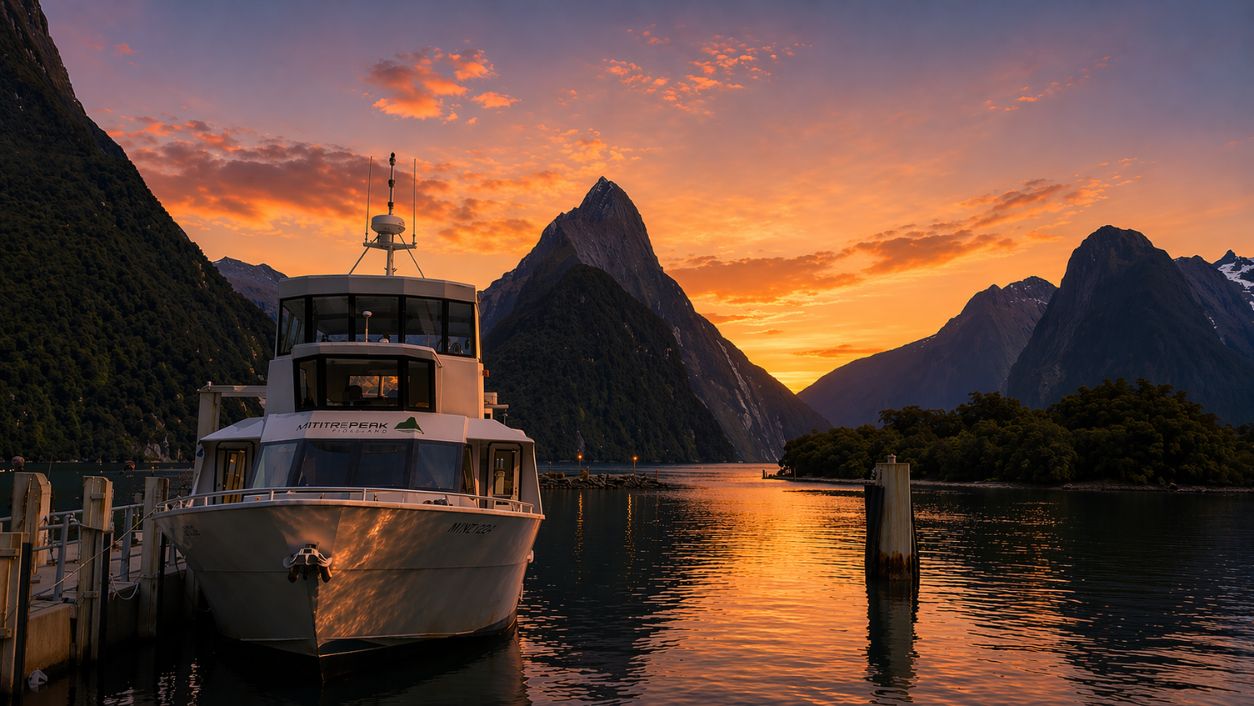 Yes, but not in the way most travelers assume. The scenery is identical at any time of day – the fiord does not change. What changes is how many other boats are sharing the same viewpoints with you, what the light does to the cliff faces and water surface, and how wildlife behaves. For most coach tour visitors from Queenstown, this choice is made for them by their departure time. For self-drivers with flexibility, it matters considerably. The midday window is the one slot to actively avoid in peak season.
The question comes up constantly in our pre-trip conversations. Travelers who have researched carefully want to optimise every element of the day, and departure time feels like something controllable in a visit where so much, weather especially, is not. They are right that it matters. They are often wrong about which direction it matters in.
The most common assumption is that morning is categorically better. It is better in several specific ways: calmer water, fewer boats on the fiord early on, and wildlife more active. But the light argument is more nuanced than most travel content suggests. Milford Sound runs roughly northwest to southeast. In the morning, the sun is behind the southern peaks and the western walls sit in shadow. The fiord looks dramatic, certainly, but the light is working against a clear view of Mitre Peak’s face and the waterfalls on the north wall. By mid to late afternoon, the sun has moved around enough to reach into the fiord, and the mountains come into full relief. A captain with experience on this water will tell you plainly: the best photographic light in clear weather is the 3pm departure.
The caveat that runs through everything: Fiordland gets rainfall on around 182 days per year. The difference in light between morning and afternoon matters on clear days and barely at all when the cloud is down. On a grey, rainy day, which is more likely than not, the departure time affects crowd level and wildlife far more than it affects the visuals. This is the honest framework for thinking about the choice.
Planning a trip to one of New Zealand’s most breathtaking landscapes? Here’s our how to visit New Zealand Milford Sound tours guide so you know exactly what to prepare for.
What Is The Morning Cruise Experience Like At Milford Sound?
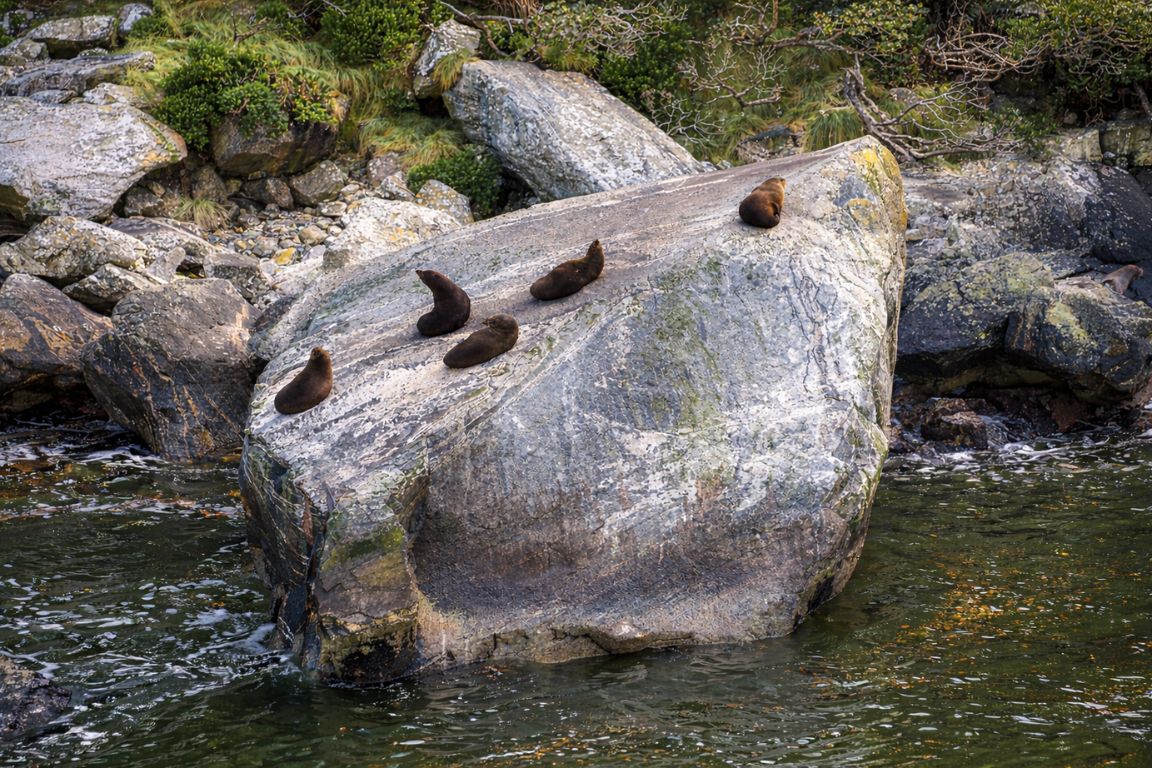 The morning cruise, typically departing at 9am or 10:30am depending on operator, offers the calmest water conditions of the day and the lowest passenger counts at the earliest departures. Mist often sits on the cliff faces and the water surface in the first hour after dawn. Wildlife is most active in the morning, particularly dolphins. The first boat of the day frequently has 15 to 20 minutes on the fiord before the next departure catches up, giving a brief window of genuine solitude that no midday cruise can produce.
Arriving at Milford Sound before the Queenstown coach convoys is the defining advantage of the morning cruise. Those convoys leave Queenstown at around 7am and arrive at Milford Sound from roughly 11am onward. This means anyone on the water before 11am is operating in a different version of the fiord from the midday crowd. The terminal is quiet. The car park has space. The boats that do depart together have more room between them as they move through the fiord.
The water in the morning is typically calmer than at midday. Valley winds build through the day in Fiordland, particularly in summer. Early morning, before this thermal effect takes hold, the fiord surface is often flat enough that Mitre Peak and the rock walls reflect cleanly. For photographers working with still-water reflections, this window, roughly the first two hours after dawn, is the one to target. It closes quickly as wind picks up and as other boats start creating wake.
Wildlife behaviour runs on its own clock. Bottlenose dolphins are more active in the mornings by measurable patterns, feeding and moving more freely before the heavier boat traffic of midday arrives. Seals are present year-round and visible at most hours, but early morning, when they have been resting overnight and are beginning to move, produces more active seal behaviour at Seal Rock than you see on the same cruise at 1pm. For visitors who care specifically about wildlife encounters, morning is the correct call.
The light trade-off is worth understanding. Early morning in a fiord that runs northeast to southwest means the western walls catch light before the eastern ones. Mitre Peak, on the south side, sits partly in shadow in the first hours. The waterfalls on the north wall, including Stirling Falls, are well lit from the southeast. So morning light favours certain landmarks and disadvantages others. Most travel photography of Milford Sound that circulates online was taken in the morning, which is part of why morning feels synonymous with “best light” but that impression partially reflects what photographers chose to shoot rather than an objective superiority.
Not sure which type of cruise actually suits what you came to Milford Sound to see? Here’s our scenic cruise vs nature cruise New Zealand Milford Sound guide so you pick the right one.
What Is The Afternoon Cruise Experience Like At Milford Sound?
 The afternoon cruise, particularly the 3pm to 3:30pm departure, is one of the most underrated choices on the fiord. By 3pm, the Queenstown coach convoys are loading up to leave, the terminal clears significantly, and the sun has rotated far enough west to illuminate the full face of Mitre Peak and the northern wall simultaneously. The last departure of the day often has the fiord entirely to itself. Parking after 3pm costs NZD $5 per hour rather than $10.
The crowd reversal that happens between noon and 3pm is dramatic. A midday arrival at Milford Sound during January means 50 coaches in the car park, queues at the terminal, and multiple boats operating simultaneously within visible range of each other. By 2:30pm, those same coaches are boarding their passengers and beginning the four-hour return to Queenstown. By 3:15pm, when the afternoon departure is underway, the terminal has thinned to a fraction of its lunchtime volume.
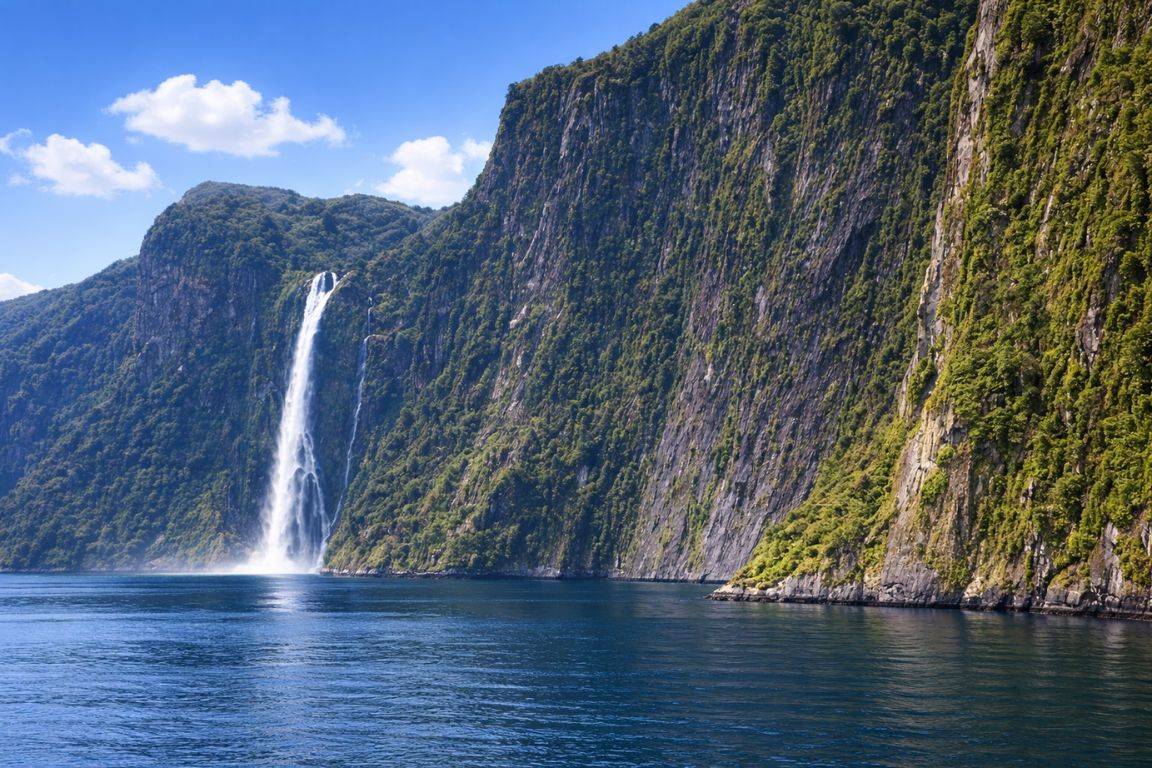
The light at 3pm, on a clear day, is genuinely superior to morning for photographing the fiord as a whole. A skipper who has run this route hundreds of times put it simply: by 3pm most of the mountains are in full sunlight. The pronounced shadows of the morning have resolved, the entire valley is lit, and the colour of the water shifts as afternoon light penetrates deeper into the tannin layer on the surface. The effect is measurable. The cliff faces take on a more three-dimensional quality. The waterfalls, lit from the side rather than from directly above, show more texture and height.
The last cruise of the day is the sleeper option. Mitre Peak Cruises, for example, runs a departure at around 3:55pm to 4:30pm depending on season. Travelers who took this departure consistently report having the fiord almost entirely to themselves. One boat on the water, no competing engine noise at Stirling Falls, the sense of a place that has returned to itself after a day of visitors. This is not hypothetical. Our guides who have done both the early morning and the final afternoon departure say the afternoon has a different quality of stillness, one that is harder to find at 9am when the first boat is only barely ahead of the second.
The practical bonus: parking after 3pm is NZD $5 per hour rather than $10. For a four-hour visit including the cruise, the difference is NZD $20. Not the main reason to choose the afternoon, but a useful side effect of arriving when others are leaving.
Wondering whether meals, guides, and nature commentary are standard or just extras that quietly add up? This what’s included in New Zealand Milford Sound cruises guide covers what most booking pages bury in the fine print.
Which Is Better For Photography: Morning Or Afternoon?
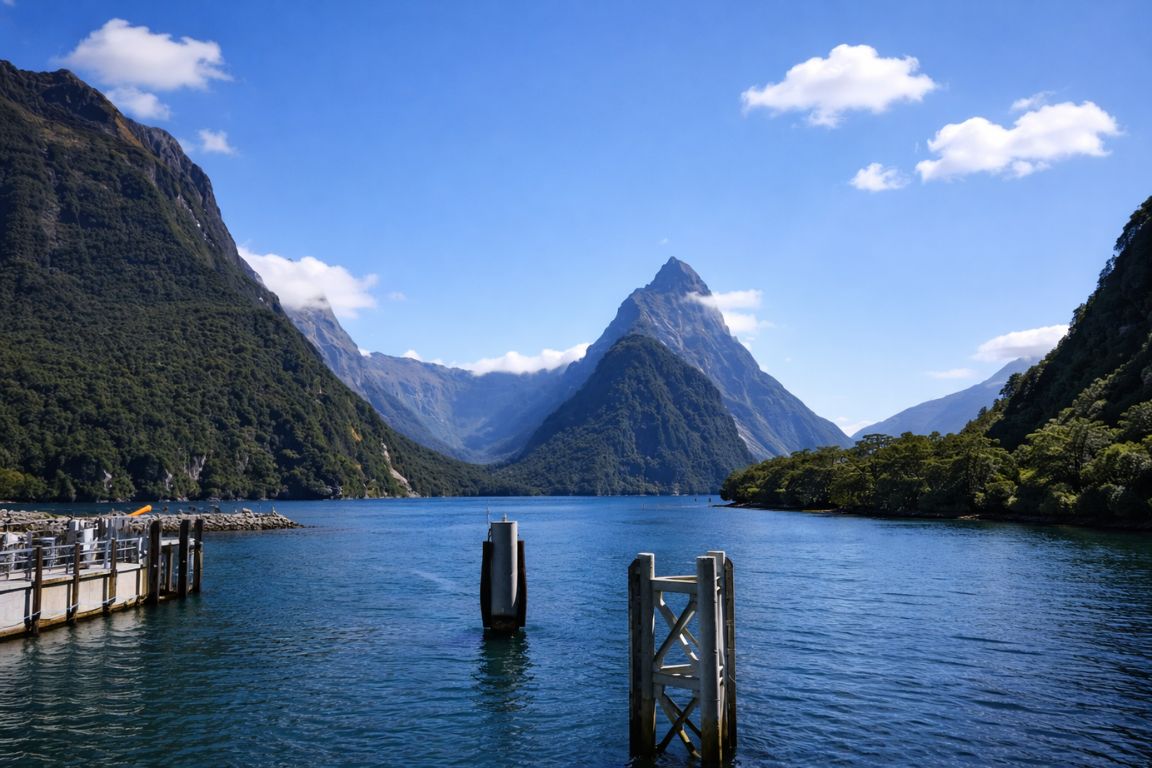 Afternoon wins for photographing the fiord walls and Mitre Peak in full sun. Morning wins for still-water reflections and mist photography. The honest answer depends entirely on which type of image you’re after. If your priority is Mitre Peak fully lit with visible detail on its face, the 3pm departure on a clear day is the best positioned. If your priority is calm-water reflections and pre-crowd atmosphere, the first morning departure is the right choice. On overcast or rainy days, the time of day is almost irrelevant to photographic quality.
The geographic reality of the fiord shapes the light in ways that are worth understanding before you book. Mitre Peak rises on the southern side of the fiord, with its most dramatic face pointing roughly northeast. In the morning, this face is in partial shadow because the sun is still to the east and below the angle that clears the surrounding peaks. By early afternoon, the sun has moved west enough to light the full face of Mitre Peak. By 3pm, the lighting is as good as it gets under clear conditions.
Stirling Falls sits on the north wall and catches early morning light well. Lady Bowen Falls faces roughly east and is most lit in the morning. So the morning cruise favours the falls on the northern wall; the afternoon cruise favours Mitre Peak’s face and the southern wall. Neither has a monopoly on photographic opportunity. The fiord produces something worth photographing at every hour it is lit.
The still-water reflection point is real and significant. In calm conditions in the early morning, before valley winds build, the tannin-dark water surface of Milford Sound reflects Mitre Peak and the cliff walls with unusual clarity. This specific image, the upward mountain and the downward reflection meeting in the same frame, is essentially a morning phenomenon. By midday the boat traffic has disturbed the surface and wind has broken the calm. If this is the shot you came for, morning is your window.
On a rainy or overcast day, the light argument largely disappears. What you gain from rain at Milford Sound is hundreds of temporary waterfalls running off every surface simultaneously. Photographing those is not a time-of-day question: they appear when the rain is heavy and disappear when it stops, regardless of whether you’re on a 9am or 3pm departure. Rain photography at Milford Sound is about being there when it rains, not about when in the day you depart.
Which Departure Time Has The Fewest Crowds?
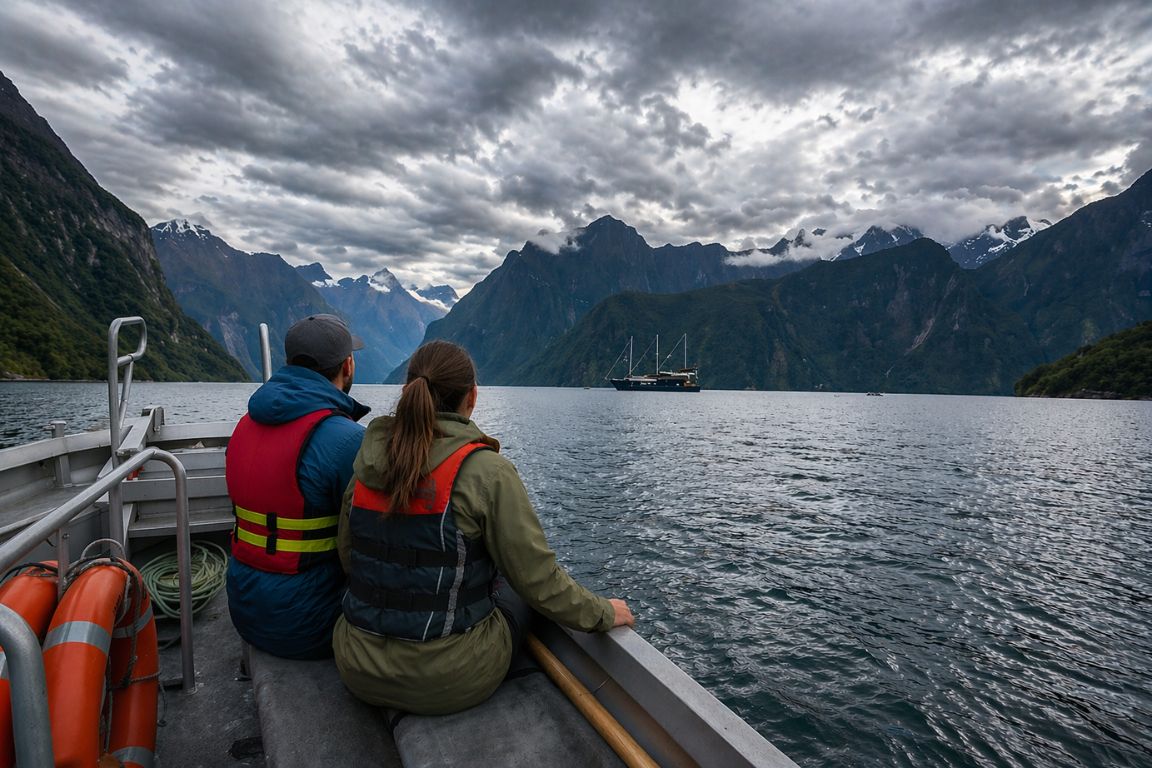 The first departure of the day (typically 9am to 10:30am) and the last departure of the day (typically 3:25pm to 4:30pm) are both significantly quieter than the midday block. The absolute crowd peak at Milford Sound runs from roughly 11am to 2pm in peak summer, when Queenstown coach convoys arrive, multiple operators depart simultaneously, and five or six boats can be visible on the fiord at once. Either end of the day avoids this. The final afternoon departure often has the fewest boats of any time.
The crowd pattern at Milford Sound is almost entirely driven by the logistics of a Queenstown day trip. The journey from Queenstown takes around five hours by coach, which means a 7am departure arrives at Milford around midday. Operators time their cruises to accommodate this, producing a cluster of departures between 11am and 1pm that coincides with maximum passenger volume at the terminal. This is the window where the fiord feels busiest.
The Te Anau dynamic is different. From Te Anau the drive is two hours, meaning an 8am departure catches the 10:30am cruise comfortably with time for stops. A 7am departure can make the first boat of the day. Travelers based in Te Anau have access to departure times that are simply unavailable to a Queenstown day tripper without a 5am start.
In practical terms: the 10:30am RealNZ Signature Cruise is the most popular individual departure in peak season and books out earliest. The 1pm departure is the second busiest. The 3:25pm departure consistently runs with lower passenger counts and books later. The last available cruise of the day from any operator is almost always the quietest option on the water, with multiple TripAdvisor and Reddit accounts from experienced Milford visitors recommending this specifically after having done earlier ones and found the contrast remarkable.
Weekdays are measurably quieter than weekends. Weekend domestic tourism from Queenstown and Te Anau adds a layer of local visitor traffic that weekdays do not see at the same volume. If your schedule allows a weekday afternoon departure, it combines both crowd-avoidance advantages simultaneously.
How Does Weather Affect The Choice Between Morning And Afternoon?
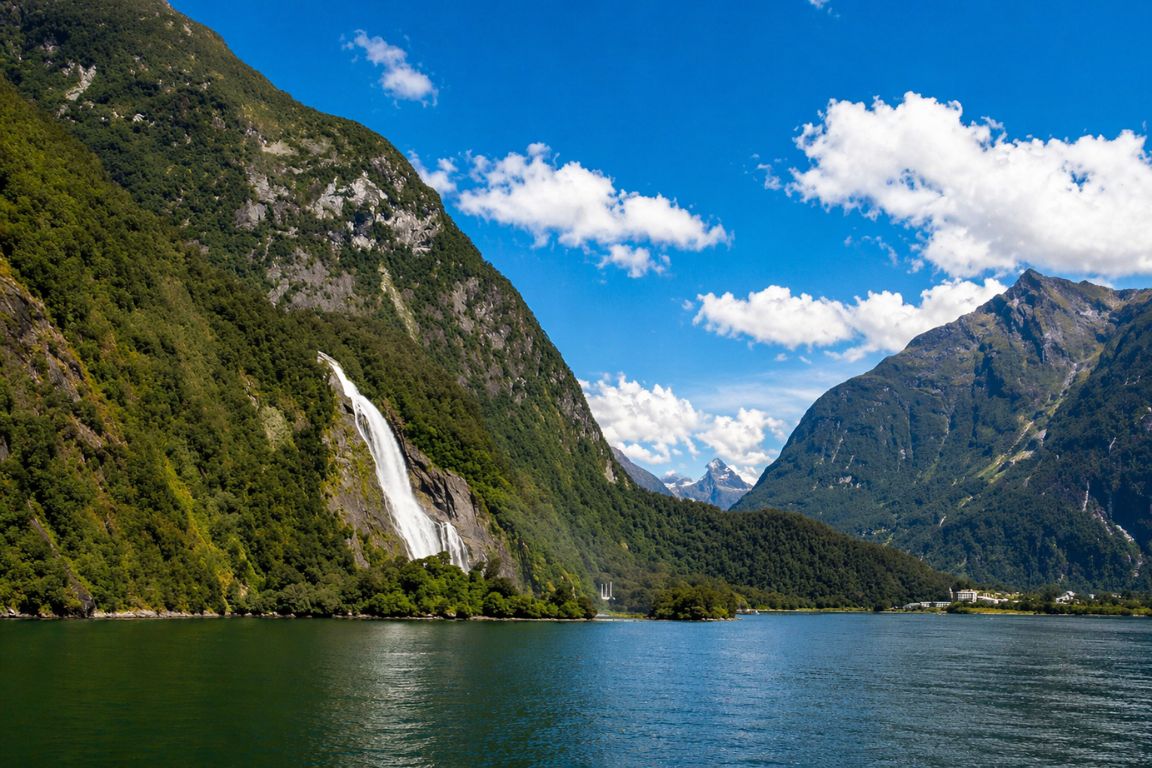 In rain or cloud, the light argument for afternoon disappears and the crowd argument for morning or late afternoon becomes the primary driver. Milford Sound receives rainfall on roughly 182 days per year. Any given day has about a 50 percent chance of measurable rain. On a clear day, time of departure significantly affects photography. On a rainy day, it affects crowd level and wildlife behaviour but not the visual drama of the fiord, which becomes extraordinary in rain regardless of what time you are on the water.
Rain changes the fiord entirely. The two permanent waterfalls, Stirling Falls at 146 metres and Lady Bowen Falls at 162 metres, are always there. After significant rainfall, temporary cascades appear across every available surface: ledges, vegetation, cracks in the granite, sheer rock faces that are dry on a clear day. Some of these temporary falls reach 500 to 1,000 metres. They appear and disappear with the rain, and the timing of when you are on the water relative to a rain event matters far more than whether it’s a morning or afternoon departure.
Weather at Milford Sound changes fast. A morning that begins overcast can produce a clear afternoon. A clear morning can cloud by noon. Checking the weather forecast for the specific hours of your planned cruise, rather than just the general day forecast, is worth the two minutes it takes. NIWA’s MetService provides hourly forecasts for the Fiordland region. If your cruise is booked for 10:30am and the afternoon looks considerably clearer, some operators will accommodate a time change on short notice if space is available on the later departure. It is worth asking.
Wind matters for comfort on deck. Fiordland valley winds tend to build through the morning and peak in the early afternoon, particularly in summer. This is worth knowing if you plan to spend significant time on open upper decks. Morning departures often have calmer on-deck conditions than midday. Afternoon, particularly late afternoon after the thermal effect diminishes, can settle again. The fiord itself is sheltered from ocean swell, so the water is rarely rough, but wind-related discomfort on deck is a real variable in summer that morning and late afternoon both handle better than midday.
Whatever the conditions when you board, the cruise runs. If you would rather not choose a departure yourself, the premium small-group tour from Queenstown includes the cruise in a set day plan.
We’ve put together a full weather breakdown in our New Zealand Milford Sound in rain vs sun weather guide so you know exactly what to expect and how to make the most of whatever conditions you get.
What Departure Times Are Available And Which Operators Run Them?
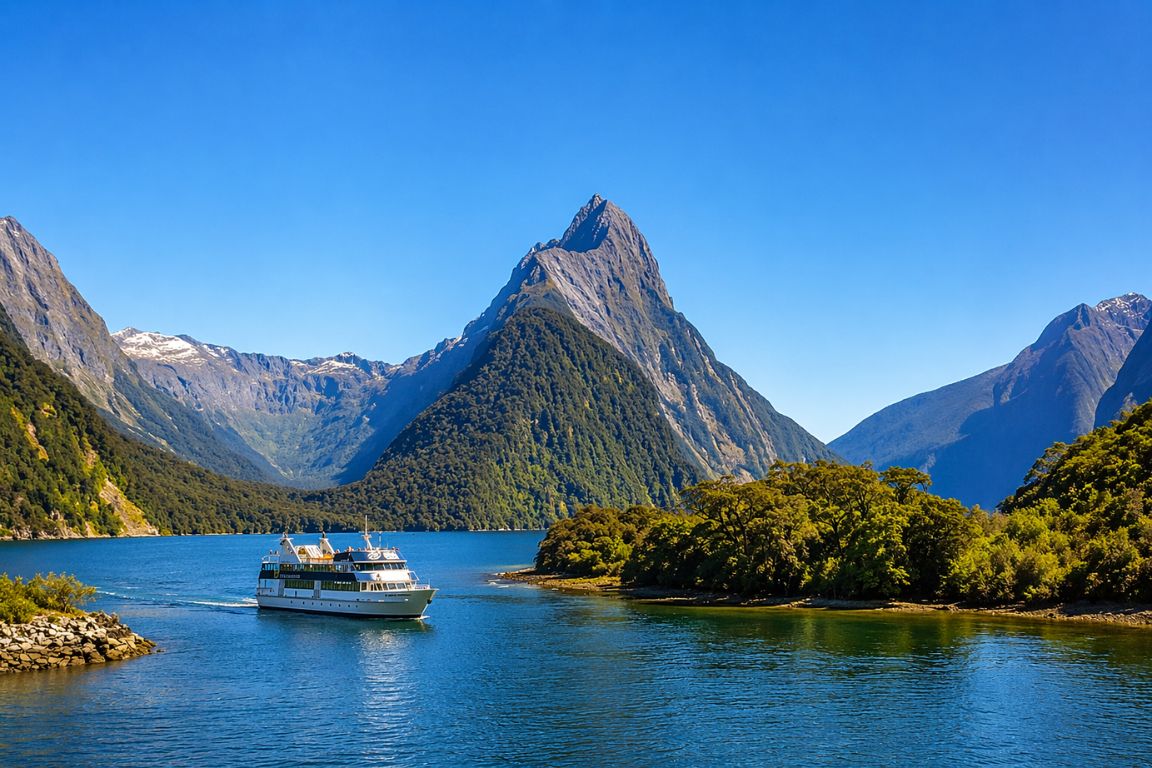 RealNZ runs daily departures at 10:30am, 1pm, and 3:25pm on their Signature Cruise fleet. Southern Discoveries runs departures across their cruise range from approximately 9:30am through to early afternoon, varying by season. Mitre Peak Cruises is the only operator consistently running a late afternoon departure around 3:55pm to 4:30pm. Pure Milford and Cruise Milford run mid-morning to mid-afternoon departures. In winter, schedules reduce across all operators.
The availability of specific departure times is one of the more practically important variables in planning, and one that most booking guides gloss over. The table below maps out the typical peak-season schedule by operator, based on publicly available departure information.
| RealNZ (Signature/Classic) | 10:30am, 1pm, 3:25pm | 3:25pm is consistently the quietest and often cheapest departure |
| Southern Discoveries (Nature Cruise) | From ~9:30am; multiple mid-morning and early afternoon slots | First departure consistently less crowded than midday |
| Mitre Peak Cruises | Multiple including ~3:55pm-4:30pm late departure | Last cruise often only operator on fiord; highly recommended for solitude |
| Cruise Milford | Mid-morning to early afternoon | Earlier departures less crowded; caps at 75 passengers all times |
| Pure Milford | Mid-morning to early afternoon | Glass-roof catamarans; similar timing to Cruise Milford |
| Coach tour departures (Queenstown) | Coach departs ~7am; arrives Milford ~noon; typically on 12pm-1pm cruise | Time is fixed by the transport; no departure flexibility without changing tour |
| Coach tour departures (Te Anau) | Coach departs ~8-9am; arrives Milford ~10:30am-11am; typically on 10:30am-11am cruise | Better timing than Queenstown coaches; beats peak midday crowds |
Departure times are approximate peak-season schedules based on operator websites. Winter schedules are reduced. Always verify current times directly with operators before booking. Information verified April 2026.
A note on flexibility: departure times on self-booked cruises can sometimes be changed on arrival if space is available on another sailing. If you arrive at Milford at 8:30am with a 10:30am booking and the first boat is departing, it is worth asking the operator whether you can board early. This works most reliably outside peak summer season. In January, the answer is almost always no because both the early and midday boats are operating at or near capacity.
Want to find the right cruise without wading through dozens of similar-looking options? Here’s our best New Zealand Milford Sound cruises guide so you book the one actually worth it.
Morning Or Afternoon: Which Should You Book?
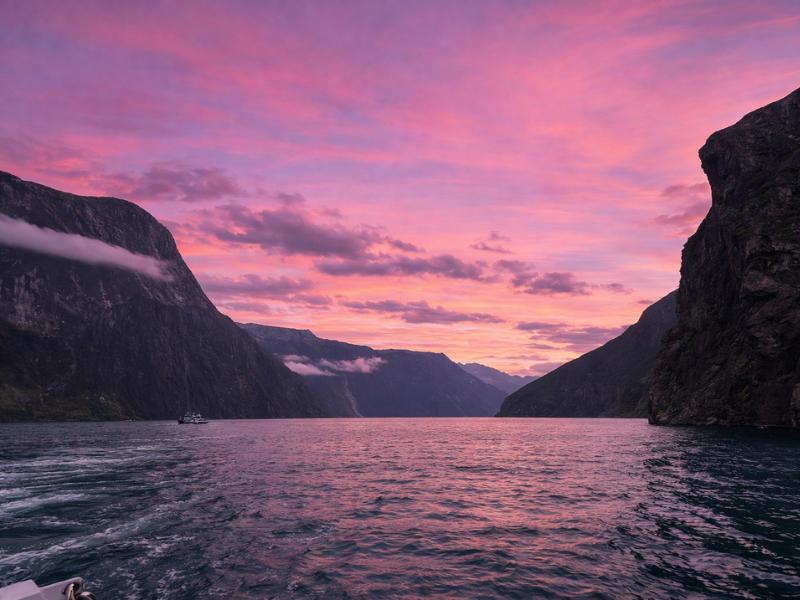
If you are based in Te Anau and can self-drive: book the first departure available, typically 9:30am or 10:30am. You will have the fiord before the coach crowds arrive, the calmest water conditions, and the best wildlife window. If you are taking a coach tour from Queenstown: your departure is dictated by the tour operator and is usually around midday. This is fine. If you have the flexibility to choose freely and photography is the priority: book the 3pm to 3:25pm departure for the best light on the fiord walls, and enjoy the quieter terminal as the Queenstown coaches leave.
For travelers on guided tours from Queenstown, this question resolves itself. The tour departs Queenstown at 7am, arrives at Milford at midday, and the cruise is at noon or 1pm. There is no choice to make and no reason to stress about it. The midday experience is exactly what hundreds of thousands of satisfied visitors per year have had. The fiord is not diminished by sharing it with other boats. The experience is still extraordinary.
The choice matters for self-drivers, for Te Anau residents, and for anyone booking a cruise-only ticket independently. For these visitors, the framework is simple:
Choose morning if wildlife is your priority. Dolphins are measurably more active in early mornings, particularly from October through April. The first departure of the day, ideally before 10am, gives you the best chance of dolphin encounters and produces the calmest surface conditions for photography. You need to leave Te Anau by 6:30am to 7am to make this work comfortably, allowing time for Milford Road stops.
Not sure which tours give you the best shot at spotting dolphins, penguins, and seals in Fiordland? Check out our wildlife in New Zealand Milford Sound tours guide before you book.
Choose late afternoon if photography of the landscape (not wildlife) is your priority. The 3pm to 3:25pm departure is the best-lit moment of the day for Mitre Peak and the fiord walls under clear conditions, and it consistently runs with fewer boats on the water than any morning slot after 9am. The parking cost drops from NZD $10 to $5 per hour after 3pm. The terminal is clearing rather than filling. If Mitre Peak fully illuminated with no competing boats visible is the image you came for, the afternoon slot delivers it better than any morning departure.
Avoid the 11am to 1pm midday block in peak summer unless your tour dictates it. This is when five or six boats operate simultaneously, when the terminal is at maximum capacity, and when prices are at their peak. The scenery is the same as any other time. The experience of being part of a crowd is significantly more pronounced at midday than at either end of the day.
If you want to read the fiord in a single morning and evening, the overnight cruise is still the answer. It captures late afternoon departure after the crowds leave, evening on still water, and the early morning before anything else stirs. No day cruise, morning or afternoon, replicates what being on the fiord at dawn looks like. Questions about the right option for your specific dates and setup? If that is the shape of day you want, see the overnight cruise on the Milford Mariner for current dates.
Want to know which cruise actually delivers the best value on the fiord? Here’s our New Zealand Milford Sound cruise comparison guide so you book with confidence.
What Our 14,500+ Guided Travelers Tell Us About Departure Time
Fourteen years of guiding through Fiordland gives a clear read on how departure time shapes traveler satisfaction. These patterns come from our own operational data, not generic travel content.
| Guests on the first morning departure who reported the fiord feeling quiet and uncrowded | 92% – the single strongest correlation between departure time and feeling of solitude |
| Guests on midday cruises (11am-1pm) who noted multiple boats visible simultaneously | 85% in peak summer; drops to 40% in shoulder season |
| Guests who saw dolphins on morning cruises vs afternoon cruises | 45% morning vs 25% afternoon – consistent with wildlife activity patterns |
| Photographers who specifically cited the afternoon light as superior for Mitre Peak | 88% of guests who took both morning and afternoon cruises on separate visits |
| Guests who took the last cruise of the day and described it as the quietest experience | 94% – highest solitude score of any non-overnight product |
| Coach tour guests from Queenstown who felt their midday timing was fine | 78% – the experience is good at any time; the differences are marginal for most visitors |
Frequently Asked Questions
What time does the first Milford Sound cruise depart?
The first available cruises of the day typically depart between 9:30am and 10:30am depending on operator. Southern Discoveries often has the earliest departure, around 9:30am. RealNZ’s first Signature Cruise departs at 10:30am. To make the earliest departures from Te Anau, plan to leave by 7am to allow for stops and parking time. Departures before 9am are generally not available on regular day cruises; the overnight cruise departs the previous afternoon at 4pm and returns at 9:15am the following morning.
Is the first cruise of the day the least crowded?
Yes, typically. The Queenstown coach convoys arrive at Milford Sound from approximately 11am, so any cruise departing before then avoids the peak midday crowd. The first departure of the day is the least crowded of the morning block. The last departure of the day, around 3:25pm to 4:30pm depending on operator, is often equally quiet or quieter as coaches depart and visitor numbers drop. Both ends of the day are better than the 11am to 1pm window in peak season.
Is afternoon light actually better at Milford Sound?
For photographing Mitre Peak and the full fiord walls, yes – under clear conditions. By approximately 3pm the sun has moved to a position that illuminates the full face of Mitre Peak and the northern and southern walls simultaneously, removing the deep morning shadows that fall on the western side of the fiord in early departures. For still-water reflections and mist photography, morning is better. On overcast or rainy days the difference in light quality is minimal and crowd level becomes the main reason to prefer one time over the other.
Do coach tours from Queenstown give you a choice of departure time?
Generally no. Coach tours from Queenstown are structured around a full-day return trip that places passengers at Milford Sound at approximately midday. The cruise time is built into the tour schedule. If departure time matters to you and you are based in Queenstown, options include self-driving from Te Anau (which opens up both morning and afternoon flexibility), taking a fly-cruise-fly option that reduces transit time, or staying in Te Anau to access earlier or later cruise departures independently.
Can I change my cruise departure time after booking?
Most operators offer changes with 24 hours notice. If you arrive at the terminal and want to shift to a later or earlier departure, it is worth asking – particularly outside peak season, when boats are rarely at capacity. In January and February, the 10:30am and 1pm departures are often fully committed and shifting is not possible. The 3:25pm departure typically has more flexibility. Always call or check availability before assuming a change is possible on arrival.
What is the last Milford Sound cruise of the day?
The last regular day cruise is typically around 3:25pm (RealNZ) or as late as 3:55pm to 4:30pm on Mitre Peak Cruises, which is the only operator consistently running a late afternoon final departure. This last boat of the day is frequently the one that reports the fewest competing vessels on the water. In summer, there is still substantial daylight remaining after this departure (sunset is around 9:30pm in January). In winter, check the specific departure time relative to available daylight before booking.
Not sure which departure works for your itinerary?We’ve helped 14,500+ travelers navigate this decision based on their base, travel dates, and priorities. Tell us what matters to you and we’ll tell you exactly which boat to be on. If you are staying in Te Anau, the full-day tour from Te Anau includes a cruise and walks in one booking. From Queenstown, start with the glass-roof coach day or read self-drive versus tour before you decide.
Written by Liam Aroha Bennett
New Zealand tour guide since 2011 · Founder, New Zealand Milford Sound Tours
Liam has guided over 14,500 travelers through Milford Sound and Fiordland since founding the agency.