Wildlife In Milford Sound
Milford Sound is a wildlife hotspot - see what you’re likely to spot (seals, dolphins, penguins), what’s rare, and why this fiord is so unique.
Quick Summary
Milford Sound holds one of the most accessible concentrations of rare wildlife in the Southern Hemisphere. New Zealand fur seals are visible from every cruise, year-round. Bottlenose dolphins visit regularly but presence is not guaranteed, and research shows they spend less time in the fiord during periods of heavy boat traffic. The Fiordland crested penguin (tawaki) is one of the rarest penguins in the world and Milford Sound is one of its key breeding sites, with approximately 180 nesting pairs in the fiord – far more than the nine once believed. Below the surface, a unique freshwater-over-saltwater layering effect allows deep-sea species including black coral to grow within 10 metres of the surface. The kea, the world’s only alpine parrot, is reliably seen along the Milford Road. Wildlife encounters are never guaranteed, but Milford Sound’s isolation and protection mean the odds are genuinely high.
A well-matched cruise or road-and-cruise itinerary gives you more time to scan the fiord, shoreline, and Milford Road while keeping every wildlife encounter genuinely wild.
Your Milford Plan
- Choose a Milford-based boutique cruise if you already have transport to the fiord.
- Choose a guided trip from Queenstown or Te Anau to include the wildlife-rich Milford Road.
- Match your travel date to seasonal wildlife, but never plan around a guaranteed sighting.
Milford Sound Wildlife At A Glance
| New Zealand fur seal (kekeno) | Very high, year-round residents | Year-round; pups visible in spring | Seal Rock, Copper Point (on cruise) |
| Bottlenose dolphin | Moderate, not always present | Year-round; more active Oct-Apr | Fiord entrance; bow waves of cruise vessels |
| Fiordland crested penguin (tawaki) | Good in season – Jul-Nov breeding season | July to November (breeding); Jan-Mar (moulting) | Harrison Cove, Anita Bay shoreline (from cruise) |
| Little blue penguin (korora) | Low, hard to spot; more common near Tasman entrance | Year-round | Near Tasman Sea entrance; calm days |
| Kea (alpine parrot) | High on the Milford Road | Year-round | Homer Tunnel, Monkey Creek, Milford Road stops |
| Whio / blue duck | Low, genuinely rare; worth the effort | Year-round | Eglinton Valley waterways; Monkey Creek |
| Black coral | Guaranteed – accessible by underwater observatory or diving | Year-round | Harrison Cove underwater observatory (Southern Discoveries) |
| Humpback / southern right whale | Low but increasing – occasional sightings | Spring-summer migration | Near Tasman Sea entrance |
| Forest birds (tui, bellbird, fantail) | High, heard throughout Milford Road | Spring-summer most vocal | Lake Gunn walk, Mirror Lakes, Milford foreshore |
All sightings are wild and can never be guaranteed. Likelihood ratings reflect typical visitor experiences based on our 14+ years of guiding in Fiordland.
What Wildlife Can You See In Milford Sound?
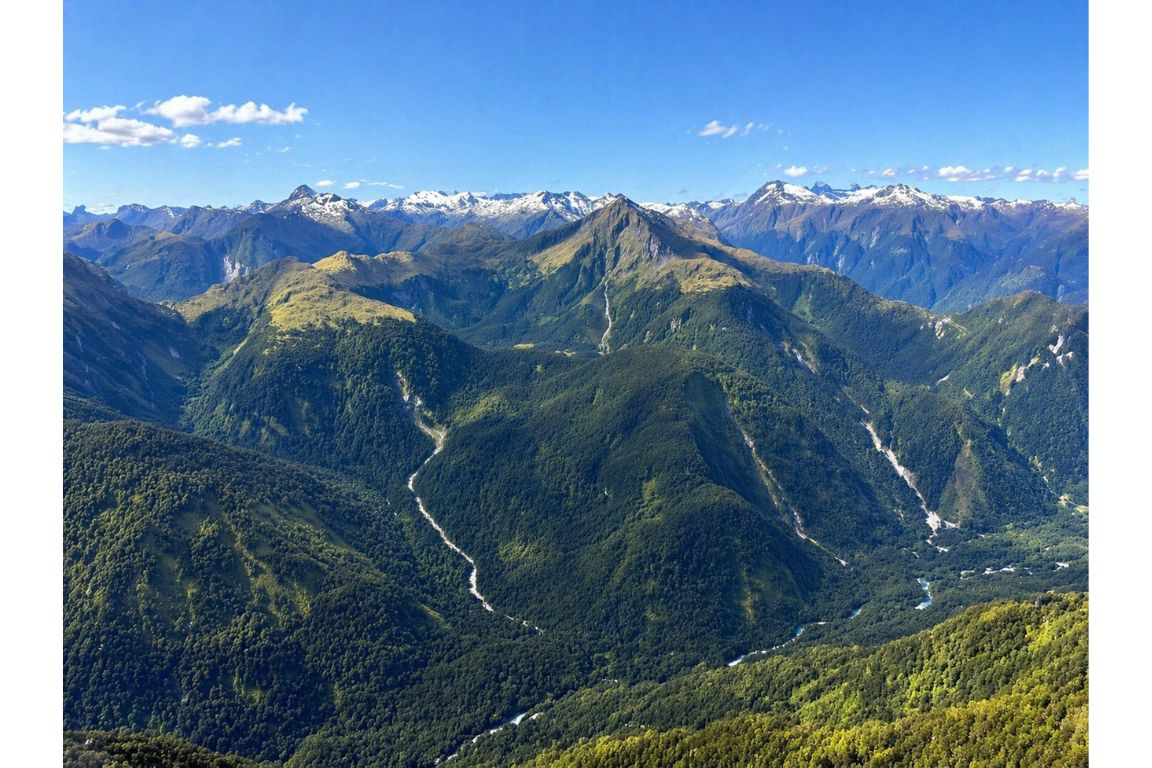 Milford Sound and the surrounding Fiordland hold one of the most ecologically intact wildlife environments accessible to visitors anywhere in New Zealand. The fiord is home to permanent colonies of New Zealand fur seals, a resident population of bottlenose dolphins, two penguin species including the globally rare Fiordland crested penguin, an extraordinary underwater world of deep-sea species growing in shallow water, and a forested mountain road delivering kea, whio, and a chorus of native forest birds. No other single day’s drive and cruise in New Zealand covers equivalent wildlife density.
The reason Milford Sound supports such varied and accessible wildlife is partly geological, partly ecological, and partly a function of extreme isolation. The fiord sits inside Fiordland National Park, the largest national park in New Zealand, within the Te Wahipounamu World Heritage Area. No permanent human settlement other than a small tourism operation exists. No farmland borders the fiord. No significant industrial activity reaches it. The rainforest that drapes the 1,200-metre cliffs on both sides is intact in a way that lowland New Zealand forest almost never is.
The marine environment adds another layer. Milford Sound’s 265-metre depth and the shallow glacial moraine sill at its entrance protect the interior waters from ocean swells. The tannin-dark freshwater layer that sits above the saltwater filters sunlight so completely that light levels at 10 metres match those typically found at 70 metres in open ocean. This creates conditions where deep-sea species including black coral, brachiopods, and sea dragons can live metres from the surface. The Piopiotahi Marine Reserve, which covers the fiord and surrounding waters, provides additional protection from fishing and disturbance.
On the Milford Road itself, the 120-kilometre drive from Te Anau passes through beech forest, alpine valleys, and sub-alpine terrain where kea are almost guaranteed at certain stops, whio (blue duck) are possible in fast-flowing waterways, and the audio environment of native forest birds is constant. The road to Milford Sound is not preamble to the wildlife experience, it is part of it.
Want to make sure you don’t miss the highlights while you’re there? Check out our what to see in New Zealand Milford Sound tours guide before your visit.
Where And How Do You See Dolphins In Milford Sound?
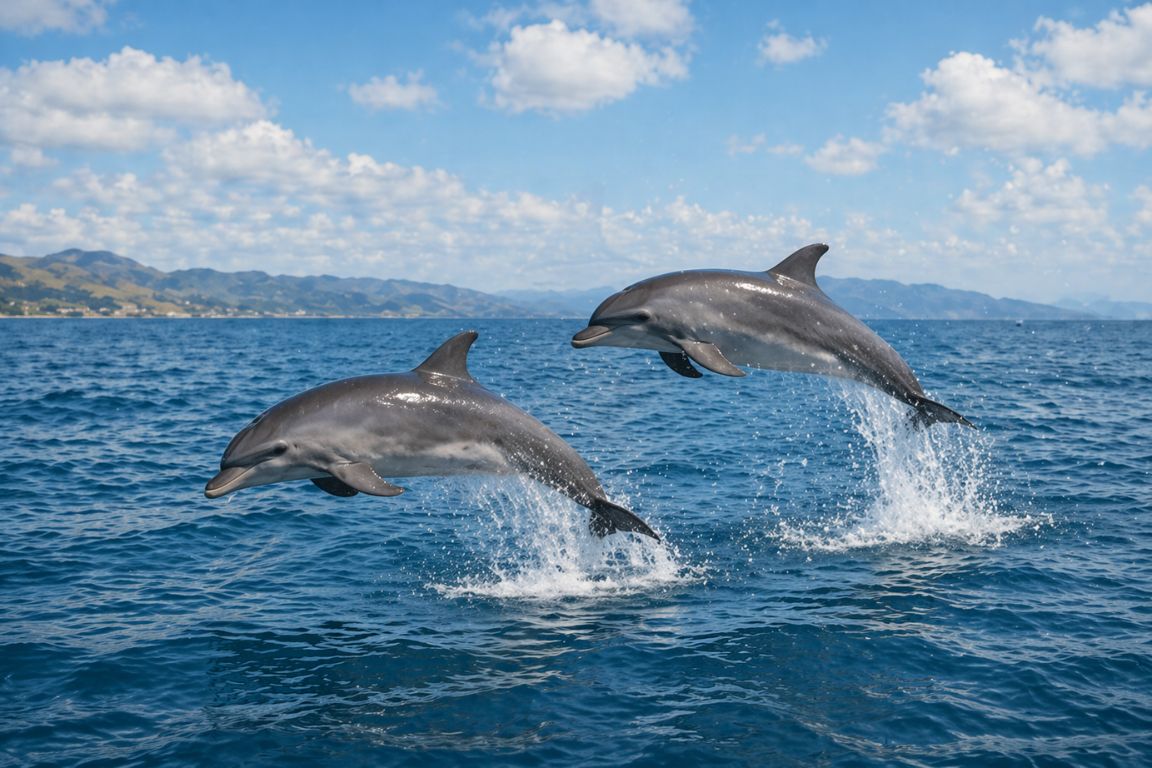 Bottlenose dolphins are the most commonly seen cetacean in Milford Sound and are observed riding bow waves of cruise vessels, surfing in boat wakes, and feeding near the fiord entrance. The resident northern Fiordland bottlenose population inhabits seven of the fourteen fiords in the region. Dolphin presence in Milford Sound is not guaranteed: published research from the University of Otago shows dolphins spend significantly less time inside the fiord during periods of heavy boat traffic, retreating toward the entrance where tour boats rarely go. Morning cruises on calmer days produce higher sighting rates than midday departures.
The Fiordland bottlenose dolphins are among the southernmost wild populations of the species anywhere in the world, living at latitudes and in water temperatures well beyond the tropical and temperate range where most bottlenose populations are found. The cold, productive Fiordland waters produce individuals noticeably larger than their tropical counterparts: Fiordland bottlenose dolphins reach around 3.5 metres, compared to roughly 2.5 metres in tropical regions. This size reflects adaptation to cold water, where a larger body mass reduces heat loss.
The research on boat traffic and dolphin behaviour is specific and worth understanding before you visit. A University of Otago study tracking dolphin residency in Milford Sound between 1999 and 2002 found that boat traffic was the single variable that correlated with how frequently dolphins were present inside the fiord. During seasons of intensive cruise activity, dolphins spent more time near the fiord entrance rather than inside, out of direct reach of the tour boats. This does not mean boat traffic eliminates dolphin sightings; it means encounters are more likely at the fiord entrance and in the early morning before the day’s cruise schedule builds. On quiet-season visits and morning departures, dolphins are observed bow-riding frequently. During the peak midday window in January, they are less predictably inside the fiord itself.
Two other dolphin species occasionally visit: dusky dolphins (smaller, dark grey back, white belly, two-toned dorsal fin, particularly near the Tasman entrance) and Hector’s dolphins (extremely rare in the fiord, among the world’s smallest dolphins, found only in New Zealand waters). Neither reliably inhabits the fiord in the way bottlenose do.
Kayaking offers a qualitatively different dolphin encounter compared to cruise vessels. At water level, without engine noise, and in a vessel that does not create significant bow pressure, kayakers occasionally have dolphins approach out of curiosity rather than to surf a pressure wave. The behaviour is different and arguably more intimate. The overnight cruise with kayaking is the listing to check if you want that kind of day.
The difference between a morning and afternoon cruise on Milford Sound is more significant than most people realize – our morning vs afternoon New Zealand Milford Sound cruises guide breaks down exactly what changes.
Where And How Do You See Fur Seals In Milford Sound?
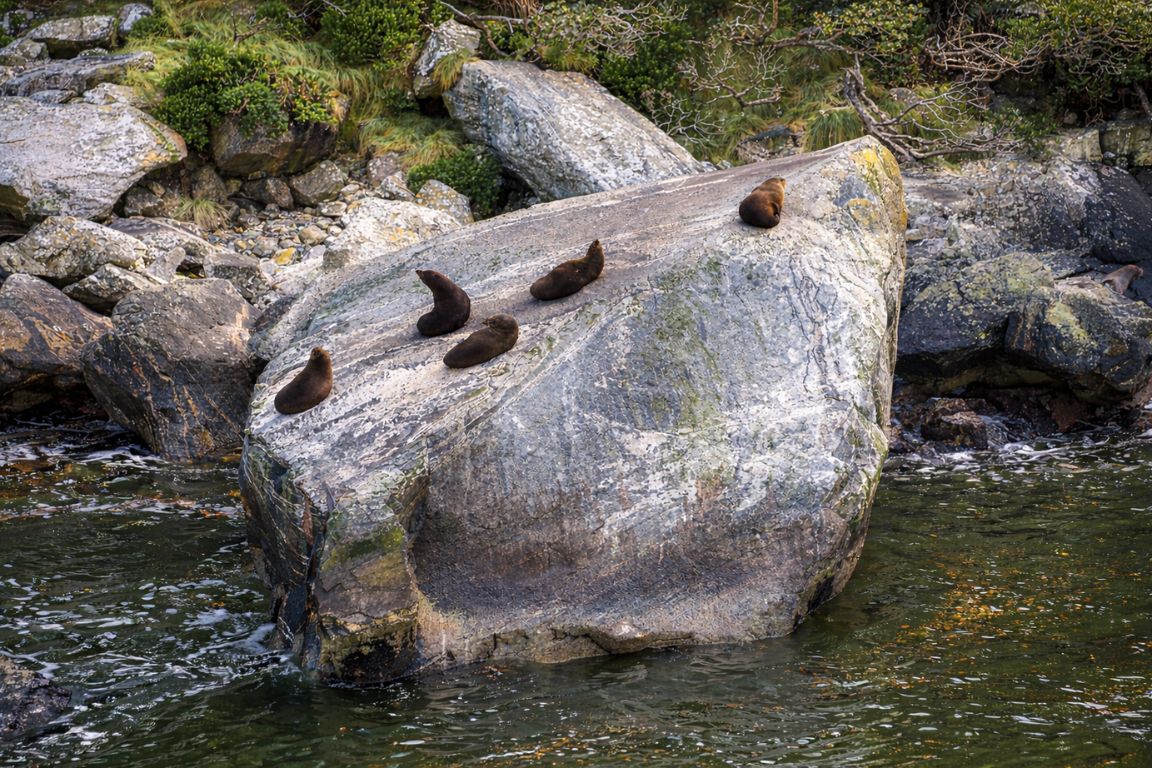 New Zealand fur seals (kekeno) are year-round residents of Milford Sound and the most reliably sighted marine mammal on any cruise. The main colony hauls out at Seal Rock near Copper Point, approximately two-thirds of the way along the fiord from the terminal toward the Tasman Sea. Every cruise passes Seal Rock and slows here. Seals are also present at various rocky ledges along both walls of the fiord. They are visible both hauled out on rocks in the classic resting posture and swimming actively in the water alongside or near the boat.
New Zealand fur seals were hunted nearly to extinction in the nineteenth century by European sealers who valued their dense, warm pelts. The same resilient ecology that made Milford Sound attractive to the hunters, abundant fish, protection from ocean weather, year-round temperate conditions relative to the open coast, also made it an ideal recovery habitat once hunting ended. Under full legal protection since 1978, the population has recovered substantially. The animals at Seal Rock today are relaxed in the presence of cruise vessels, a product of decades of protected and habituated coexistence.
The hauled-out posture at Seal Rock is frequently described as laziness, but it serves a specific thermoregulatory function. Fur seals are not fully streamlined for long dives in the way true seals are; their thick fur is their insulation, and drying it in the sun between fishing trips maintains its effectiveness. The rock-basking behaviour is optimal energy management, not idleness. An active fur seal in the water near a cruise boat, moving at speed and surfacing intermittently, is a different animal from the sun-soaking colony: faster, more purposeful, and visually compelling in a different way.
Spring (September to November) produces an additional dimension at Seal Rock: fur seal pups, born earlier in the season, begin appearing in the water and on the rocks alongside adults. Pups are noticeably smaller, lighter in colour, and less coordinated in their movements than adults. This is one of the more engaging times of year to observe the colony.
Scuba divers report encounters with fur seals underwater at Milford Sound that are categorically different from surface observations. In the water, fur seals are quick, acrobatic, and directly interactive, approaching divers and sometimes imitating their movements. The dive operator Descend Diving runs small-group dives within the Piopiotahi Marine Reserve where seal encounters are a consistent feature.
Where And How Do You See Penguins In Milford Sound?
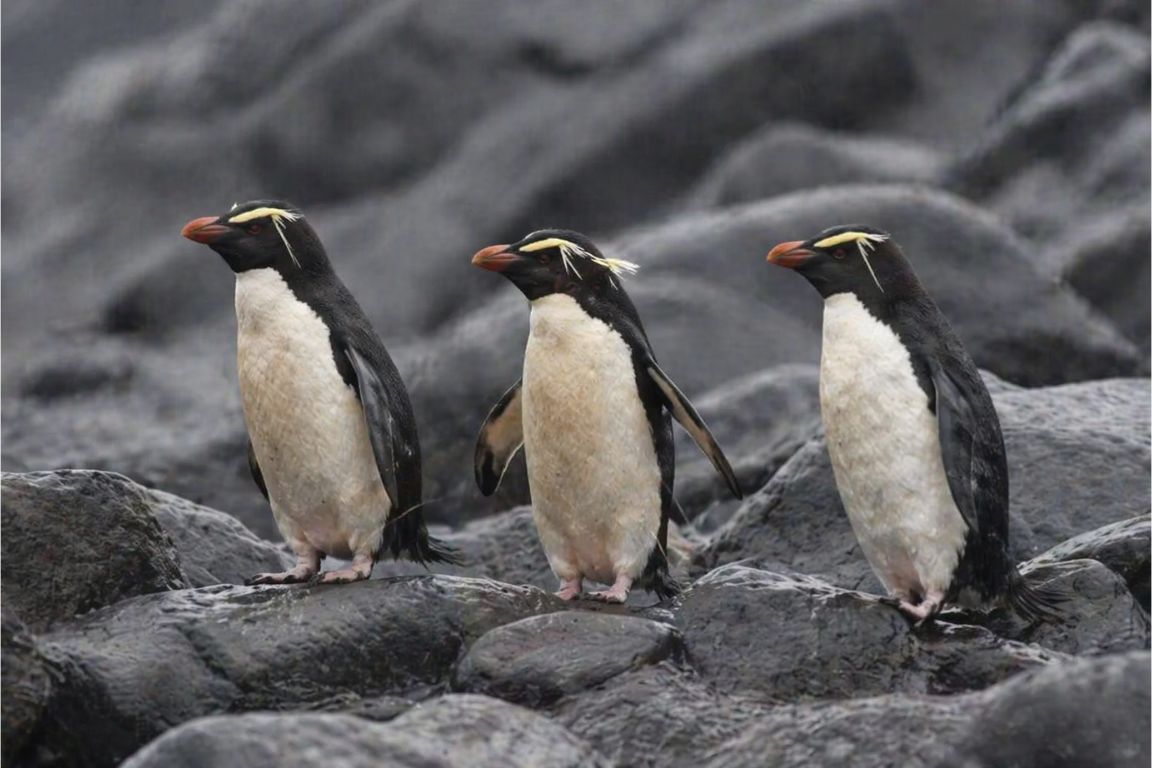 Two penguin species live in Milford Sound: the Fiordland crested penguin (tawaki) and the little blue penguin (korora). The tawaki is one of the rarest penguins in the world and Milford Sound is one of its most important breeding sites, with approximately 180 nesting pairs confirmed in the fiord by the Tawaki Project (Otago University). The best time to see tawaki is during the breeding season from July to November, when they are present on the shoreline at sites including Harrison Cove and Anita Bay. The little blue penguin is more cryptic and harder to spot, appearing mainly near the Tasman Sea entrance on calm days.
The tawaki story in Milford Sound contains one of the more striking conservation corrections in New Zealand wildlife science. For many years, the accepted figure for tawaki breeding pairs in the fiord was approximately nine. This number, derived from older survey methodology, shaped conservation priorities and public understanding of the species’ presence here for years. When the Tawaki Project (led by Dr Thomas Mattern and Dr Ursula Ellenberg of the University of Otago) conducted systematic surveys using modern tracking methods, they revised this figure dramatically upward to approximately 180 breeding pairs in Milford Sound. The species was harder to find than previously understood because tawaki nest in dense forest, rock crevices, and caves rather than open beaches, making ground-level surveys systematically incomplete. The Milford Sound colony may be the most studied tawaki site in the world, with a transponder monitoring gate operating at Harrison Cove and satellite-tagged birds providing data on their winter migration to Subantarctic waters.
Tawaki identification is not difficult once you know what you are looking for. They are medium-sized penguins, around 60 centimetres tall and up to 4 kilograms. The distinctive feature is a bright yellow crest running from the base of the beak backward above each eye, paired with a vivid orange-red beak and red eye. In breeding season (July to November), the crest becomes more pronounced and the birds show a brick-red flush around the face. They are shy by nature, the most timid of the crested penguin species, and will retreat quickly if approached. The standard guidance from DOC and cruise operators is to maintain at least five metres distance and avoid blocking the path between a penguin and the water.
Research from the Tawaki Project revealed something important about Milford Sound as a habitat. During the severe El Nino of 2015, tawaki at Jackson Head on the West Coast had to travel hundreds of kilometres offshore to find food and suffered significant chick mortality. At Milford Sound in the same season, tawaki barely had to leave the fiord at all: the sheltered, productive waters provided enough food that birds were returning to their nests from foraging trips of just a few kilometres. Researchers now believe Milford Sound may function as a climate buffer zone for tawaki, maintaining adequate prey availability even when open-ocean conditions deteriorate.
The little blue penguin (korora) is harder to see. Approximately 40 centimetres tall and weighing around one kilogram, they spend most daylight hours at sea and come ashore after dark to nest in burrows. During a day cruise, your best chance is near the Tasman Sea entrance on calm mornings when the birds may be visible swimming or resting on rocks before heading out to feed. Their blue-grey plumage blends naturally against water and shadow at distance.
What Birds Can You See In Milford Sound And On The Milford Road?
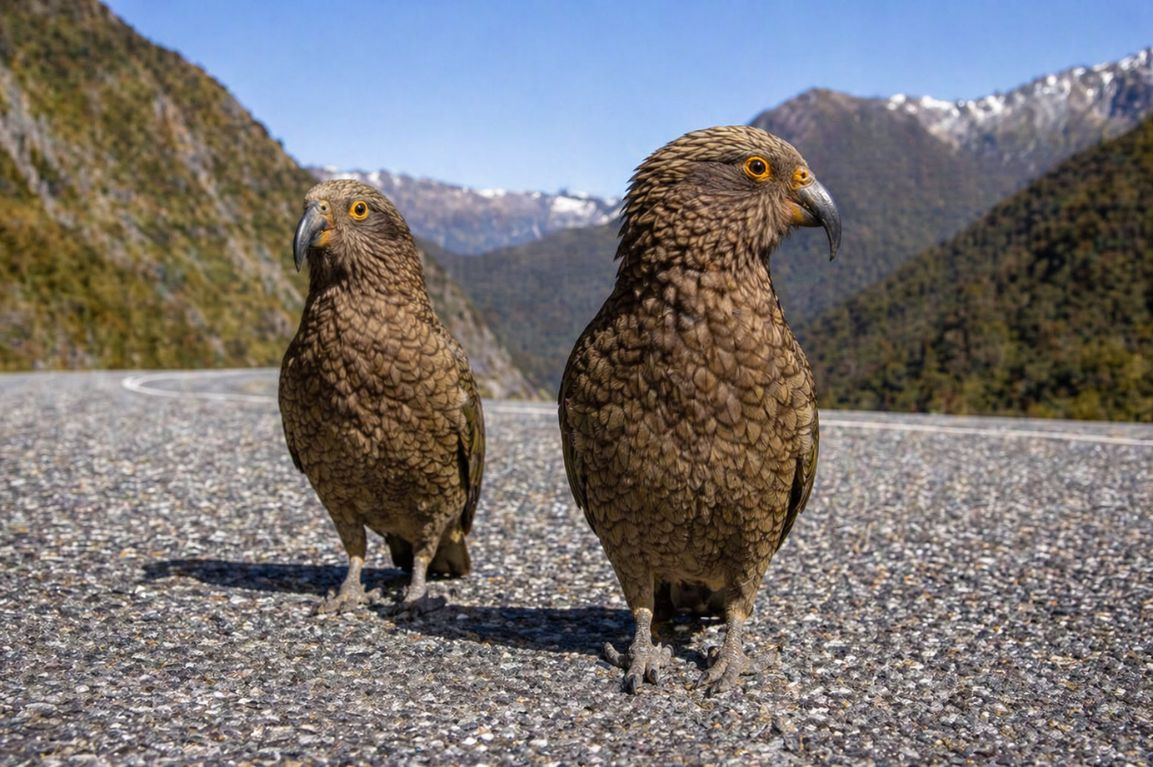 The Milford Road and Milford Sound itself support an extraordinary range of native birds, with the kea almost guaranteed at several road stops, the whio (blue duck) possible at Eglinton Valley waterways and Monkey Creek, and a chorus of forest birds including tui, bellbirds, fantails, and tomtits audible throughout the beech forest sections. Milford Sound has been identified as an Important Bird Area by BirdLife International, primarily because of its tawaki penguin population. The journey to the fiord is as birdwatching-rich as the fiord itself.
The kea is the most reliably encountered native bird on the Milford Road. Endemic to New Zealand’s South Island alpine zones, kea are the world’s only alpine parrot, large olive-green birds with brilliant orange-red under their wings, which flash visibly in flight. They are famously intelligent, problem-solving animals, known to dismantle car windshield wipers, remove valve caps from tyres, and open unattended packs. The standard advice at every roadside stop is to close car windows and keep belongings secured. Kea are most concentrated around the Homer Tunnel, Monkey Creek, and the Milford Road carparks where human activity produces the highest density of interesting objects to investigate. They are present year-round, active during daylight, and typically visible at eye level or above on rocks and scrub.
The whio (blue duck) is a different kind of encounter: rare, genuinely wild, and almost entirely passive if found. One of New Zealand’s most threatened birds, the whio is one of only a few duck species worldwide to specialise in fast-flowing mountain rivers. With slate-blue plumage and a distinctive pink-tipped bill adapted to scraping invertebrates from river stones, they are visually unlike any other waterfowl. The Eglinton Valley section of the Milford Road, particularly around the valley floor streams, and Monkey Creek at kilometre 99, are the most consistent locations for whio on the route to Milford. Sightings are not common but the ecological conditions are right, and those who stop at stream crossings and scan carefully rather than just photographing the scenery find them more often than casual visitors expect.
Forest birds along the road are heard more reliably than seen. The tui’s complex, liquid, and occasionally electronic-sounding call carries far through the beech forest canopy. The bellbird (korimako) produces a sound that early European naturalists described as the finest birdsong they had encountered anywhere in the world: a resonant, cascading note repeated from within the forest. Fantails (piwakawaka) are the most approachable and will follow walkers along forest tracks hawking the insects disturbed by footfall. Tomtits, grey warblers, brown creepers, and New Zealand robins are all present in the beech forest sections of the road and around the Lake Gunn nature walk.
In the forest above Milford Sound, the mohua (yellowhead) exists in a small and carefully managed population within Fiordland. Once abundant across New Zealand, mohua were catastrophically reduced by stoat predation and are now found in only a handful of protected strongholds. The gold-headed male with its vivid yellow plumage is unmistakable when seen; finding one requires attention in the beech forest at mid-altitude where they forage in small groups. The mohua appears on the New Zealand $100 note.
What Marine Life Exists Below The Surface Of Milford Sound?
 Milford Sound’s underwater environment is unique on earth. A permanent layer of tannin-stained freshwater, up to ten metres deep, sits above the denser saltwater from the Tasman Sea. This layer filters sunlight so completely that light levels at 10 metres depth match those typically found at 70 metres in open ocean. The result is a shallow-water environment with deep-ocean conditions, allowing species normally found at hundreds of metres depth to live metres below the surface. The fiord hosts an estimated seven million black coral colonies, ancient brachiopods unchanged in 300 million years, sea dragons, sea pens, spiny starfish, crayfish, octopus, and walls of coloured anemones.
The black coral of Milford Sound deserves specific explanation because it is consistently misunderstood at a surface level. Black coral (Antipathes fiordensis, a species native to Fiordland) is not black in colour when living, it is white and gold, branching in tree-like formations up to five metres high. The “black” refers to its skeletal structure, which darkens when dried. In the underwater observatory at Harrison Cove you see it as it actually lives: pale, branching, surrounded by fish and invertebrates, in a forest-like ecosystem on the fiord wall. The fiord holds the world’s most extensive shallow-water black coral population; approximately seven million colonies are estimated to exist in Milford Sound’s waters, some up to 200 years old. The same cold-water, low-light conditions that allow them to grow near the surface here are what normally confine them to depths of 200 metres or more in open ocean.
The brachiopods visible in the Piopiotahi Marine Reserve are among the most ancient animals on earth. Brachiopods, sometimes called lamp shells, are filter-feeding invertebrates whose body plan has remained essentially unchanged since the Cambrian period, roughly 500 million years ago. The same species visible at 10 metres in Milford Sound is found in the fossil record in strata hundreds of millions of years old. They occupy what biologists call a relic habitat: a place where conditions have remained stable enough, cold, dark, productive, that evolution had no compelling reason to modify what was working.
For visitors who want to see this environment without scuba training, the Milford Sound Underwater Observatory in Harrison Cove (operated by Southern Discoveries, currently check availability as it has been subject to intermittent closures) provides access at 10 metres depth via a spiral staircase in a flooded, air-filled chamber. Panoramic windows give views of the coral, fish, and invertebrates in their living state. For certified divers, Descend Diving operates small-group dives in the reserve. The combination of fur seals, black coral, fish, and the halocline layer between freshwater and saltwater visible in the dive makes Milford Sound one of the most distinctive dive sites in the Southern Hemisphere.
What Is The Best Time Of Year To See Wildlife In Milford Sound?
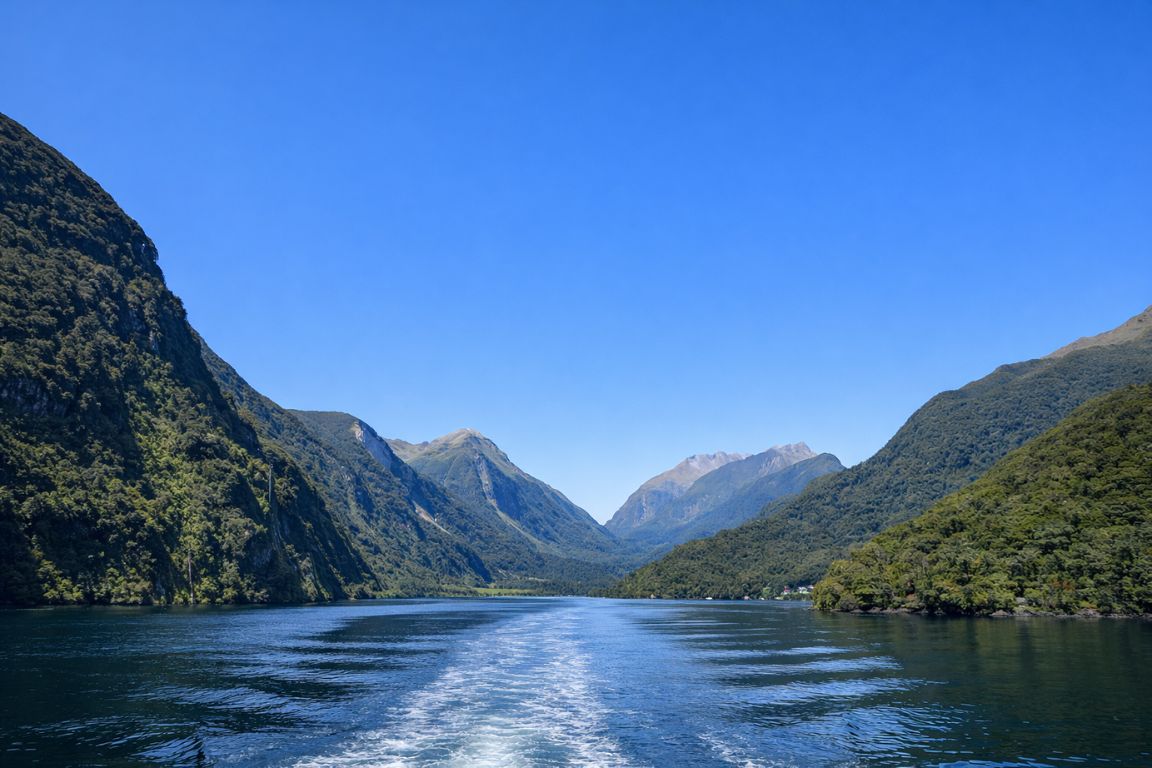 There is no single best month for all wildlife. Tawaki penguins are present during their breeding season from July to November, with peak visible activity in August and September. Bottlenose dolphins are present year-round but more reliably active October through April. Fur seals are resident year-round with spring pups appearing from September onward. Kea are visible year-round on the road. The overall wildlife calendar is richest in spring (September to November): penguin breeding, fur seal pups, dolphin activity increasing, forest birds most vocal, and waterfalls at their fullest from spring rainfall.
The tawaki breeding calendar is the most time-specific wildlife window at Milford Sound. Females return to the same beaches each year in July to find their mate from the previous season (tawaki pair for life). Eggs are laid in August and hatch in approximately 30 days. Chicks are independent by November and December, after which tawaki leave the fiord for their winter migration to Subantarctic waters, travelling south to forage along the Subantarctic Front. They are essentially absent from the fiord between December and June. This means summer visitors (December through February) are unlikely to see tawaki in the fiord itself, while winter visitors (July through September) have the best probability.
Bottlenose dolphin activity peaks in the warmer months (October through April), when calves born in summer are present and the pod is most actively social and playful near boats. Winter brings reduced dolphin activity inside the fiord and the Doubtful Sound population to the south (the most studied Fiordland population) shows stronger winter residency in quieter months when boat traffic is reduced. The relationship between boat traffic and dolphin behaviour noted in research on the Milford Sound population suggests winter visits, with fewer cruises operating simultaneously, may produce more reliable dolphin encounters inside the fiord rather than near the entrance.
Whale sightings are rare at any time of year but have been increasing as humpback and southern right whale populations recover from historic commercial whaling. Both species pass through the outer Tasman waters adjacent to Milford Sound during their spring and summer southern migrations. Sightings inside the fiord are exceptional rather than expected, but the near-Tasman section of a cruise (weather permitting) is the most likely location.
Not sure when to go to make the most of Milford Sound without the worst of the crowds? Here’s our best time to visit New Zealand Milford Sound tours guide so you time it right.
| Spring (Sep-Nov) | Tawaki breeding active; fur seal pups appearing; dolphins increasing; forest birds most vocal; waterfalls fullest | Unpredictable weather; road conditions improving but still variable |
| Summer (Dec-Feb) | Dolphins most active and playful; fur seals year-round present; birds active; peak daylight hours | Tawaki absent from fiord; heaviest boat traffic reduces dolphin fiord presence; peak crowds |
| Autumn (Mar-May) | Tawaki moulting (Jan-Mar); fewer crowds; dolphins still active; clearer air for photography | Tawaki leaving fiord from late Feb-March; reduced cruise schedule from May |
| Winter (Jun-Aug) | Tawaki return in July; least boat traffic; more dolphin time inside fiord; seals and penguins on ice-free rocks; snow on peaks | Fewer cruise departures; road conditions require more care; no overnight cruises available |
How Do You Maximise Your Chances Of A Wildlife Encounter?
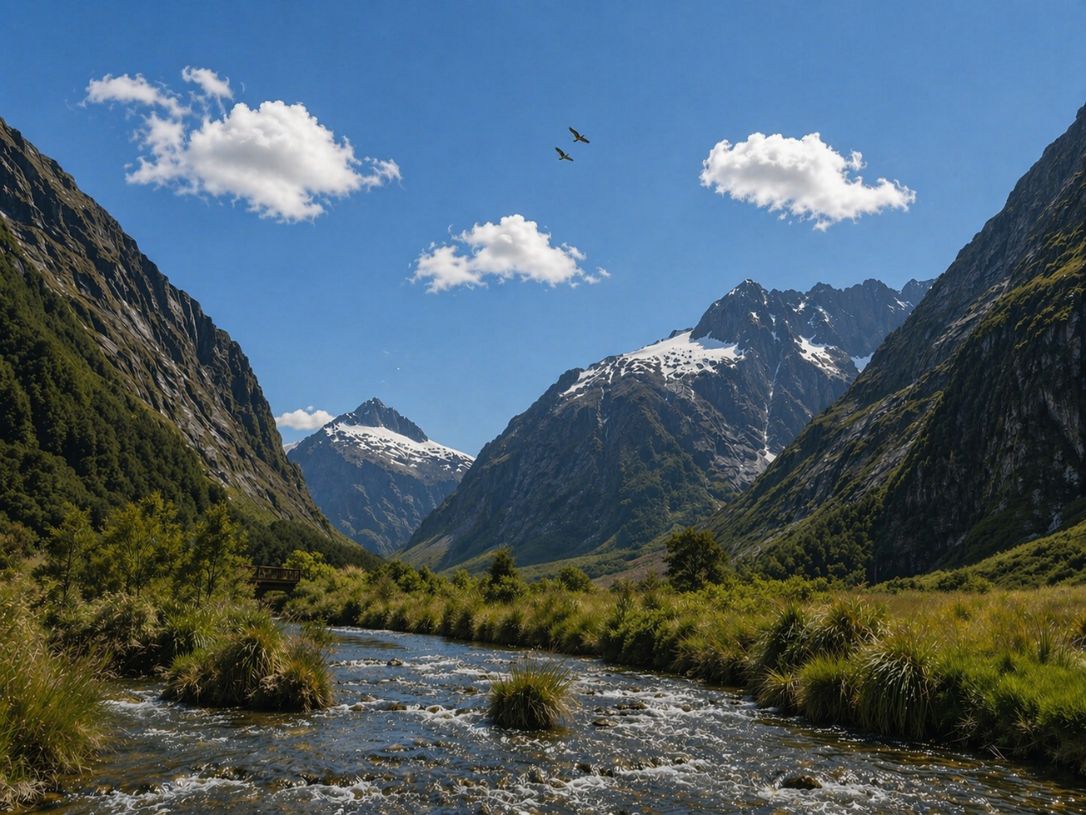 Five things have the strongest influence on wildlife encounter quality at Milford Sound: booking a nature guide-led cruise rather than standard PA commentary, choosing a morning or late afternoon departure to avoid peak dolphin avoidance behaviour, visiting during the tawaki breeding season (July to November) for the best penguin sightings, spending time at Milford Road stops including Monkey Creek and the Eglinton Valley for birds, and giving yourself more time on the water through either a longer cruise product or a kayak session. None of these changes what wildlife is present. They change how much of it you are positioned to notice.
The guide factor matters more for wildlife than for any other aspect of a Milford Sound visit. A dedicated nature guide scanning the shoreline before a cruise reaches Harrison Cove can spot a tawaki on the rocks at two hundred metres that a PA commentary system will never identify. The guide knows which ledges the seals prefer in morning sun versus afternoon. They recognise the surface behaviour that distinguishes a dolphin feeding run from one that is heading toward the boat. They understand how the tidal state affects where fish, and therefore seals and penguins, concentrate. All of this translates directly to what you see and how well you understand what you are seeing.
We’ve put together a full comparison in our self-drive vs tour New Zealand Milford Sound guide so you know exactly which option suits your comfort level and itinerary.
Time on the water is the second highest-leverage factor. More time raises probability for every species. The Southern Discoveries Discover More cruise adds 30 minutes over the standard product. An overnight cruise gives you both the late afternoon and early morning windows, which research and guide experience consistently identify as the highest wildlife activity periods. Kayaking adds a third dimension: silent, low to the water, and capable of reaching shoreline zones that cruise vessels cannot approach without disturbing habitat.
The Milford Road is as important as the fiord for a complete wildlife day. Every stop matters. Mirror Lakes at 57 kilometres is quiet enough to hear bellbirds and fantails before the coaches arrive. Monkey Creek at 99 kilometres is the most consistently productive spot for whio on the entire road. The Homer Tunnel at 104 kilometres is almost always occupied by kea. Arriving at the fiord having engaged with the road rather than simply driving through it produces a very different day.
Binoculars raise the quality of every wildlife encounter. A 8×42 or 10×42 binocular brings the tawaki shoreline within useful range from the cruise deck. It converts a “maybe something dark on the rocks” into a confirmed penguin sighting with identifiable crest and posture. They are worth carrying even if you do not typically birdwatch.
Finally: all wildlife encounters are wild and unpredictable by definition. The seals are always at Seal Rock. The penguins may be. The dolphins may be inside the fiord or near the entrance. This unpredictability is what makes an encounter meaningful. The seals’ indifference to the boat’s proximity after decades of coexistence is a kind of trust that cannot be manufactured, and the moment a tawaki emerges from the forest edge and enters the water metres from the cruise bow is something no arranged experience can replicate. A nature cruise with a self-guided Milford Track walk is a practical way to cover both the fiord and the forest birds in one day.
What Our 14,500+ Guided Travelers Report About Wildlife At Milford Sound
| Fur seal sightings at Seal Rock (any season, any cruise) | 98% – effectively certain for any cruise reaching Seal Rock in calm weather |
| Bottlenose dolphin sightings on morning cruises vs midday | 45% morning vs 25% midday – consistent with boat traffic research findings |
| Tawaki (penguin) sightings on cruises during Jul–Nov breeding season | 22% – guide-led cruises significantly outperform standard cruises for tawaki identification |
| Kea sightings at Homer Tunnel or Monkey Creek | 65% – among the most reliable wildlife encounters in the entire Milford Road experience |
| Guests who didn’t use binoculars and wished they had for tawaki or dolphins | 55% – mentioned specifically in post-trip feedback more than any other equipment item |
| Guests who cited wildlife encounters as the single most memorable element of their Milford day | 42% – consistently close to or exceeding the waterfall and scenery category |
Frequently Asked Questions
Are you guaranteed to see dolphins at Milford Sound?
No. Bottlenose dolphins are present in the northern Fiordland fiords year-round as a resident population but are not always inside Milford Sound itself. Research from the University of Otago found that dolphins spend less time inside the fiord during periods of heavy boat traffic, often remaining near the fiord entrance instead. Morning cruises in quieter periods produce more reliable dolphin encounters. When dolphins are inside the fiord, bow-riding and wake-surfing behaviour makes them highly visible.
When is the best time to see penguins at Milford Sound?
The Fiordland crested penguin (tawaki) is present in Milford Sound during its breeding season from July to November. August and September, when birds are incubating eggs and feeding early chicks, offer the best sighting windows. Tawaki are absent from the fiord between December and approximately June, spending the non-breeding season foraging in Subantarctic waters. The little blue penguin is present year-round but hard to spot; look near the Tasman Sea entrance on calm mornings.
Where exactly can you see fur seals on a Milford Sound cruise?
The main colony hauls out at Seal Rock near Copper Point, approximately two-thirds of the way along the fiord from the terminal toward the Tasman Sea entrance. Every standard cruise passes and slows at Seal Rock. Additional individuals and smaller groups are visible on various rocky ledges along both walls of the fiord throughout the cruise. Seals also swim actively around the boat at various points.
What is the Tawaki Project and why does it matter for visitors?
The Tawaki Project is a research programme led by Dr Thomas Mattern and Dr Ursula Ellenberg of the University of Otago, focused on the ecology and conservation of Fiordland crested penguins. Their surveys of Milford Sound revised the known number of tawaki breeding pairs in the fiord from approximately nine to approximately 180, fundamentally changing the understood importance of Milford Sound as a tawaki breeding site. Their research also found that Milford Sound may function as a climate buffer zone for tawaki during El Nino events, maintaining local prey availability when open-ocean conditions deteriorate. A transponder monitoring gate operates at Harrison Cove in the fiord, tracking individual penguins non-invasively as they pass to and from the colony.
Can you see whales at Milford Sound?
Occasionally. Humpback and southern right whales pass through the outer Tasman waters adjacent to Milford Sound during their spring and summer southern migrations. Sightings inside the fiord are uncommon but increasing as both whale populations continue recovering from the commercial whaling era. Orca (killer whales) have also been sighted in the fiord on rare occasions. If whales are present, they are most likely seen near the Tasman Sea entrance section of the cruise.
Where do you see kea on the way to Milford Sound?
Kea are most reliably encountered at three points on the Milford Road: the Homer Tunnel area (104 kilometres from Te Anau), Monkey Creek (99 kilometres), and at the Milford Sound Airport carpark area. They may also appear at any other road stop where human activity and parked vehicles create investigation opportunities. Keep bags, food, and vehicle openings secured: kea are genuinely persistent and capable of significant vehicle damage. Do not feed them – their natural diet is plants, roots, and invertebrates, and human food causes digestive harm.
Want to maximise your Milford Sound wildlife experience?After 14 years and 14,500 guided travelers, we know which cruise, which timing, and which Milford Road stops produce the best wildlife encounters. Start with the small boutique cruise if you are already near the fiord, or the small-group tour from Queenstown if you want the Milford Road and a cruise in one day.
Written by Liam Aroha Bennett
New Zealand tour guide since 2011 · Founder, New Zealand Milford Sound Tours
Liam has guided over 14,500 travelers through Milford Sound and Fiordland since founding the agency.