Milford Sound In Rain Vs Sun: The Ultimate Weather Showdown
Worried about rain in Milford Sound? Don’t be, it’s what makes the place spectacular. Learn what weather really means for your visit and the best conditions to aim for.
Quick Summary
Milford Sound receives a mean annual rainfall of 6,412mm and rains on approximately 182 days per year, making it the wettest inhabited place in New Zealand. Rain does not diminish the experience. Hundreds of temporary waterfalls appear on cliff faces within minutes of rain, the permanent falls double or triple in power, and the fiord takes on a different character that many experienced visitors consider more impressive than a clear day. Cruises run in almost all weather – strong wind, not rain, is the cause of most cancellations, and the fiord’s sheltered geometry protects it from most wind events. Road closures due to avalanche risk happen on average eight to nine days per year. The best condition of all is a clear day immediately after heavy rain: full waterfalls, clean mountain visibility, and the dramatic post-storm light that makes the postcards.
Choose an experience that works with Milford Sound’s changing conditions, then check your actual travel date before arranging the rest of your day.
Your Milford Plan
- Rain can reveal temporary waterfalls, while clear conditions offer broader mountain views.
- Prepare for both conditions with waterproof outerwear, warm layers and protected camera equipment.
- Confirm road status, operating conditions and your chosen departure before travelling.
Milford Sound Weather By Season: Quick Reference
| Summer (Dec-Feb) | 15-22°C | 500-720mm (wettest months) | Warmest; longest days (15+ hours); heavy rain common; peak crowds | Most activities; kayaking; scenic flights; overnight cruise (Nov-Apr only) |
| Autumn (Mar-May) | 10-18°C | 548-566mm | Cooling; clearer air; good photography light; fewest crowds outside winter | Photography; quieter cruises; best autumn light on fiord walls |
| Winter (Jun-Aug) | 5-12°C | 424-429mm (driest season) | Snow on peaks; road chains may be required; Homer Tunnel closures possible; tawaki breeding from July | Snow scenery; penguin sightings (July+); fewest visitors; most dramatic skies |
| Spring (Sep-Nov) | 10-17°C | 540-567mm | Warming; waterfalls at fullest; wildlife most active; tawaki breeding peak; wildflowers on road | Best all-round wildlife and waterfall combination; penguins; seal pups |
Temperatures refer to fiord-level conditions. Mountaintop conditions are significantly colder year-round. Driest month is July at approximately 383–394mm – still very wet by any other standard.
Is Milford Sound Better In Rain Or Sun?
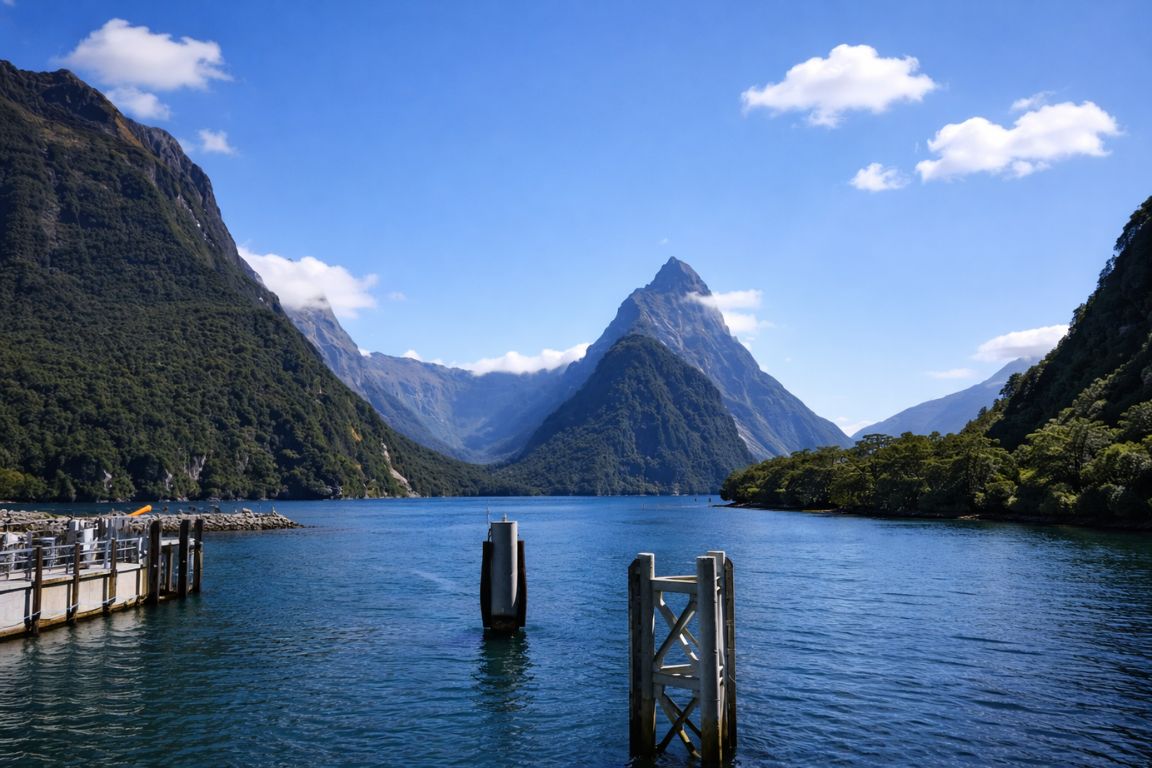 Neither condition is objectively better, they are two genuinely different experiences of the same place. Rain brings hundreds of temporary waterfalls, a dramatic mist-shrouded atmosphere, and an intensity to the permanent falls that clear days cannot match. Sun brings Mitre Peak in sharp relief, flat-water reflections, blue sky against green walls, and conditions that match the postcard photographs most people arrive expecting. The most commonly cited “best” condition by experienced guides and repeat visitors is a clear day immediately following heavy rain: full waterfalls still running on every cliff face plus unobstructed mountain visibility.
The honest framing for most visitors is this: you almost certainly cannot choose. Milford Sound receives an average of 6,412mm of rain per year and rains on approximately 182 days. One in every two days, statistically, is a rainy day. The probability of a visitor with a single-day booking landing on a clear, sunny day is around 50 percent in summer, and lower in most other seasons. Spending the days before your visit anxiously watching a forecast and trying to move bookings around in pursuit of sunshine is a common trap, and a pointless one: Fiordland weather forecasts are notoriously unreliable beyond 24 hours, and conditions at the fiord can differ dramatically from those in Te Anau or Queenstown an hour away.
The better preparation is to arrive genuinely open to both versions and to understand concretely what each one delivers. If you do, neither disappoints. If you arrive having invested in the postcard image and the sky is low and grey, you will miss a spectacle that many experienced visitors consider superior. After 14 years of guiding at Milford Sound across every weather condition, I have never had a group leave genuinely disappointed by the fiord. I have had groups leave disappointed by their own expectations.
What Does Milford Sound Look Like In The Rain?
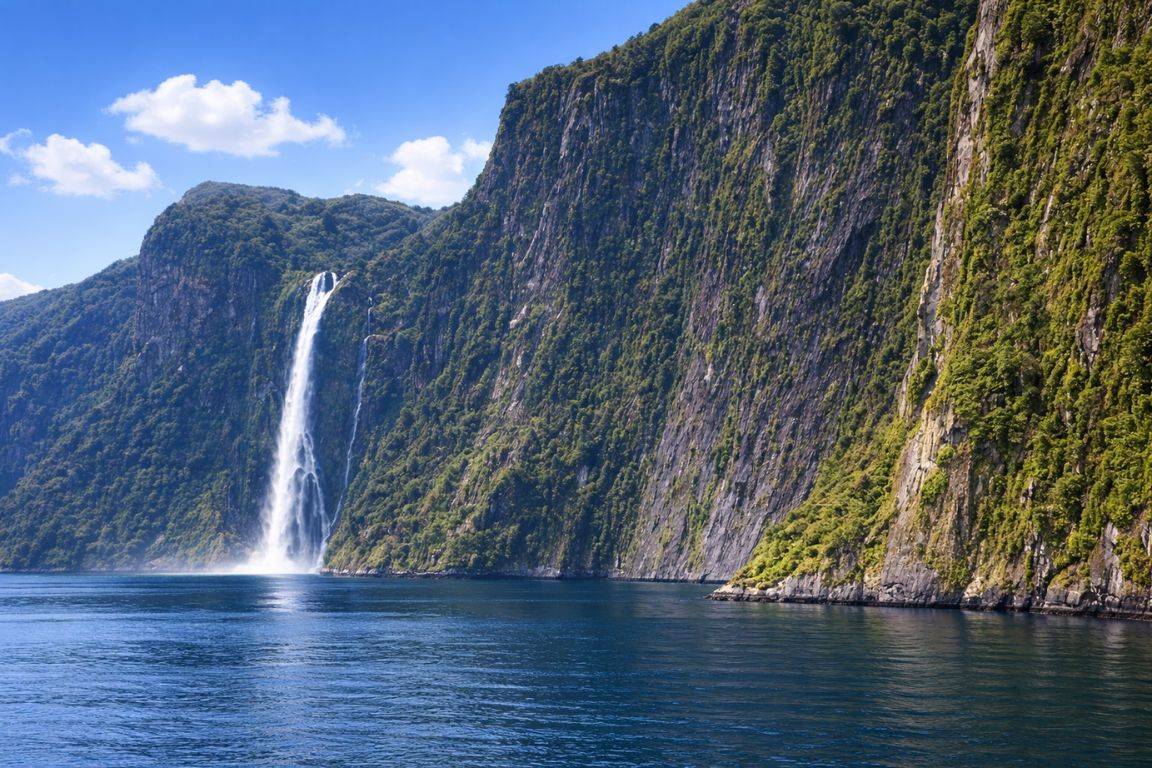 In rain, Milford Sound transforms from two permanent waterfalls into hundreds. Within minutes of rainfall beginning, water appears simultaneously on every exposed cliff face: in gullies, over ledges, through cracks in the granite, and in straight drops from flat overhangs where no water existed moments before. Some of these temporary falls are immense, running down 600 to 1,000 metres of cliff face. At the heaviest rainfall events, some falls are so high they never reach the fiord – the water disperses into mist or is carried sideways by wind before it gets there. The permanent falls double or triple in volume. Low cloud settles through the valleys, partially obscuring the peaks, producing the moody, layered atmosphere that photographers describe as the fiord’s most dramatic state.
The appearance of temporary waterfalls is genuinely startling the first time you witness it. One moment the granite faces are bare. Minutes after rain begins, white lines start appearing at intervals across the dark rock: narrow threads at first, then growing quickly to full curtains and columns of white water. On a heavy rain day the entire 1,200-metre wall on both sides of the fiord is in motion, water running down every available surface. The cruise guide on your boat will say something like “the mountains are crying.” It sounds like a cliche until you see it, and then it is the only phrase that fits.
The low cloud adds a different dimension. When cloud settles at around 400 to 600 metres, Mitre Peak disappears above a certain point. You see the lower 600 metres of the mountain with absolute clarity, the waterfall-covered rock face in detail, and then the peak simply is not there. It is in the cloud above you. The effect is more imposing than seeing the full peak: the mountain appears to extend into another domain that you cannot see. The same applies to all the peaks. The fiord feels more enclosed, more geological, more ancient.
The four-sisters waterfall formation on the northern wall is only visible in the rain. It is four identically sized falls appearing simultaneously in a line across the cliff face, often generating their own small rainbow through the mist. On the Encounter Nature Cruise, the skipper may position the bow underneath one of these temporary falls and pass around glasses of water collected from the falls for passengers to drink. Pure Fiordland water, caught mid-fall.
The permanent falls in rain are a completely different scale from the same falls on a clear day. Stirling Falls, at 146 metres, runs noticeably wider and louder after heavy rain. Lady Bowen Falls, which powers the Milford Sound settlement, runs as a thick white mass rather than the elegant ribbon visible in dry conditions. The spray at the base of both extends further toward the cruise deck.
Want to know which cruise type delivers more for your time and money on the fiord? Here’s our New Zealand Milford Sound scenic cruise vs nature cruise guide so you don’t guess.
What Does Milford Sound Look Like In The Sun?
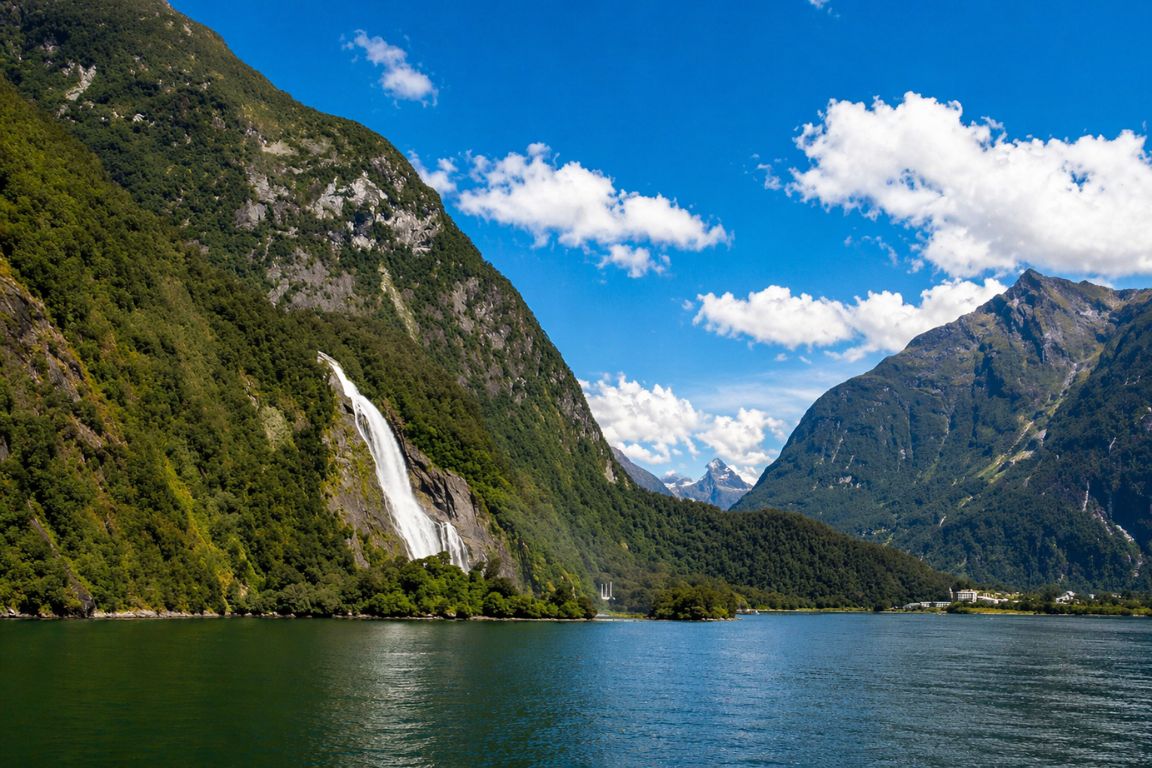 On a clear day, Milford Sound delivers the version of itself that most people carry in their minds from photographs. Mitre Peak stands in complete definition against blue sky, every ridge visible from summit to waterline. The fiord surface reflects the mountains and sky in conditions that, on calm mornings before wind builds, produce the perfect mirror image most famously seen in photographs. The forest on the cliff faces shows its full colour spectrum of green. Wildlife is more visible: seals are conspicuously active, dolphins are more likely inside the fiord, and the colours of the water shift from the dark, tannin-brown of rainy-day surface layers to brighter blue-green as light penetrates further.
The postcard view of Milford Sound, Mitre Peak reflected in flat water, requires three conditions simultaneously: clear sky, calm wind, and the right tide. These conditions occur most reliably in the early morning before the day’s first cruise vessels disturb the water. Self-drivers who arrive before 9am on a calm morning can walk the Foreshore Walk and find the fiord surface in mirror condition – the mountain above and the mountain below, the horizon line the only thing dividing them. By the time the first coach tour boats are under way, the surface is usually moving.
Not sure whether to book the early departure or wait for the afternoon slot? Here’s our morning vs afternoon New Zealand Milford Sound cruises guide so you pick the right one.
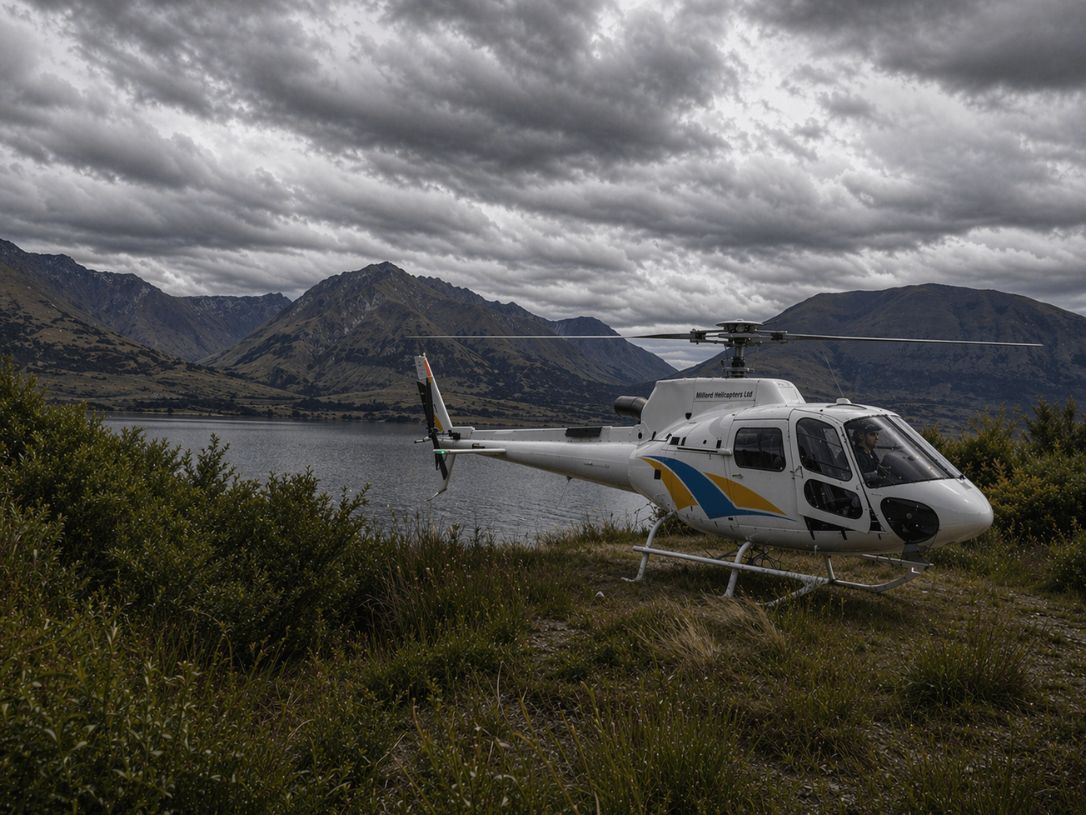
Clear days also unlock the aerial dimension. On a clouded day, a scenic helicopter or fixed-wing flight shows you fiord and valley but not the full mountain panorama: peaks disappear into cloud above. On a clear day, a Queenstown-based helicopter shows you the full extent of the Fiordland range, the glaciers at altitude, Mitre Peak from above, and the Tasman Sea from the fiord entrance. This is the most complete single visual experience available at Milford Sound.
Want the most dramatic perspective Milford Sound has to offer? Here’s our New Zealand Milford Sound helicopter tours guide so you know exactly what to expect up there.
The trade-off on sunny days is the waterfalls. On a dry sunny day, only Lady Bowen Falls and Stirling Falls are flowing. The cliff faces are bare dark granite with no movement. The fiord’s visual character is dominated by the scale and geometry of rock and water rather than the kinetic energy of falling water. Both characters are real and worthy. They are simply different.
Sandflies are worth noting here. Milford Sound’s sandflies, which can be genuinely overwhelming in warm, calm conditions, are significantly reduced by wind and rain. On a still sunny summer day they are at their peak. On a breezy or rainy day they are absent or minimal. This is not a reason to prefer rain, but it is a variable that experienced Milford visitors mention consistently.
How Much Does It Rain At Milford Sound?
 Milford Sound receives a mean annual rainfall of 6,412mm, making it the wettest permanently inhabited place in New Zealand and one of the wettest in the world. It rains on approximately 182 days per year – essentially every other day on average. In a single 24-hour period, up to 250mm can fall. The wettest months are December and January, during the New Zealand summer, with average monthly rainfall of around 600 to 720mm. The driest month is July with approximately 383mm – still extraordinarily wet by the standard of most places on earth.
The mechanism that produces this rainfall is orographic precipitation. Warm, moisture-laden winds travel east across the Tasman Sea, absorbing water, before hitting the Fiordland mountains. The air is forced upward, cools rapidly as it rises, and drops its moisture as rain on the western-facing slopes and fiords. Milford Sound sits in a geography that concentrates this effect: the surrounding peaks channel the incoming moisture into the fiord basin. The result is a rainfall regime that operates independently of season to a striking degree. Unlike most places on earth where one season is clearly wetter than another, Milford Sound has no dry season – only a slightly less wet one.
The counter-intuitive fact about Milford Sound’s rainfall is that summer is the wettest season. December and January see the highest monthly averages, not the winter months. The driest period is actually mid-winter (June to August), when cooler Tasman air carries less moisture. This surprises visitors who assume summer sunshine and winter rain. The practical implication: visitors who time their trip to Milford Sound for a New Zealand summer should not assume they have chosen the dry season. They have chosen the warmest and longest days, which is a valid reason to visit, but they have also chosen the rainiest months statistically.
What makes Milford Sound’s rainfall ecologically significant is not just the volume but the speed. Heavy events can produce 100mm in a few hours. The cliff faces go from dry to covered in water in under ten minutes when an event arrives. This is why temporary waterfalls are such a defining part of the Milford Sound experience rather than a marginal phenomenon: the mechanism that produces them operates with genuine speed and visual drama.
| January | ~717–722mm | ~14.7 | 10-19°C |
| February | ~601mm | ~14.7 | 10-18°C |
| March | ~548mm | ~15 | 9-18°C |
| April | ~552mm | ~15 | 7-15°C |
| May | ~566mm | ~15 | 4-12°C |
| June | ~424mm | ~14 | 2-10°C |
| July | ~383mm | ~13.1 | 2-9°C |
| August | ~429mm | ~15.3 | 2-11°C |
| September | ~540mm | ~16.5 | 4-13°C |
| October | ~549mm | ~16 | 6-14°C |
| November | ~567mm | ~16.2 | 8-16°C |
| December | ~595mm | ~14.7 | 10-18°C |
Data based on climate averages. Individual years vary significantly. The 2016 calendar year saw over 9,000mm of total rainfall at Milford Sound.
What Happens To Cruises And Tours When It Rains?
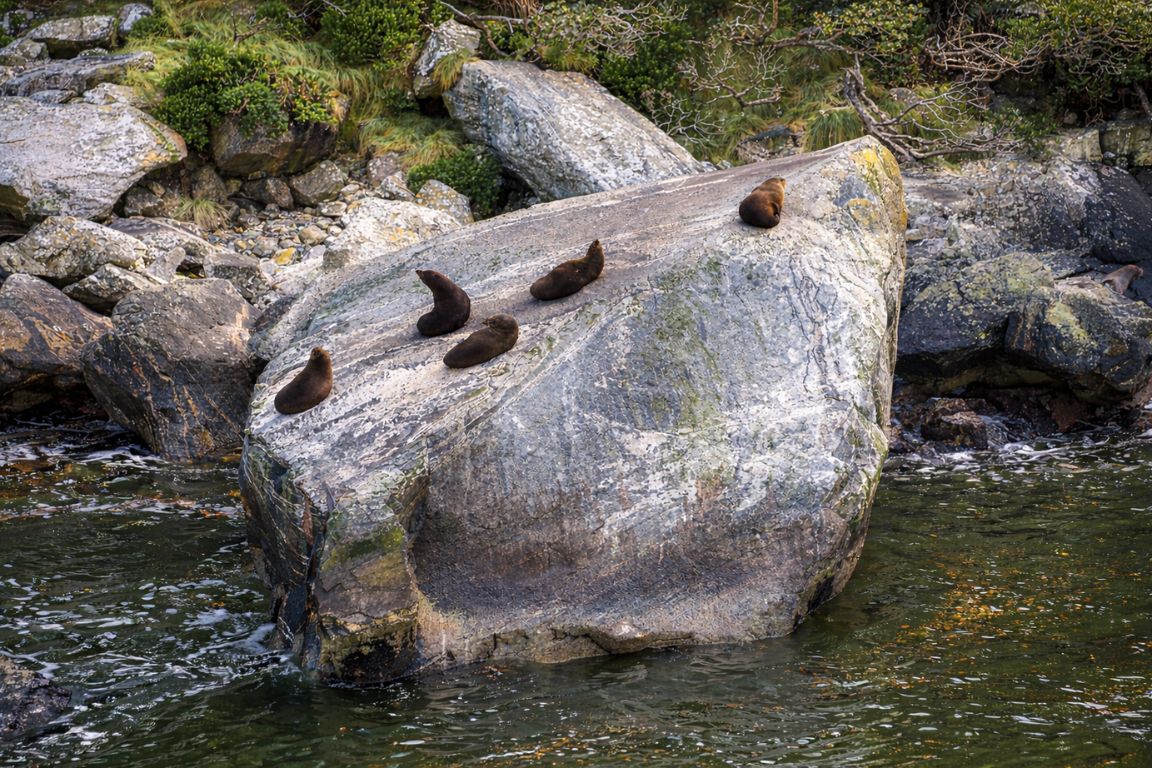 Cruises run in rain. Rain is not a cancellation cause at Milford Sound: it is standard operating weather. The main causes of cruise cancellation are strong wind and, much more commonly for the access journey, Milford Road closures due to snow or avalanche risk. Road closures happen on average eight to nine days per year, primarily between June and November. Wind cancellations of cruises are rare because the fiord geometry shelters the interior water from most wind events. When rain falls during a cruise, the guide announces it as good news, not a problem.
The sheltered geography of the fiord is important here. The glacial moraine sill at Milford Sound’s Tasman Sea entrance, combined with the narrowing of the fiord toward the terminal, creates a body of water that is protected from ocean swells and most prevailing winds. The inner fiord sections near Harrison Cove and Seal Rock remain calm in conditions that would make Doubtful Sound or the open coast uncomfortable. This is why cruise operators run their boats in heavy rain without hesitation: the water they operate on is fundamentally sheltered.
We’ve put together a full comparison in our New Zealand Milford Sound vs Doubtful Sound guide so you know exactly which one suits your priorities, schedule, and tolerance for crowds.
Road closures are a more significant risk than most visitors anticipate and deserve specific planning attention. The Milford Road is monitored daily by an avalanche control team, particularly in the section above and approaching the Homer Tunnel where rock faces above the road are subject to ice and snow loading in winter. When avalanche risk is assessed as significant, the road is closed until cleared. The New Zealand Transport Agency (NZTA) publishes road status updates at scheduled times (typically 7:30am is the key morning update). If the road is closed on the day of your visit, most tour operators will offer rescheduling or a full refund. The practical implication: for winter and spring visits from June to November, check the NZTA road status the evening before and again on the morning of your trip before driving.
Helicopter and fixed-wing scenic flights are cancelled for poor visibility and strong wind, not for rain alone. Low cloud that obscures mountain peaks cancels glacier landings but not necessarily the fiord flight itself. In persistent heavy rain with no cloud break, flights are delayed or cancelled. This is why operators and guides consistently recommend booking scenic flights early in your Queenstown itinerary: rescheduling is possible if you have two or three days available, but not if the flight is on your last day.
Kayaking runs in rain with no hesitation. The gear is waterproof by necessity and the operators are fully equipped. Rain on the water from a kayak, with the cliff faces in motion above you, is the highest-intensity version of the Milford Sound rain experience available. If you would rather not track road status yourself, compare self-drive versus a guided tour.
We’ve put together a full operator comparison in our best New Zealand Milford Sound cruises guide so you know exactly which experience fits your budget and group size.
How Should You Dress And Prepare For Milford Sound’s Weather?
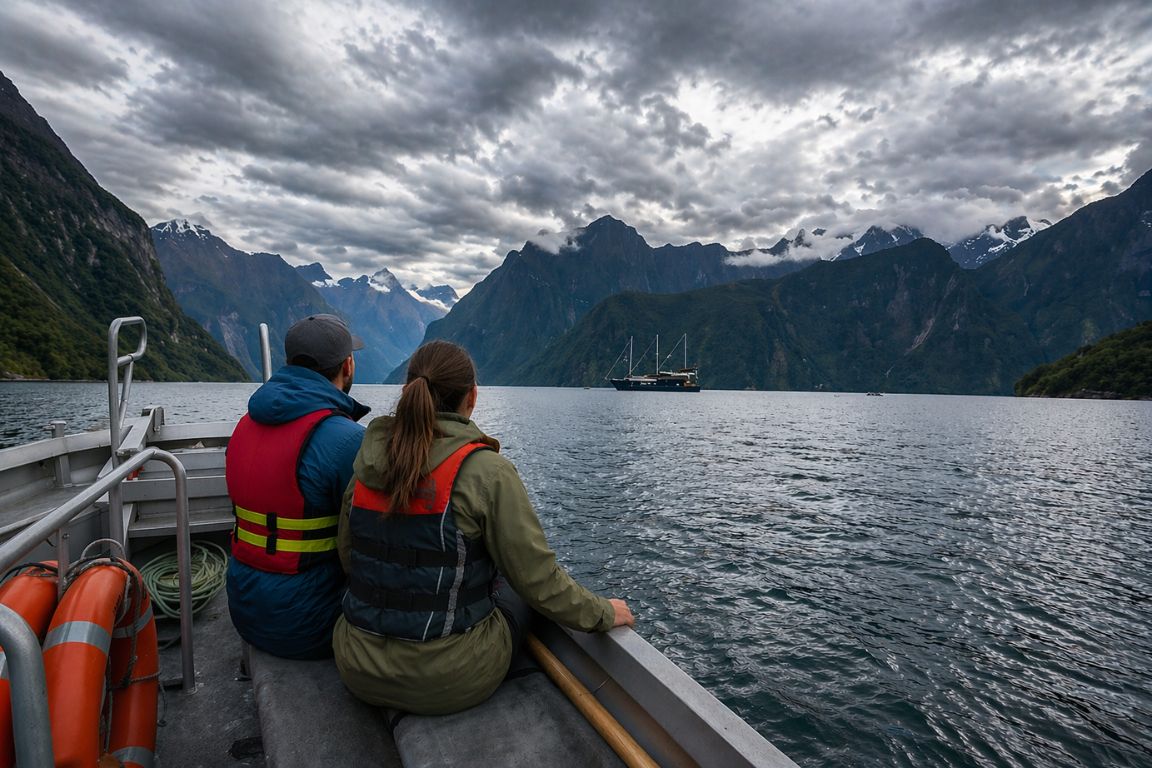 The single most important item for any Milford Sound visit is a waterproof jacket with a hood, adequate for sustained rain in wind. Umbrellas are largely ineffective due to the wind that accompanies rain in Fiordland. Warm mid-layers are essential in all seasons, including summer. Waterproof footwear is recommended for any walking activity. On the cruise, the bow deck gets wet from waterfall spray regardless of weather. A change of dry layers is worth carrying for the return journey. Camera equipment should be protected from moisture.
The jacket recommendation deserves emphasis. Visitors who arrive in Milford Sound with a thin rain shell or a hood-free jacket find the experience significantly less comfortable than those in proper waterproof gear. The rain at Milford Sound is not a gentle shower. A sustained heavy event in wind means horizontal rain and waterfall spray simultaneously. A proper waterproof jacket, ideally with taped seams and a helmet-compatible hood, keeps you genuinely dry when conditions dictate spending 30 minutes on the bow deck in heavy rainfall. This is one of the most memorable activities available at the fiord. Being underdressed removes the option.
Layering matters because conditions change within hours. A summer morning in Milford Sound that starts at 15 degrees in clear weather can shift to 10 degrees with rain within 90 minutes. The base layer, a mid-layer of fleece or insulation, and an outer waterproof shell covers all versions of the day. Removing layers on a warm sunny section is trivial; being cold and wet with no option to add warmth is not.
For the Milford Road drive, particularly in winter and spring, carry snow chains if the NZTA status requires it. Chains are mandatory on the Homer Tunnel section in certain winter conditions and vehicles without them are turned back at the control point. Rental car companies can advise on chain requirements and supply them.
Photography equipment: a dry bag or waterproof camera housing is worth using in any season. The humidity at Milford Sound is very high even on clear days. In rain, the spray from waterfalls reaches farther than expected from the cruise deck. Telephoto lenses accumulate water droplets quickly in this environment. Bringing lens cloths and keeping equipment covered when not in use protects against water damage and lens fog. The rain does not stop photography at Milford Sound. Some of the most striking images of the fiord are made in exactly these conditions.
What Is The Weather Like In Each Season At Milford Sound?
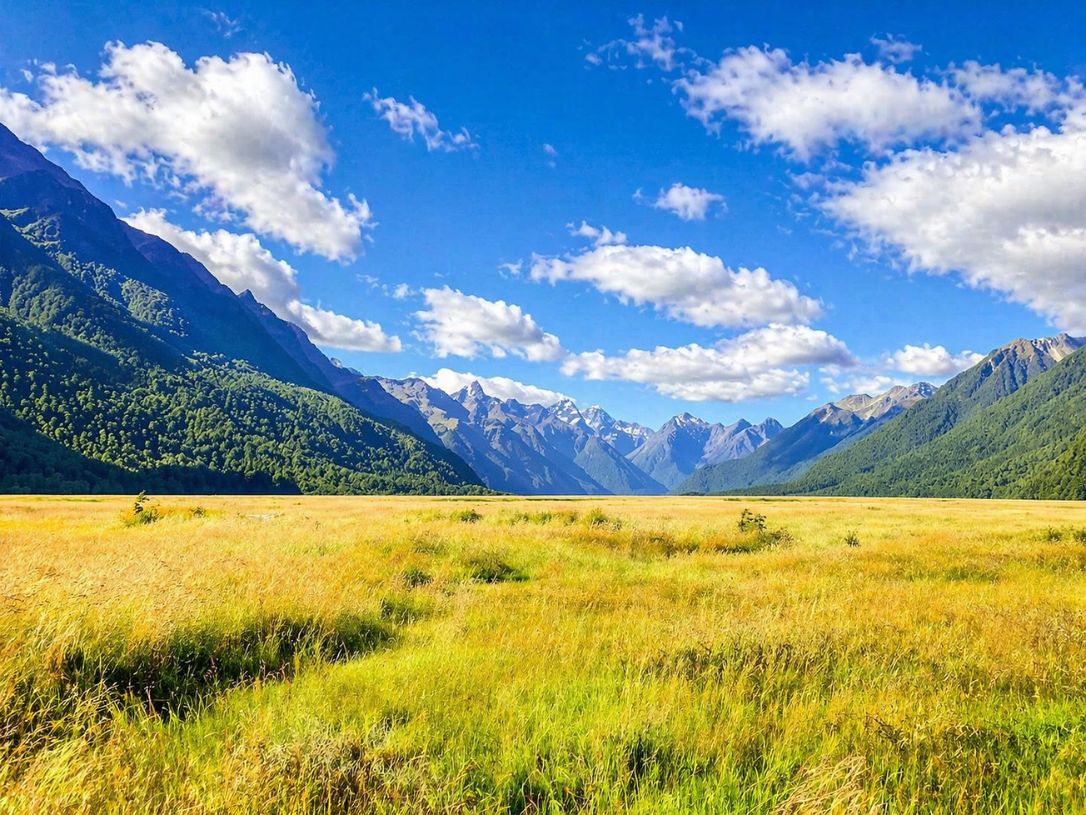 Summer (December to February) is warmest at 15 to 22 degrees Celsius, has the longest days at up to 15 hours, and is paradoxically the wettest season with monthly rainfall of 500 to 720mm. Autumn (March to May) cools to 10 to 18 degrees with slightly reduced rainfall and the clearest light of the year. Winter (June to August) is coldest at 5 to 12 degrees, has the lowest monthly rainfall at 383 to 429mm, brings snow to the peaks, and has the fewest visitors. Spring (September to November) warms from 10 to 17 degrees, has the most active waterfall season, the best wildlife combination, and building crowds from October.
Summer at Milford Sound is busy, warm, and wet. The long daylight hours from mid-December to late January, with light available until 9:30pm, give visitors maximum time on the water and on the road. The overnight cruise, which operates from November to April, is at its best in summer when the evening light lasts long past dinner and dawn arrives early. The volume of temporary waterfalls in summer is at its peak because the combination of warm air and high rainfall produces the most intense precipitation events. But so does the number of visitors: December and January produce the highest cruise passenger volumes, the most crowded parking at Milford Sound, and the longest road transit times from Queenstown.
Want to fit Milford Sound into your Queenstown itinerary without losing a full day to travel? Here’s our New Zealand Milford Sound tours from Queenstown guide so you use your time wisely.
Autumn is the understated best season for visitors who have flexibility. March and April in particular bring cooler but still comfortable temperatures (10 to 18 degrees), significant rainfall that keeps the temporary waterfalls running, fewer tourists, better photography light from the lower sun angle, and the calmer fiord surface that produces the best reflection conditions on clear mornings. The tawaki breeding season ends in November, so penguin sightings are less reliable in autumn. But every other aspect of Milford Sound is at least as good as summer and considerably less crowded.
Winter delivers the snow-peak version of Milford Sound. From June to August, Mitre Peak and the surrounding mountains carry snow on their upper sections, sometimes extending lower than usual after major winter events. The contrast between snow-white summits, dark granite mid-sections, and deep fiord water below is visually striking in a way the other seasons cannot match. Winter also brings the earliest tawaki breeding activity from July, the lowest visitor numbers, and the most remote-feeling experience available at the fiord. The trade-off is road risk: the Homer Tunnel section requires the most caution, and visiting on a weekday reduces traffic and risk further.
Spring is the season most guides at Milford Sound quietly prefer. From September onward, waterfalls are at their seasonal fullest as rainfall builds before summer. The tawaki breeding season is active throughout spring, with August and September offering the best penguin sighting windows at Harrison Cove. Fur seal pups appear at Seal Rock from September. Forest birds are at their most vocal. The road sees wildflowers and lambs in the Eglinton Valley, and temperatures are climbing from winter lows toward the comfortable range. Tourist volumes in September and October are lower than summer but growing. It is arguably the best single-month visit window in the year.
We’ve put together a full seasonal breakdown in our best time to visit New Zealand Milford Sound tours guide so you know exactly when to go based on what you want to see.
Should You Cancel Your Milford Sound Trip If The Forecast Looks Bad?
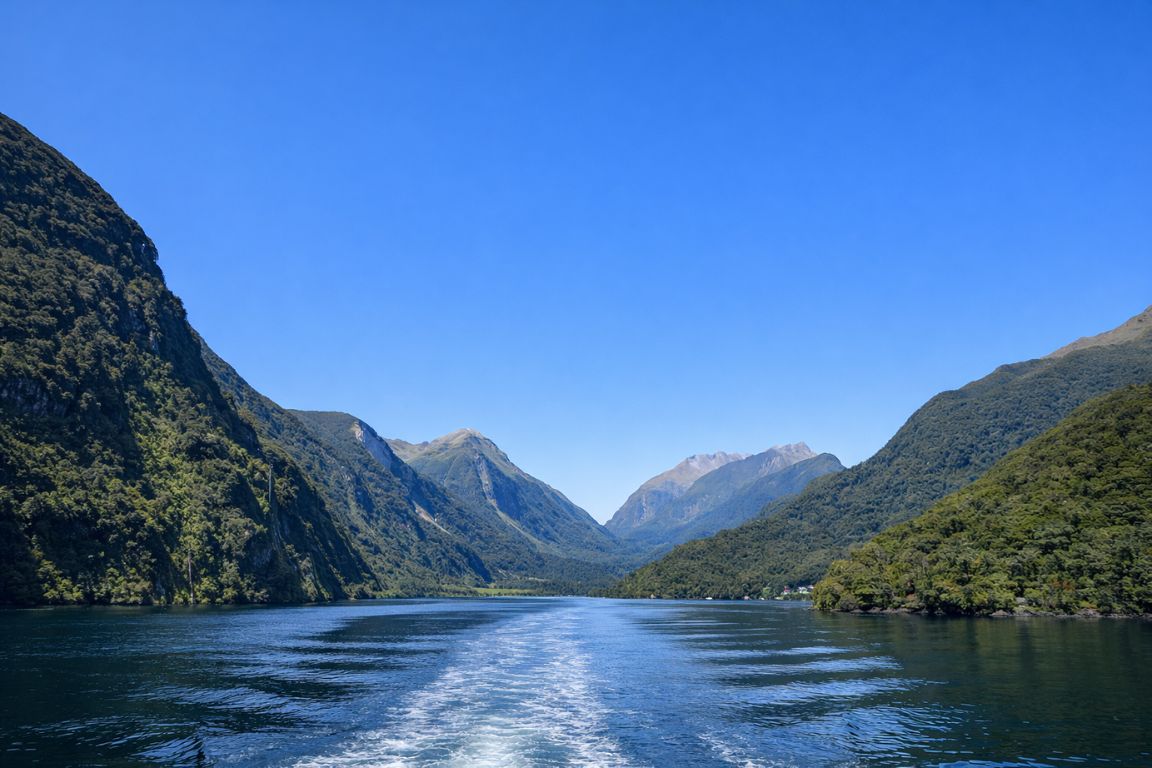 No, with one exception: if the Milford Road is closed due to avalanche risk or snow on the morning of your visit, you cannot go regardless of conditions at the fiord itself. For all other weather events, including heavy rain, low cloud, mist, fog, and overcast skies, the answer is to go. Rain is not a valid reason to cancel a Milford Sound trip. It is, by the most defensible argument, the condition in which Milford Sound is most spectacular. The forecast is also frequently wrong at Milford Sound beyond 24 hours and conditions at the fiord regularly differ from those in Te Anau or Queenstown.
The impulse to cancel based on a rain forecast is understandable. Most people plan a trip to Milford Sound with a specific visual in mind – the postcard image, the blue sky, the reflection. When the forecast shows rain for three consecutive days, the impulse is to wait for the clear window. But Fiordland forecasts do not work this way. The orographic rainfall mechanism means conditions at the fiord can shift from heavy rain to clearing skies in under an hour. A morning forecast of “persistent rain” at Milford Sound can produce a clear afternoon. A forecast of “partly cloudy” can produce a dramatic rain event from the west. The forecast is a probabilistic statement about a system that changes faster than the forecast can track.
The experienced traveller’s approach: check the road status (at nzta.govt.nz), confirm the cruise is operating (the operator will call if it is not), wear the right gear, and go. If conditions are poor, they will likely change within your two-hour cruise. If they do not change, you will see the most dramatic waterfall spectacle in the Southern Hemisphere operating at full capacity. Either outcome produces a memorable experience of Milford Sound. The one outcome that produces neither is staying in Queenstown watching the forecast change.
The one legitimate cancellation scenario is a confirmed Milford Road closure due to avalanche risk. These closures are declared at scheduled update times (7:30am is the key morning update on the NZTA website and app). If the road is closed with no reopening confirmed within your travel window, rescheduling rather than cancelling outright is the better choice if your itinerary allows. Operators handle road closure rebookings smoothly, and Doubtful Sound from Manapouri is an excellent alternative that day if road closure is confirmed and you cannot reschedule. If you would rather not depend on the road, the cruise with round-trip flights from Queenstown leaves the Milford Road out of the day.
Planning a trip to one of New Zealand’s most breathtaking landscapes? Here’s our how to visit New Zealand Milford Sound tours guide so you know exactly what to prepare for.
What Our 14,500+ Guided Travelers Tell Us About Weather At Milford Sound
| Travelers who experienced rain during their cruise and rated it positively | 92% – the “I came expecting to be disappointed but it was incredible” response is our most common rainy-day feedback |
| Travelers who said the rainy waterfall display exceeded their expectation of what rain would bring | 95% – specifically the speed at which temporary falls appear surprises almost everyone |
| Visitors who came inadequately dressed for rain and said it affected their experience negatively | 74% – the single most avoidable regret in all Milford Sound visitor feedback |
| Travelers who delayed or tried to rebook to chase a sunny forecast and ended up with similar or worse conditions | 15% – the unpredictability of Fiordland forecasts is well documented; we advise against itinerary rearrangement for weather in most cases |
| Travelers who rated their rainy Milford Sound experience higher than the same travelers rated other NZ sunny-day attractions | 85% – the fiord’s rain condition is so visually powerful it regularly outranks sunny-day alternatives in post-trip rankings |
| Travelers who said their best photographs of New Zealand were taken at Milford Sound in rainy or post-rain conditions | 88% – consistent with the “moody light produces better photographs” observation made by every landscape photographer who has shot here |
Frequently Asked Questions
Does it rain every day at Milford Sound?
Not every day, but close. Milford Sound rains on approximately 182 days per year – essentially every other day on average. In some years the total exceeds this significantly; 2016 saw more than 9,000mm of total rainfall. There is no dry season. The driest month is July at around 383mm, which is still exceptionally wet by any other standard. Expect rain as the baseline and be pleasantly surprised by clear days rather than the other way around.
Is Milford Sound worth visiting on a rainy day?
Yes, without qualification. Rain is the condition in which hundreds of temporary waterfalls appear on the cliff faces, the permanent falls increase dramatically in volume and width, and the fiord takes on the dramatic mist-and-cloud atmosphere that many experienced visitors consider its most spectacular state. Cruises run in rain as standard operating weather. The only requirement is dressing correctly: a proper waterproof jacket with a hood makes a rainy Milford Sound day excellent rather than uncomfortable.
What cancels a Milford Sound cruise?
Very strong wind is the primary weather cause of cruise cancellations, but this is rare because the fiord geometry shelters the interior water from most wind events. Rain, low cloud, and mist do not cancel cruises. The more common disruption is a Milford Road closure due to avalanche risk or snow, which prevents visitors from reaching the fiord entirely. Road closures happen on average eight to nine days per year, mainly between June and November. Check the NZTA road status at nzta.govt.nz on the morning of your visit if travelling between June and November.
What is the best time of year to visit Milford Sound for weather?
Autumn (March to May) offers the best combination of manageable temperatures (10 to 18 degrees), slightly reduced rainfall from the summer peak, clearer air quality for photography, and lower visitor numbers. November is also excellent: warming temperatures, building waterfall season, active tawaki breeding, and not yet at full summer volume. Winter (June to August) is the driest season statistically but the coldest and most affected by road risk. Summer is warmest and has the longest days but is paradoxically the wettest season.
Should I cancel my Milford Sound trip if the forecast shows rain?
No. Rain is part of the Milford Sound experience and one of its most visually spectacular elements. Fiordland forecasts are also frequently inaccurate beyond 24 hours, and conditions at the fiord regularly differ from those in Te Anau or Queenstown. The only reason to cancel is a confirmed Milford Road closure due to avalanche risk, which prevents you reaching the fiord. For all other weather conditions, dress appropriately, confirm the cruise is running, and go.
How should I dress for a Milford Sound cruise in rain?
A waterproof jacket with a hood is the minimum, and quality matters here. Umbrellas are ineffective in the wind that accompanies rain in Fiordland. Wear warm mid-layers underneath as temperatures are cool even in summer and the bow deck is exposed. Waterproof footwear helps on any walking sections. Bring a dry change of mid-layers for the return journey if you spend time on the deck during a heavy rain event. Protect camera equipment with a dry bag or waterproof housing as spray from the waterfalls reaches further than expected from the cruise deck.
Visiting Milford Sound and unsure what the weather will bring?We monitor conditions daily and know how to make the most of every version of Milford Sound’s weather. Tell us your dates and we will make sure you are prepared for whatever the fiord delivers. Check the small boutique cruise for your dates.
Written by Liam Aroha Bennett
New Zealand tour guide since 2011 · Founder, New Zealand Milford Sound Tours
Liam has guided over 14,500 travelers through Milford Sound and Fiordland since founding the agency.