Scenic Stops On The Way To Milford Sound
Driving to Milford Sound? The journey is part of the experience - discover must-see stops, timing, and key tips before you hit this iconic road.
Quick Summary
The drive to Milford Sound is one of the best road trips in New Zealand, and the stops along the way are not optional extras – they are part of the experience. The Milford Road section alone (Te Anau to Milford Sound) passes through a glacier-carved valley, a rainforest lake walk, the dramatic Homer Tunnel, and the Cleddau Valley descent, all before you reach the fiord. Allow at least four hours from Te Anau with stops, fill fuel before you leave, and download offline maps. Mobile reception disappears shortly after town.
Choose a road-based itinerary that leaves time for viewpoints and short walks, then check your travel date before arranging the rest of your Milford Sound day.
Your Milford Plan
- Allow at least four hours from Te Anau when combining the drive with viewpoints and one short walk.
- Start in Te Anau for a road-focused day, or in Queenstown if you want end-to-end transport.
- Check road, track and parking information for your actual travel date before arranging the rest of the trip.
Milford Road Stops: Quick Reference
| Eglinton Valley | ~30-45 km | 5-10 min | Glacier-carved valley with tussock floor | Pull over anywhere; dawn mist is extraordinary |
| Mirror Lakes | ~57 km | 15 min | Reflective tarns, boardwalk, DOC signs | Go before 9am; upside-down DOC sign |
| Lake Gunn Nature Walk | ~76 km | 45 min | Loop track through red beech forest to lake | Birdlife, lakeside views, wheelchair accessible |
| The Divide / Key Summit | ~84 km | 3 hrs return | Southern Alps lowest pass; alpine hike | Three-valley panorama from summit |
| Pops View Lookout | ~90 km | 5 min | Roadside panorama of Hollyford Valley | Best on return in afternoon light |
| Monkey Creek | ~99 km | 10 min | Glacial creek; kea and whio habitat | Drink the water; watch for kea in the car park |
| Gertrude Valley Lookout | ~103 km | 10 min (lookout) / 2 hrs (valley walk) | Alpine valley with waterfall views | Kea at the entrance; Darran Mountains backdrop |
| Homer Tunnel | ~104 km | Variable (up to 20 min wait) | 1.2 km single-lane granite tunnel | Exit view down Cleddau Valley is the reward |
| The Chasm | ~109 km | 20-30 min | River gorge sculpted by the Cleddau | Partially open (lower bridge closed); check DOC first |
Distances are approximate from Te Anau. Always check NZTA and DOC websites for current road and track conditions before departing. Information verified April 2026.
Is The Drive To Milford Sound Worth Stopping For, Or Just A Way To Get There?
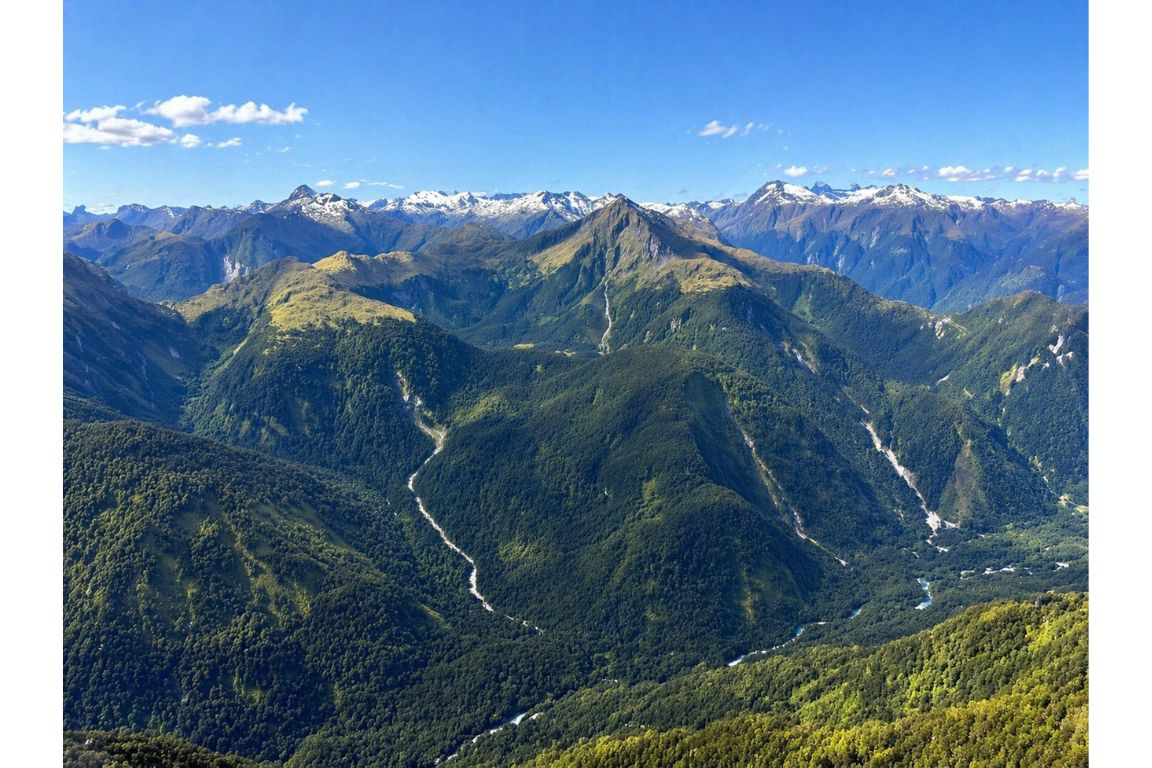 The drive is not the way to get there. It is the experience. The Milford Road from Te Anau through Fiordland National Park is consistently described by people who have driven great roads around the world as one of the finest they have done. It passes through a glacier-carved valley the width of three football fields, alongside reflective mountain lakes, through ancient beech rainforest, under peaks that hit 2,700 metres, and into a tunnel bored through solid granite by hand during the Great Depression. The fiord at the end is extraordinary. So is everything before it.
We have been running tours through Fiordland since 2011. The guest feedback that surprises people most is how often the drive rates as highly as the cruise. Not because the cruise is underwhelming, it isn’t. Because the road is genuinely that good, and most visitors underestimate it until they’re in the middle of it.
The trap is treating the Milford Road as a transit corridor. Queenstown to Milford Sound is 288 kilometres, and if you drive it like a motorway run, you arrive tired and have missed the second half of the experience. The road deserves time. The stops deserve more than a 90-second pullout and a phone photo taken through the windscreen. Mirror Lakes before 9am on a still morning looks nothing like Mirror Lakes at 11am with three coaches in the car park. The Eglinton Valley in early light, with mist sitting in the tussock grass and the beech forests catching the first sun, is one of the more quietly spectacular things Fiordland produces.
This guide covers the stops from Queenstown to Milford Sound in order, with honest assessments of which are unmissable, which reward extra time, and which are fine to skip if you’re running behind schedule.
Wondering whether to fly in, drive, or join a guided tour from Queenstown or Te Anau? This how to visit New Zealand Milford Sound tours guide covers the access options most first-timers overlook.
What Are The Best Stops Between Queenstown And Te Anau?
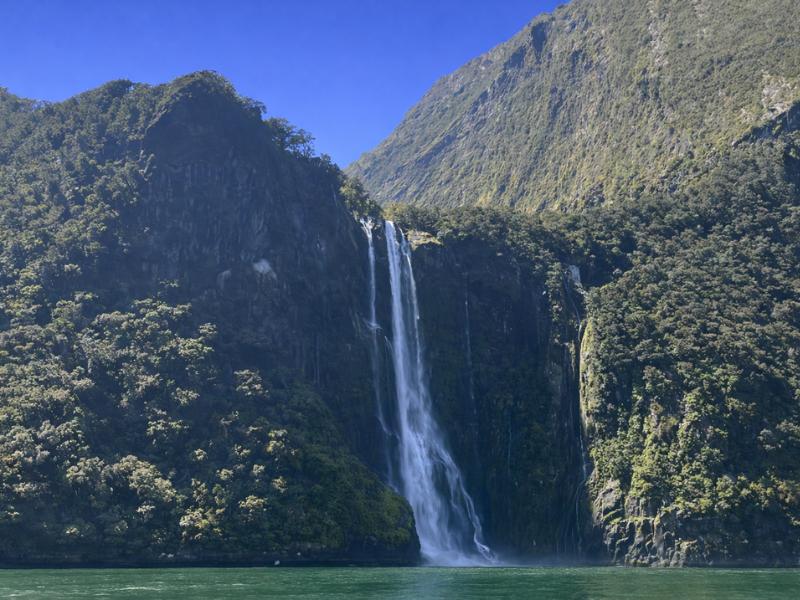
The Queenstown to Te Anau leg covers 175 kilometres on State Highway 6 and takes around two hours without stops. The key stops are the Devil’s Staircase Lookout above Lake Wakatipu, the town of Kingston at the lake’s southern end, and the Garston Hunny Shop around 60 kilometres south of Queenstown. Te Anau itself is a mandatory stop: it is the last place for fuel, food, and mobile coverage before Milford Sound.
Leaving Queenstown, the road follows the eastern shore of Lake Wakatipu south. Within 15 minutes, the terrain opens up and the Remarkables range fills the view to the east. The road is straightforward until it climbs above the lake’s edge along the Devil’s Staircase, a winding stretch named for its gradients rather than its difficulty, where the view back across the lake toward Queenstown stops people mid-sentence. The car park is small, around 15 vehicles, and on the right heading south. Worth five minutes if it’s clear.
Kingston sits at the southern tip of the lake, 45 minutes from Queenstown. It’s a small lakeside settlement with a cafe and public toilets, and the starting point for the Around the Mountains Cycle Trail. Nothing mandatory here for Milford visitors, but it’s a sensible stop to stretch legs and check the time before heading inland. The sandy beach looking back up the lake is genuinely pretty on a clear morning.
From Kingston the road heads inland through flat farming country. Mossburn is worth noting for two practical reasons: cheap fuel compared to both Queenstown and Te Anau, and it marks the turn onto State Highway 94, which you’ll follow all the way to Milford. The Garston Hunny Shop, roughly 60 kilometres from Queenstown, is a small roadside stop with local honey, good coffee, and a reason to slow down on a stretch of road that otherwise offers little to stop for.
Te Anau is where the day actually begins. Fill the tank. Buy food for the road, there are no shops between here and Milford Sound. Download offline maps if you haven’t already. Check NZTA for road conditions. The last petrol pump is in Te Anau. This is not an exaggeration, and people who skip this step and arrive at Milford on a near-empty tank are regular visitors to our pre-trip consultation conversations.
The distance between Queenstown and Milford Sound catches most visitors off guard – our New Zealand Milford Sound tours from Queenstown guide breaks down the realistic options for getting there and back.
What Are The Must-Stop Viewpoints On The Milford Road?
 The five non-negotiable stops on the Milford Road are the Eglinton Valley, Mirror Lakes, Monkey Creek, Gertrude Valley Lookout, and the Homer Tunnel exit. Each takes between five and twenty minutes. Together they add about an hour to the drive and transform it from a transit into an experience. If you only have time for two, choose Mirror Lakes (before 9am) and the Monkey Creek pullout (for the kea).
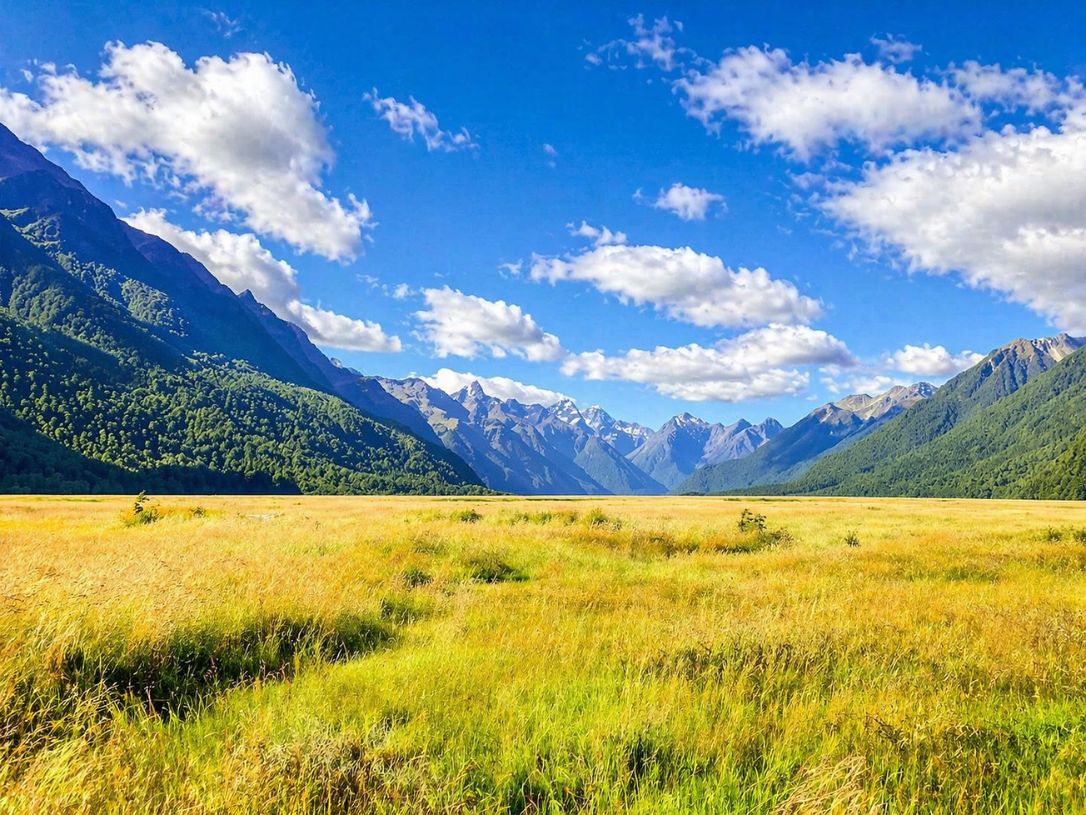
The Eglinton Valley opens about 30 kilometres out of Te Anau. You emerge from a band of beech forest into a flat-floored valley that stretches two kilometres wide at its broadest, with walls that rise steeply on both sides into peaks that hold snow well into summer. The floor is covered in tussock grass and threaded by the Eglinton River. There are multiple pullouts along the road; pick any of them. At dawn, when mist sits on the valley floor and the upper ridges catch the first light, this valley is as good as anything New Zealand produces. At 10am with a queue of coaches ahead of you, it is still remarkable. Photographers come back specifically for this valley.
Mirror Lakes sits at 57 kilometres from Te Anau. The car park is signposted, the boardwalk to the water is 400 metres return. It takes five minutes to walk. On a calm morning, the tarns reflect the Earl Mountains so precisely that the DOC information sign is installed upside down, readable correctly only in the reflection. This detail alone is worth knowing before you arrive; it changes how you look for it. On a windy day the reflections vanish and Mirror Lakes is just a pleasant wetland walk. On a still morning before the coaches arrive, it is one of the most photographed spots in New Zealand for a reason that makes complete sense once you’re standing there.
Pops View Lookout is a roadside pullout at roughly 90 kilometres from Te Anau, on the right heading toward Milford. It overlooks the Hollyford Valley: a deep, forested trough that drops away below the road, with the Hollyford River visible on the valley floor. The view is weather-dependent; fog or low cloud makes it unremarkable. On a clear day the scale of the descent below you clarifies where you are in the topography of the Southern Alps. It’s better on the return drive when the sun is further around, so don’t stress about this one heading in if you’re running on time.
Monkey Creek, at around 99 kilometres, is where two things converge: glacial water you can drink straight from the source, and kea. The creek is fed from the snowfields above and runs fast and cold and clear. Filling a water bottle here is a habit for people who know this road. The car park is large and consistently hosts kea, New Zealand’s alpine parrot, which will approach your vehicle with the specific intention of getting into your food, chewing your windscreen seals, and stealing anything left unattended. They are spectacular and protected and very good at their jobs. Watch them. Do not feed them. Close your car windows.
The Gertrude Valley Lookout is a quick stop just before the Homer Tunnel. From the car park you get an unobstructed view into the Gertrude Valley, framed by the Darran Mountains above. The scale of the peaks here is genuinely disorienting: you are at 940 metres above sea level and the summit of nearby Mount Tutoko is at 2,746 metres. The valley floor carries waterfalls in wet conditions. This is also a trailhead for the Gertrude Saddle route, an expert-only hike that should not be attempted without experience and current DOC advice.
Heading to Fiordland and want to know what’s genuinely worth your attention? Here’s our what to see in New Zealand Milford Sound tours guide so nothing important passes you by.
What Is Mirror Lakes And Is It Worth The Stop?
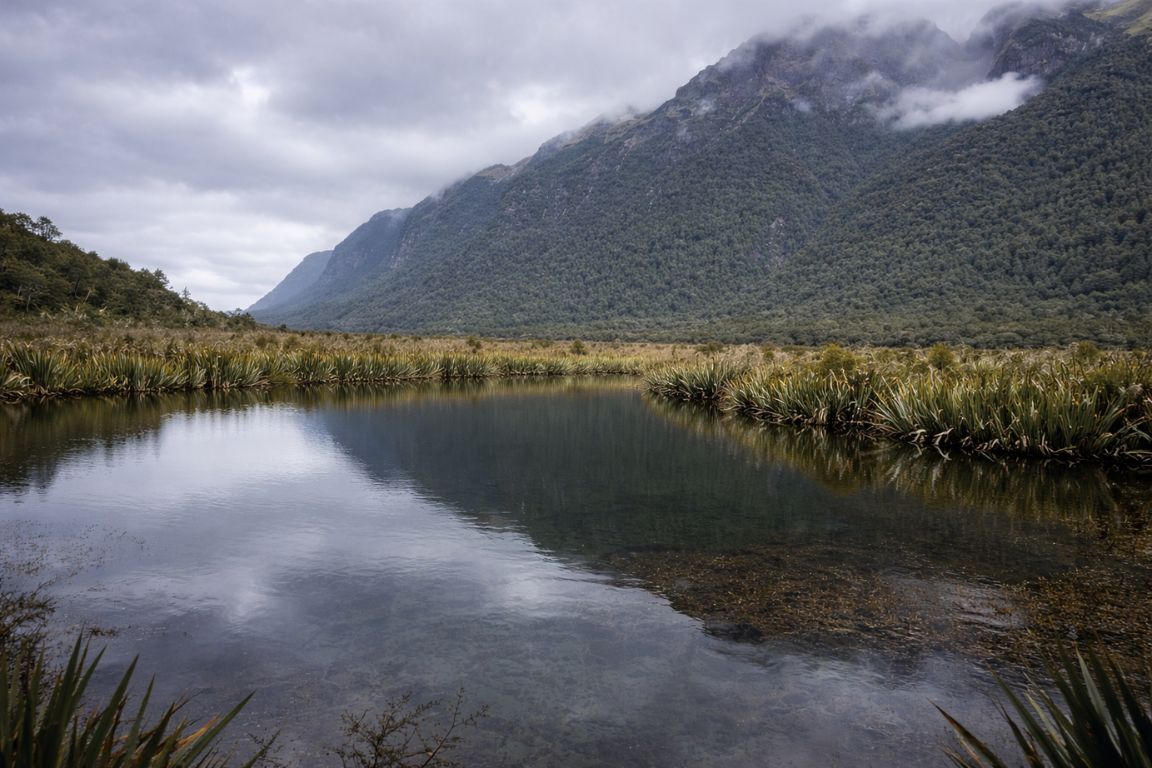 Yes, with a timing condition. Mirror Lakes at the right moment is among the most striking roadside stops in New Zealand. The Earl Mountains reflect off still water with a clarity that photographs can barely capture. The visit takes 15 minutes. The timing requirement is non-negotiable: arrive before 9am to see the reflection, before the coaches arrive, and before wind picks up through the valley. Visit it on the way in, not on the return – morning light is the only light worth photographing here.
The lakes themselves are small. First-timers occasionally feel slightly underwhelmed by the physical size until they understand what they’re looking for. The point is not the size. The point is the reflection, which under the right conditions produces a vertically symmetrical image of mountain, sky, and treeline that looks edited. The flax that borders the tarns frames the image. The Earl Mountains behind are both above and below the water simultaneously. The DOC sign marking the site is installed with its letters reversed, readable correctly only in the reflection below it. When this detail clicks, you understand what makes Mirror Lakes what it is.
The practical notes that matter: the boardwalk is 400 metres return, flat, and wheelchair accessible. There is no toilet at Mirror Lakes. The nearest toilets are at Knobs Flat, 7 kilometres further along. The car park is small and fills fast when coaches arrive from Queenstown, which typically happens between 9:30am and 11:30am. If you are there before the first coaches, the experience is almost private. If you arrive mid-morning during summer, you are sharing a short boardwalk with potentially 80 or 90 people. Both versions are worth experiencing; they are just different experiences.
One more thing: wind ruins the reflection immediately. A duck crossing the water ruins it momentarily. Morning is calmer than afternoon on this valley. If you visit on the return journey, the wind has typically picked up and the reflection is usually gone. Visit Mirror Lakes on the outbound drive, before 9am when you can manage it.
If you'd like a guide who knows when to be at Mirror Lakes, the Premium Milford Sound Small-Group Tour from Queenstown times the road stops as part of the day.
What Is The Homer Tunnel And What Should You Know Before You Drive Through It?
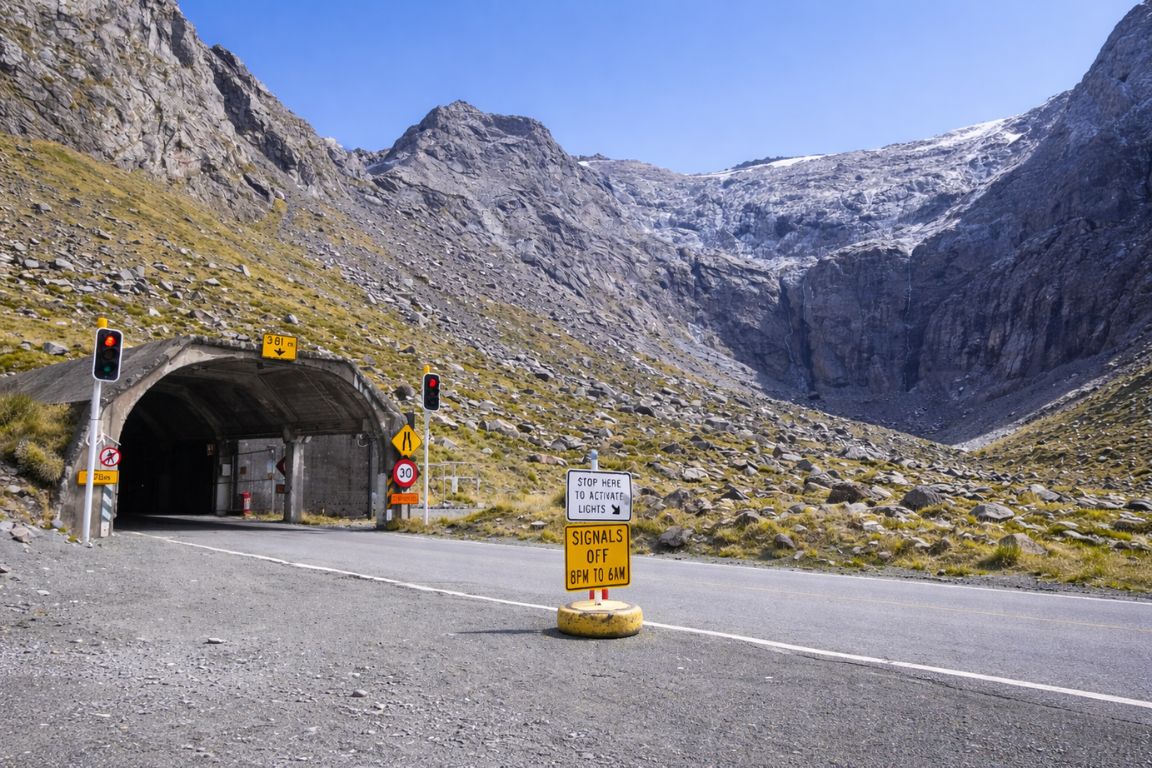 The Homer Tunnel is a 1.2-kilometre single-lane tunnel at 940 metres above sea level, bored through solid granite by hand during the Great Depression. Traffic lights control one-direction flow, with waits of up to 20 minutes in summer. It is dark, wet, and slopes steeply downward toward Milford. It is not technically difficult but it is unfamiliar. Headlights on, follow the signals, drive steadily. The view when you exit on the western side, down into the Cleddau Valley with waterfalls running off both walls, is one of the best moments on the entire route.
Construction of the Homer Tunnel began in 1935, largely by workers directed to Fiordland by the government during the Great Depression. They worked by hand, pick and shovel, through solid granite at nearly 1,000 metres of elevation. Avalanches killed workers during construction. The tunnel breakthrough was achieved in 1940 but war interrupted completion, and it wasn’t until 1953 that the tunnel finally opened Milford Sound to road access. The road itself remained gravel until the 1980s. All of this is visible in how the tunnel looks and feels: unlined stone walls, wet surfaces, a gradient that tips you forward as you descend. It is not a modern motorway tunnel. It is exactly what it is, and the history is worth knowing before you drive through it.
In peak summer season, traffic lights at both portals control one-way flow. The wait can be up to 20 minutes. This is not a malfunction; it is the system. The car park at the eastern portal is a reasonable place to stretch legs while you wait, and the kea who inhabit the area will make the wait entertaining regardless. Keep bags closed, windows up, and food out of sight.
In winter, the tunnel operates two-way traffic with no signals. This means oncoming headlights in a narrow, dark, single-lane passage. Drive slowly, stay left, and use dipped headlights throughout. The tunnel is also the last point before a series of avalanche-prone sections on the descent. Follow all signage. The No Stopping Zone between the Homer Tunnel western portal and The Chasm exists because this stretch is an active avalanche area. This is enforced, not advisory.
We’ve put together a full seasonal breakdown in our best time to visit New Zealand Milford Sound tours guide so you know exactly when to go based on what you want to see.
The exit. When you come out of the western portal, the Cleddau Valley opens below you in a three-hairpin descent. In wet weather, waterfalls pour off both walls. The scale of the drop and the drama of the valley floor below is genuinely one of the great reveal moments in New Zealand road travel. Pull over safely at the first available spot on the descent, which there is room to do, and take a moment before continuing down.
What Walks Can You Do Along The Milford Road Without A Full Day Hike?
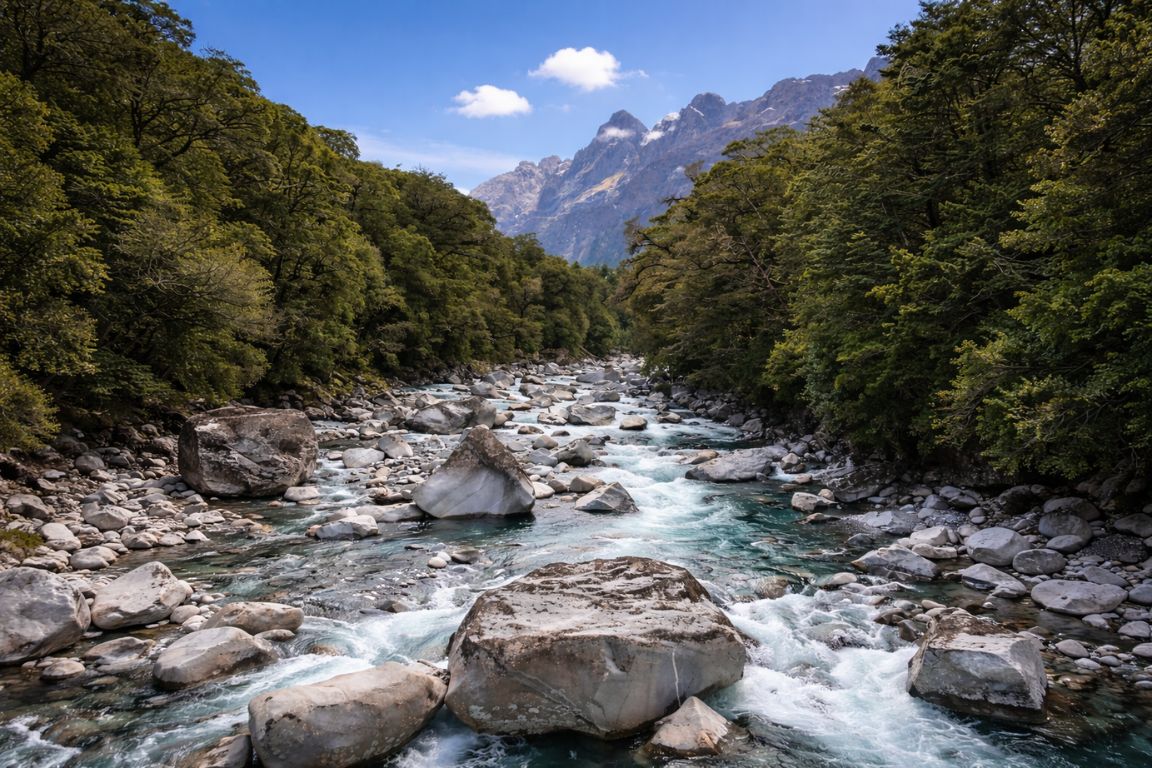 Three walks fit inside a standard day trip without compromising your cruise timing: the Mirror Lakes boardwalk (15 minutes), the Lake Gunn Nature Walk (45 minutes return), and The Chasm walk (20 to 30 minutes return, partially open as of early 2026). If you have an extra two to three hours, the Key Summit Track from The Divide is one of the best half-day hikes in Fiordland. The Gertrude Valley walk-in (not the full saddle route) adds roughly two hours and is far less known than it deserves to be.
The Lake Gunn Nature Walk starts at the Cascade Creek car park, roughly 76 kilometres from Te Anau. It is a 1.4-kilometre loop through ancient red beech forest to the edge of Lake Gunn, taking around 45 minutes at an easy pace. The forest floor is carpeted in moss. The trees are large and old. The lake itself sits at 480 metres above sea level and has a dark, glassy quality that feels nothing like a lowland lake. Birdlife along this track is excellent: bellbirds, riflemen, and tomtits are common. The walk is flat, well-maintained, and wheelchair accessible. It is quiet even in summer because it sits slightly off the main coach schedule. One of the more underrated 45 minutes on this road.
The Key Summit Track starts from The Divide car park, 84 kilometres from Te Anau and 531 metres above sea level, the lowest east-west crossing of the Southern Alps. The first section follows the start of the Routeburn Track, one of New Zealand’s Great Walks. You leave the forest after about 40 minutes, enter open alpine terrain with tarns and low shrubland, and reach Key Summit with panoramic views of the Hollyford, Greenstone, and Eglinton valleys simultaneously. Allow three hours return. The views from the summit are among the best day-hike payoffs in the entire Fiordland region. This is the stop to choose if you have to pick one longer walk on the road.
The Chasm is at 109 kilometres from Te Anau, between the Homer Tunnel and Milford Sound. The Cleddau River enters a narrow rock gorge here, accelerating through water-sculpted stone basins over thousands of years. The walk is 400 metres return and takes 20 minutes. As of early 2026, The Chasm is partially open following storm damage that destroyed bridges in 2020: you can walk to the river’s edge and see the gorge, but the viewing bridges over the main formations are not yet reinstated. Check DOC’s website for current status before visiting. The kea are reliable in the car park regardless of the track’s condition.
The Gertrude Valley walk-in deserves more attention than it gets. The trailhead is at the Gertrude Valley car park just before the Homer Tunnel. You can walk into the valley for up to 3.5 kilometres before the terrain becomes the beginning of the expert-only Gertrude Saddle route. The valley walk itself is accessible and remarkable: tussock meadow, waterfalls off sheer cliff faces, and mountain silence. Allow about two hours return for the valley section alone. Do not attempt the saddle unless you are an experienced alpine hiker and have checked current conditions with DOC.
Where Should You Stop On The Way Back To Te Anau Or Queenstown?
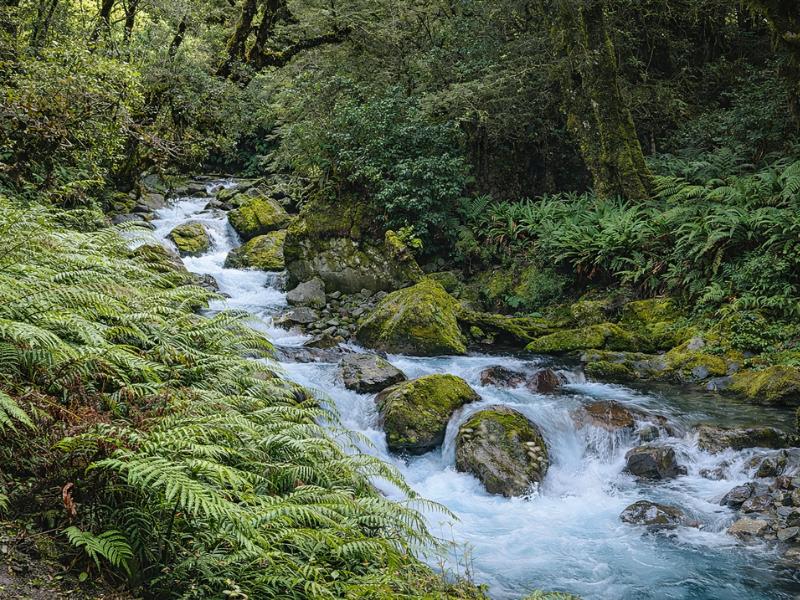
The return drive looks different. Light comes from a new direction. Stops that felt busy in the morning are quieter in the afternoon. Three stops are best kept for the return: Pops View Lookout (right-hand side, easier to pull into heading back to Te Anau), Lake Fergus (two lakeside pullouts on the eastern side of the road), and The Chasm car park (afternoons are far quieter after the morning coach traffic has passed through). The Lake Gunn Nature Walk also suits the return for the same reason.
One thing guides notice that most travelers don’t: the return drive is often more relaxed than the outbound. The pressure of reaching the cruise on time is gone. The light has shifted, and the Eglinton Valley, which faces roughly northwest, catches the late afternoon sun in a way that the morning light doesn’t reach. The tussock floor goes warm gold. The beech forest on the western slopes catches it directly. If you did Mirror Lakes early on the way in, you’ve already seen it at its best; on the return, look instead at the Eglinton flats from the car.
Lake Fergus is a stop that barely appears in most travel guides and is worth knowing about. Two small lakeside pullouts on the eastern side of the road, accessible on the return drive, give you still water with mountain reflections in the afternoon that rival Mirror Lakes without a single coach in sight. Wind is the variable; if the valley is calm late in the day, Lake Fergus in the afternoon light is a legitimate photographic moment.
The Chasm car park in the afternoon is reliably quieter. The coach convoys that stopped here on the way in are long gone. The forest walk is pleasant regardless of the track’s current state further along. The kea are still there. This is a good stop for a late lunch or a quiet sit before the final stretch back to Te Anau.
If you didn’t do Key Summit on the way in and you have time, The Divide is worth pulling into on the return for even a short walk into the Routeburn Track‘s first section. You don’t need to go far to understand what the track is. Fifteen minutes in and back gives you beech forest, bird noise, and a completely different texture from the open valley driving. It resets the senses before the final hour to Te Anau.
What Should You Have Ready Before You Leave Te Anau?
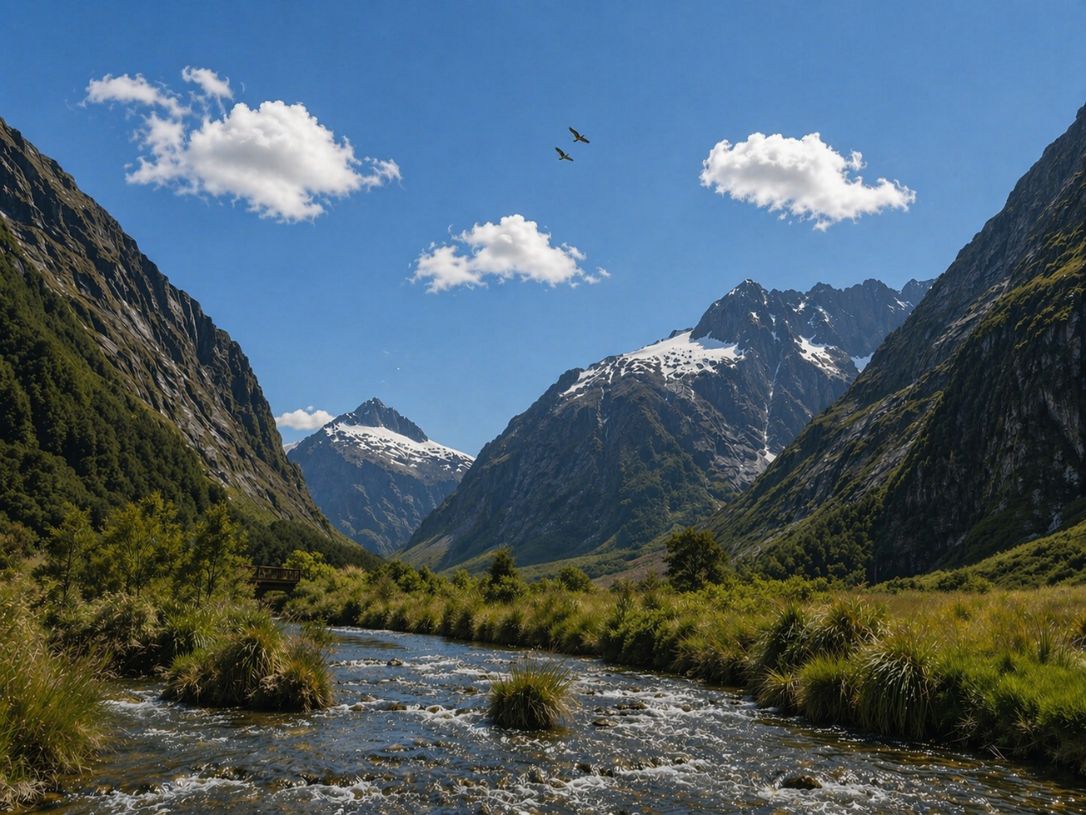 Six things: a full tank of fuel, enough food and water for a full day, offline maps downloaded, NZTA road conditions checked, snow chains if visiting between May and November, and insect repellent. Once you leave Te Anau there are no fuel stations, no shops, and no mobile phone reception for most of the 119 kilometres to Milford Sound. The toilet stops are at Knobs Flat (63 km) and The Divide (84 km). Plan around them.
Fuel is the most common avoidable problem on this road. People leaving Te Anau on a quarter tank, assuming they’ll manage, are the ones who arrive at Milford Sound on empty after a long day of idling in the Homer Tunnel queue and running the heater. Fill the tank completely before leaving Te Anau regardless of what your gauge reads. The return trip is another 119 kilometres of fuel burn before you reach anything.
Food from Te Anau is strongly recommended. The cafe at Milford Sound terminal is expensive and the menu is limited. A packed lunch from the Te Anau supermarket or one of the bakeries costs a fraction of what you’ll pay at the terminal and you can eat it at Monkey Creek or The Chasm car park with considerably more atmosphere. The Wapiti Bakery in Te Anau opens early and makes good pies; the Sandfly Cafe is the standard recommendation for a sit-down breakfast before departure.
Offline maps are not optional. Google Maps and Apple Maps both lose signal within 15 kilometres of leaving Te Anau. Download the route before you leave, including the return. Navigation is included on a guided tour from Queenstown; self-drivers are on their own once reception drops. There are satellite phones at Knobs Flat and Milford Sound for emergencies, but ordinary mobile use disappears.
Want an honest comparison before you book? Here’s our self-drive vs tour New Zealand Milford Sound guide so you pick the option that actually fits your trip.
Insect repellent matters from October through March. Sandflies at Milford Sound are aggressive, particularly near the water. They are present to a lesser degree at stops along the road. A DEET-based repellent works better than lighter alternatives. People who arrive at the terminal without it notice.
Snow chains: May through November, whenever roadside signage indicates. Not all rental cars include them. The fine for non-compliance is NZD $750. Check with your rental company specifically; do not assume. Chains can be hired in Te Anau. Know how to fit them before you leave town.
Questions about the road, the stops, and the timing? The self-drive vs tour guide compares those trade-offs in one place.
What Our 14,500+ Guided Travelers Tell Us About The Road Stops
Fourteen years of guiding through Fiordland produces clear patterns in how travelers experience the road. These are the observations that come up most consistently from our own traveler cohort.
| Travelers who rated the road experience as highly as the cruise itself | 78% – particularly those who left Te Anau before 7am |
| Guests who saw perfect Mirror Lakes reflections | 82% of those who arrived before 9am vs 15% who arrived later |
| Travelers who encountered kea on the road | 65% – highest at Monkey Creek and Homer Tunnel car park |
| Guests who named the Homer Tunnel exit view as a highlight of the day | 92% – consistently among the top three moments of the trip |
| Self-drivers who ran low on fuel between Te Anau and Milford Sound | 5% – almost entirely avoidable with a full tank in Te Anau |
| Travelers who said the Key Summit Track was the best walk of their New Zealand trip | 85% of those who did it – one of our most consistent high-satisfaction stops |

Check Your Date Before Blocking A Full Queenstown Day The premium small-group tour packages selected-location pickup, lunch, snacks, water and a boutique cruise into 13 hours.
Scheduled dates load here. Confirm availability and final price on Viator.
Viator scheduled departures, not confirmed inventory for your party. Select the same date on Viator to confirm availability and final price.
This recommendation does not fit your selected itinerary. Adjust your choices at the end to see other options.
Frequently Asked Questions
How long should I allow for the drive from Te Anau to Milford Sound with stops?
Allow at least four hours from Te Anau to Milford Sound if you want to stop at the main viewpoints and do one short walk. If you plan to hike Key Summit, add three hours. The drive itself is two hours without stops on a clear day, but the road is worth more time than that, and the Homer Tunnel can add up to 20 minutes of waiting in peak summer.
What is the best stop on the Milford Road for photography?
Mirror Lakes before 9am on a calm day is the single best photography stop, combining mountain reflections, low morning light, and a physically accessible location. The Eglinton Valley at dawn for landscape photography, and the Homer Tunnel exit for drama. The Gertrude Valley viewpoint is underused and rewards photographers who get there before the coach convoys.
Where are the toilets on the Milford Road?
Public toilets are located at Knobs Flat (63 km from Te Anau) and at The Divide (84 km from Te Anau). There are also facilities at the Milford Sound terminal. There are no toilets at Mirror Lakes. Plan around the Knobs Flat stop if you have children or if the drive is starting to feel long.
Is The Chasm walk open in 2026?
The Chasm walk is partially open as of early 2026. The forested section to the Cleddau River’s edge is accessible and worth doing. The lower viewing bridge over the main rock formations remains closed due to storm damage from 2020. Check the DOC website for current status before visiting, as reinstatement work is ongoing. The car park remains a reliable kea sighting spot regardless of track conditions.
Can I see kea on the drive to Milford Sound?
Yes, and reliably. Kea are most commonly encountered at Monkey Creek, the Homer Tunnel car park, The Chasm car park, and occasionally at The Divide. They will approach your vehicle and investigate bags, door seals, and anything left accessible. Do not feed them; they are a protected endemic species and feeding habituates them to humans in ways that harm the population. Close windows and put bags inside the car before getting out.
Can I drink the water at Monkey Creek?
Yes. Monkey Creek is glacier-fed and widely considered safe to drink directly from the source. It runs cold and fast and clear. This is one of the small genuine pleasures of the Milford Road that experienced guides mention and most travel content skips. Bring a water bottle and fill it here.
Want someone who knows every stop on this road?We’ve been driving the Milford Road with travelers since 2011. Guides on the small-group tour from Queenstown time Mirror Lakes, the Eglinton Valley pullouts, and the usual kea stops as part of the day. The small-group tour from Queenstown is set up so you can watch the road instead of the clock.
Written by Liam Aroha Bennett
New Zealand tour guide since 2011 · Founder, New Zealand Milford Sound Tours
Liam has guided over 14,500 travelers through Milford Sound and Fiordland since founding the agency.