Milford Sound Scenic Flights
The argument for flying to Milford Sound is not luxury, it is arithmetic. Eight hours of a Queenstown day trip are spent in a coach seat. A flight removes almost all of that and adds an aerial view of country you cannot otherwise reach. What it also adds is weather risk.
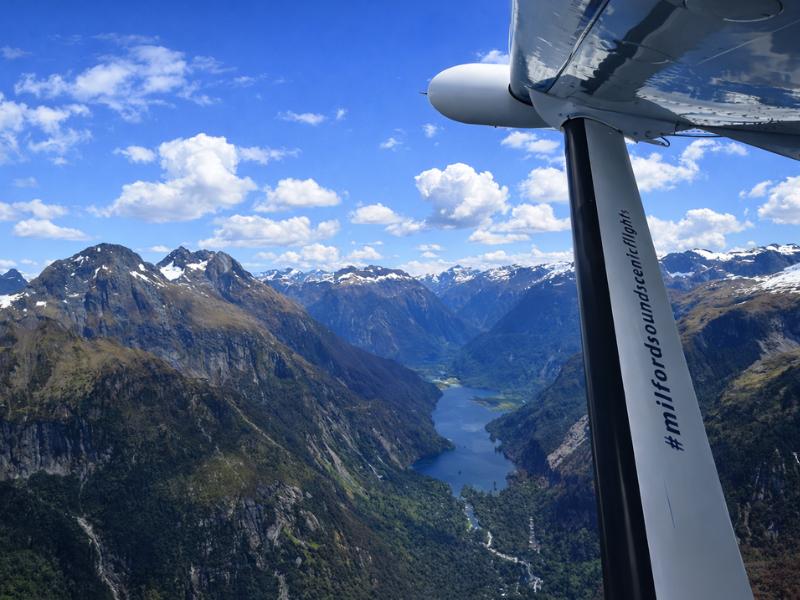
Fly-cruise-fly means flying from Queenstown to Milford Sound, taking a cruise on the fiord, and flying back. The flight takes roughly 35 to 40 minutes each way against about four hours by road, which turns a twelve to thirteen hour day into about five.
Compare the five-hour fly-cruise-fly day with the coach and helicopter alternatives before deciding how much of your itinerary to spend in transit.
Your Milford Plan
- Choose fly-cruise-fly to combine aerial views with a fiord cruise in about five hours.
- Choose the coach and cruise if Milford Road stops matter more than saving most of a day.
- Schedule a weather-dependent flight early in your stay and check operator terms for your actual travel date.
Variants exist and matter. Fly one way and return by coach is a common compromise that halves the road time and gives you the Milford Road scenery in one direction. Helicopter trips with an alpine or glacier landing are a different product again, focused on the flying rather than the fiord.
How Much Time Does Flying Actually Save?
About seven to eight hours on a Queenstown day trip. The coach option runs twelve to thirteen hours door to door. A round-trip flight with a cruise in the middle runs about five. The cruise itself is the same length either way.

That saving is the entire proposition. Everything else, the aerial views and the sense of occasion, is a bonus on top of getting most of a day back. For travellers on a tight South Island itinerary, the difference is a whole extra half-day somewhere else.
| Option | Total day | Travel time | Time on the fiord |
|---|---|---|---|
| Coach both ways | 12 to 13 hours | About 8 hours in a coach | Around 2 hours cruising |
| Fly one way, coach the other | 8 to 9 hours | About 4.5 hours combined | Around 2 hours cruising |
| Fly both ways | About 5 hours | About 80 minutes flying | Around 2 hours cruising |
| Helicopter with landing | About 2 hours | Flying is the experience | Landing time, no cruise |
What Do You See From The Air?
The part of Fiordland that no road reaches. The route crosses the Southern Alps, passes glacial lakes and hanging valleys, and typically routes near Sutherland Falls, which cannot be seen from a cruise. The fiord itself only makes sense from above.
From the water you see walls. From the air you see the shape: a glacial trench cut through a plateau, with tributary valleys hanging hundreds of metres above the main channel because the ice that filled them was smaller. It is the clearest possible illustration of how the place was made.
Fixed-wing aircraft used on these routes are small, which means everyone has a window and the pilot provides commentary throughout. Seat allocation is often by weight and balance rather than preference, so ask rather than assume.
Fixed-wing Or Helicopter?
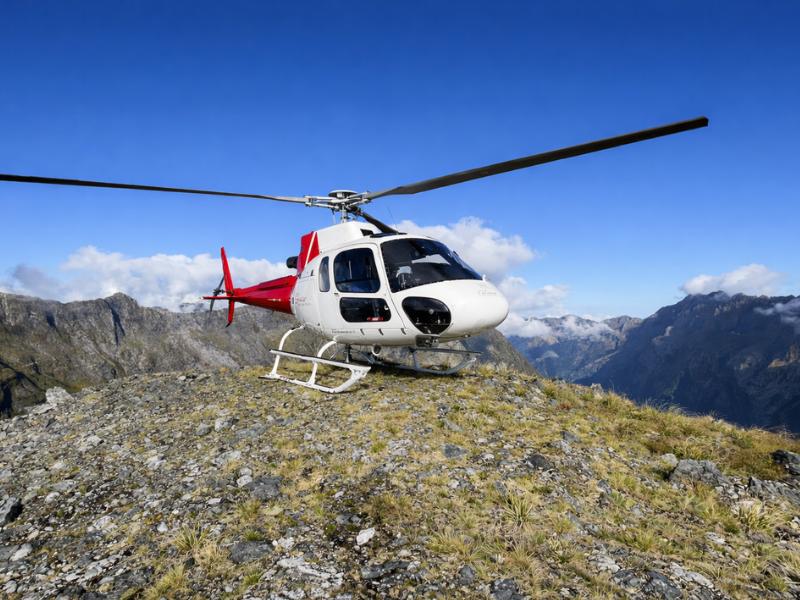
Fixed-wing for the fly-cruise-fly day, because it is faster, cheaper and built around getting you to the cruise. Helicopter for the landing, because a helicopter can put you on a glacier or an alpine ridge that no aircraft can reach.
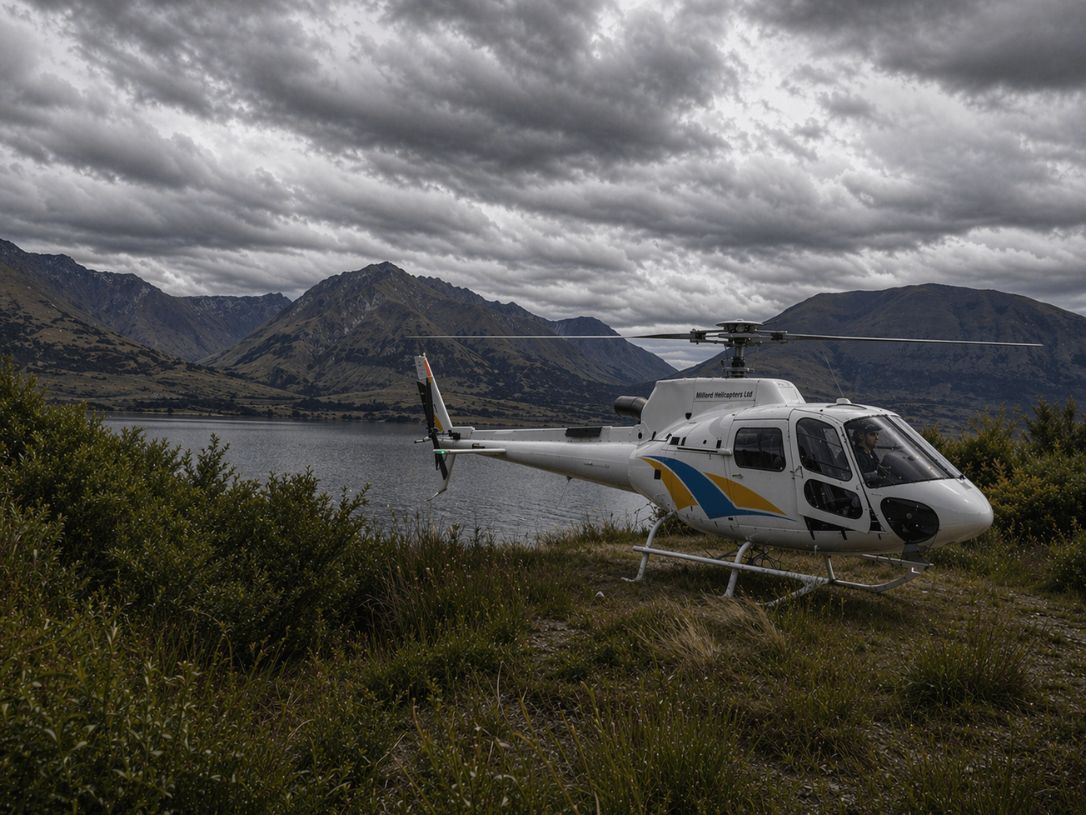
The helicopter product is a different day entirely. A two-hour trip flies the length of the fiord, lands somewhere you could not otherwise stand, and returns, without a cruise attached. It costs considerably more per hour and it is the more weather-sensitive of the two.
Weight limits are stricter on helicopters. Operators require accurate passenger weights at booking, and there is usually a per-passenger maximum in the region of 120 kilograms. This is a balance calculation rather than a policy, and being vague about it causes real problems on the day.
| Fixed-wing fly-cruise-fly | Helicopter with landing | |
|---|---|---|
| Typical duration | About 5 hours total | About 2 hours total |
| Includes a cruise | Yes | No |
| Lands away from an airfield | No | Yes, weather permitting |
| Weather sensitivity | High | Higher |
| Relative cost | Moderate to high | Highest per hour |
How Often Do Flights Get Cancelled?
Often enough to plan around. Low cloud, wind at altitude and poor visibility all ground scenic flights, and Fiordland produces all three regularly. Cruises run in almost any weather. Flights do not, and that is the central trade.
Operators cancel for safety and refund or reschedule the flight portion as standard. On combination trips the usual fallback is to switch you onto coach transport, which saves the day but returns you to the long version of it.
The practical defence is to book the flight early in your stay rather than on your last day. That way a cancellation becomes a second attempt instead of a missed experience. Anyone with one fixed day in the region should think carefully about whether to hang the whole trip on an aircraft.
Is A Scenic Flight Worth The Money?
If time is your constraint, yes: it buys back most of a day and adds views you cannot get any other way. If budget is your constraint, no: the coach day sees the same fiord, includes the same cruise, and costs a fraction as much.
The honest framing is that you are paying for time and perspective, not for a better cruise. The cruise is identical. What differs is how you arrive and what you see on the way.
The middle option deserves more attention than it gets. Flying one direction and coaching the other costs less than a return flight, still halves the road time, and gives you both the aerial view and the Milford Road with its stops. For many travellers that is the best value in the whole category.
What About The Drive You Are Skipping?
The Milford Road is not filler. Mirror Lakes, the Eglinton Valley, Monkey Creek and the Homer Tunnel approach are genuine attractions, and a good coach day treats them as stops rather than scenery passing a window. Flying both ways means missing all of it.
This is the argument people forget when they compare only the hours. If you fly both ways you see Fiordland from above and from the water, but never from inside the valley. Some visitors regard that as the real loss.
What Should You Know Before You Fly?
Give accurate weights at booking, dress in layers, bring sunglasses, and expect the aircraft to be small. Motion sickness is worth considering: mountain air is often turbulent, and the flight is short but can be bumpy.
Cameras work best with a polarising filter for the glare off water and snow, and shooting through a window means keeping the lens close to the glass to avoid reflections. Ask about the seat allocation if photography is the point of the trip.
If you are landing on snow or rock, wear something on your feet with grip. The stop is short, the surface can be slippery, and the temperature at altitude is far below what it was at the airfield.
What Time Of Day Is Best To Fly?
Morning, in most conditions. Air over the mountains is generally more settled early, cloud often builds through the day, and an early booking leaves room for the operator to reschedule you later the same day if the first slot cannot run.
That last point is the practical one. A morning flight that gets weathered out can sometimes be moved to the afternoon. An afternoon flight that gets weathered out is simply cancelled, because there is nothing left in the day to move it into.
The light argues the other way. Late afternoon gives longer shadows and warmer colour on the rock, which photographers prefer. If the forecast is genuinely settled, a later flight can be the better picture. If it is marginal, take the early slot.
Can You Fly From Te Anau Or From Milford Itself?
Yes. Queenstown is the busiest departure point, but flights also operate from Te Anau, which is closer and therefore cheaper and shorter, and there are scenic flights and transfers from the Milford Sound airstrip itself.
| Departing from | Flight time to the fiord | Best for |
|---|---|---|
| Queenstown | Around 35 to 40 minutes | Saving a full day of driving |
| Te Anau | Considerably shorter | Anyone already based in Fiordland |
| Milford Sound airstrip | Local scenic loops | Adding an aerial view to a day already at the fiord |
Flying out of Te Anau is the option most visitors overlook. If you are staying there anyway, it removes the long transit legs and puts the whole cost into flying over Fiordland rather than getting to it.
What Happens If The Weather Closes In While You Are There?
On a fly-cruise-fly day the operator will usually put you on a coach for the return leg rather than leave you at the fiord. You still get home, the day just becomes four hours longer than you booked.
This is worth knowing before you book, because it changes the risk calculation. The realistic downside of a flight day is not being stranded, it is ending up doing the coach journey you paid to avoid, on a schedule you did not plan for.
Operators refund or credit the affected flight portion when they cancel. What they cannot refund is the rest of your itinerary, which is the argument for putting a scenic flight early in a stay rather than on the last day before you move on.
Are Scenic Flights Suitable For Children Or Nervous Flyers?
Children are generally welcome on fixed-wing scenic flights, with minimum ages and lap-infant rules varying by operator. Nervous flyers get a mixed deal: the visibility from a small aircraft is reassuring, the turbulence over mountains is not.
Mountain air is rarely still. Thermals and wind over ridges produce bumps that feel more pronounced in a small aircraft than in an airliner, even when they are completely routine. Pilots tend to say so in the briefing rather than pretend otherwise.
If motion sickness is a concern, take something before departure rather than at the first sign, sit where you can see the horizon, and choose a morning flight when the air is usually more settled. Operators carry bags and are unbothered by it.
For anyone genuinely anxious about small aircraft, the honest advice is to take the coach and put the money into a longer cruise instead. The fiord is the destination either way, and forty minutes spent tense is not worth the view.
What Route Do The Flights Actually Take?
From Queenstown the usual line runs over the Remarkables or up the Wakatipu basin, across the Southern Alps, over the Hollyford or Greenstone valleys, past Sutherland Falls, and down the length of the fiord to land beside the water at Milford.
| Leg | What you see |
|---|---|
| Queenstown departure | Lake Wakatipu, The Remarkables, the basin from above |
| Crossing the divide | Snowfields, glacial cirques, alpine lakes with no road access |
| Fiordland interior | Hanging valleys, Sutherland Falls, the Milford Track as a thread |
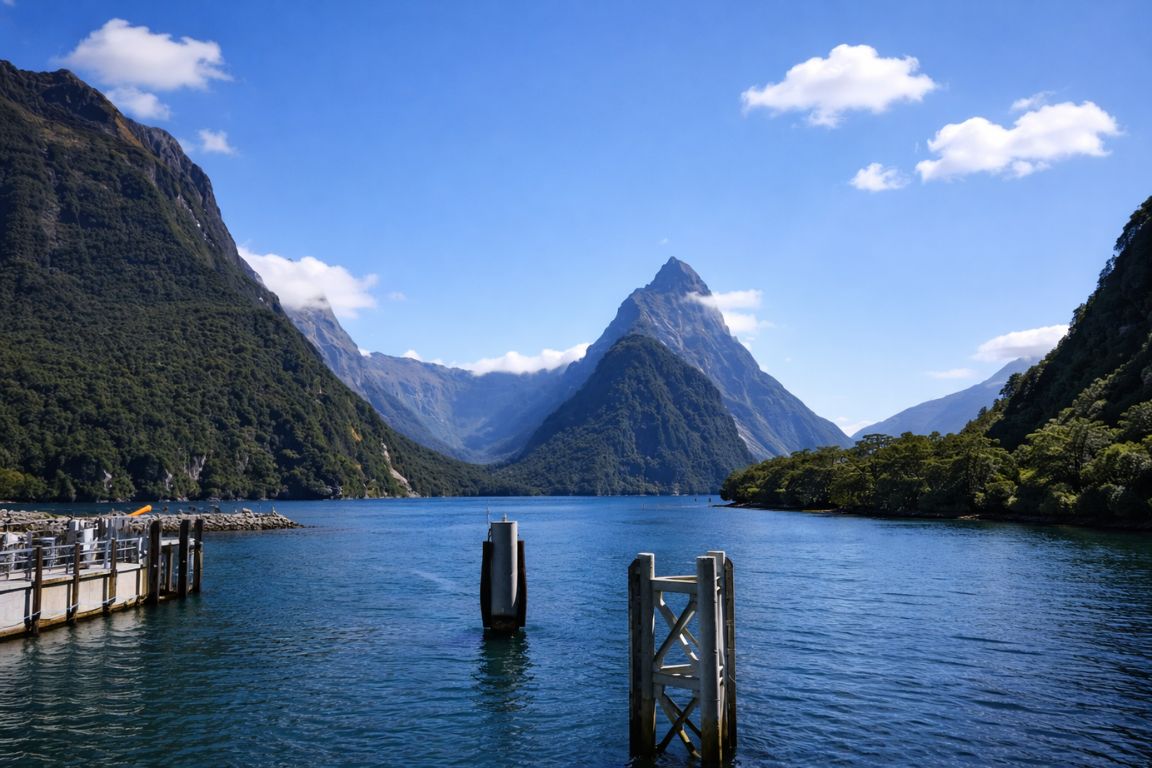
| The fiord | Mitre Peak and the walls from above, then the landing strip |
Sutherland Falls is the item that justifies the fare for a lot of passengers. It cannot be seen from a cruise and reaching it on foot means walking the Milford Track, so a flight is the only way most visitors will ever look at it.
Exact routing changes daily with cloud and wind. Pilots pick the line that works, which means two people flying the same product on consecutive days can see quite different country.
What Is The Landing Option Really About?
A helicopter can put you down on a glacier, a snowfield or an alpine ridge that has no other access. The stop is usually short, ten to fifteen minutes, and it is entirely weather-dependent: the flight may run while the landing does not.
That distinction matters commercially. Operators generally advertise the landing as weather permitting, so a flight that goes ahead without one is not a failure of the product and typically is not refunded. If the landing is the entire reason you are booking, ask what happens when conditions rule it out.
What the landing gives you is silence and scale. Standing on snow with the rotors off, surrounded by country that took days to reach on foot for the people who first crossed it, is a different experience from looking at the same ground through a window.
How Do Cancellations Work Commercially?
Operators cancel for safety and refund or reschedule the flight portion as standard. On combination trips the usual substitution is coach transport for the affected leg, so the day still happens, just in the longer form you paid to avoid.
| Scenario | Typical outcome |
|---|---|
| Flight cancelled before departure | Refund or reschedule; combo trips switch to coach |
| Weather closes in while you are at the fiord | Coach return, longer day, flight leg refunded |
| Landing not possible, flight fine | Flight proceeds; landing usually not separately refunded |
| You cancel | Standard cancellation terms apply, not the weather policy |
Read the weather policy before booking rather than after. The gap between an operator-caused cancellation and a customer cancellation is where almost all the disappointment in this category lives.
Is A Flight Good For Photography?
Very, with caveats. Small aircraft mean everyone gets a window, but you are shooting through perspex that scratches and reflects. Keep the lens close to the glass, avoid a polariser on perspex, and wear dark clothing to cut reflections.
Seat allocation is usually by weight and balance rather than preference, so ask rather than assume you can choose a side. Pilots will often say which side has the better view on the day's routing, and on a return trip the good side changes.
The other constraint is time. The aircraft is moving, the light is changing and there is no second pass. Shoot more than feels sensible and sort it later.
Flight Only, Or Flight Plus Cruise?
Flight plus cruise for a first visit, every time. The aerial view explains the geology and the cruise delivers the scale at the waterline, and they are complementary rather than redundant. Flight-only suits repeat visitors and anyone very short on time.
| Flight only | Flight plus cruise | |
|---|---|---|
| Total time | About 2 hours | About 5 hours |
| Sees the fiord from above | Yes | Yes |
| Gets under the waterfalls | No | Yes |
| Sees Sutherland Falls | Yes | Yes |
| Best for | Repeat visits, tight schedules | A first visit |