The Milford Track: A Practical Guide
The Milford Track has been called the finest walk in the world for more than a century, which has done it no favours: the reputation attracts people who have not checked what the walk actually involves. It is four days, one direction, fully booked months ahead, and it does not touch the fiord until the final afternoon.
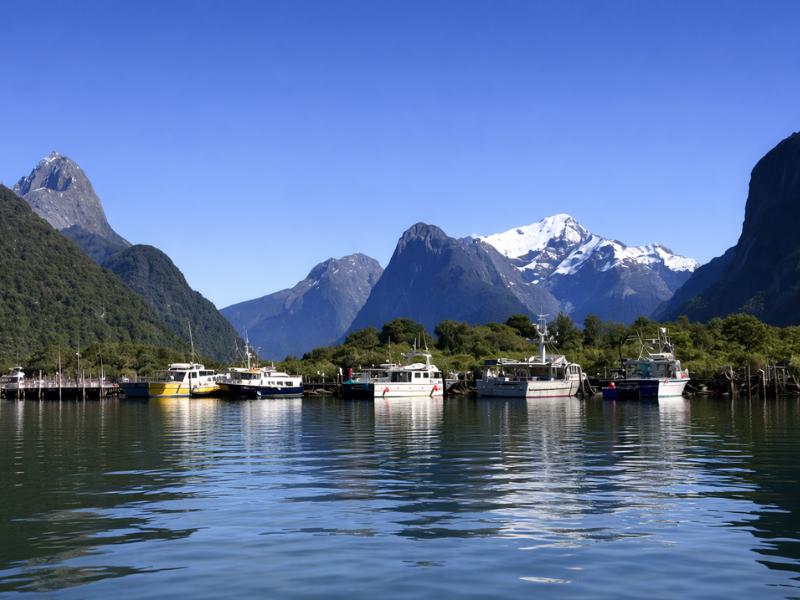
The Milford Track is a 53.5 kilometre, four-day, one-way walk through Fiordland National Park, ending at Sandfly Point on Milford Sound. It runs as a Great Walk with a strict booking system in summer, and it can only be walked in one direction, starting at Glade Wharf.
If four hut days will not fit, compare shorter ways to walk a real Milford Track section and see the fiord from the water.
Your Milford Plan
- The full Milford Track is 53.5 km, one way, over four days, with sequenced hut bookings and boat transfers at both ends.
- A self-guided Milford-end day walk reaches genuine track forest without the hut system.
- Check your actual travel date before arranging accommodation, transport or other fixed parts of the trip.
Almost everything that surprises people about this walk comes from those two constraints. One direction means you cannot turn back and stroll out the way you came. Date-specific hut bookings mean you commit to a start date months ahead and walk in whatever weather that date delivers.
How Difficult Is The Milford Track?
Moderate rather than hard for anyone with reasonable fitness. The daily distances are manageable, the track is well formed, and the only sustained climb is Mackinnon Pass on day three. What makes it demanding is doing it four days in a row, carrying everything, in weather that can be relentless.
The technical difficulty is low. This is a walking track, not a mountaineering route, with boardwalks, bridges and a graded surface for most of its length. No scrambling, no exposure that requires a head for heights, no navigation problem to solve.
The honest challenges are different. Rain is the first: this is one of the wettest places on earth and a wet Milford Track is the normal Milford Track, not bad luck. The second is the pass, a climb of several hundred metres in a morning followed by a long descent that punishes knees more than lungs. The third is cumulative fatigue with a pack.
| Day | Section | Distance | What it is like |
|---|---|---|---|
| 1 | Glade Wharf to Clinton Hut | About 5 km | Short and flat, an afternoon walk after the boat transfer |
| 2 | Clinton Hut to Mintaro Hut | About 16 km | Gentle valley walking, gradually climbing |
| 3 | Mintaro to Dumpling Hut, over Mackinnon Pass | About 14 km | The hard day: up to just over 1,150 m, then a long descent |
| 4 | Dumpling Hut to Sandfly Point | About 18 km | The longest distance but almost flat, on a deadline for the boat |
Can You Walk The Milford Track Without A Guide?
Yes. Independent walkers book Department of Conservation huts and carry their own food, bedding and cooking gear. Guided walkers book through the licensed operator and stay in private lodges with meals and hot showers. Both walk the same track, and the two systems are entirely separate.
The independent route is far cheaper and requires more of you. You carry four days of food, a sleeping bag and a stove. Huts have bunks, mattresses, cold water and a toilet, plus a warden in the Great Walk season. There is no food for sale anywhere on the track.
The guided option costs several times as much and removes almost all of the load. Meals are cooked, bedding is provided, packs are lighter, and the lodges have drying rooms, which after a wet day is a bigger deal than it sounds.
| Independent | Guided | |
|---|---|---|
| Accommodation | DOC huts, bunk rooms | Private lodges, hot showers, drying rooms |
| Food | Carry all four days | Provided and cooked |
| Pack weight | Full load | Day pack |
| Booking system | DOC hut bookings, opens months ahead | Through the licensed operator |
| Relative cost | Low | Several times higher |
How Do Bookings Actually Work?
Great Walk season hut bookings open months in advance through the Department of Conservation and sell out for peak summer dates extremely quickly. You book a specific start date and specific huts, in sequence. There is no flexibility to arrive a day late or walk it faster.
This is the part that catches out visitors used to turning up at trailheads. The Milford Track in season is closer to a timed ticket than a hike. Two boat transfers are locked to your dates as well, one across Lake Te Anau to the start and one from Sandfly Point at the end, and both need to be booked separately.
Outside the Great Walk season the booking pressure disappears and so does the infrastructure. Facilities are reduced, bridges may be removed, avalanche risk is real and the track becomes a serious undertaking for experienced parties only. For most visitors, off-season is not the workaround it appears to be.
What Is The Best Month To Walk The Milford Track?
Within the Great Walk season, the shoulders are the sweet spot. Late October to early December and late February into April give you the booking system, the boat transfers and the wardens, with fewer people competing for dates and, in autumn, more settled spells between fronts.
January and February are the warmest and the busiest, which is a genuine trade rather than an obvious win. Peak summer dates are also the hardest hut bookings to get. Sandflies, Fiordland's real signature, are at their most enthusiastic in warm still weather.
No month is dry. Expect rain on at least one or two of the four days whenever you go, and treat a completely dry crossing as a bonus rather than a plan.
| Window | Crowds | Weather | Booking difficulty |
|---|---|---|---|
| Late Oct to early Dec | Moderate | Cooler, snow lingering on the pass | Easier than midsummer |
| Dec to Feb | Highest | Warmest, long daylight | Hardest, sells out fastest |
| Late Feb to Apr | Falling away | Settled spells, cooler nights | Easier, best all-round window |
| May to Sep | Very low | Snow, avalanche risk, reduced facilities | Not a Great Walk season |
Is The Milford Track Harder Than The Routeburn?
The Milford is longer and takes a day more. The Routeburn is shorter at around 33 kilometres over three days, but spends more time high and exposed, so its hard sections feel harder. Most walkers find the Milford easier per day and more tiring overall.
The Kepler Track sits in the same family: a roughly 60 kilometre loop over three to four days, starting and finishing near Te Anau, with a long exposed ridge section. Being a loop, it avoids the transport logistics that both other walks require.
If you want the famous one and you can get the booking, walk the Milford. If you want alpine views for a higher proportion of the time, the Routeburn delivers more of them per hour. If you want to avoid arranging boats and shuttles, the Kepler is the simplest of the three to organise, and there is a guided heli-hike that covers its best section in a single day if four days is not available: check the tour and its dates here.
What Do You Actually See On The Walk?
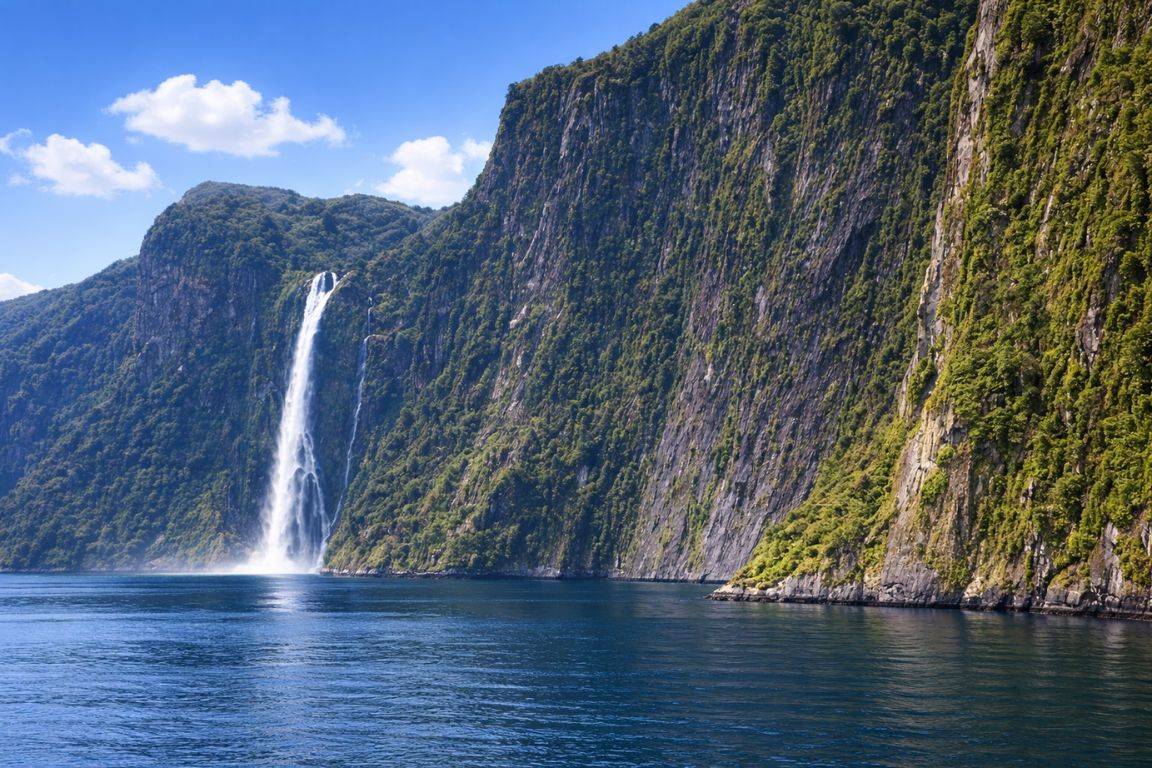
Beech forest, a long glacial valley, waterfalls in every direction after rain, and one big alpine day at Mackinnon Pass. The single most photographed feature is Sutherland Falls, around 580 metres, reached by a side trip from the track on day three.
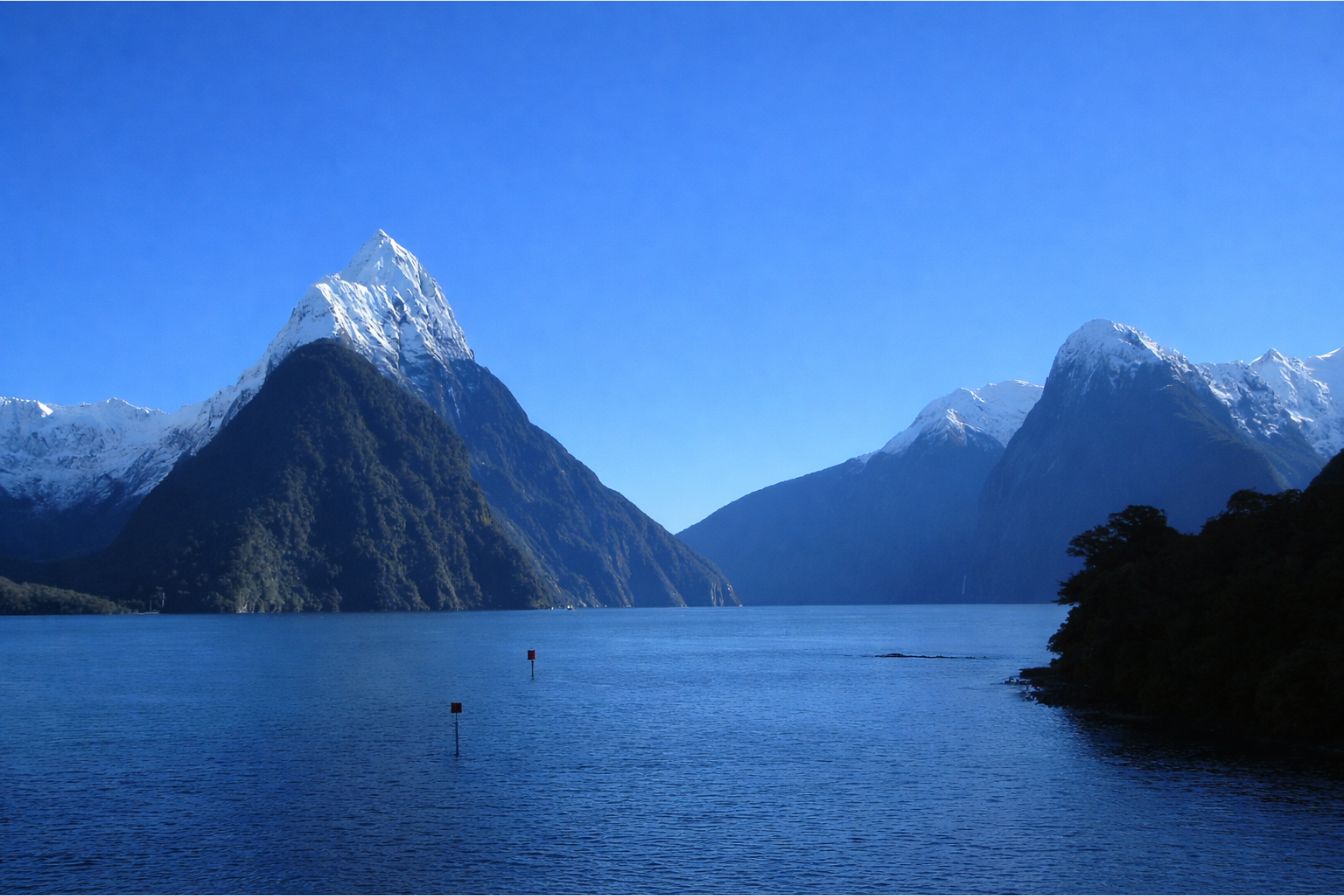
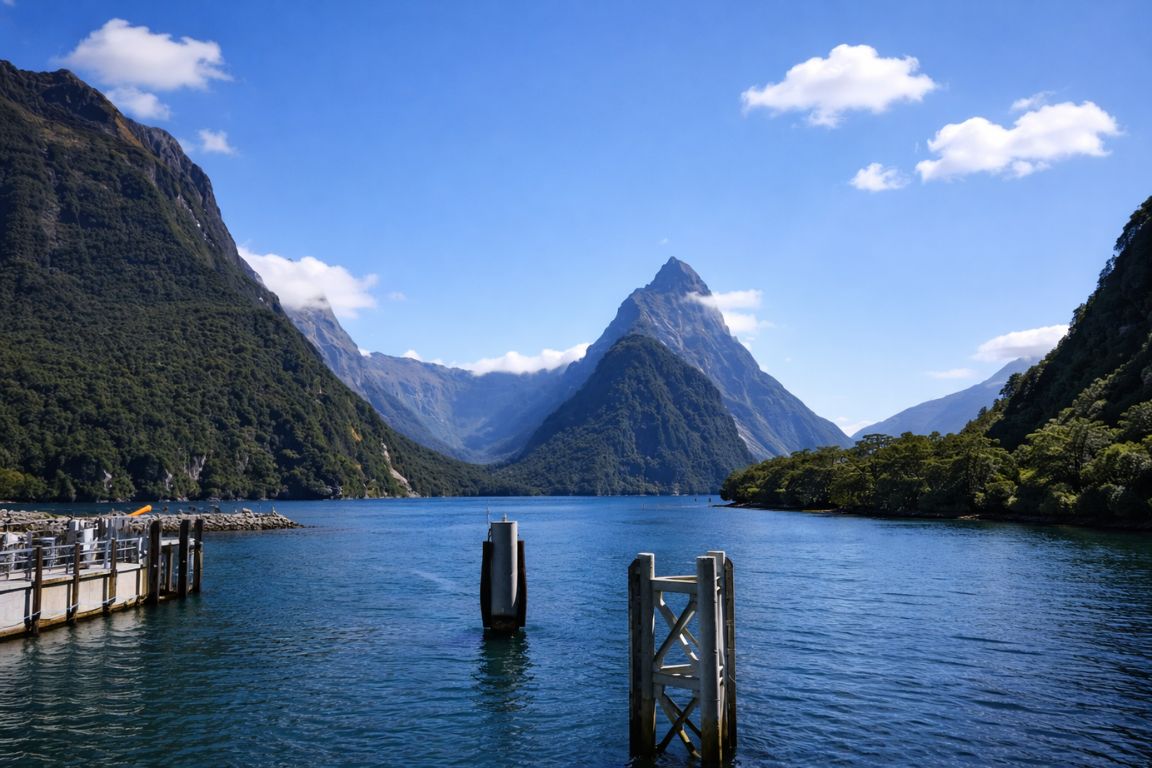
What you do not see for most of the walk is Milford Sound itself. The track finishes at Sandfly Point, and the fiord appears at the very end, from the boat that takes you to the terminal. Anyone expecting four days of fiord views has misread the map.
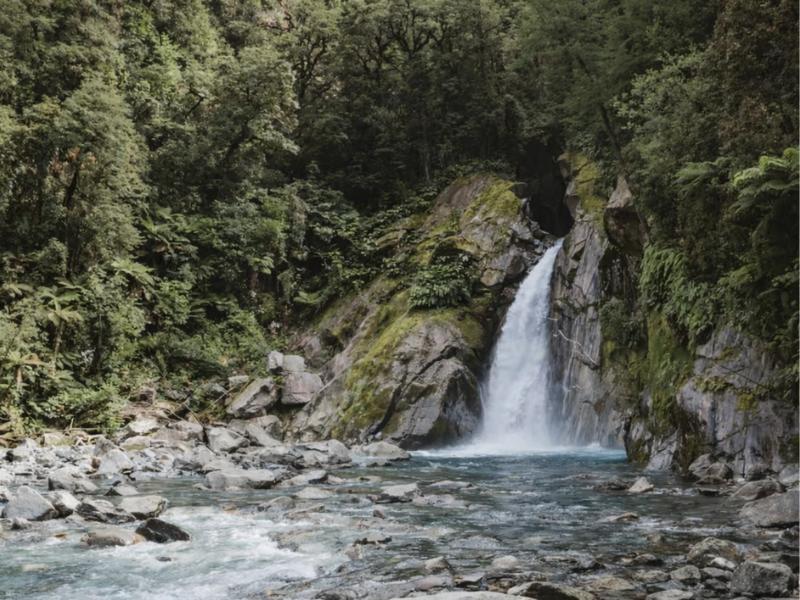
The valley walking is the character of the thing. Long, green, wet, enclosed by walls that stream with water, with the sound of it constant. The pass day is the exception, and in clear weather it is the reason people remember the walk for the rest of their lives.
What If Four Days Is Too Much?
Walk a section as a day trip instead. Boat transfers from the Milford end let you walk the final stretch of the track and return the same day, either self-guided or with a guide, without touching the hut booking system at all.
This is the option most visitors do not realise exists, and it solves a real problem. You get genuine Milford Track forest, the swing bridges and the river, and you are back at the terminal in time for a cruise. A short self-guided day walk is the cheapest way onto the track by a wide margin.
Guided day options bundle the walk with a nature cruise, which turns a half day into a full one and covers both the forest and the water. For anyone who wants to say they walked the Milford Track without giving up four days and a booking window, this is the honest answer.
What Should You Carry?
A properly waterproof jacket, more than one pair of dry socks, insect repellent for the sandflies, and for independent walkers, everything else: sleeping bag, stove, four days of food. Cotton is the wrong choice for every layer.
Wet weather gear is not optional here and cheap rain shells do not survive a Fiordland day. Boots should be worn in before you arrive. Sandfly repellent matters more at the huts and at Sandfly Point, which earned its name honestly, than it does while you are moving.
How Does The Track Connect To A Cruise?
The boat from Sandfly Point drops walkers at the Milford Sound terminal, which is where the cruises leave from. Finishing the track and stepping onto a cruise the same afternoon is possible if the timing lines up, and it is the natural way to see the fiord you have just walked to.
Most walkers are shuttled back to Te Anau instead, because that is where their car and their spare clothes are. If seeing the fiord from the water matters to you, plan the cruise as a separate day rather than assuming you can squeeze it in tired, wet and on a shuttle schedule.

Give The Fiord Its Own 105 Minutes This terminal-based boutique cruise lasts 105 minutes and includes tea, coffee and biscuits, so water time can be planned separately from the track finish.
Scheduled dates load here. Confirm availability and final price on Viator.
Viator scheduled departures, not confirmed inventory for your party. Select the same date on Viator to confirm availability and final price.
This recommendation does not fit your selected itinerary. Adjust your choices at the end to see other options.
What Does The Guided Walk Actually Include?
Beds in private lodges rather than DOC huts, all meals cooked for you, a lighter pack, guides walking with the group, and drying rooms at the end of each day. The route and the distances are identical to the independent walk.
| What you carry independently | What the guided option removes |
|---|---|
| Four days of food | All meals provided |
| Sleeping bag and liner | Bedding in the lodges |
| Stove, fuel, cookware | Not needed |
| Wet gear with nowhere to dry it | Drying rooms each night |
The drying rooms deserve their own mention. On a track where rain is the normal condition, starting each day in dry boots is a bigger difference than the menu, and it is the thing guided walkers most often name afterwards.
What Happens In Bad Weather On The Track?
You walk. Rain is routine here and the track is built for it, with bridges over the major crossings. In heavy rainfall, side streams can rise fast and wardens or guides may hold a group at a hut until levels drop, which is why the schedule has no spare days built in.
Flooding is the genuine hazard rather than the rain itself. Fiordland's rivers respond within hours because the rock sheds water so quickly, and a crossing that was ankle-deep in the morning can be impassable by afternoon. The instruction in that situation is always the same: wait, do not cross.
Because the huts are booked in sequence, a delayed day cascades. Wardens coordinate with the boat operators at the end of the track when this happens, which is another argument for walking in season when the system is staffed.
Can You Walk It In Reverse Or As A Return Trip?
No. During the Great Walk season the track is one-way only, from Glade Wharf to Sandfly Point, with hut bookings sequenced to match. You cannot start at the Milford end, and you cannot turn around and walk back.
The direction rule exists to manage hut capacity and avoid two groups arriving at the same bunkroom from opposite ends. It also means the transport at both ends is fixed: a boat across Lake Te Anau to start, a boat from Sandfly Point to finish.
The one exception is the day-walk option from the Milford end, which uses the boat transfer to put you on the final section and bring you back the same day. That is a different product operating outside the hut system entirely.
How Do The Huts Actually Work?
Bunk rooms with mattresses, cold running water, flush or composting toilets, and a communal area with gas cooking rings in the Great Walk season. No showers, no power sockets, no food for sale, and a warden on site who checks bookings and gives the evening weather briefing.
| What the huts have | What they do not |
|---|---|
| Bunks with mattresses | Bedding of any kind |
| Cold water | Showers or hot water |
| Gas rings in season | Pots, pans, cutlery or fuel outside the season |
| Toilets | Rubbish collection, so carry it out |
| A warden in season | Power, charging or phone signal |
Hut etiquette is straightforward and worth knowing before your first night. Boots come off at the door, headlamps go red or off after lights-out, the drying racks are shared and nobody gets the whole rail, and the warden's briefing is when you learn whether tomorrow's crossing is on. People are generally tired and friendly, and the social side of a Great Walk hut is a real part of the experience.
The gas rings deserve a specific note. They exist in the Great Walk season and not outside it, so an off-season walker must carry a stove and fuel. Even in season, most walkers bring a small stove anyway rather than queue for a ring at the busiest hour.
What Does The Milford Track Actually Cost?
Independently, the main costs are hut fees for three nights plus two boat transfers, which together make it one of the more expensive Great Walks to arrange despite the modest nightly rate. Guided, you are paying several times that for lodges, meals and guiding.
| Cost | Independent | Guided |
|---|---|---|
| Accommodation | Three nights of DOC hut fees | Included, private lodges |
| Boat to Glade Wharf | Booked separately | Included |
| Boat from Sandfly Point | Booked separately | Included |
| Transport to and from Te Anau | Your own or a shuttle | Usually included |
| Food | Four days, carried | Included and cooked |
| Gear | Yours, or hired in Te Anau | Much lighter list |
The transfers catch people out, because they are easy to forget when the hut booking is the thing you were fighting for. Both are mandatory: there is no road to either end of the track. Check current fees on the Department of Conservation site when you book, since they are reviewed periodically and differ for New Zealand residents.
How Does The Booking Release Work In Practice?
Bookings for the coming Great Walk season open on a single announced date, usually mid-year, and the popular start dates go within minutes rather than hours. Treat it like a ticket release: be logged in, know your dates, and have a second and third choice ready.
Practical tactics that genuinely help: decide your party size in advance, because a solo bunk is far easier to place than four together; have alternate start dates written down rather than deciding live; and remember that midweek starts and shoulder-season dates clear less quickly than a Saturday in January.
Cancellations do get released back through the season, so a failed first attempt is not the end. Checking periodically in the weeks before you travel is worth the effort, particularly for a party of one or two.
What Wildlife Will You See On The Track?
Birdlife, mostly, and more of it heard than seen. Expect fantails following you for insects, bellbirds and tui in the forest, weka around the huts, kea at the higher points, and blue duck on some river sections. Sandflies are the constant companion.
Kea are the ones to watch, in both senses. They are intelligent, curious and destructive, and an unattended pack at the Mackinnon Pass shelter is an invitation. Nothing malicious is happening; they simply investigate everything with a strong beak.
Weka around the huts operate the same way at ground level and will carry off anything shiny or edible left out. Neither bird should be fed, and both are protected native species you are lucky to be sharing a track with.
What If You Cannot Get A Booking?
The alternatives are genuinely good rather than consolation prizes. The Kepler Track is a loop from Te Anau with no transport to arrange, the Routeburn is shorter with more time above the bushline, and the Milford day-walk option puts you on the actual track for an afternoon.
| Option | Length | Logistics | Best for |
|---|---|---|---|
| Kepler Track | About 60 km, 3 to 4 days | Loop from Te Anau, no boats | Simplest to organise |
| Routeburn Track | About 33 km, 3 days | One way, transport needed | Most alpine time per hour |
| Hollyford Track | Longer, lower | Guided options common | Rainforest and coast, no alpine pass |
| Milford day walk | A few hours | Boat from the Milford terminal | Walking the track with no booking |
The day-walk option is the one most people do not know about and the one that solves the actual problem for a visitor with a fixed itinerary. You get the forest, the river and the swing bridges, and you are back for a cruise the same afternoon.