Why Is Milford Sound So Famous?
Plenty of places have fiords. Norway has more of them, and several are larger. Milford Sound's reputation rests on a narrower and more specific combination of things, and it helps to know what they are before you decide whether the trip is for you.
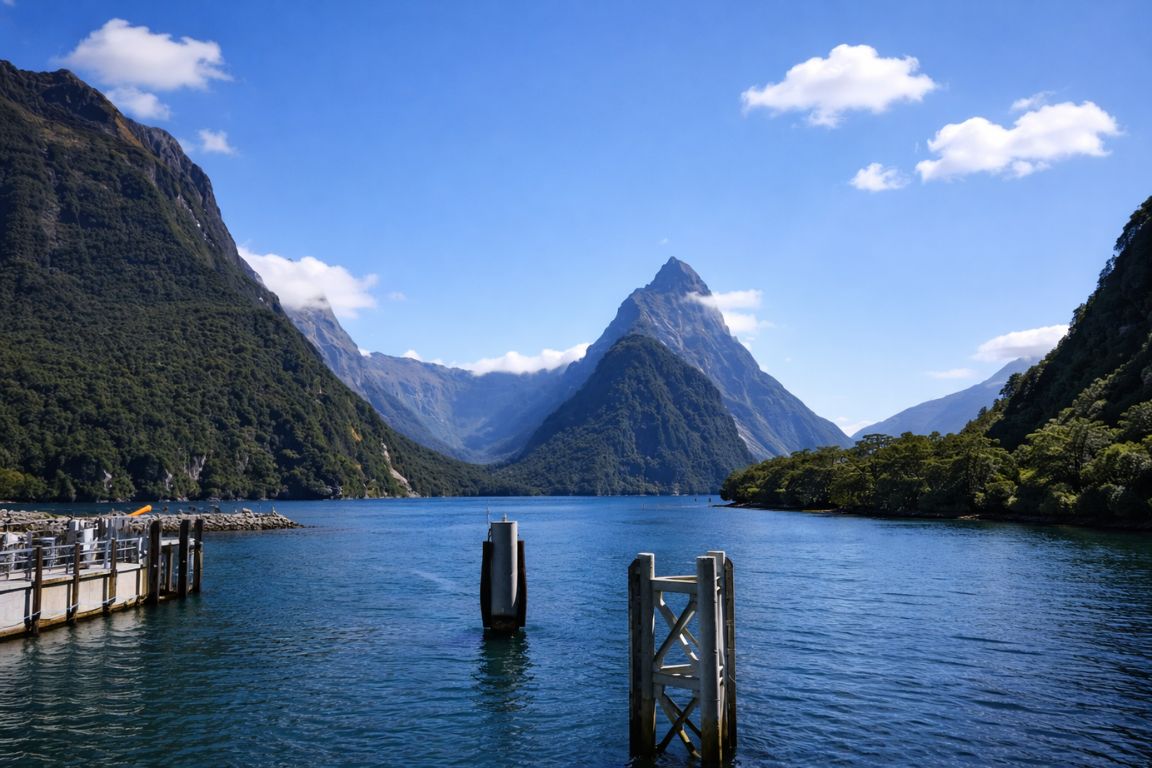
Milford Sound is famous because it combines near-vertical rock walls rising over a kilometre straight out of deep water, extreme rainfall that turns those walls into hundreds of waterfalls, and road access into a wilderness that is otherwise almost unreachable. Very few places offer all three.
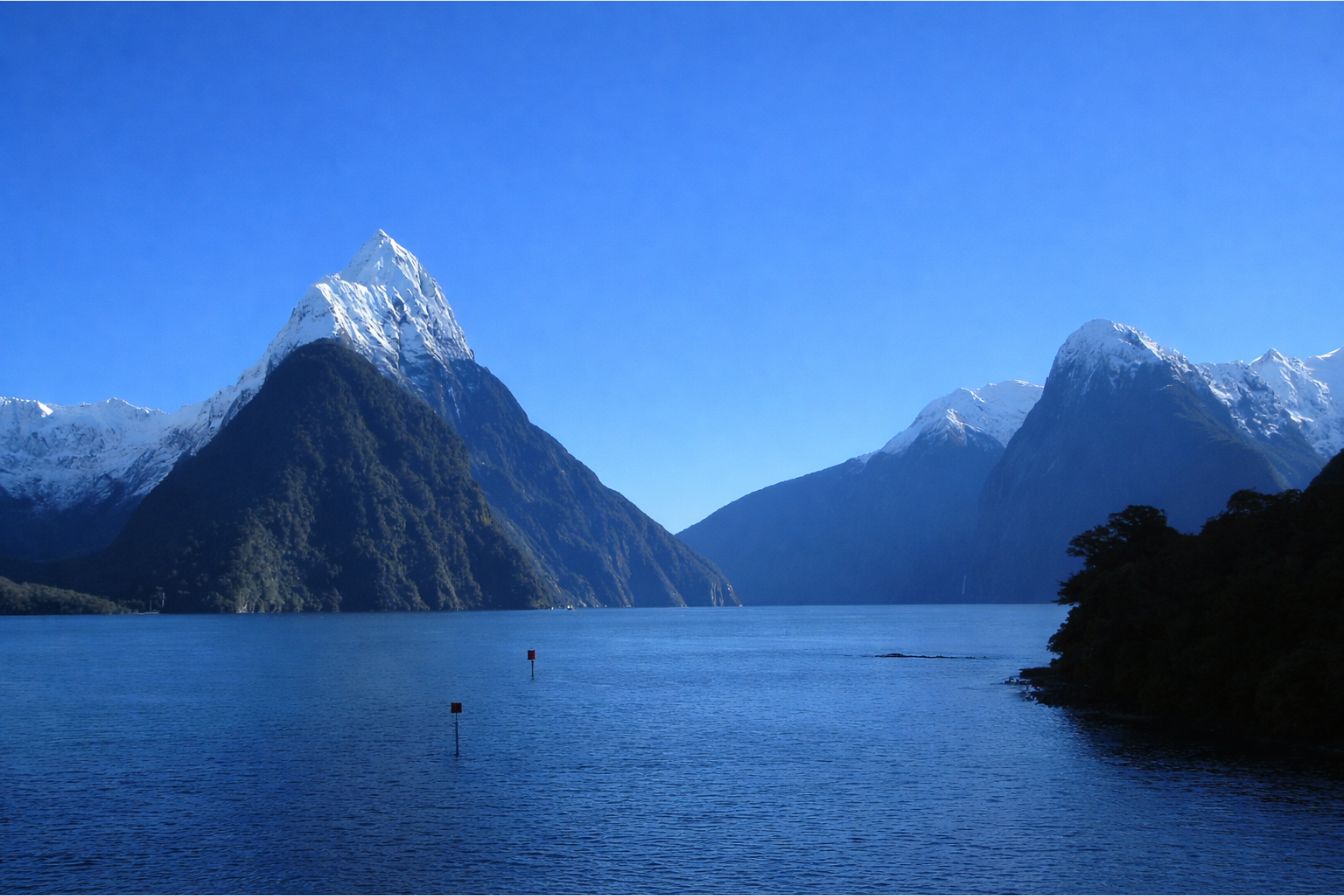
The clearest way to understand why Milford Sound is famous is from the water, where the rise from fiord to summit reads at full scale.
Your Milford Plan
- Choose a terminal cruise if you already have transport to Milford Sound.
- Choose a coach and cruise if you need a complete day trip from Queenstown or Te Anau.
- Check your travel date before arranging connecting transport, accommodation or other fixed plans.
Take any one of those away and the fame makes less sense. Without the road it would be another remote fiord that few people ever see. Without the rainfall the walls would be bare most of the year. Without the vertical relief it would be a pretty inlet rather than something people describe as overwhelming.
What Actually Makes It Different From Other Fiords?
The steepness relative to the water depth. Glaciers cut Milford Sound deep and narrow, so the walls drop straight into the fiord with no shoreline, no foothills and nothing to soften the transition. Mitre Peak rises 1,692 metres almost directly from the surface.
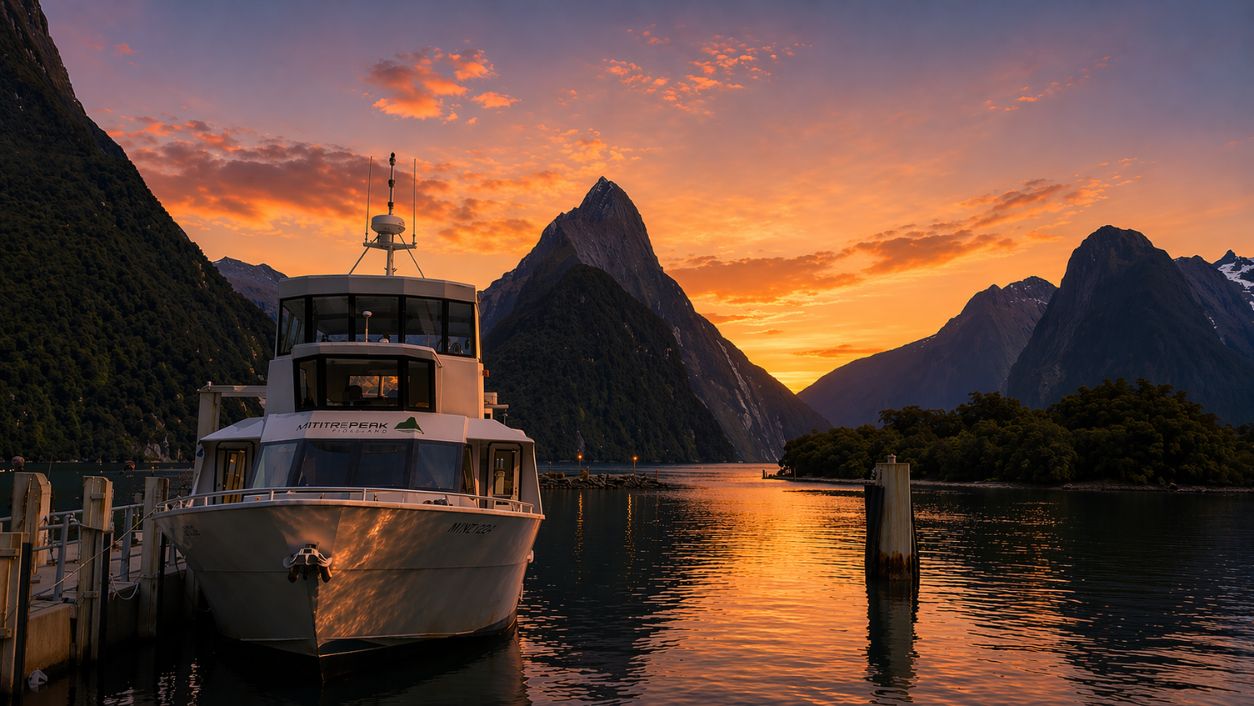
That number is not large for a mountain. What matters is that there is nothing between the summit and the water. In most mountain scenery you view peaks across a valley floor or a lake margin, which gives the eye a sense of distance. Here the rock starts at the waterline, so the full height reads at once.
The other structural feature is the hanging valleys. Smaller glaciers fed into the main one and cut shallower troughs, so their valleys now end abruptly hundreds of metres up the walls. Water pouring out of them is where the tall waterfalls come from.
Is The Rain Part Of The Reason?
It is the main reason the fiord looks the way it does in photographs. Around seven metres of rain falls here a year, among the highest totals of any inhabited place on earth, and within hours of heavy rain the walls carry hundreds of temporary waterfalls.
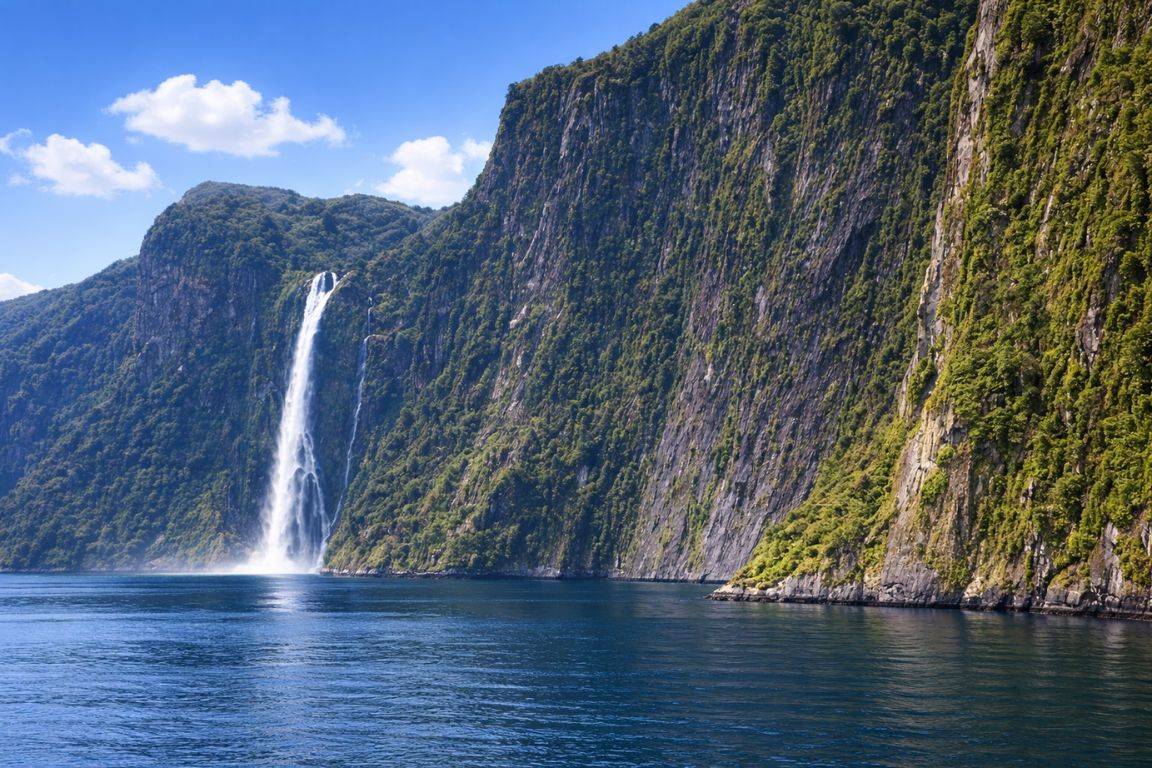
Only two waterfalls run permanently, Stirling Falls and Lady Bowen Falls. The rest are weather. This is why the same fiord can look completely different to two visitors a week apart, and why the dramatic images that build the reputation are wet-weather images.
The rain also produces the rainforest growing on sheer rock, which should not be possible and is one of the odder things to look at closely. Trees hold on by interlocking roots rather than soil depth, which is why sections occasionally slide off the cliff in what locals call a tree avalanche.
Who Called It The Eighth Wonder Of The World?
Rudyard Kipling is the name usually attached to the phrase, and it has been repeated in tourism material for over a century. It is a marketing line rather than a formal designation, and there is no official list that Milford Sound appears on.
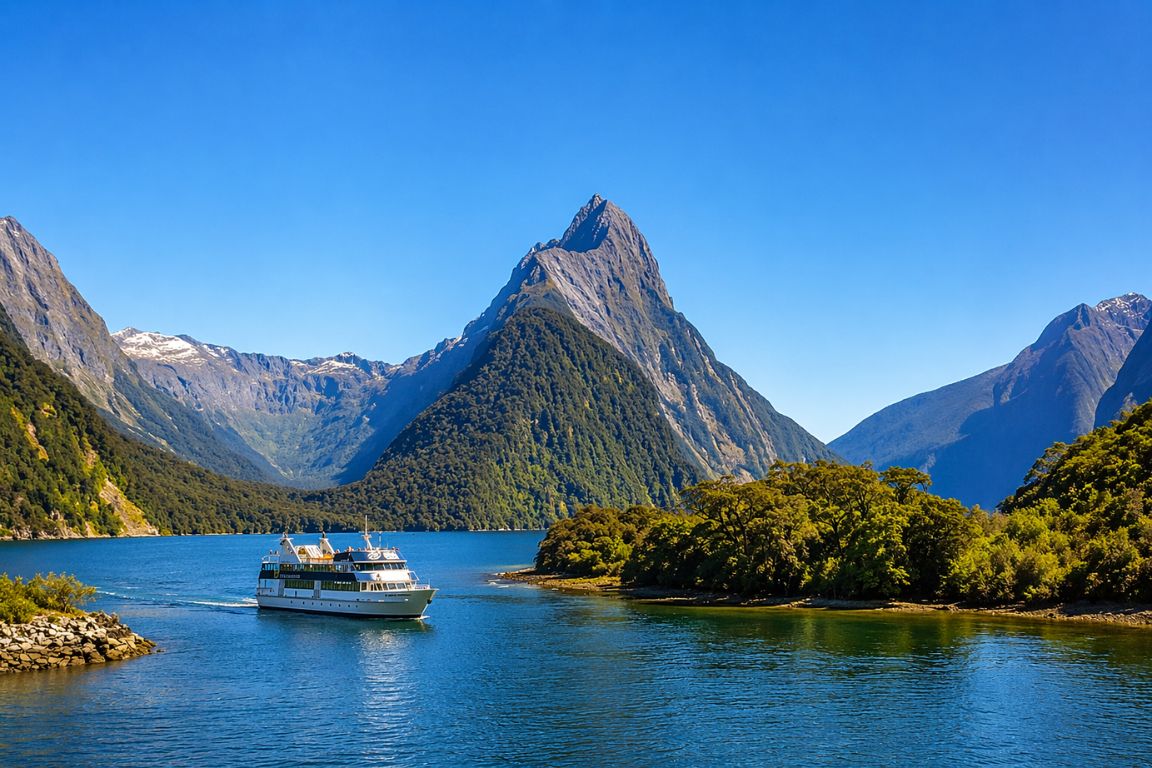
The phrase persists because it is useful, not because it is verified. What is formally recognised is the World Heritage listing: Fiordland National Park forms part of Te Wahipounamu, inscribed by UNESCO in 1990 for its landforms, its glacial geology and the ancient plant lineages that survive here.
Is It Famous Because Of Lord Of The Rings?
No, and this is a persistent mix-up. Milford Sound was famous long before the films, and the fiord itself does not feature the way people assume. New Zealand's screen tourism boom lifted the whole country's profile, but Milford's reputation was established well over a century earlier.
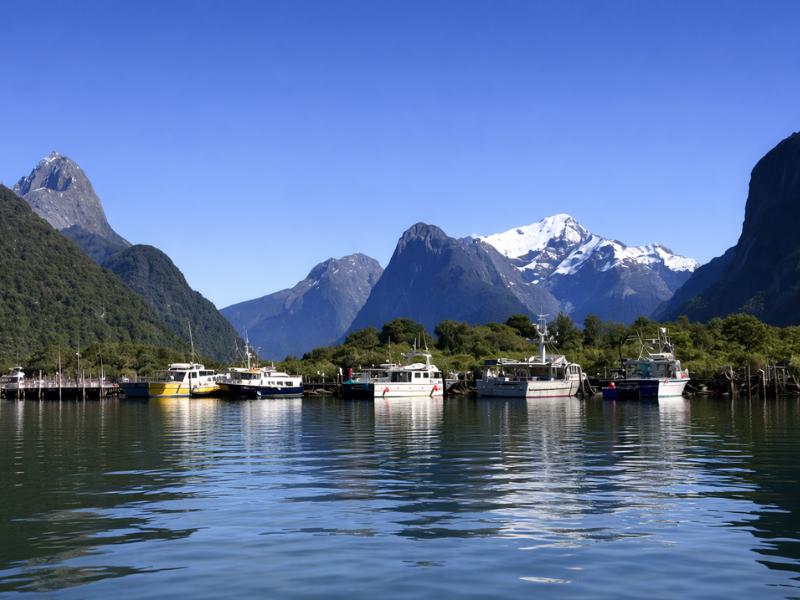
Visitors were coming here in the 1800s, the Milford Track was being walked and written about by 1900, and the road was driven through the mountains in the mid-twentieth century specifically to bring people in. That is a much older story than any film.
Does It Live Up To The Reputation?
For most visitors, yes, with two caveats. Weather can hide the peaks entirely, and the middle of the day at the terminal is genuinely busy. Neither is a reason to skip it, and both are manageable if you plan around them.
The people who come away disappointed usually made one of two mistakes: they expected a town and found a car park, or they arrived at midday in the peak of summer and judged the place by the crowd rather than the water. On the fiord itself, vessel numbers are capped by the concession system, so it thins out quickly once you are moving.
| What people expect | What is actually true |
|---|---|
| A town or resort at the fiord | A terminal, an airstrip and one lodge, inside a national park |
| Rain ruins the trip | Rain produces the waterfalls; cruises run in it routinely |
| Hundreds of waterfalls always running | Two run permanently, the rest depend on recent rain |
| It is close to Queenstown | About four hours each way by road |
What Is The Single Most Memorable Part?
Most people name the same thing: the moment a boat noses in under Stirling Falls and the spray comes over the bow. It is the only point where the scale stops being something you look at and becomes something happening to you.
The runner-up is the run out to the Tasman Sea, where the fiord opens and you understand how far inland you have been. On a calm day the swell arriving from the open ocean is the first movement in otherwise flat water.
How Does It Compare With The Fjords In Norway?
Norway has more fjords and longer ones. Milford's advantages are steepness relative to depth, the rainfall that keeps the walls running with water, and the fact that a rainforest grows on near-vertical rock. Norway's are grander in length; Milford is more concentrated.
| Milford Sound | Typical Norwegian fjord | |
|---|---|---|
| Length | About 16 km | Often far longer |
| Wall steepness | Near-vertical, no shoreline | Steep, usually with settlements |
| Vegetation | Temperate rainforest on bare rock | Boreal forest, farmland, villages |
| Rainfall | Around 7 metres a year | Far lower |
| Settlement | Effectively none | Towns and roads along the water |
The emptiness is the real difference. A Norwegian fjord typically has a road along one side and villages on the flats. Milford Sound has a terminal at one end and nothing else, which is what makes the scale legible.
What Is The Fiord Actually Like In Person?
Louder and colder than photographs suggest. Waterfalls that read as silent white threads are audible from a long way off, the air off the water is cold even in summer, and the walls block the sun for much of the day so the light is flat and blue.
The other surprise is how quickly it changes. Cloud tears across the tops, a wall that was grey turns black and streaming after a squall, and the fiord that looked flat and dull at the terminal can be spectacular twenty minutes out. People who judge the day from the car park are consistently wrong.
Does The Fame Make It Crowded?
At the terminal, in the middle of the day, yes. On the water, much less than you would expect, because the number of vessels allowed on the fiord is capped under the national park concession system rather than left to the market.
Over a million people a year visit a place with no town. They arrive by road in a concentrated midday block, board a limited number of boats, and spread across sixteen kilometres of water. The bottleneck is the car park, not the fiord.
Is The Reputation Deserved?
On balance yes, with the caveat that it is a landscape rather than an attraction. There is nothing staged, no viewing platform engineered for the photograph, and no guarantee the peaks will be visible. What there is happens to be extraordinary.
The people who leave disappointed almost always hit one of three things: cloud on the tops, the midday crush, or an expectation of a destination town. None of those is the place failing to live up to itself, and two of the three are avoidable by choosing when you go.