What Movies Were Filmed At Milford Sound?
Ask which films were shot at Milford Sound and you will get confident answers that mostly turn out to be about somewhere else in New Zealand. The region has real screen credits. They are just not always the ones people name.
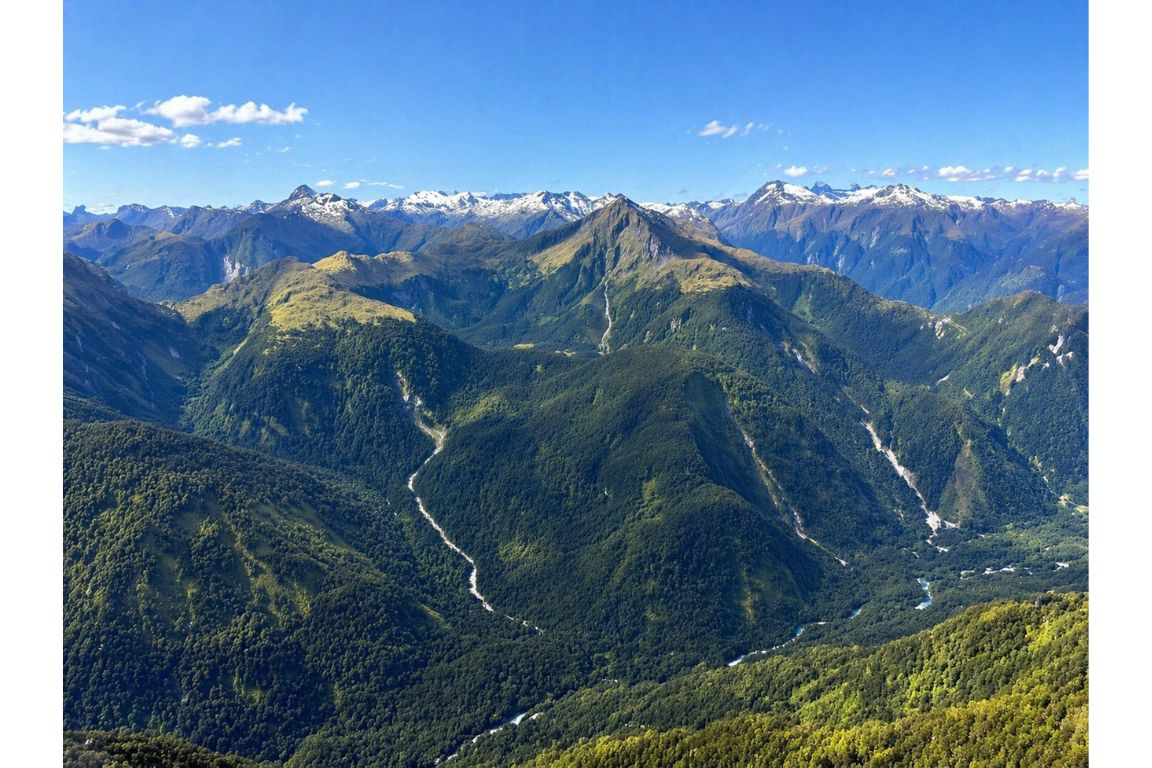
Fiordland has featured in major productions, most notably as backdrop scenery filmed from the air, but Milford Sound itself appears far less than its reputation suggests. Much of what visitors attribute to Milford was shot elsewhere in New Zealand, often near Queenstown or in the Southern Alps.
Choose an aerial view for Fiordland's cinematic scale, or cruise beneath the walls to experience the landscape without treating Milford Sound as a film set.
Your Milford Plan
- Milford Sound has no marked film-location trail.
- A scenic flight is the closest match to Fiordland's aerial screen perspective.
- Use Queenstown and Glenorchy for recognisable ground locations, or cruise Milford for natural-history scenery.
The confusion is understandable. New Zealand's landscapes are marketed collectively, aerial footage rarely announces its exact location, and Milford Sound is the most recognisable name in the south. So it collects credits that belong to its neighbours.
Was Lord Of The Rings Filmed At Milford Sound?
Not in the way most people mean. The trilogy used dozens of South Island locations, many of them around Queenstown, Glenorchy and the Southern Alps, and Fiordland contributed aerial and backdrop material. The fiord itself is not a recognisable on-screen location.
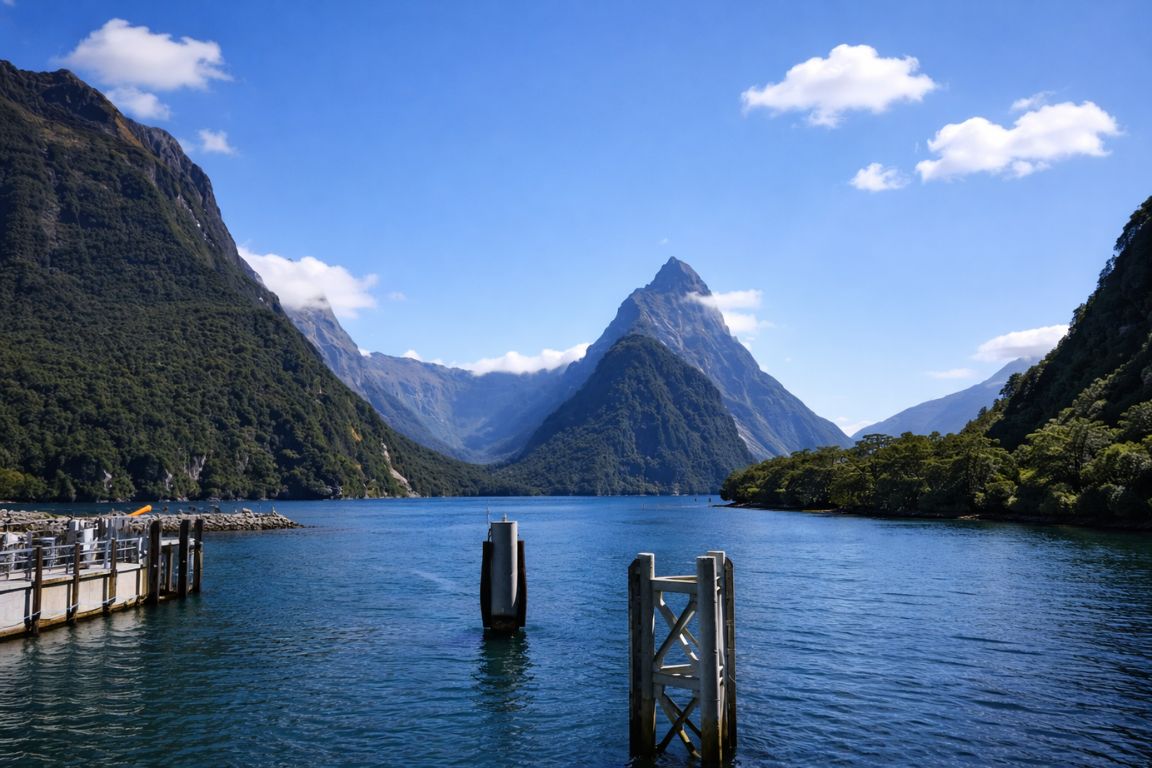
If you are visiting for film locations specifically, the Queenstown and Glenorchy area is the productive region rather than Milford Sound. Several sites there are identifiable on the ground and are visited on dedicated tours.
What Milford does offer is the same character of landscape at a scale the films traded on. Standing under the walls explains, better than any tour, why location scouts kept coming to this part of the world.
What Has Genuinely Been Filmed In The Region?
Fiordland's dramatic aerial scenery has been used in feature films, documentaries and commercials for decades. Wildlife and natural-history productions are the most consistent users, because the fiords offer terrain and species that are difficult to film anywhere else.
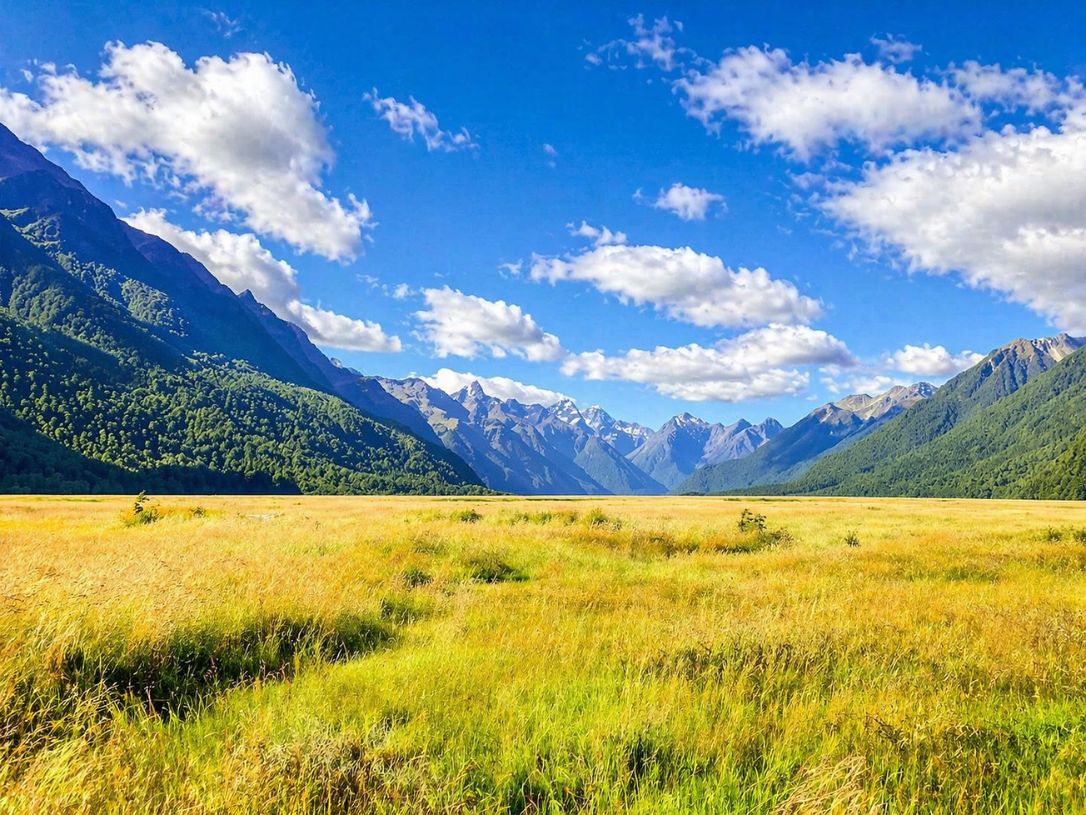
Natural history is where the region's screen presence is strongest and least disputed. The combination of rainforest growing on vertical rock, marine life in a fiord with a freshwater layer on top, and species like the Fiordland crested penguin makes it a recurring subject.
Why Does The Fiord Look So Cinematic In Person?
Because the compositions are already framed. Vertical walls on both sides, a flat reflective surface, and a single dominant peak at the head produce the sort of shot a cinematographer would build deliberately. The place does the work.
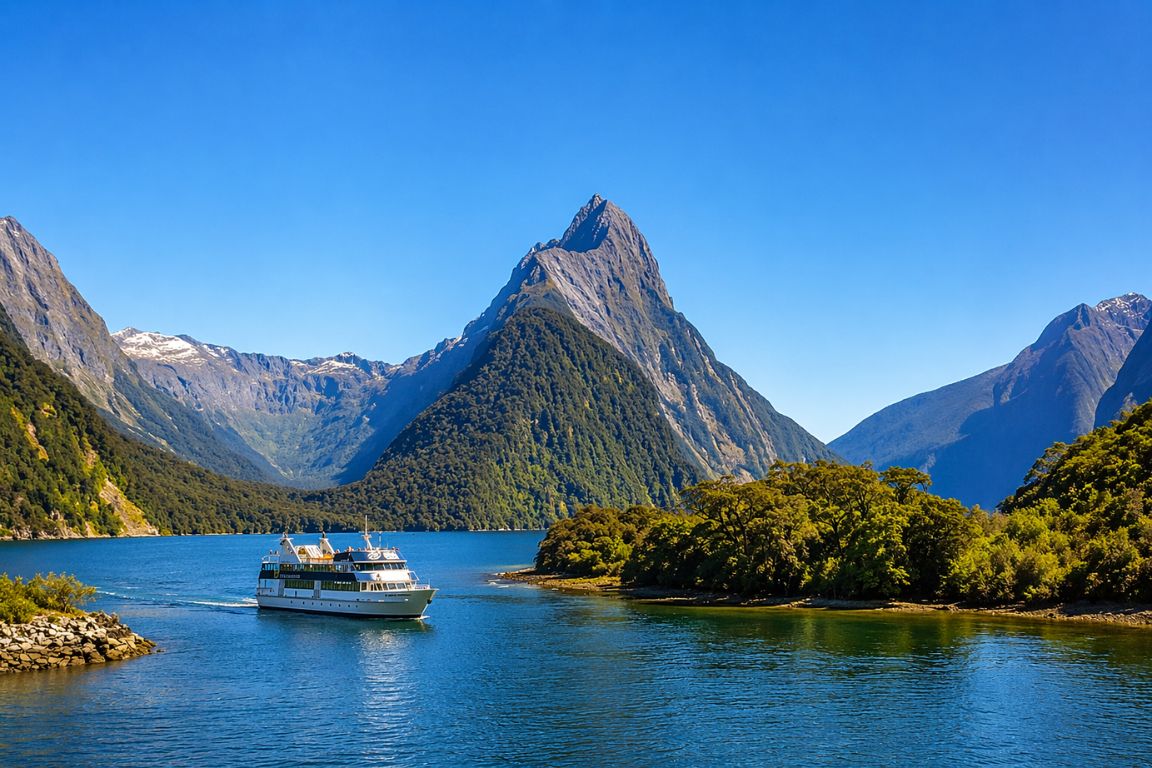
The light adds the rest. Weather moves fast, cloud tears across the tops, and a fiord that looked flat and grey can be lit and streaming with waterfalls half an hour later. This is why so much footage of the region is aerial: the scale only resolves from above.
Can You Visit Filming Locations At Milford Sound?
There is no marked film-location trail at Milford, because the fiord's screen appearances are mostly aerial. Scenic flights cover the same country the cameras did, which is the closest equivalent available.
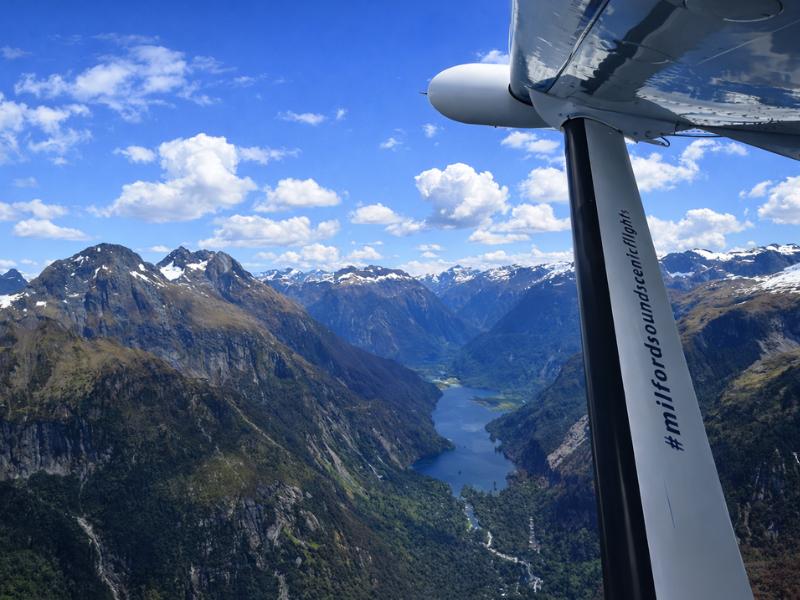
For identifiable locations you can stand in, look to the Queenstown and Glenorchy region. For the aerial perspective that gave the films their scale, a flight over Fiordland is the real answer, and it doubles as the fastest way to reach the fiord.
| What people assume | What is accurate |
|---|---|
| Lord of the Rings was filmed at Milford Sound | Filmed across many South Island sites; Fiordland contributed aerial backdrop |
| There are marked film locations at the fiord | None; the region's screen use is largely aerial |
| The fiord is famous because of the films | Famous since the 1800s, long before any of them |
Why Does New Zealand Attract So Many Productions?
Landscape variety within short distances, crews and infrastructure built up over decades, screen production incentives, and terrain that can stand in for somewhere else: alpine, subtropical, volcanic and coastal country all within a few hours of each other.
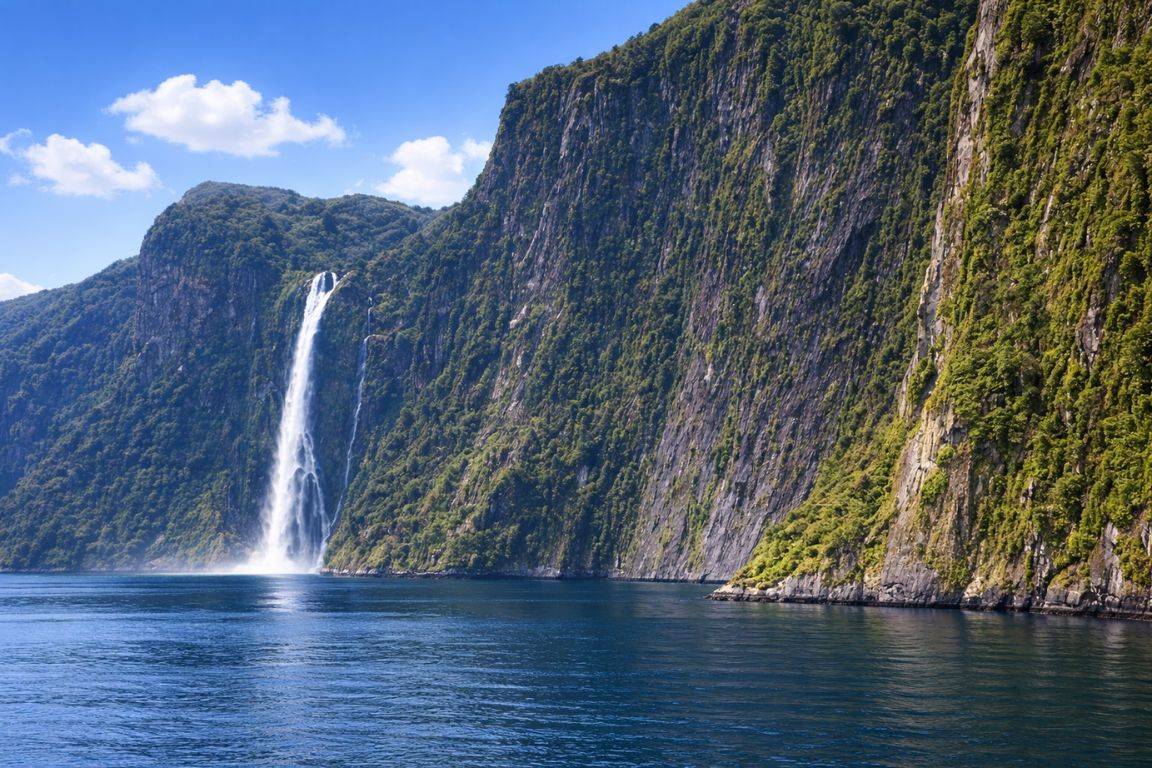
Fiordland's specific contribution is scale with no sign of human occupation. A production that wants a landscape with no pylons, roads or field boundaries in shot has very few options anywhere in the developed world. Here that is simply the default condition.
It is also why the footage tends to be aerial. From the ground Fiordland is enclosed, green and awkward to film. From the air it resolves into a landscape.
Which Locations Can You Actually Visit?
For identifiable, stand-in-the-spot locations, the Queenstown and Glenorchy area is the place, and dedicated tours run to several of them. Around Milford Sound there is nothing marked, because the fiord's screen appearances are aerial rather than scene-based.
| What you want | Where to go |
|---|---|
| Recognisable ground locations | Glenorchy, Paradise, the Wakatipu basin |
| The aerial Fiordland look | A scenic flight over the fiords |
| Natural-history filming country | The fiord itself, by boat |
Does The Film Association Change The Visit?
Very little, and arguably for the better. Milford Sound has no film-themed infrastructure, no photo-op signage and no themed tour, so the place is presented as what it is rather than as a set.
Its reputation was established more than a century before any of these productions, by writers, painters and early tourism operators. The films borrowed the landscape's existing fame rather than creating it.