Is Food Included On A Milford Sound Cruise?
This question gets asked more than almost any other before booking, and the answer is genuinely operator-dependent. Getting it wrong means a long day with nothing to eat in a place that has nowhere to buy anything.
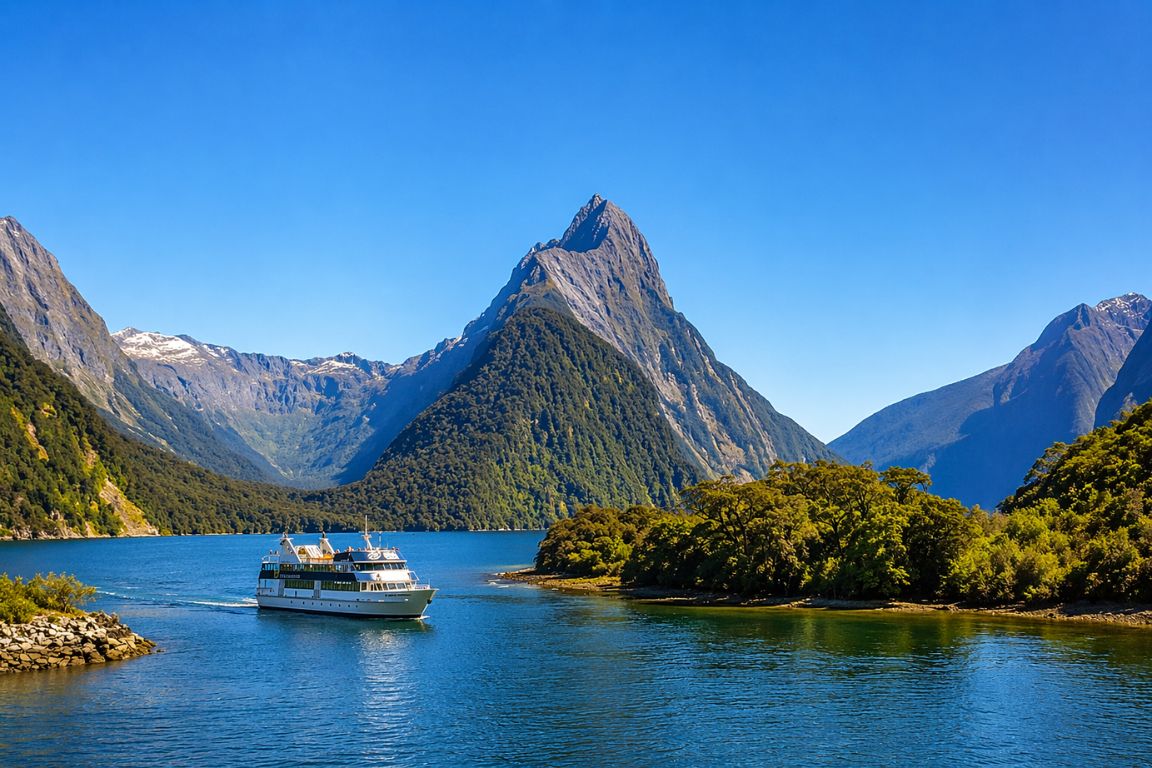
On most standard Milford Sound day cruises, food is not included. Larger vessels usually have a cafe or bar selling snacks, hot drinks and simple meals. Some coach packages add a picnic lunch as a paid extra, premium small-group tours often include it, and overnight cruises include dinner and breakfast as standard.
Match the trip to your meal plan first, so a long Milford day is not spent hunting for food that is not there.
Your Milford Plan
- Standard day cruises usually skip included meals and rely on a cafe or food you bring.
- A Queenstown small-group day can include lunch, snacks, water, transport and the cruise.
- Overnight cruises include dinner and breakfast, and dietary requests need to be sent at booking.
The variation is wide enough that assuming either way is a mistake. Check the inclusions on the specific trip you are booking rather than relying on what a friend experienced on a different boat.
What Does Each Type Of Trip Actually Include?
Standard scenic cruise: nothing included, cafe on board. Coach and cruise package: lunch is commonly an optional add-on. Premium small-group tour: usually included. Overnight cruise: dinner, breakfast and often supper included as part of the fare.
| Trip type | Food included | What is available |
|---|---|---|
| Standard day cruise | Usually not | Cafe or bar on the larger vessels |
| Coach and cruise from Queenstown | Often optional, pre-booked | Picnic lunch or buffet, added at booking |
| Premium small-group tour | Commonly included | Provided as part of the day |
| Nature cruise with a guided walk | Varies | Check the specific listing |
| Overnight cruise | Yes | Three-course or buffet dinner, plus breakfast |
Can You Buy Food At Milford Sound Itself?
Barely. The terminal has limited food service and it is expensive by New Zealand standards. There is no supermarket, no shops and no town. The last reliable place to buy groceries on the way in is Te Anau, about two hours south.
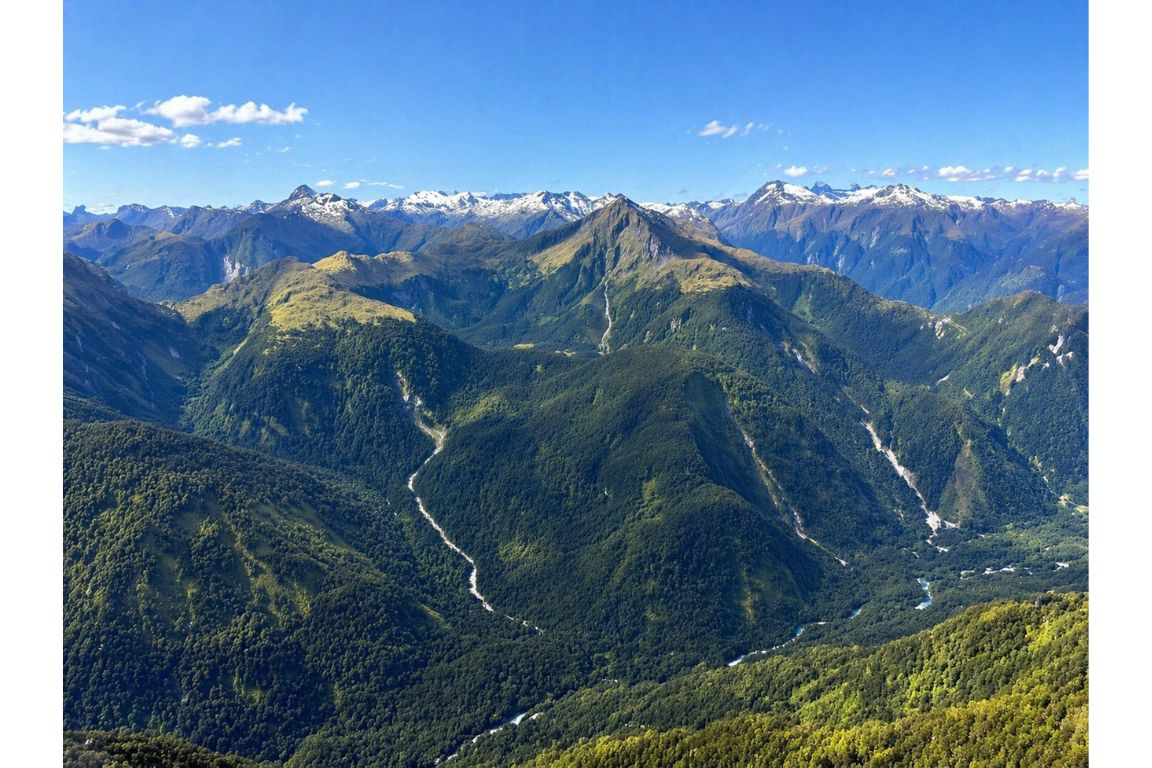
This is the part visitors underestimate. Milford Sound is not a destination village with cafes. It is a terminal building, a car park and an airstrip inside a national park, and everything sold there has been trucked two hours up a mountain road.
Anyone driving themselves should shop in Te Anau. Anyone on a coach from Queenstown should either pre-book the lunch or bring food from town, because the stops on the way in are scenic rather than commercial.
What Is The Food Like On An Overnight Cruise?
Substantially better, because it is the point of the fare rather than an afterthought. The Milford Mariner serves a buffet-style three-course dinner. The smaller Fiordland Jewel, carrying around twenty-two passengers, runs a plated three-course meal cooked by an onboard chef.
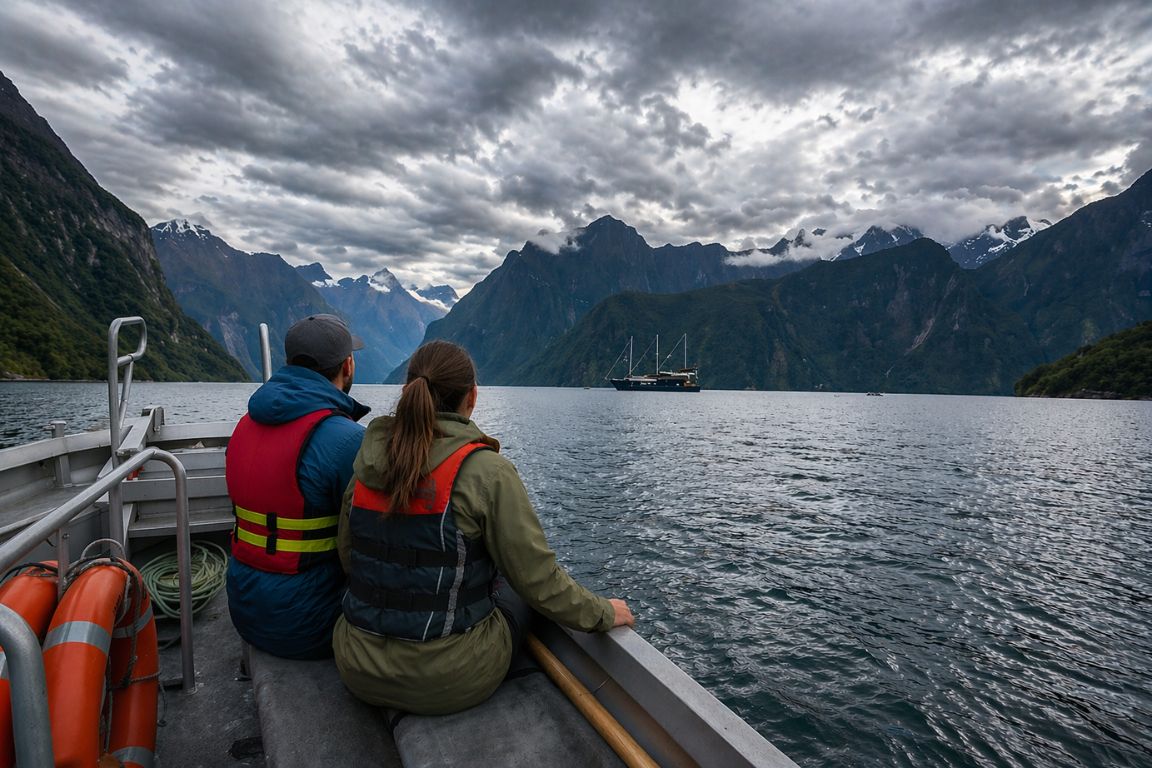
Breakfast is included on both the following morning, before the vessel returns to the terminal. Dietary requirements are handled if you notify the operator in advance, which on a boat with a fixed menu and no shops nearby genuinely matters.
Should You Bring Your Own Food Anyway?
Yes, in almost every case. Even when lunch is included, a long day with a two-hour drive at each end justifies having something of your own. Bring more water than you think you need, because the cafes are small and the queues at peak times are real.
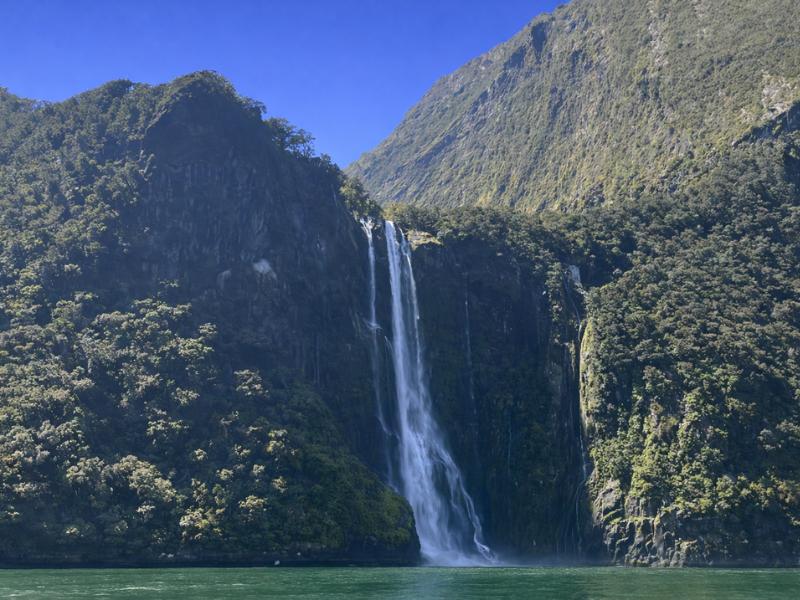
Practical constraints: pack it in something that survives a coach locker, avoid anything that needs refrigeration for a twelve-hour day, and take your rubbish with you. Facilities at the terminal are limited and the national park has no waste infrastructure to absorb a busy day's leftovers.
What About Dietary Requirements?
Notify the operator at booking, not on the day. Vessels carry what they loaded in Te Anau or Queenstown, so a request made at the gangway usually cannot be met. Given proper notice, most operators handle common requirements without difficulty.
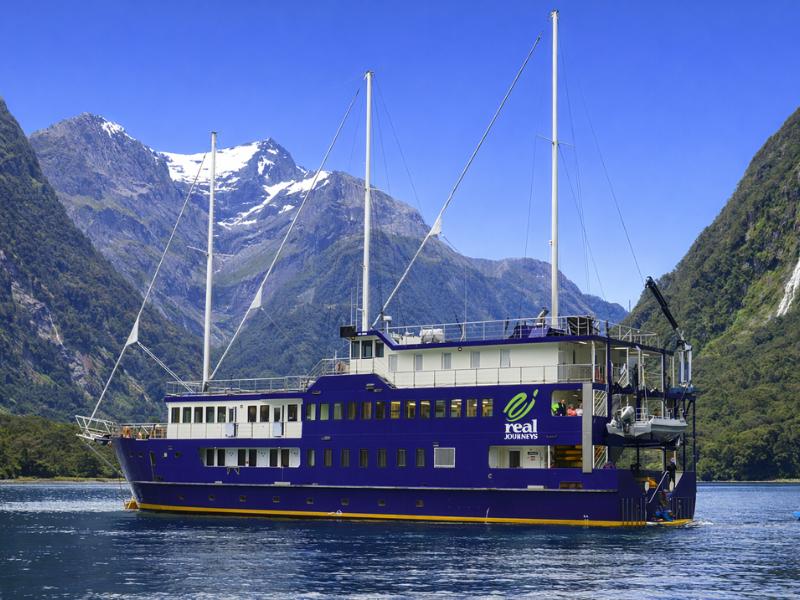
On the overnight cruises this is more important still, because you are on board for the better part of a day with no alternative. Confirm it in writing when you book rather than assuming a note on a form was read.
What Is Actually Sold On Board?
On the larger vessels, a cafe counter with hot drinks, sandwiches, pies, snacks and a bar. On small boats, often nothing beyond water and possibly tea or coffee. Prices reflect the two-hour supply run from Te Anau.
| Vessel type | What is on board | Queue at peak |
|---|---|---|
| Large scenic vessel | Cafe and bar, seating indoors | Real, especially just after departure |
| Small boutique boat | Hot drinks at most | None |
| Nature cruise | Varies; often tea and coffee | Minimal |
| Overnight vessel | Full catering included | Not applicable |
The queue is worth planning around. On a two-hour cruise, twenty minutes spent waiting for a coffee is twenty minutes not spent on deck, and the cafe is busiest exactly when the boat is leaving the terminal and everyone has the same idea.
When Is Lunch Worth Pre-booking?
On a Queenstown coach day, usually yes. It is a twelve to thirteen hour day with limited options at the fiord, and the pre-booked picnic or buffet removes a decision from the middle of it. On a Te Anau day trip you can simply bring food from town.
The economics are not the point. The convenience is: on a long coach day the alternative is a cafe queue shared with several coachloads of people who all arrived within the same half hour.
Can You Eat Before Or After Instead?
Yes, and it is often the better plan. Eat properly in Te Anau on the way in, carry something for the boat, and treat the fiord as a place you visit rather than dine at. Anyone driving has full control of this.
Coach passengers have less flexibility because the schedule is fixed, which is exactly why the pre-booked option exists. Ask what stops the itinerary includes before assuming there will be a chance to buy something.
What About Water?
Bring more than you think. Vessels have water available, but a long day with a two-hour drive at each end catches people out, and the cafe queue applies to bottled water as much as coffee.
Fiordland's tap water in Te Anau is drinkable and free, so filling a bottle before you leave town costs nothing and solves the problem for the whole day.